 Previous Day |
Anchorage, AK → Port Alsworth, AK → Katmai National Preserve minimal ground miles covered |
 Next Day |
Sun’s out, fun’s out, everyone!
In all the years I’ve been exploring national parks, I’ve never spent more than two days in one! Well, I was determined to change that as my national park quest nears its climax, so I signed up for a 6-day guided adventure with Alaska Alpine Adventures! It would be total immersion in the high tundra with no phones, laptops, or headlines, just the tundra and whatever wonders it might have in store. My friend, Ross from Utah, decided to tag along, and together we showed up at the AAA warehouse right at 8:00 AM for orientation and gear inspection, along with four complete strangers—Tyler, Marie, & Stephanie from Houston, Niko & Helen also from Houston (by coincidence), and Brian from Philadelphia! In a location like where we were heading, this cross-country collection of campers would either become best chums or mortal enemies real quick, which added to the excitement of the morning!
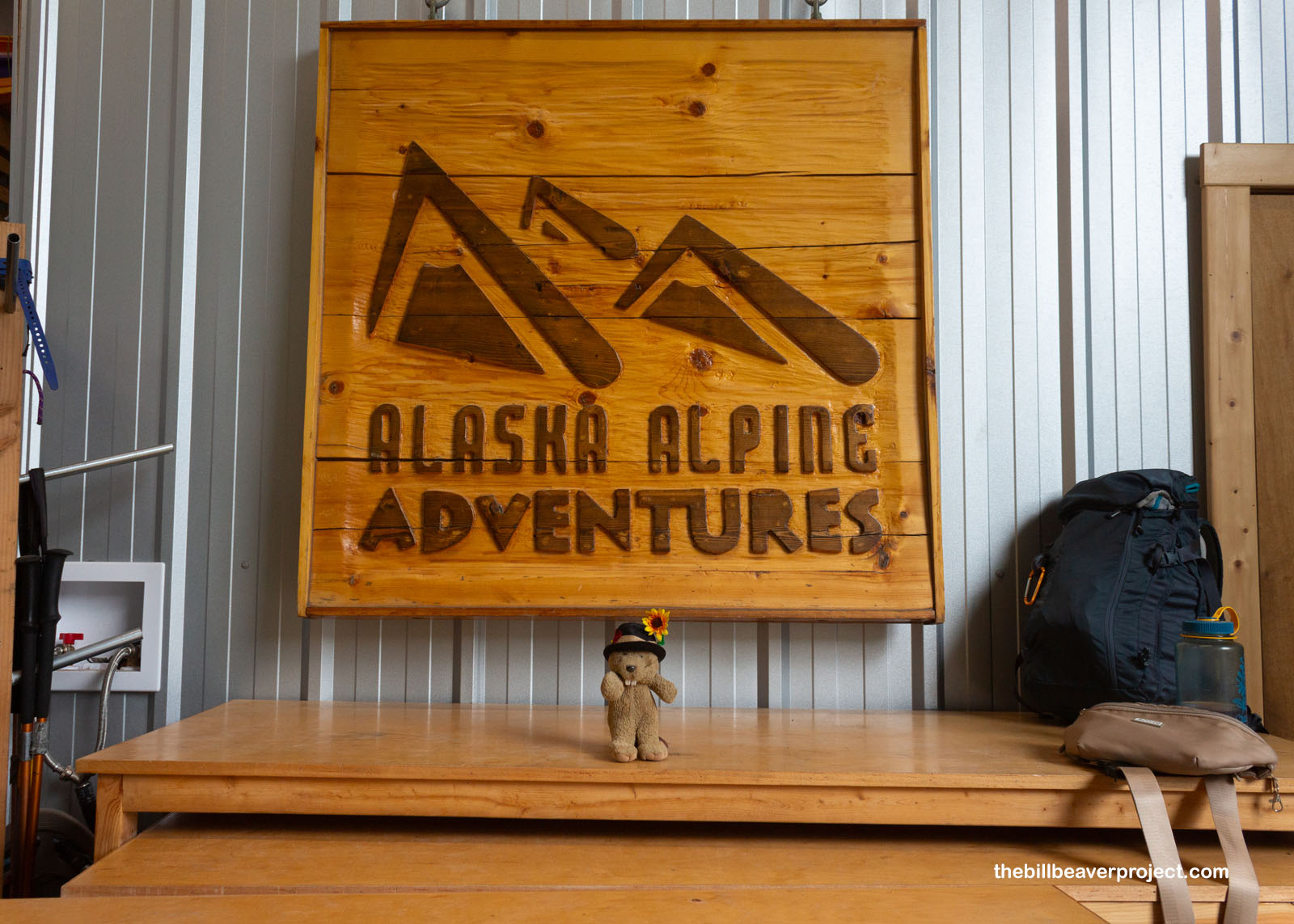 |
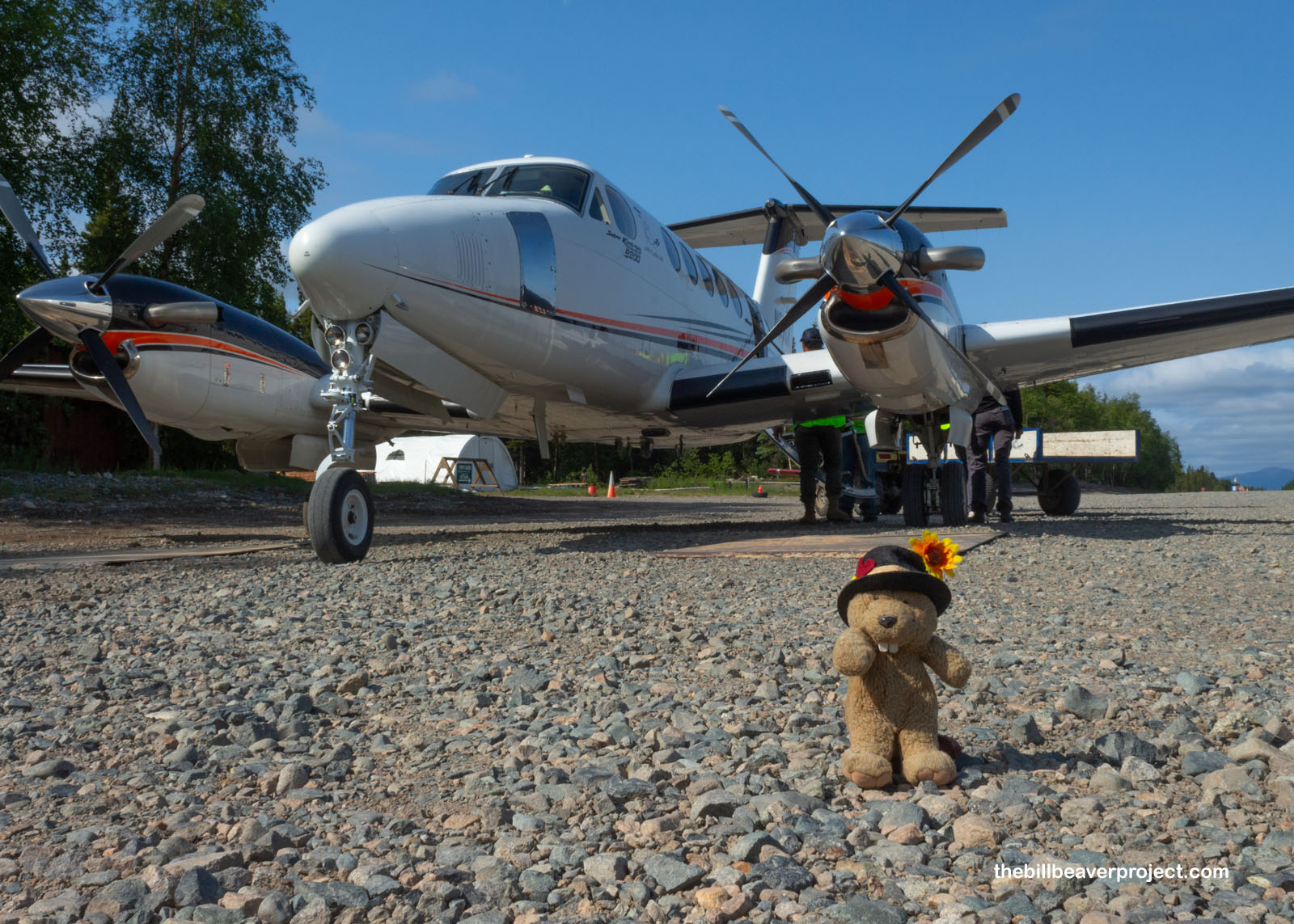
Our guides, Tim and Philip, checked everyone’s gear and made some important substitutions. For instance, everyone would have to find room in their packs for a 10-pound bearproof barrel, and anyone who hadn’t tested their tent in high wind would have to take a AAA-approved tent instead. In my case, I could neither carry a 10-pound bearproof barrel nor prove that my tent could withstand high winds, so I ended up having to leave my stuff behind in Anchorage and rely on my small size to share tent space with someone else. At any rate, our guides got us all packed and ported to Merrill Field Airport just ahead of 10:00 AM for the first leg of our aerial journey with Lake Clark Air. After careful weighing of everyone’s backpacks, 7 of us got on the plane to Port Alsworth, but poor Ross was consigned to the “kids’ plane,” which really was transporting mostly children! We soared up out of Anchorage on a one-hour flight that took us over low-lying clouds punctured by an oil rig tower, and through extraordinary snow-capped mountains, including Mount Spur, on yellow alert for potential eruptions, until we landed on the long, gravelly runway of Port Alsworth on the sunny shore of Lake Clark!
 |
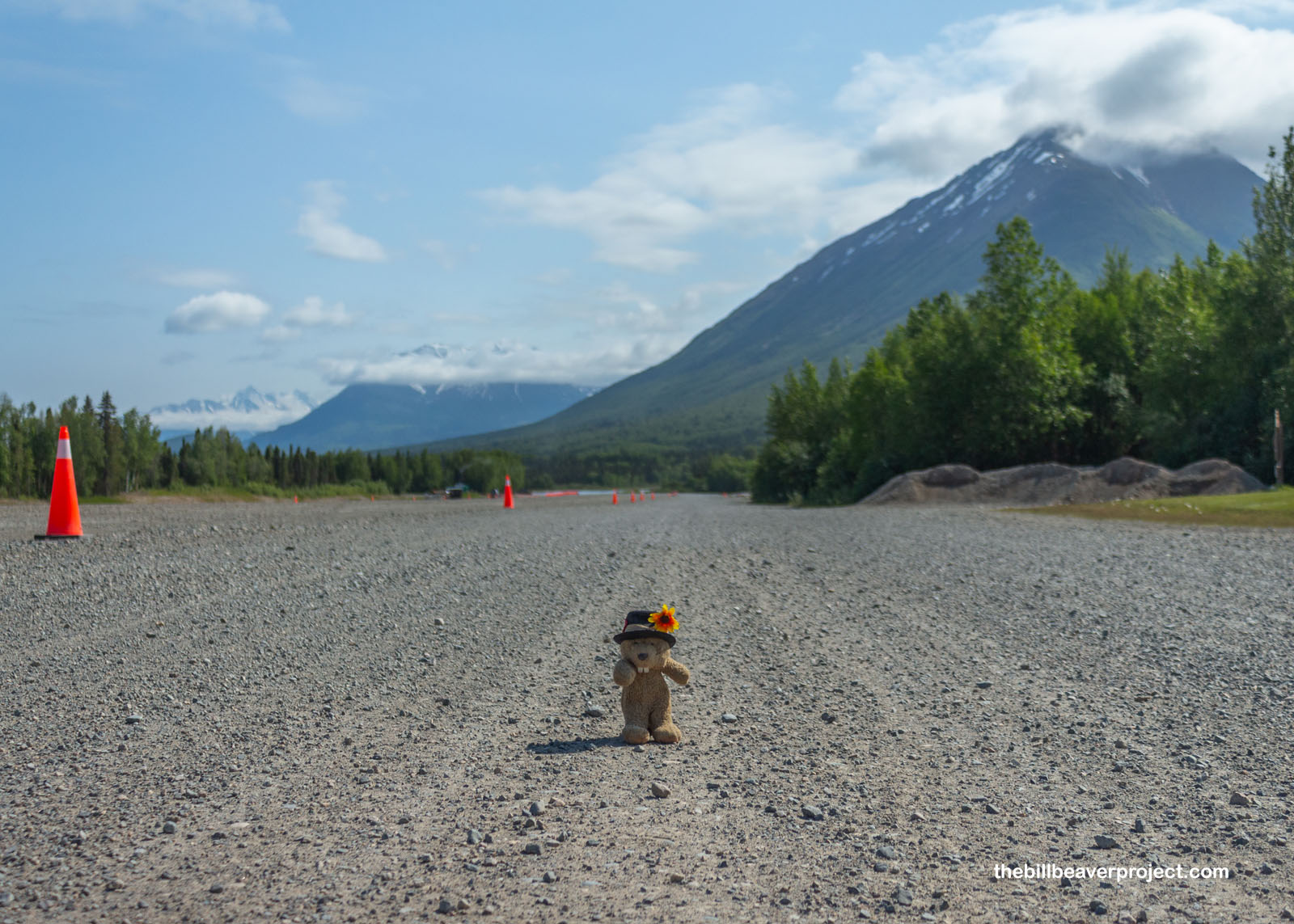
Making a pile of our backpacks outside the Cranberry Cache coffee shop, the early group of us took a walk through Port Alsworth, a tiny community founded in 1950 by Babe and Mary Alsworth and still run by their descendants. There’s a lodge, two bible camps, the Cissie’s Kitchen food truck (serving yummy milkshakes), and several warehouses we were convinced would be the perfect place to house aliens in the shadow of the mountain called Tanalian!
 |
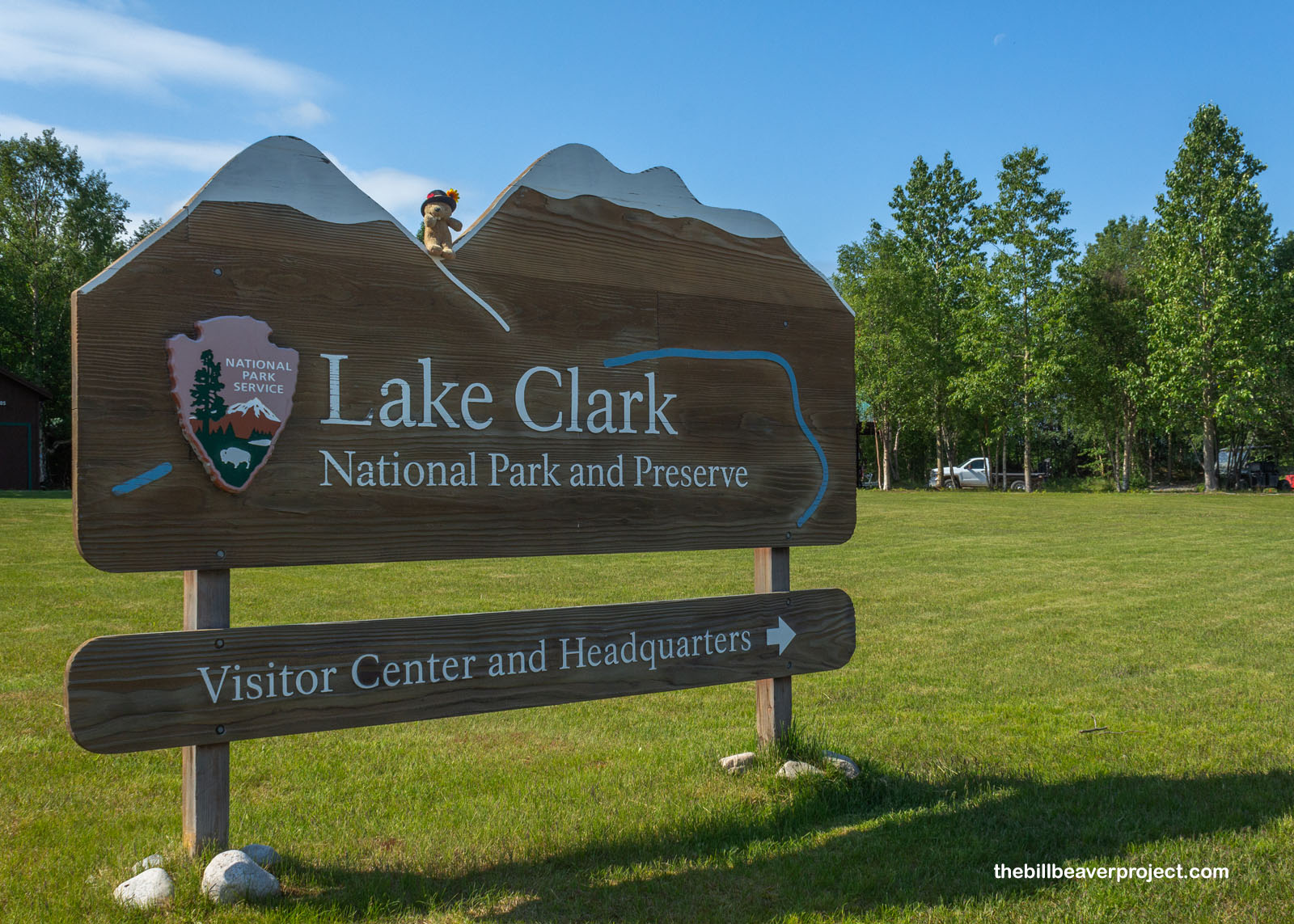
Port Alsworth is also home to the visitor center for Lake Clark National Park and Preserve, which came with a few bombshell revelations! Firstly, we were visiting today instead of on our way back, because the federal government was in the process of cutting $900 million from the National Park Service and reducing staffing by 30%! This meant the visitor center would probably be closed on our return to Port Alsworth. The second bombshell was that none of our routes were setting foot in either national park! Instead, our journey was going to be limited to the Preserve part of Katmai National Park and Preserve and Lake Clark National Park and Preserve. I was very glad to have set foot in Brooks Camp three days ago, but some of our park-hopping crew had really been hoping to get passport stamps for both parks on this trip. Well, we were here now, and we were all going to make the most of it.
 |
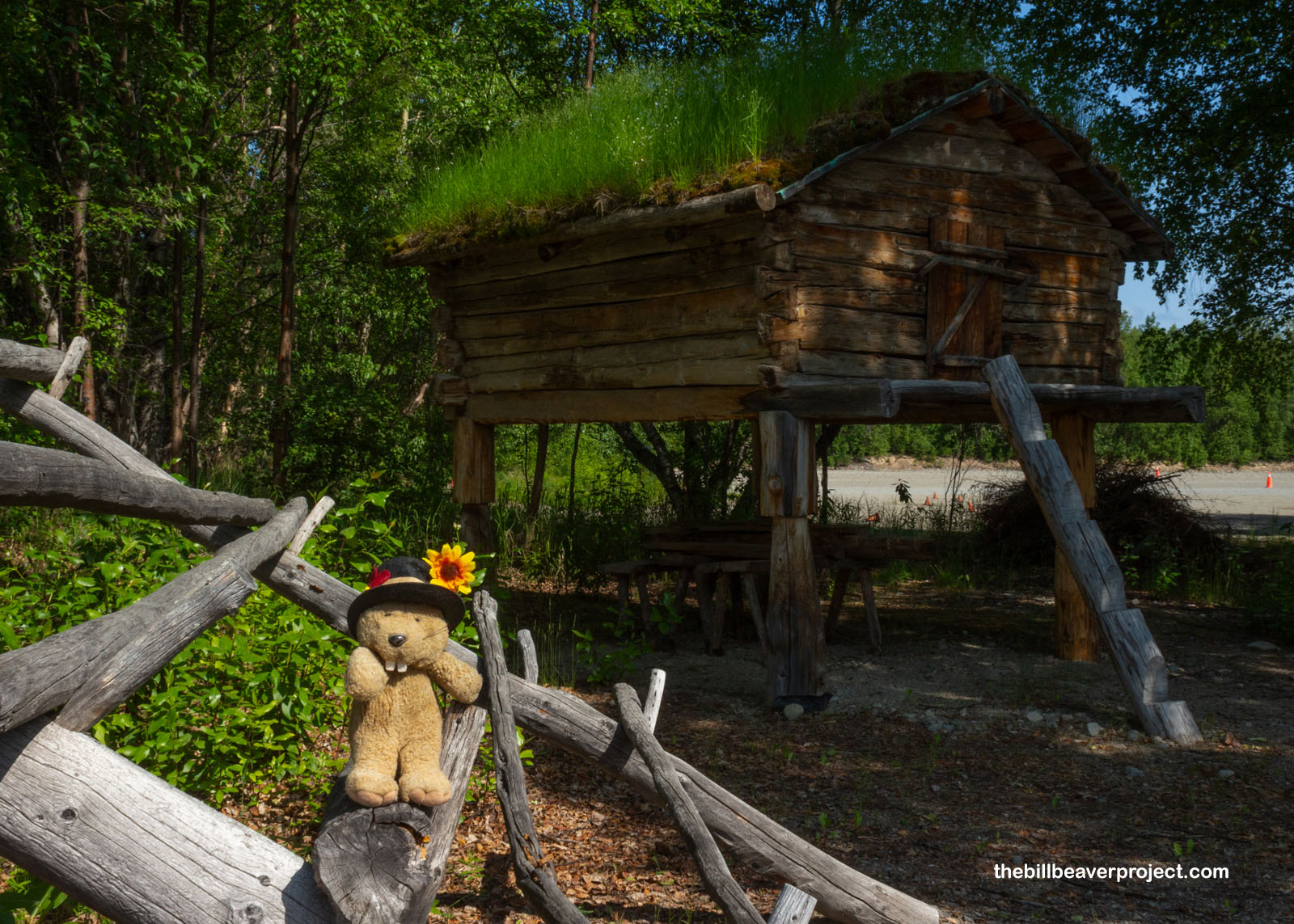
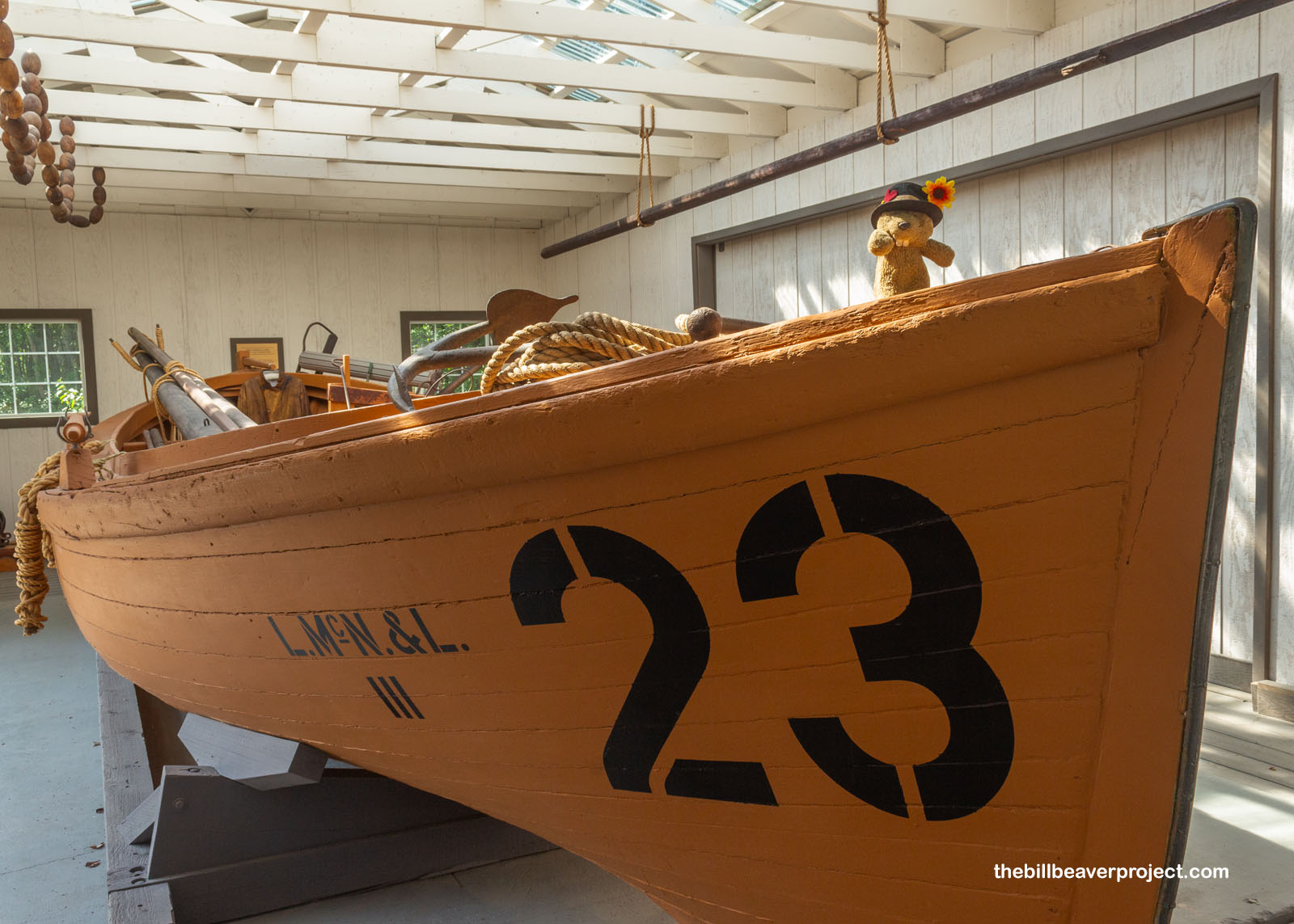
There were some cool surprises at the visitor center, though: two unique structures on the National Register of Historic Places! The first was the last surviving, best example of a traditional Dena’ina fish cache, built by master woodworker, Wassillie Trefon! The second was also made of wood, housed in a special shed for protection: Libby’s Number 23 Bristol Bay Double-Ender, a 60-year veteran of Bristol Bay’s salmon fishing industry and one of only ten double-enders left in existence!
 |
 |
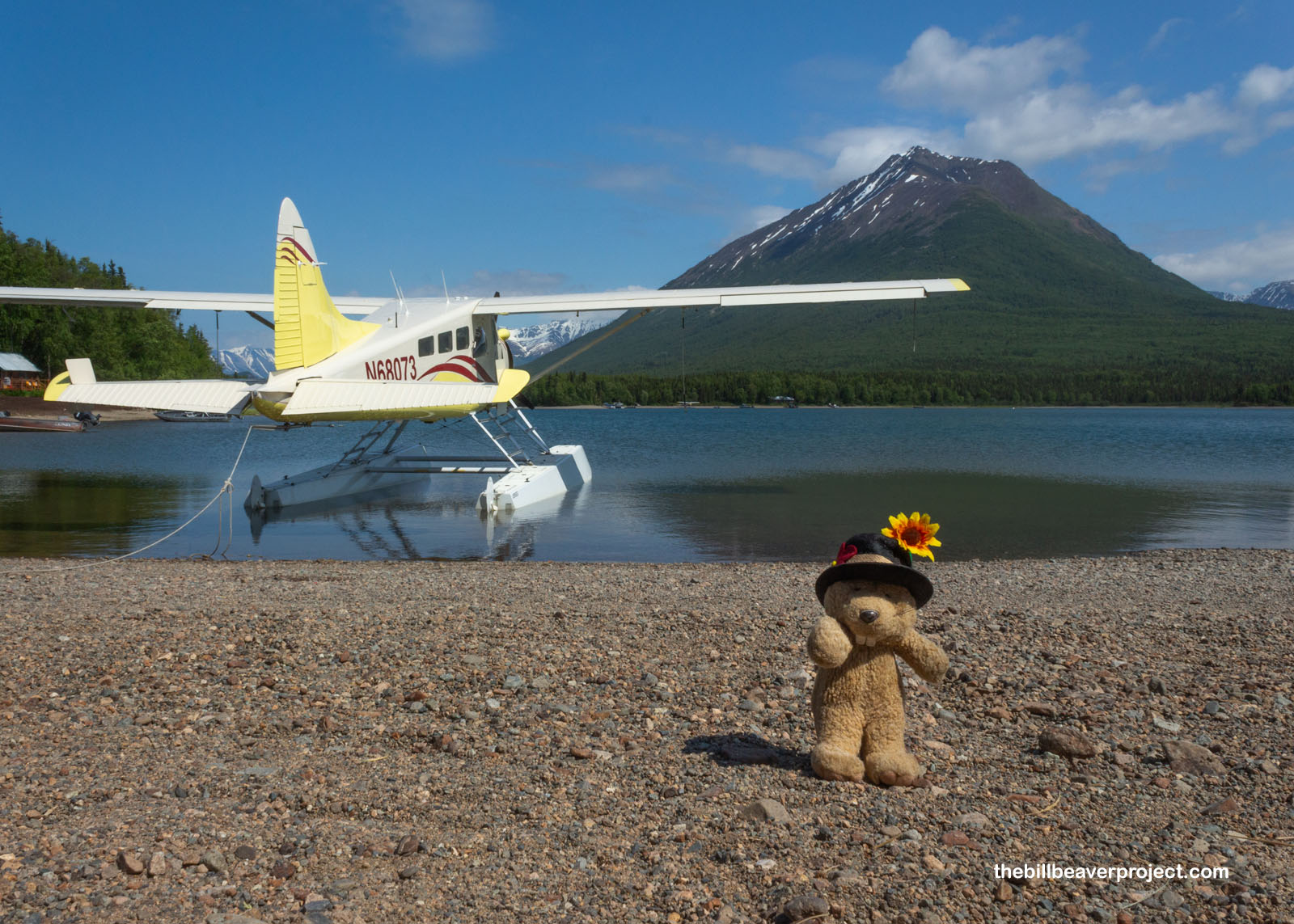
Having made the most of the visitor center’s exhibits, stamped passports, and purchased postcards, we all re-convened at the Cranberry Cache to eat lunch and await our next flight, all the while enjoying the many different kinds of planes coming and going from this remote airport. There was some debate over whether there would be enough planes to take us all at once, or one group after the other. As it turned out, two Alaska Magnum Beavers were available to get us all airborne and on our way to Katmai National Preserve!
 |
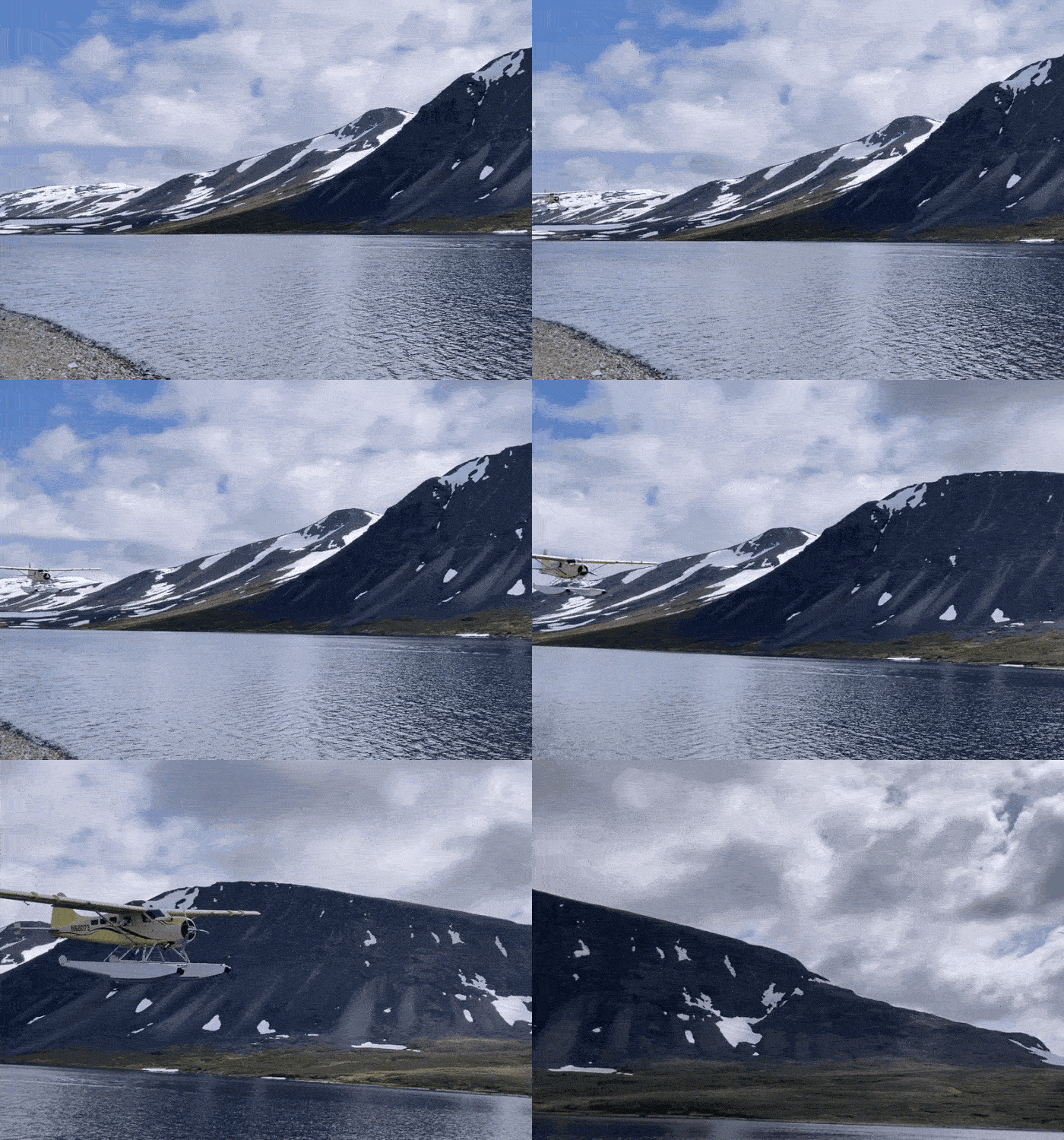
We flew up over the brilliant blues and greens of Lake Clark, surrounded by richly forested mountains! We continued out over Lake Iliamna, the largest of Alaska’s more than 3 million lakes, big enough to have islands with lakes of their own, a unique subspecies of freshwater harbor seal, and a lake monster called Illie, rumored to be a huge, black fish or freshwater whale! But we were just passing over Iliamna and its mysteries, aiming for a different lake in a basin surrounded by snow fields where caribou were taking a break from the summer heat and the summer bugs! Just before 5:00 PM, we touched down on Mirror Lake—one of hundreds of Mirror Lakes in the world—and floated ashore for the first steps of our adventure.
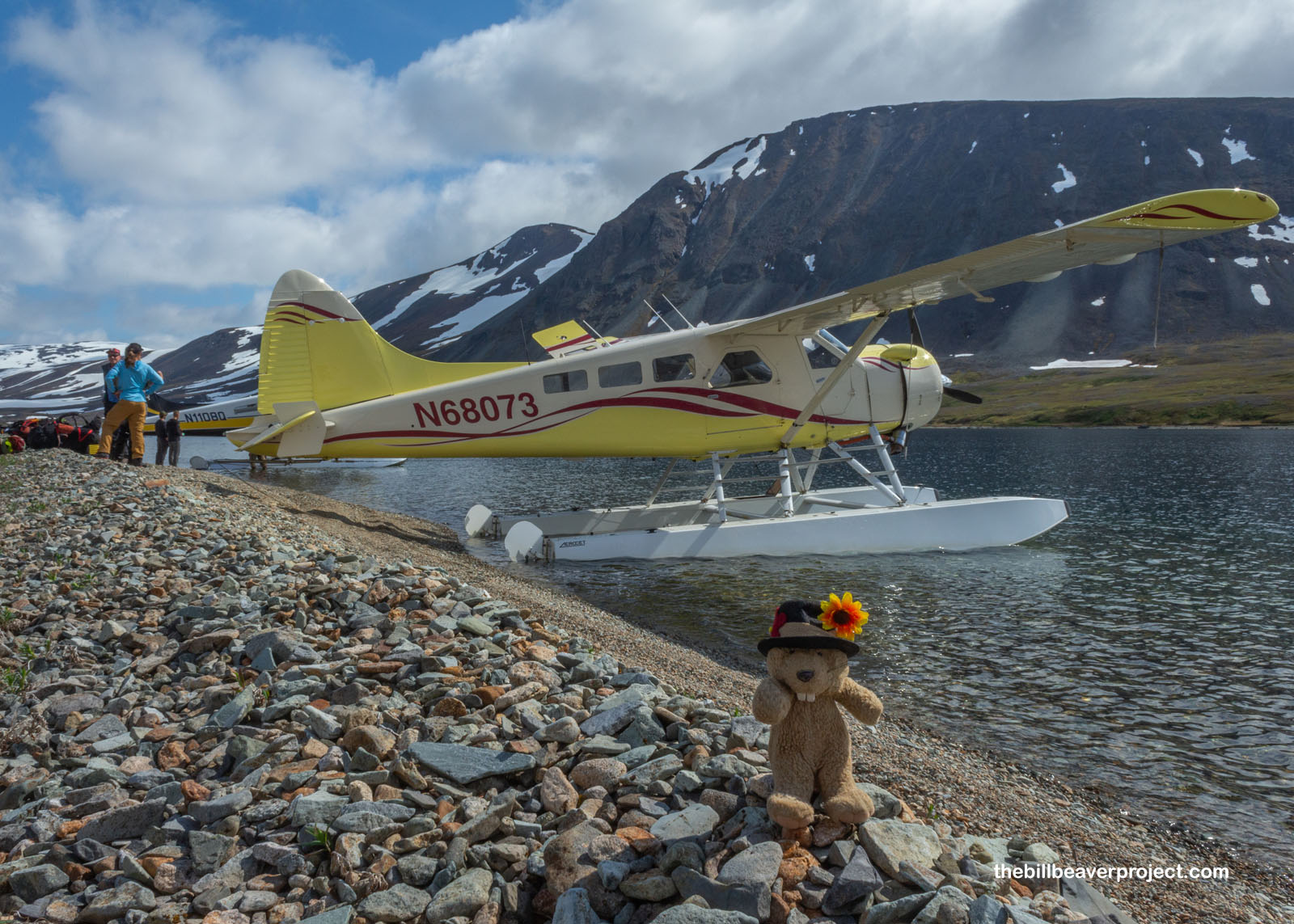 |
With bags unloaded and hikers ashore, the flying Beavers were off again! As the roar of their propellors faded away, the eight of us were left to pure mountain quiet and the kind of wild beauty that’s normally reserved for the foxes, caribou, and bears! Even though I was taken aback earlier by the announcement that we’d be in the Preserve—different from a Park in that hunting and gathering are allowed—this mountainous beauty was quickly melting away my concerns!
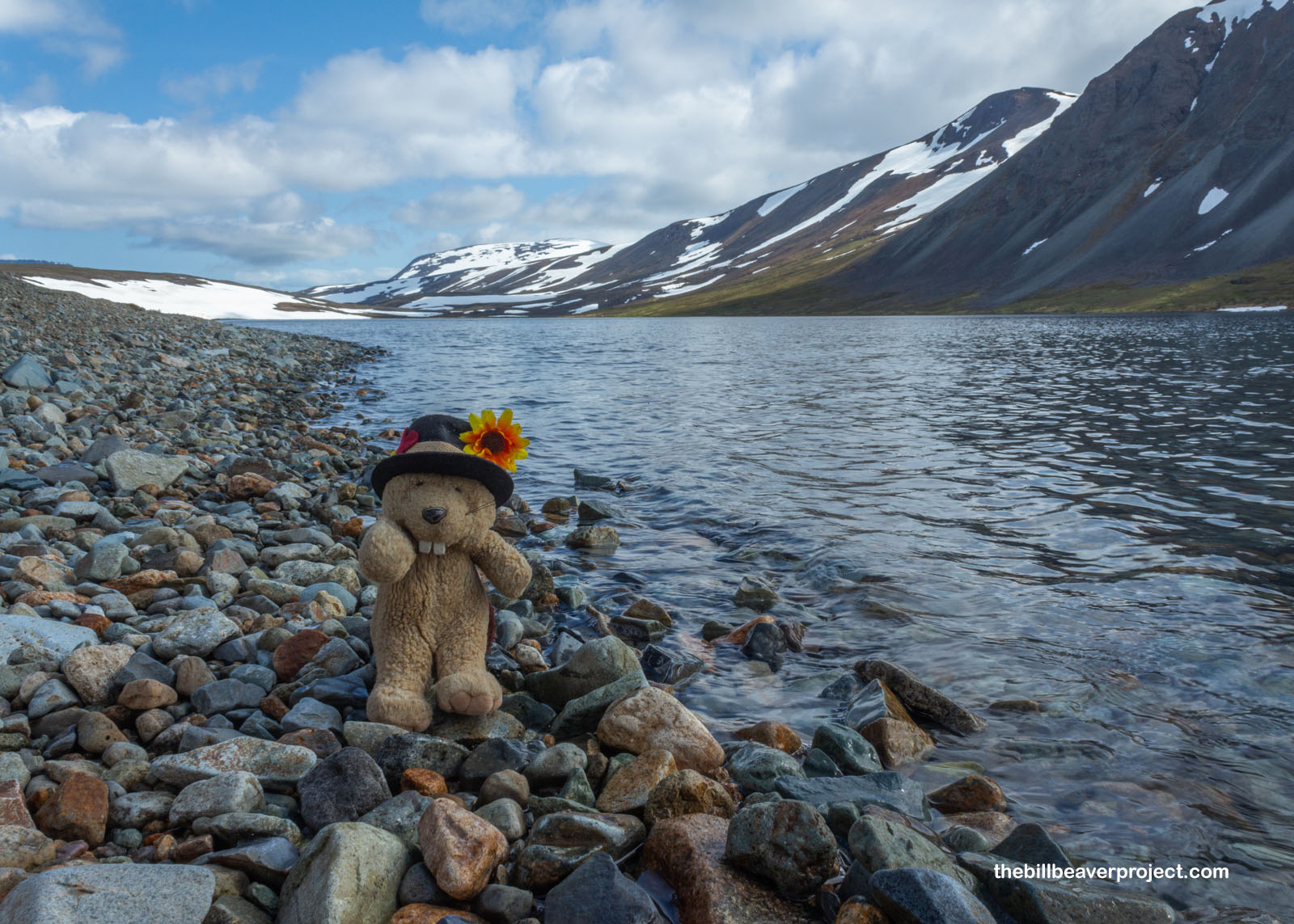 |
But we had much to do! The lakeshore was pretty, but it wasn’t the ideal campsite. There were too many rocks, and we needed to find a good source of flowing water for drinking and for practicing diffusion, a Leave No Trace technique of cleaning dishes in fast-moving water so the food waste gets broken down and scattered as much as possible. This is only really practical in far flung places with low visitation like this one, though. So, the group loaded up and set off across several good sources of flowing water, the first test of everyone’s stream crossing prowess.
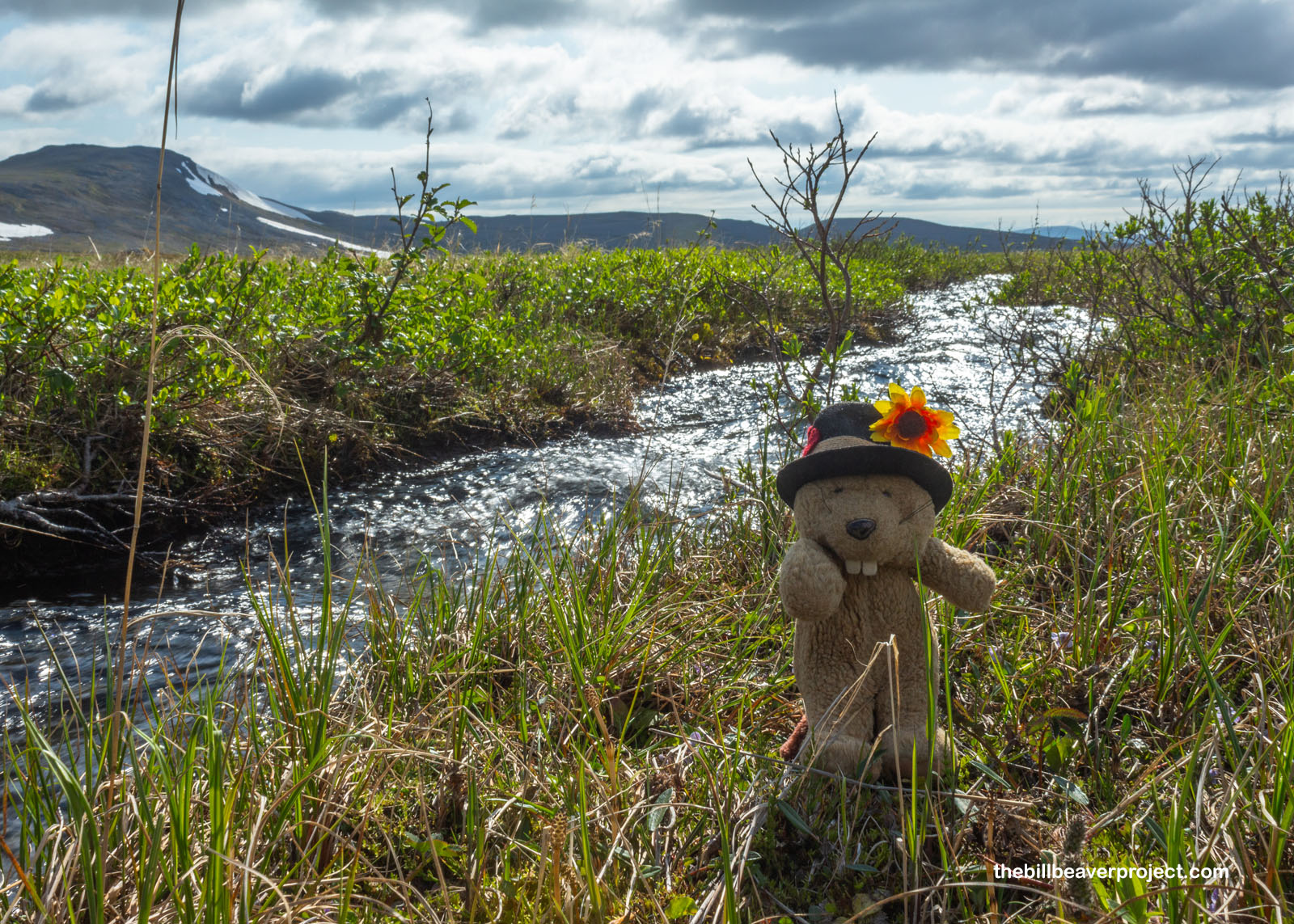 |
We picked our way across big squishy lumps in the tundra called frost heaves, which form as groundwater freezes and thaws. When temperatures drop below freezing above ground, water underground starts to freeze irregularly, forming ice “lenses,” which grow and grow, pushing up the soil above them with their convex sides. In cities, this can wreak havoc on sidewalks, but in the tundra, it makes really cool formations with layers upon layers of squishy tundra mosses!
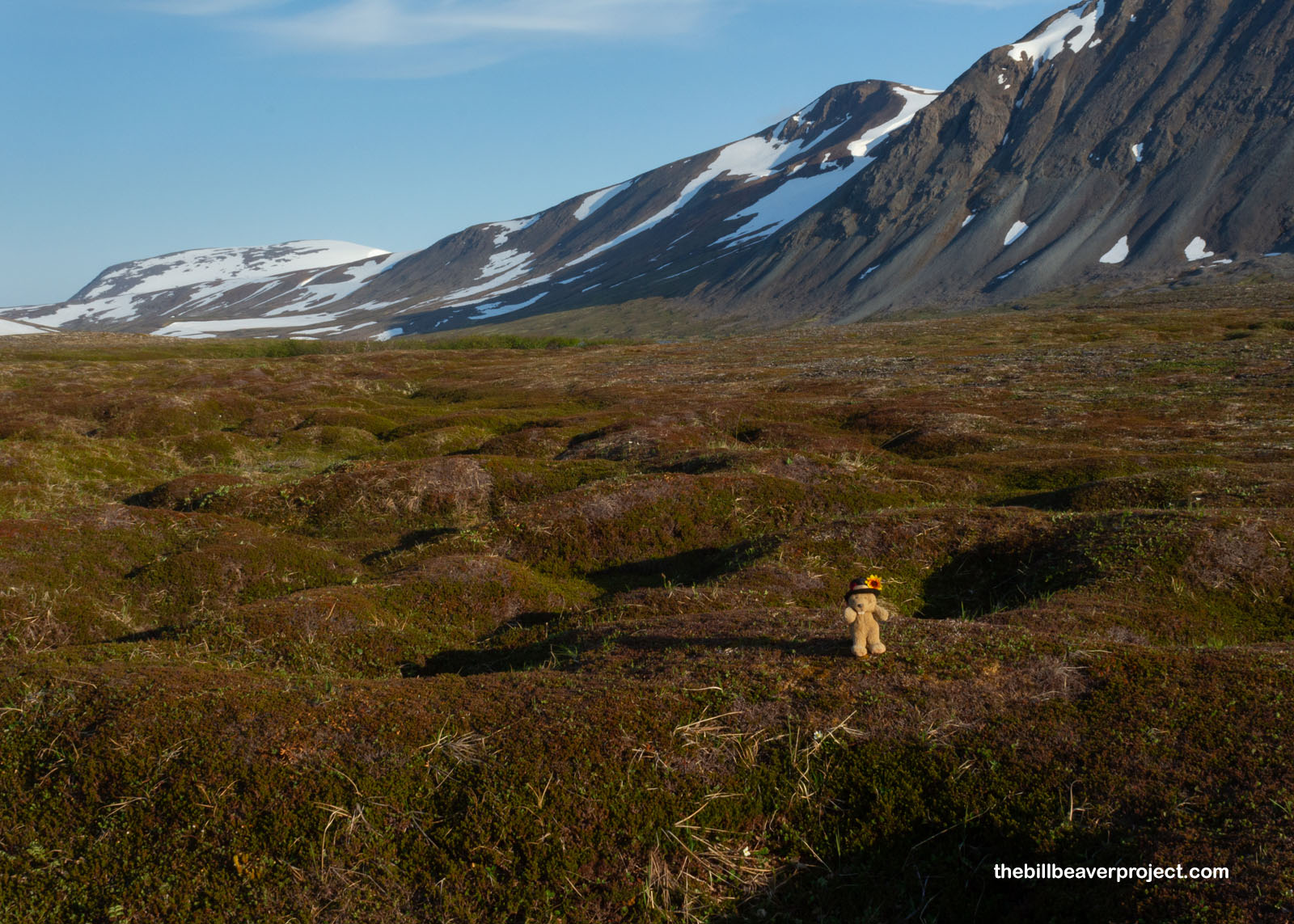 |
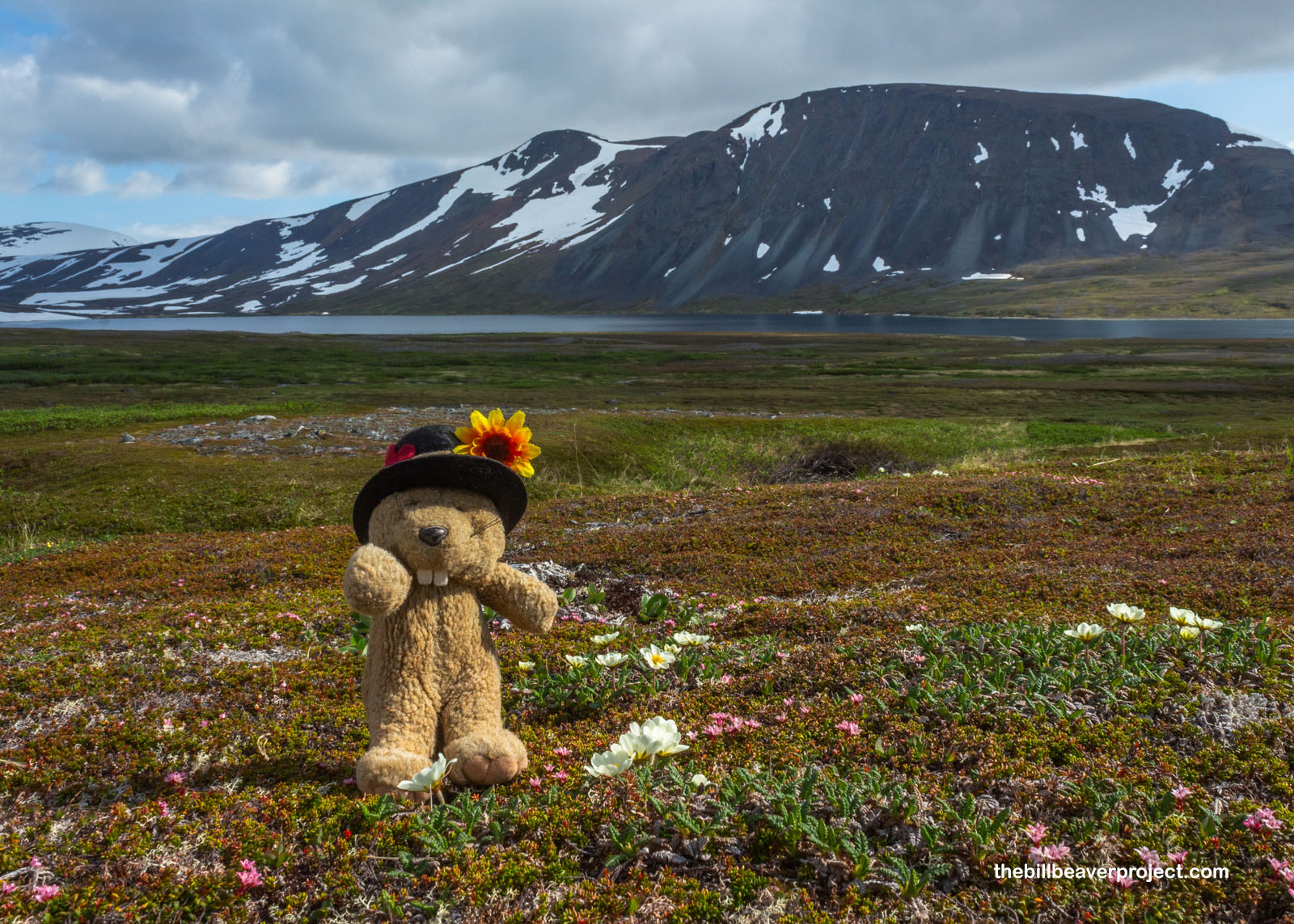
And being here in June meant that the tundra was in full bloom with tiny flowers, from the pink moss campion (Silene acaulis) to the white eightpetal mountain avens (Dryas octopetala), whose cousins I’d seen gone to seed in the Canadian Rockies last year! Apart from being pretty, Dryas species are super important for taking root in soil that’s recently been cleared of glacial ice and fixing it with nitrogen that other plants can use to grow!
 |
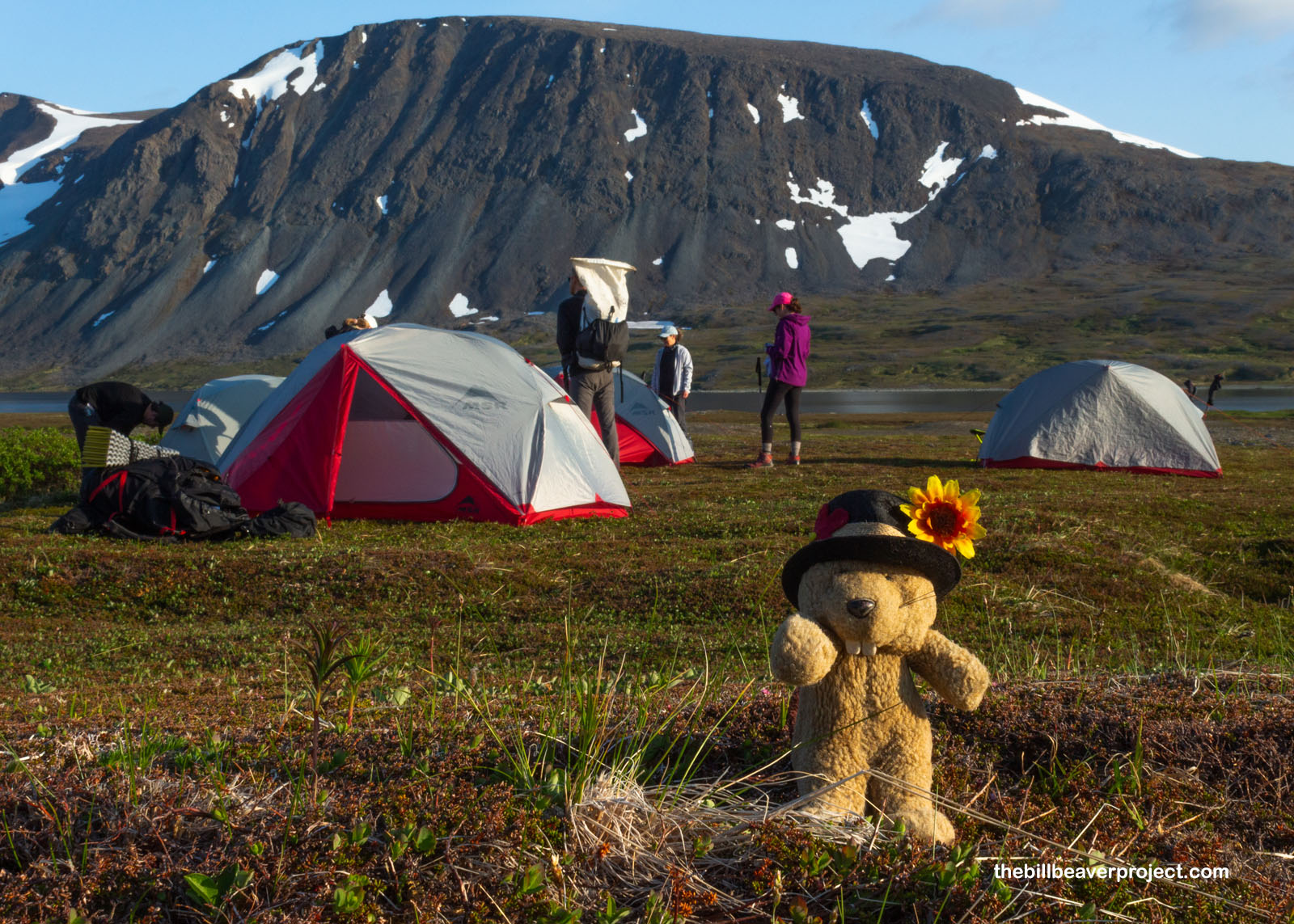
Those plants that weren’t in bloom were about to become our collective mattress as we settled on a campsite on a high mound overlooking a smaller lake and right next to a great stream! Tents and the cooking area went up a good distance from each other, one more precaution in bear country, and I have to say, having everyone use the same kind of tent made for easy setup and some swell looking photos!
 |
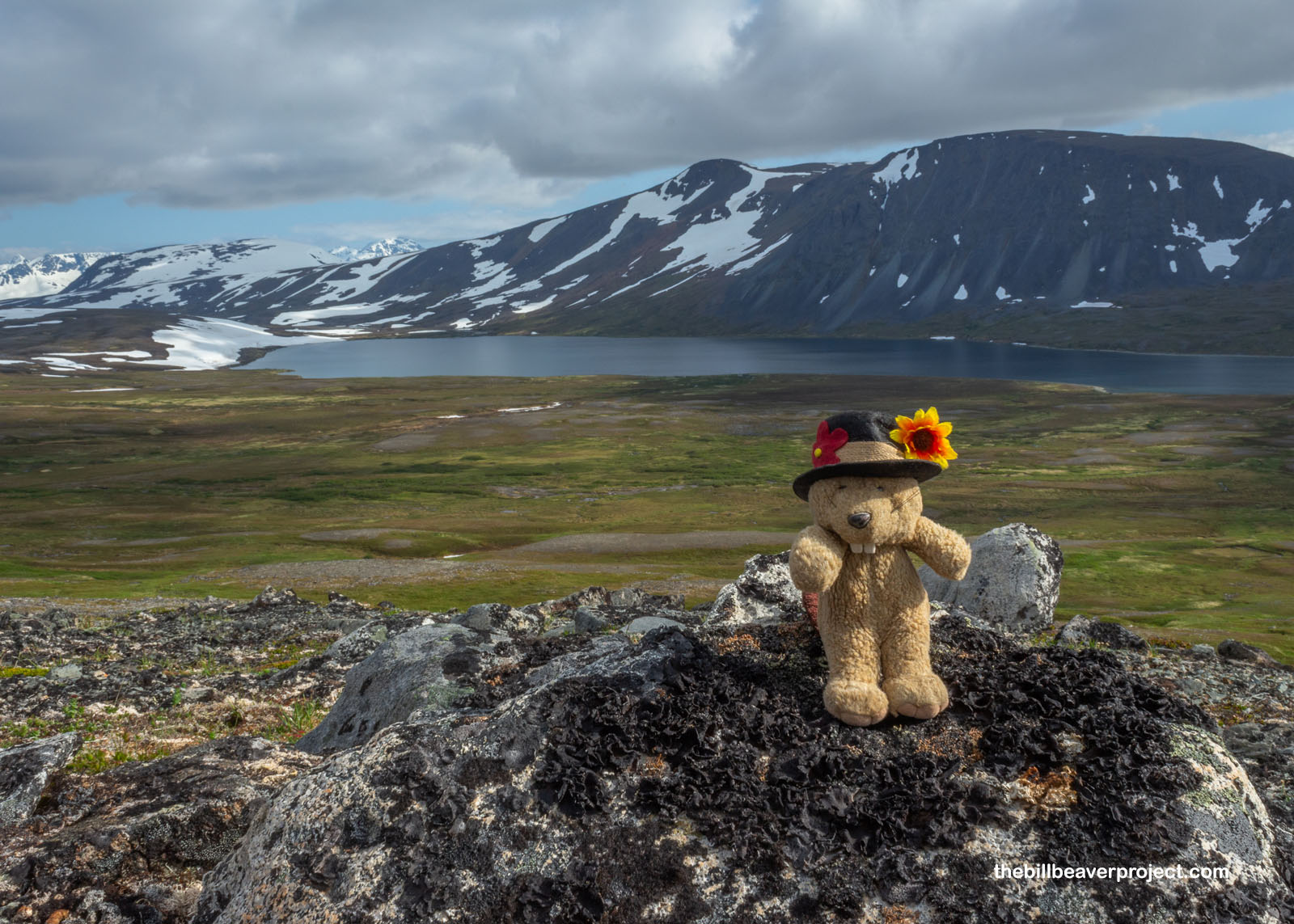
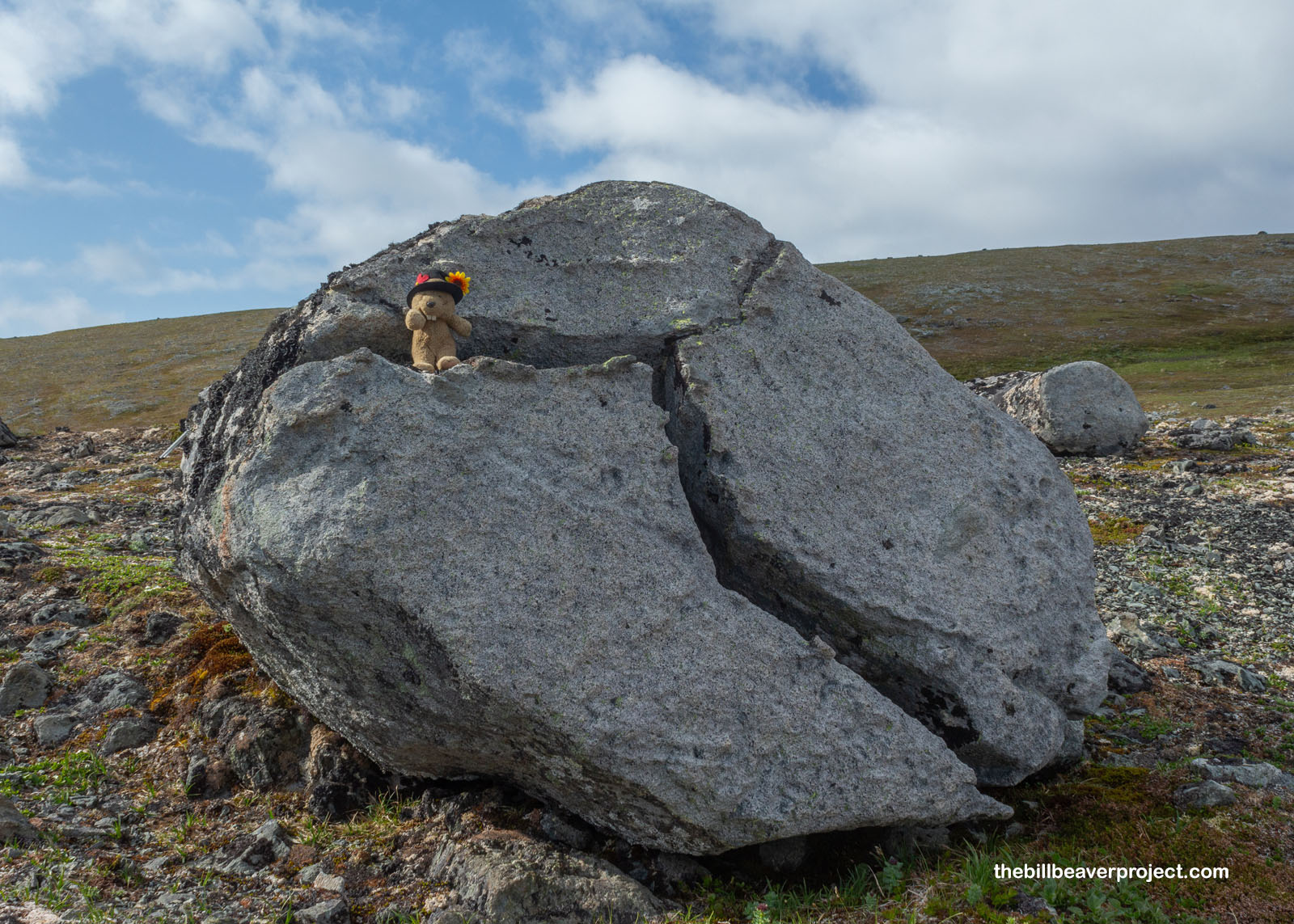
As Tim stayed behind to cook up some cheesy penne carbonara—reducing one lucky camper’s backpack by a few pounds each meal—Philip took the rest of the group on a short hike up a nearby hill. It was an easy warmup tramp for some views of the terrain we’d just crossed and some guesswork about what terrain we were about to explore! We looked for the caribou we’d spotted earlier relaxing on the snow fields, but those fields were out of view from our level. That didn’t mean our level was without cool stuff, though! Many of the rocks were covered in this really cool, crunchy lichen called rock tripe like I’d seen last summer in Maine, and I really liked this split boulder, which made me think of some kind of cursed Celtic stone that was going to warp the fabric of time itself!
 |
 |
Being in Alaska during summer, time itself did feel like it was being stretched anyway. With the sun due to set around 11:30, what would have been evening in LA remained late afternoon well past our dinner times. And beyond the slopes and scree, the mountains and the lakes, there were vast stretches of country ahead of us to explore with no signs or trails. I sure was glad we had guides to show us the way, because just making a decision on which way to go was more than my brain could handle!
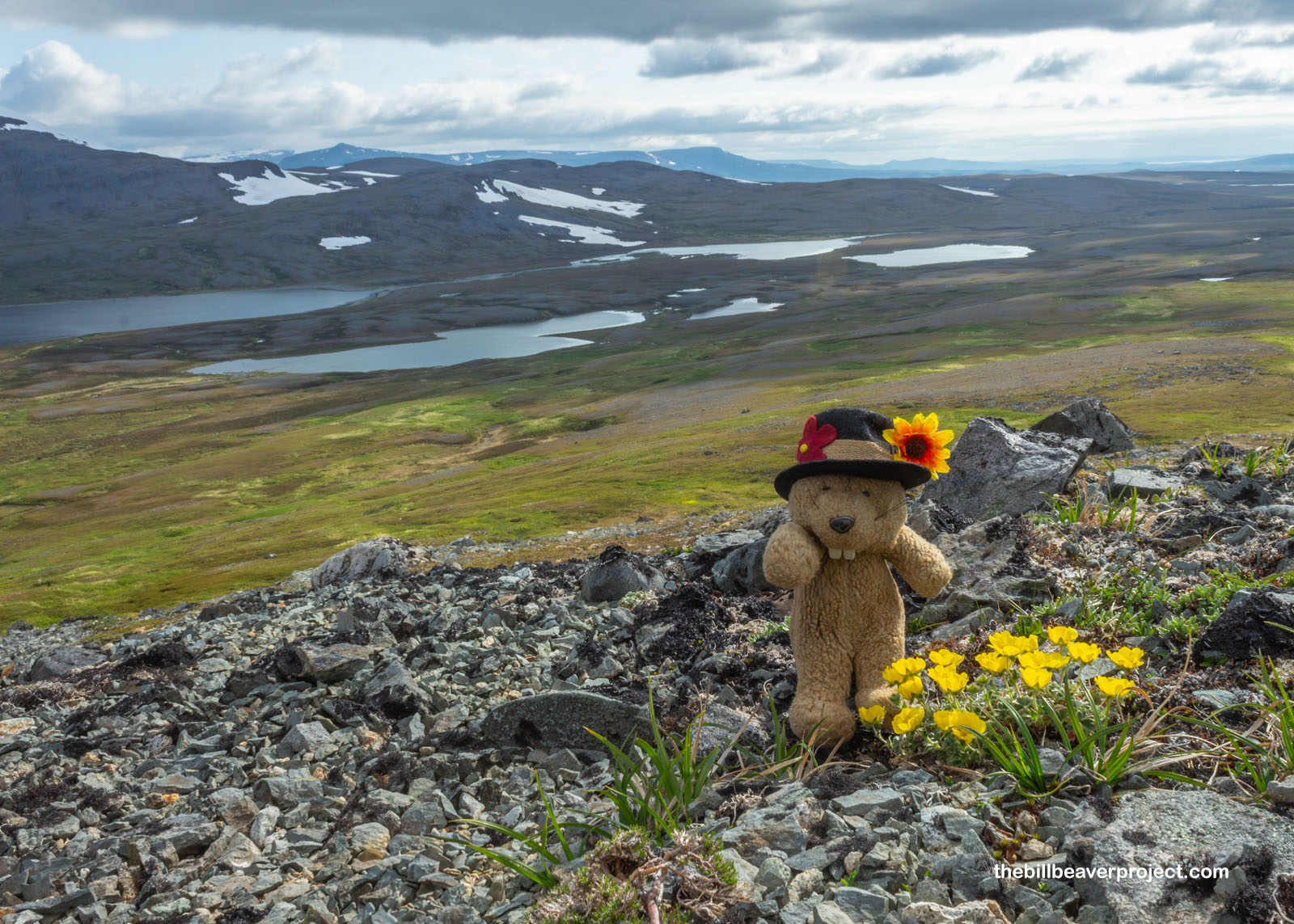 |
Tucked into the tent at the end of the day, it still felt like maybe 5:00 PM, which is why everyone was advised to pack eye masks to simulate darkness. But unlike some places I’ve camped before, the best part of sleeping on the tundra is the three or so inches of mosses and lichens that form a mat over the nutrient-poor soil. So comfy! As I drifted off to sleep, I decided to name this spot Mirror Lake Camp, for obvious reasons. I’ll be giving names to later camps as well to track our progress, since everything before us is wilderness!
Can’t wait!

Previous Day |
Total Ground Covered: 8.0 mi (12.9 km) |
Next Day |