 More 2025 Adventures |
Kalaupapa, HI 8.8 mi (14.2 km) |
 More 2025 Adventures |
Hūlō, kākou!
I may be a beaver, but I have been watching one national park site like a hawk! Just like Rainbow Bridge National Monument, Kalaupapa National Historical Park on Molokaʻi has been off-limits to visitors for five years. It’s a medically sensitive place only accessible by an authorized tour, sponsored by a patient-resident, and there just hadn’t been any residents willing to take that risk since the COVID-19 pandemic! All that changed back on September 8th, when the park announced that tours would resume this October, and just as I did in a gas station parking lot in 2020, I mashed that “Book” button as soon as it appeared!
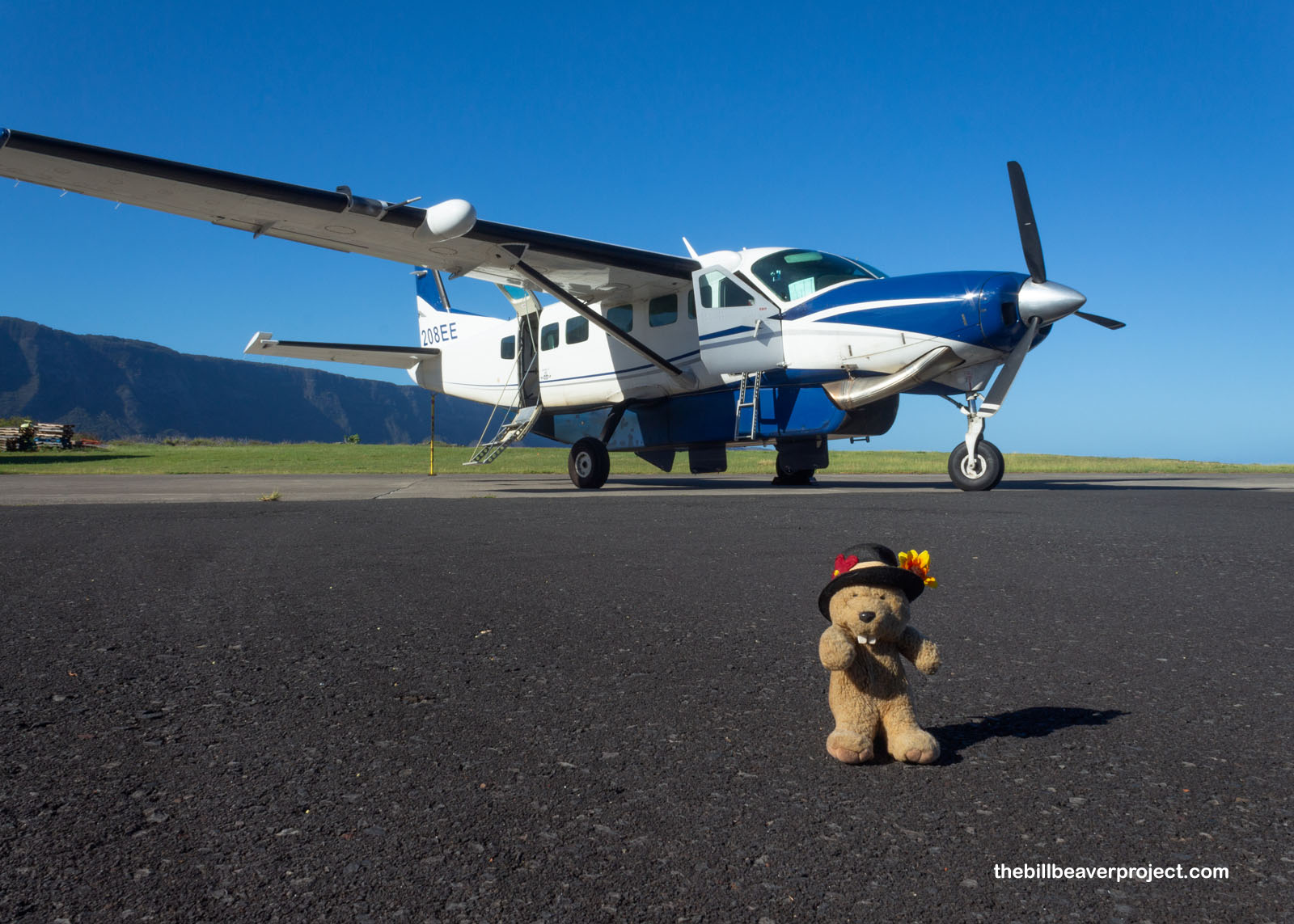
Up early in the same hotel I’d stayed in back in February en route home from Guam, I shuttled to the tiny Mokulele Airlines terminal to join Mr. John Meadows from Seawind Tours & Travel and a group of seven other adventurers for a timely 8:35 AM departure aboard our Cessna 208/208EE Caravan. This sure has been a year for propellor plane flights! After 45 minutes, soaring past Diamond Head and over the ocean to Molokaʻi, we touched down with what was described as an “air force” landing—not to be confused with a “navy” landing—taxied around the tiny runway over to the tiny open-air terminal, and transferred from plane to van, donning our required visitor passes as we did so.
 |
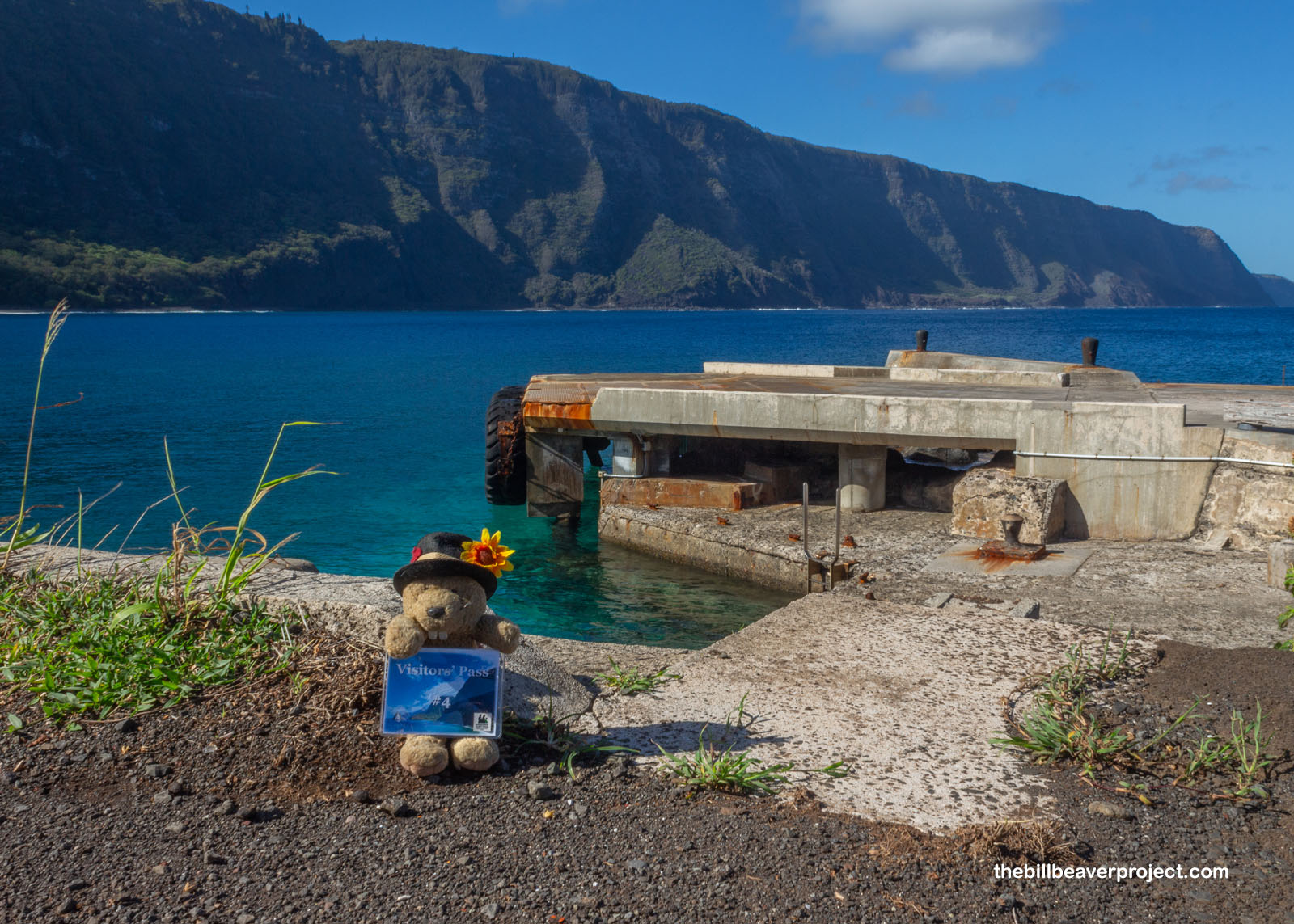
The first thing we passed was the cemetery, where over a thousand Kalaupapa residents were buried. I didn’t take photos, because of my cemetery policy, but there were so many, divided up by denomination. Mr. Meadows pointed out a former resident’s home there, collapsed in on itself, revealing an old dresser and bed. If a resident’s family didn’t want their belongings, whole homes would be left to the elements. Kalaupapa is America’s last “leper colony.” European traders had brought all sorts of devastating diseases to the Hawaiian Islands, including smallpox, influenza, and leprosy (today called Hansen’s Disease after Gerhard Hansen, who identified the bacterium that causes it). While not super contagious, Hansen’s Disease was incurable and fatal until the 1940s, so starting in 1866, King Kamehameha V made the difficult decision to exile all Hawaiians with Hansen’s Disease to this remote peninsula called Kalaupapa. Its name means “leaf” because of its shape, ocean on two sides and backed by the world’s highest sea cliffs! If these folks had written a will, it was executed, and they were pronounced dead. If they were married, their marriage was dissolved. This was a one-way trip to be dumped at what is now a port, previously only rocky shores!
 |
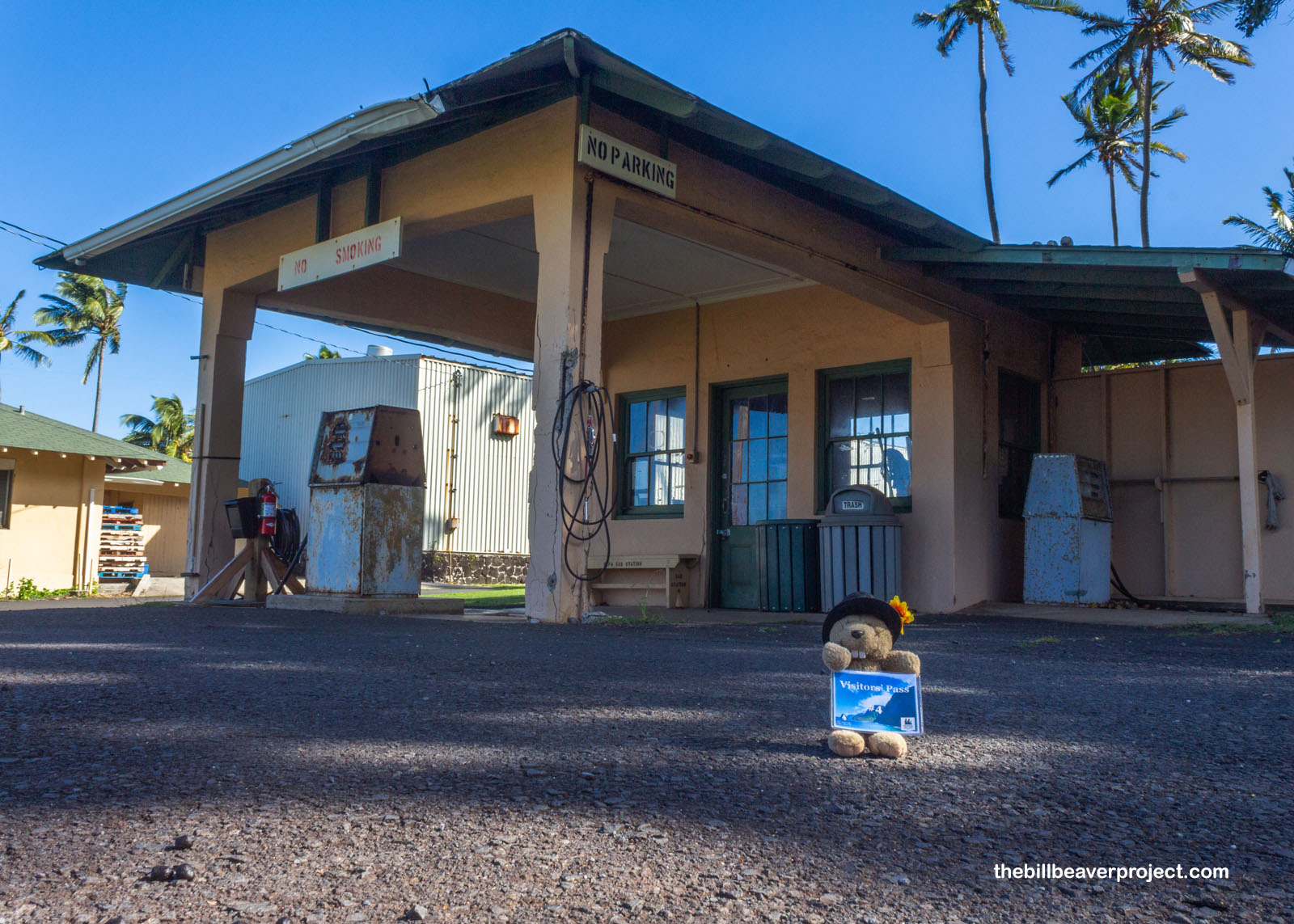
One cargo ship comes to Kalaupapa each year, so much of the town center is a throwback to other times. The post office is a simple collection of boxes, there’s one small store, and there’s one small, rusty gas station from 1934. Because it’s restocked only once per year, folks are limited to six gallons a week! Maybe because of that, it was really, really quiet here. A truck would pass by periodically, one of the many workers keeping this place running, but there weren’t really people out on the streets. It was mostly our small tour group, the tropical breeze, and deer, so many deer! Axis deer were introduced here from Hong Kong in 1868 as a food source for residents, but humans alone couldn’t keep their population from exploding! At every turn, a buck, doe, or fawn—or a half dozen of each—was bounding away from us!
 |
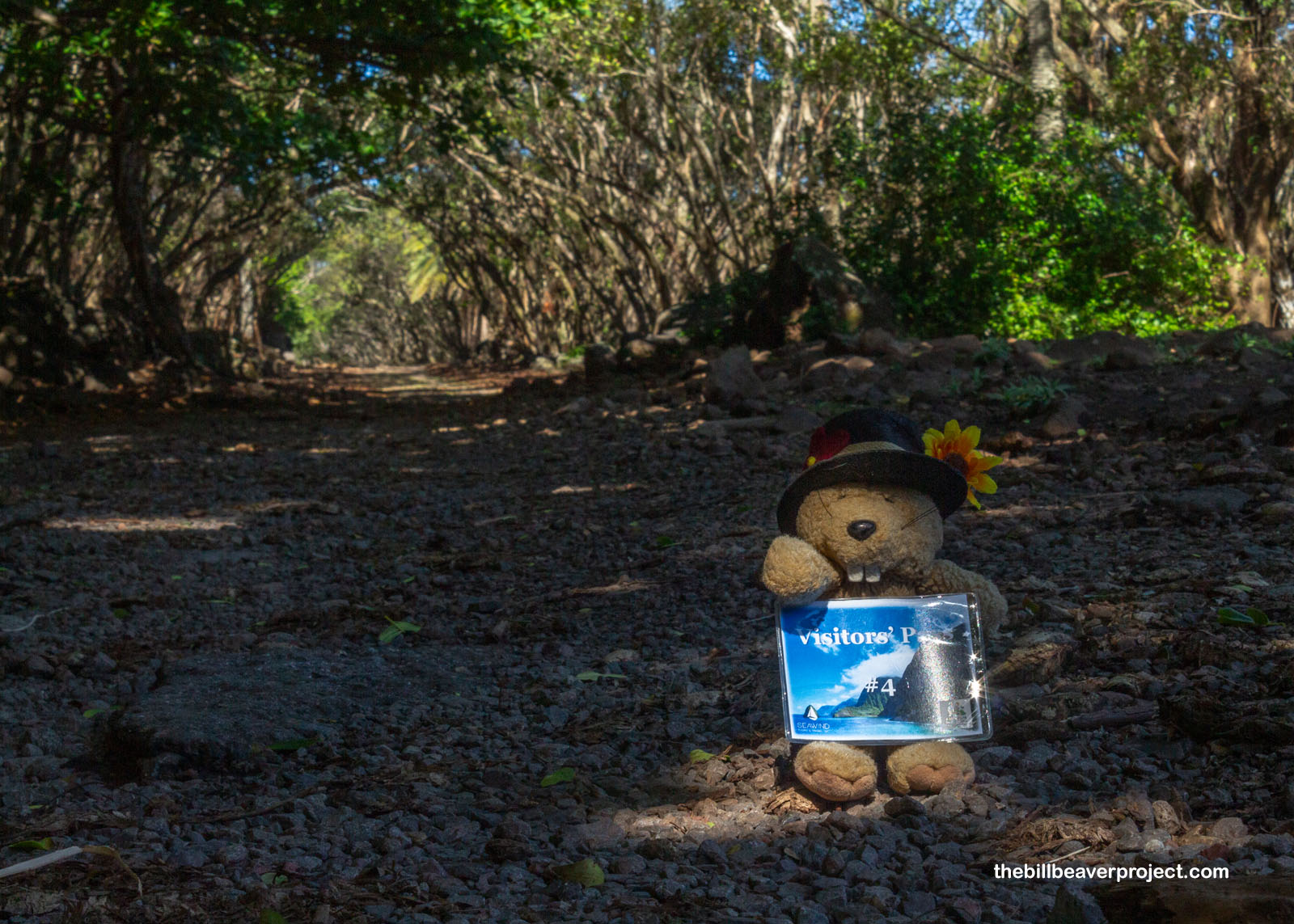
Deer were all over the place as we left the port and headed for the other side of the peninsula in the footsteps of the first patients. Before there were roads, patients were dropped off at the port where we had just been, then had to slog through four miles of thicket to reach Kalawao, where the government had repurposed the homes of the original residents. You can get a sense of what they were walking through by looking at the sides of what is now a road behind me! More would have died if it weren’t for the hospitality of the Native Hawaiian residents who stuck around to feed the newcomers!
 |
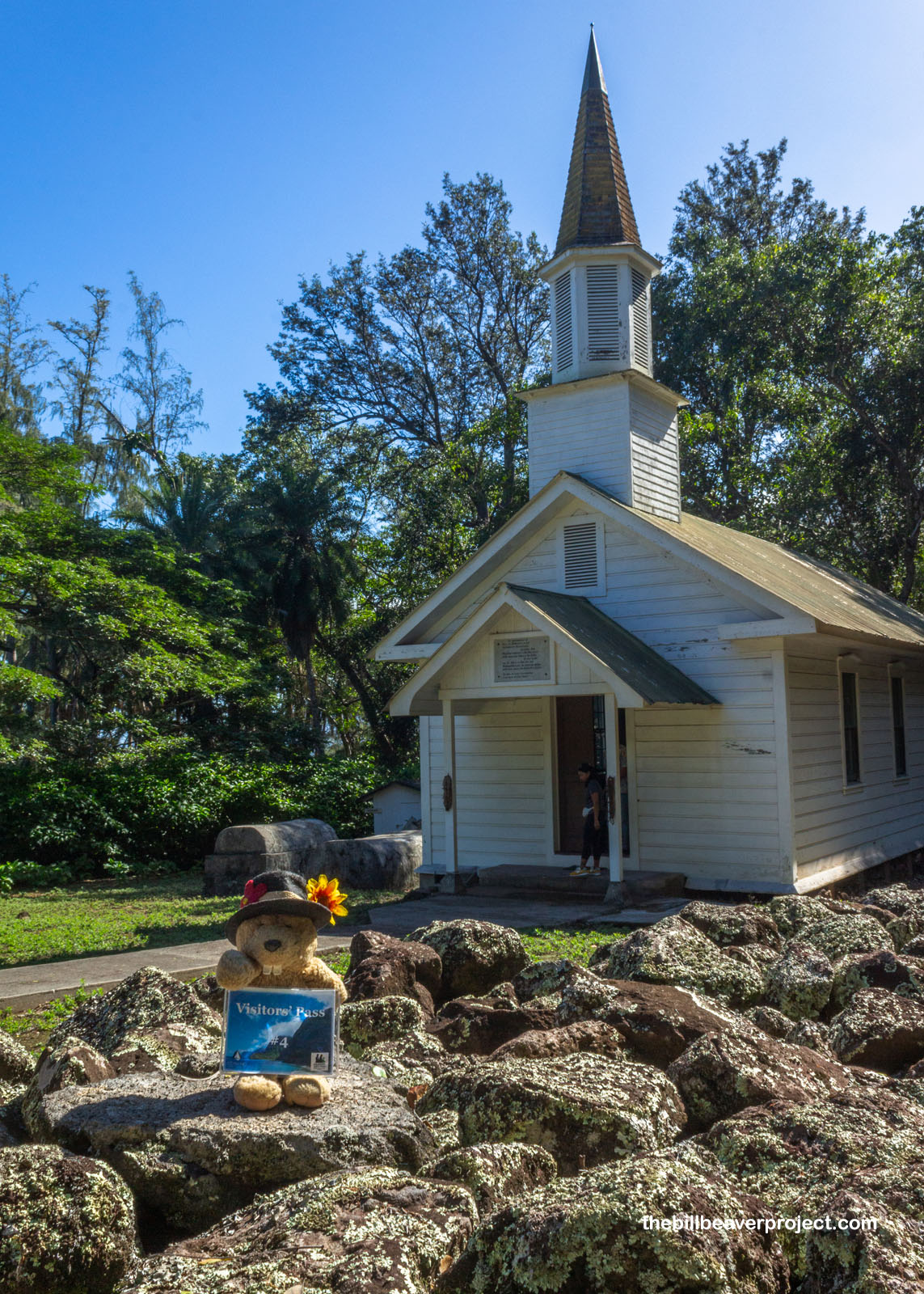
These exiled patients were super resilient, though, and within a year after setting foot at Kalaupapa, they had formed a congregational church, calling it Siloama after the Siloam spring where Jesus cured a blind man in the New Testament. Though it fell into disrepair when the community moved from Kalawao to Kalaupapa, it was totally rebuilt in 1966 with a 50-year time capsule in the cornerstone. The reconstruction may be modern, but it still holds services without electricity, burning kukui nut oil in lamps instead!
 |
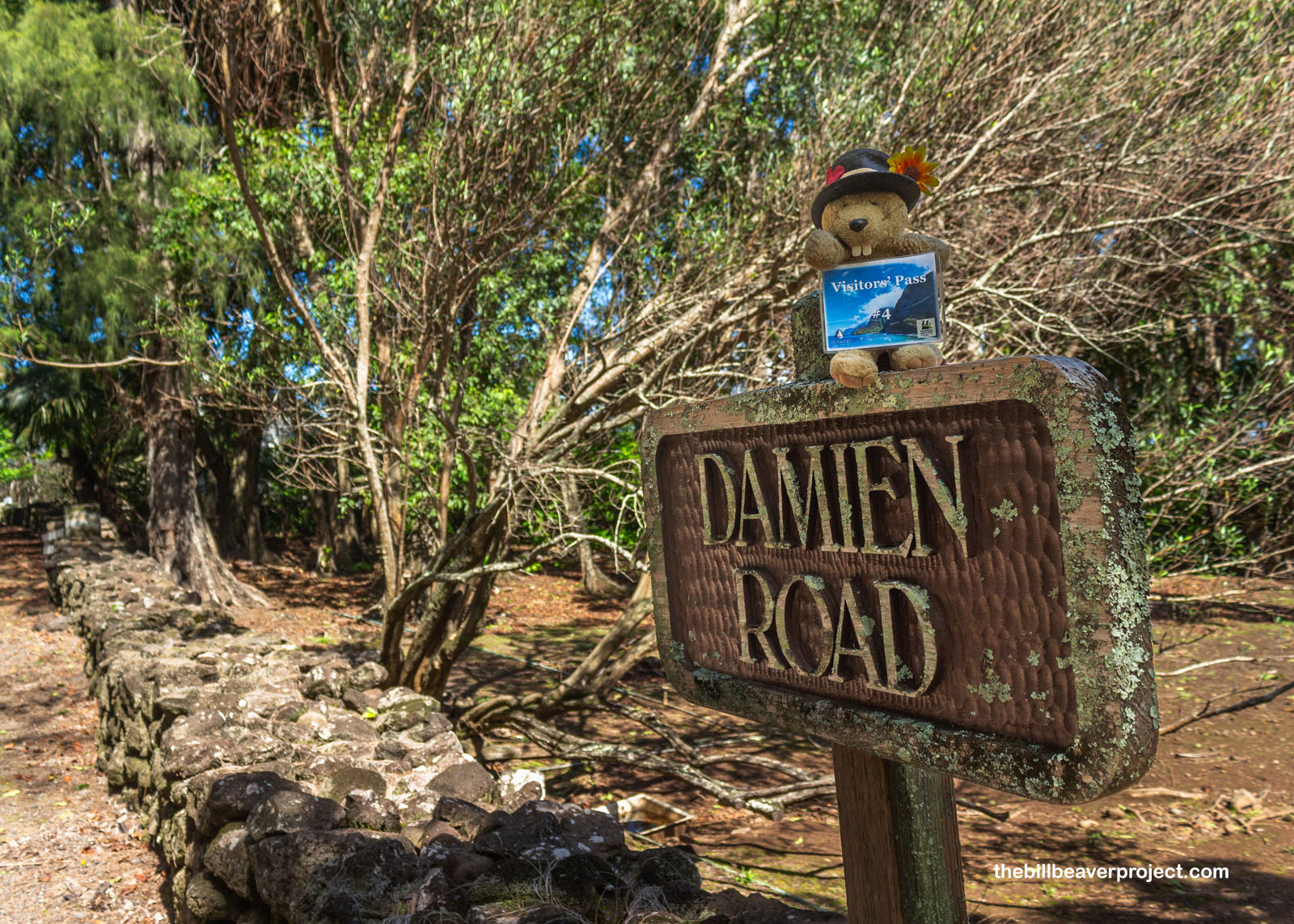
We continued down Damien Road toward Kalawao. Damien, of course, refers to Father Damien, born Joseph De Veuster in Belgium, who volunteered to help the residents of Kalawao in 1873. After seeing the terrible conditions they were living in—he himself slept outside under a pandanus tree the first few days he was there—Father Damien extended his original three-month shift to sixteen years!
 |
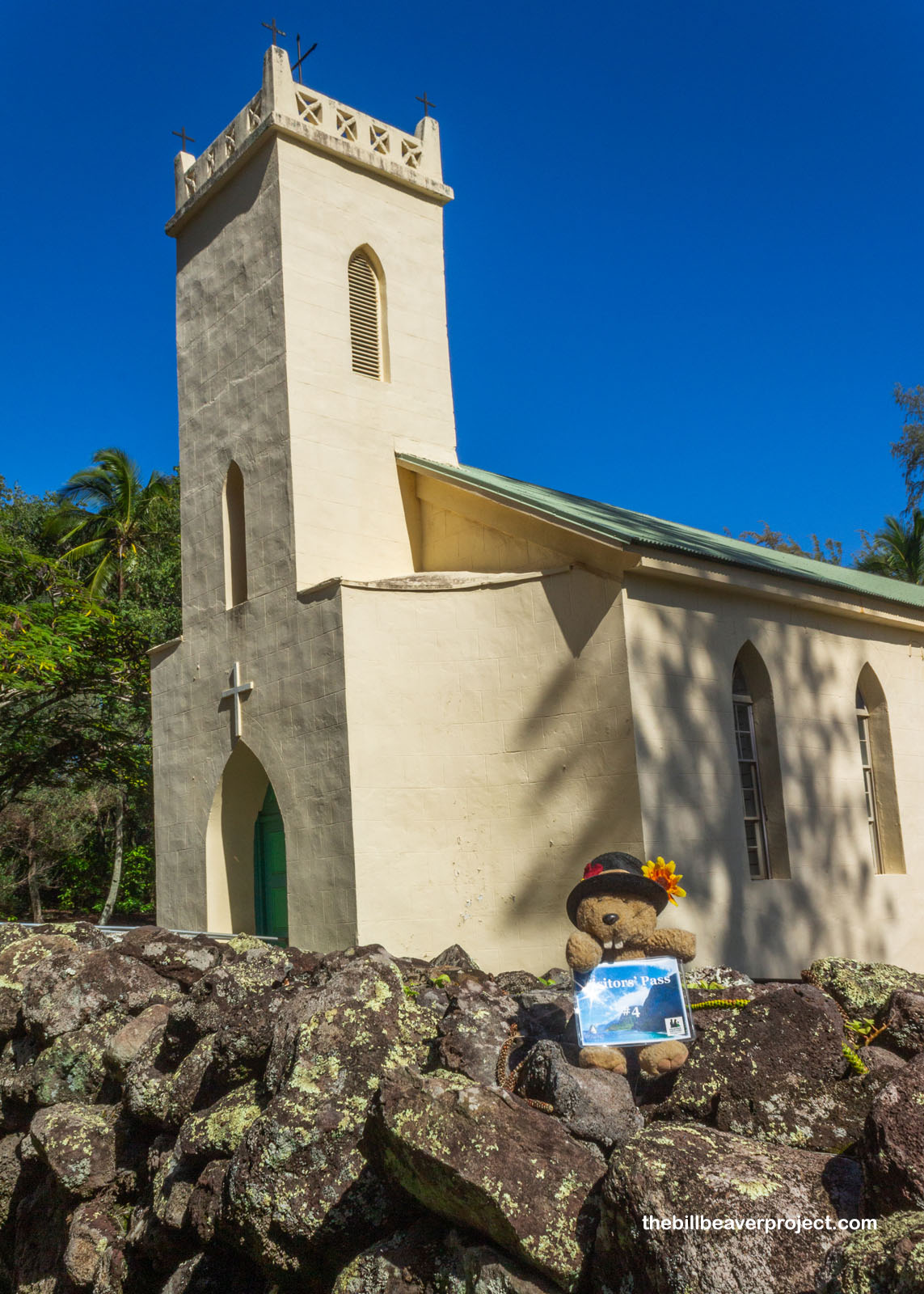
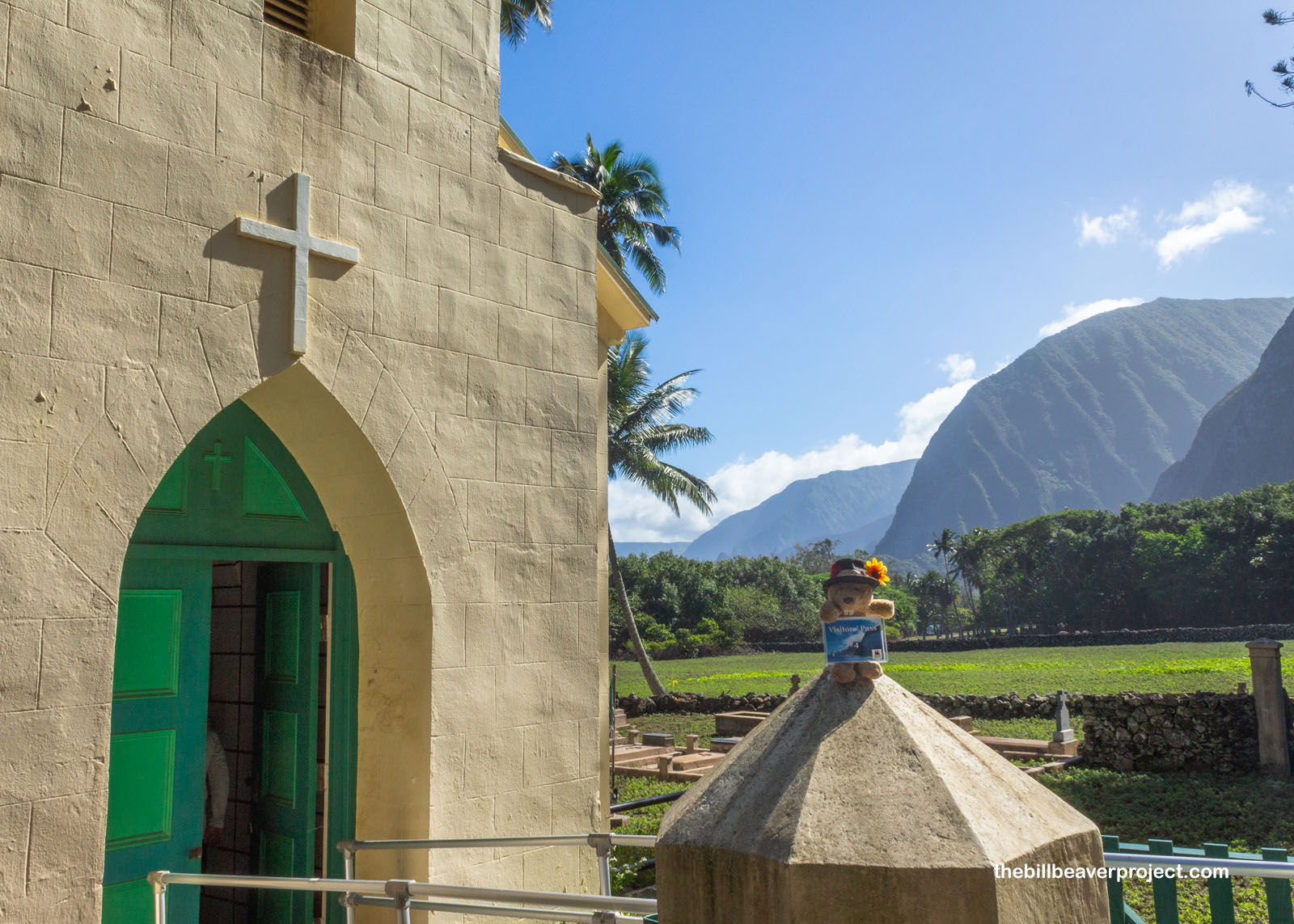
In addition to his regular priestly duties, Father Damien built houses for the living and coffins for the dead, an orphanage, a hospital, and churches both on the peninsula and top-side. Mr. Meadows went into one of these churches, built in honor of St. Philomena, which housed the runner-up Father Damien statue to the one now in front of the Hawaiian capitol, and some really unique holes under the pews. Mr. Meadows said these were to encourage patients with severe symptoms to come inside the church instead of waiting outside. Hansen’s Disease can produce a lot of phlegm, so some long straws into these holes gave congregants a way to dispose of the fluids discretely during services!
 |
Sadly, Father Damien did ultimately succumb to the disease himself. How he caught it has been a subject of debate. In his final three years, he was joined by Joseph Dutton, a Civil War veteran and Trappist monk who came here as an act of penance and stayed for forty years doing spiritual and manual labor, all while managing the nearby Baldwin Home for Boys! His grave sat next to Father Damien’s at St. Philomena’s, though most of Father Damien’s remains were returned to Belgium by order of King Leopold III. Today, only a single hand remains in this grave for veneration, marking the spot of the pandanus tree under which Father Damien originally slept in 1873.
 |
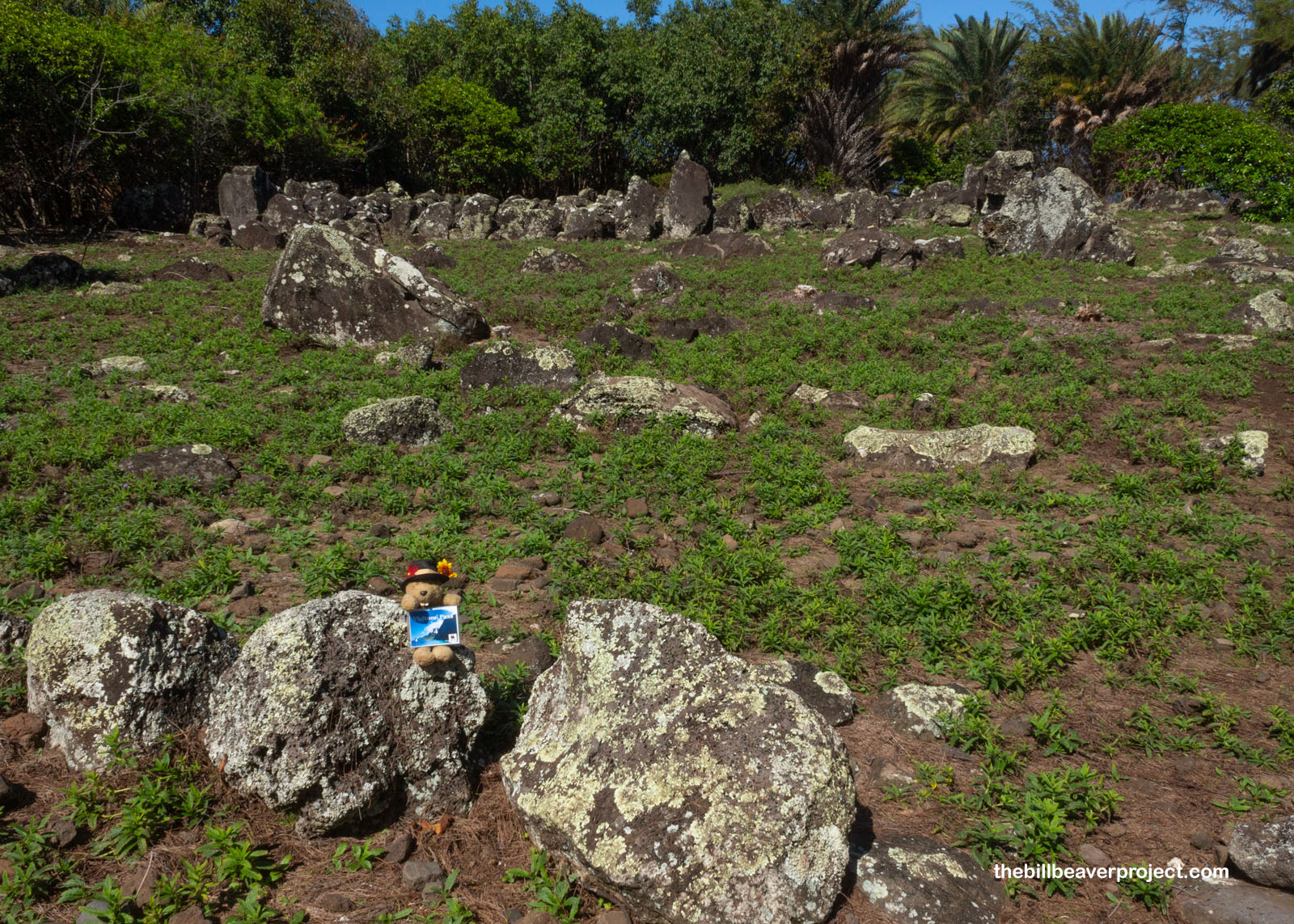
Continuing our journey, we passed a heiau left behind by the peninsula’s early residents, probably built to ensure good fishing. Stone ruins were scattered throughout the woods we had passed through, harkening back to a happier time. Folks lived on the Kalaupapa peninsula for 900 years before it became a quarantine zone, dividing it into four ahupuaʻa—Kalaupapa, Makanalua, Kalawao and Waikolu—where folks could fish and grow, not taro but South American sweet potatoes! This peninsula had been so good for growing sweet potatoes that Kalaupapa became a major supplier of them for Gold Rush California! It wasn’t to last, though. From 1866 and spanning 34 years, all Native Hawaiians left Kalaupapa as it became the isolation area for which it’s now (in)famous.
 |
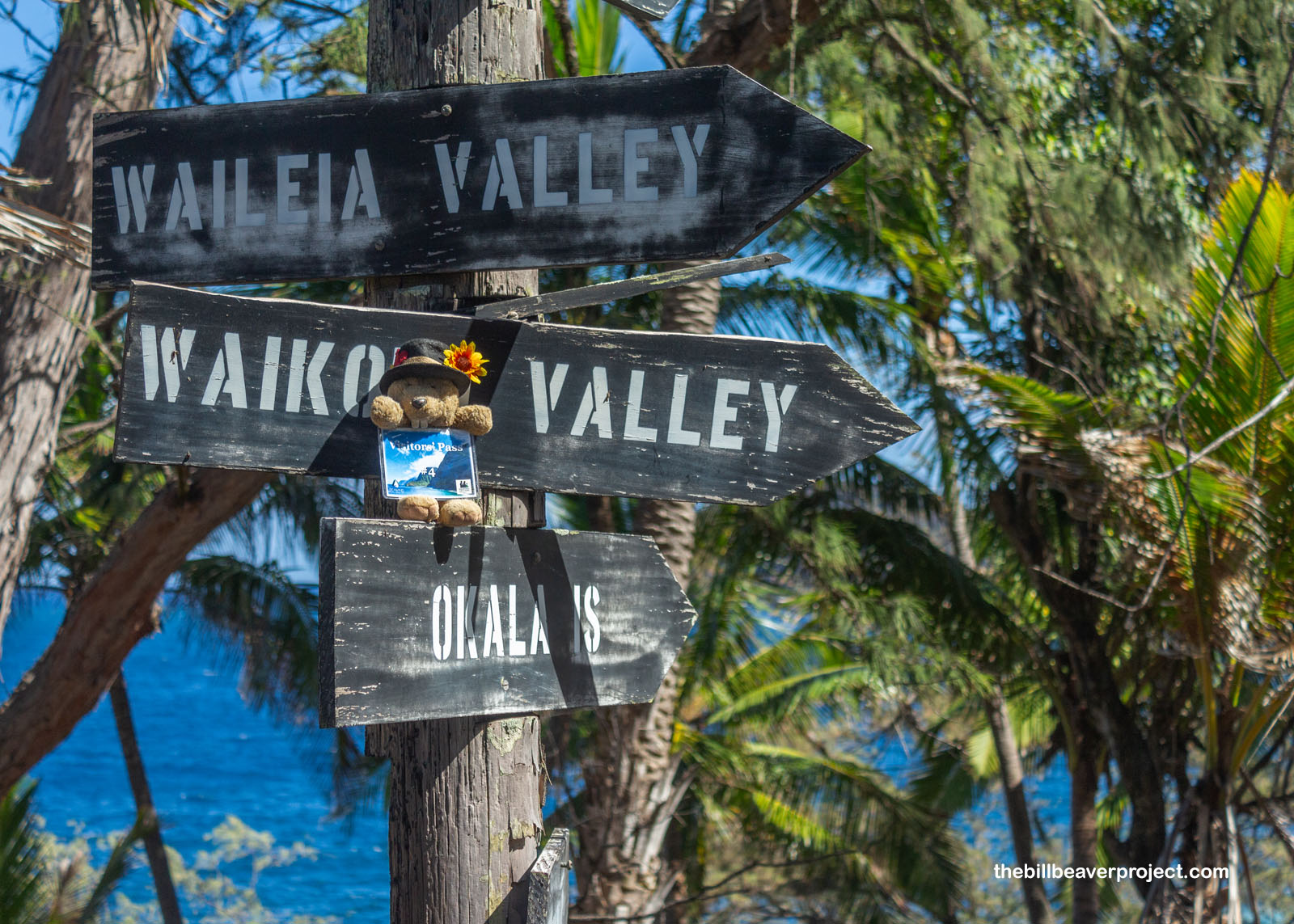
It was easy to see why this area had previously been so desirable. Beyond St. Philomena and the remains of Kalawao, there was plenty of natural beauty. Nowadays, there are trails leading to the Waileia and Waikolu Valleys, which authorized folks can enjoy, though they still lead into the heart of the mountains and away from civilization. Its recreation now, instead of isolation, and frankly, I was sure anywhere at the end of these arrows would be worth exploring!
 |
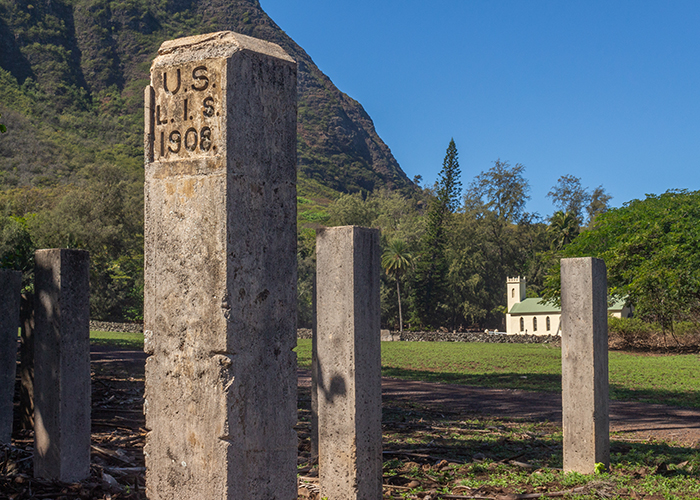
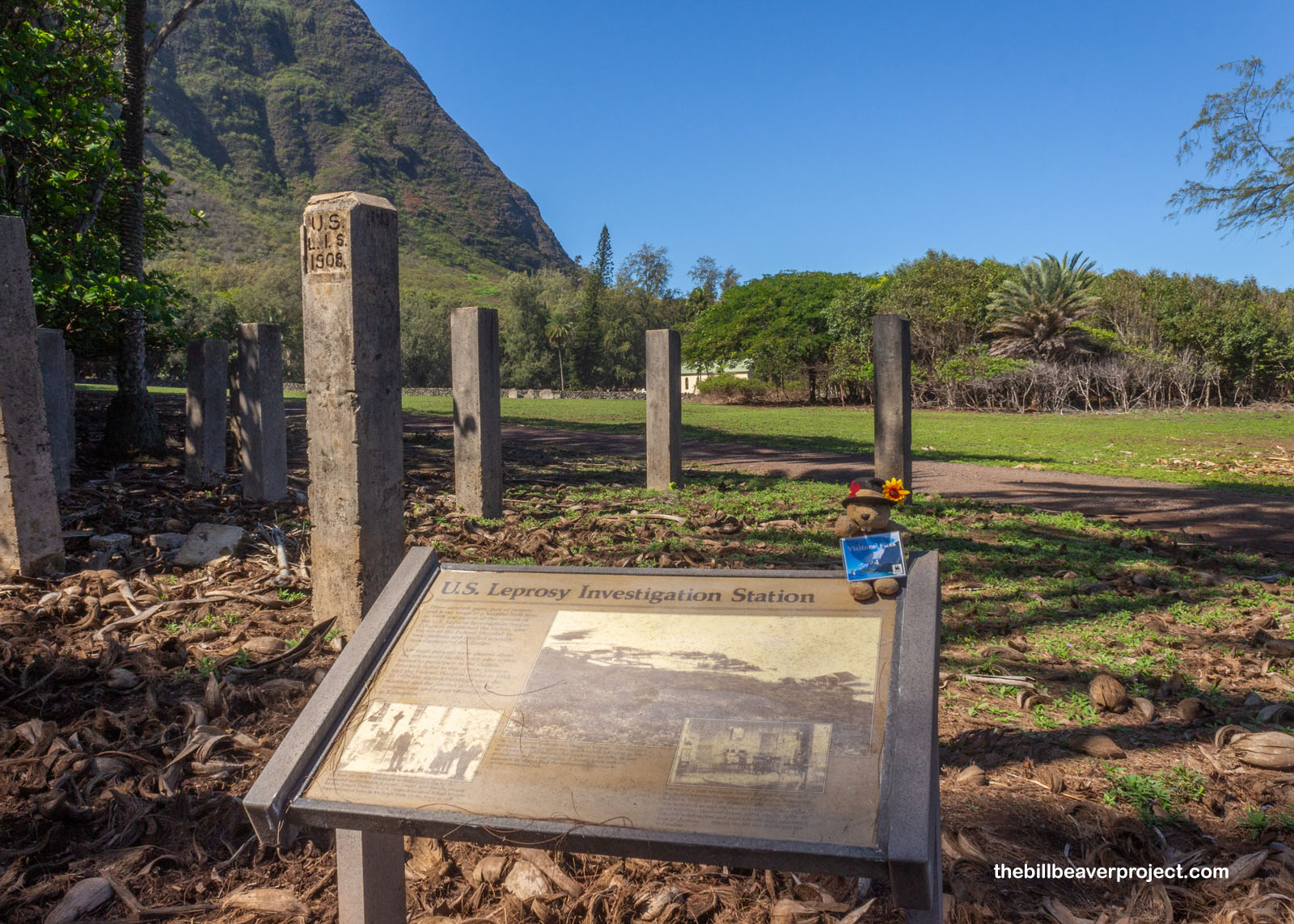
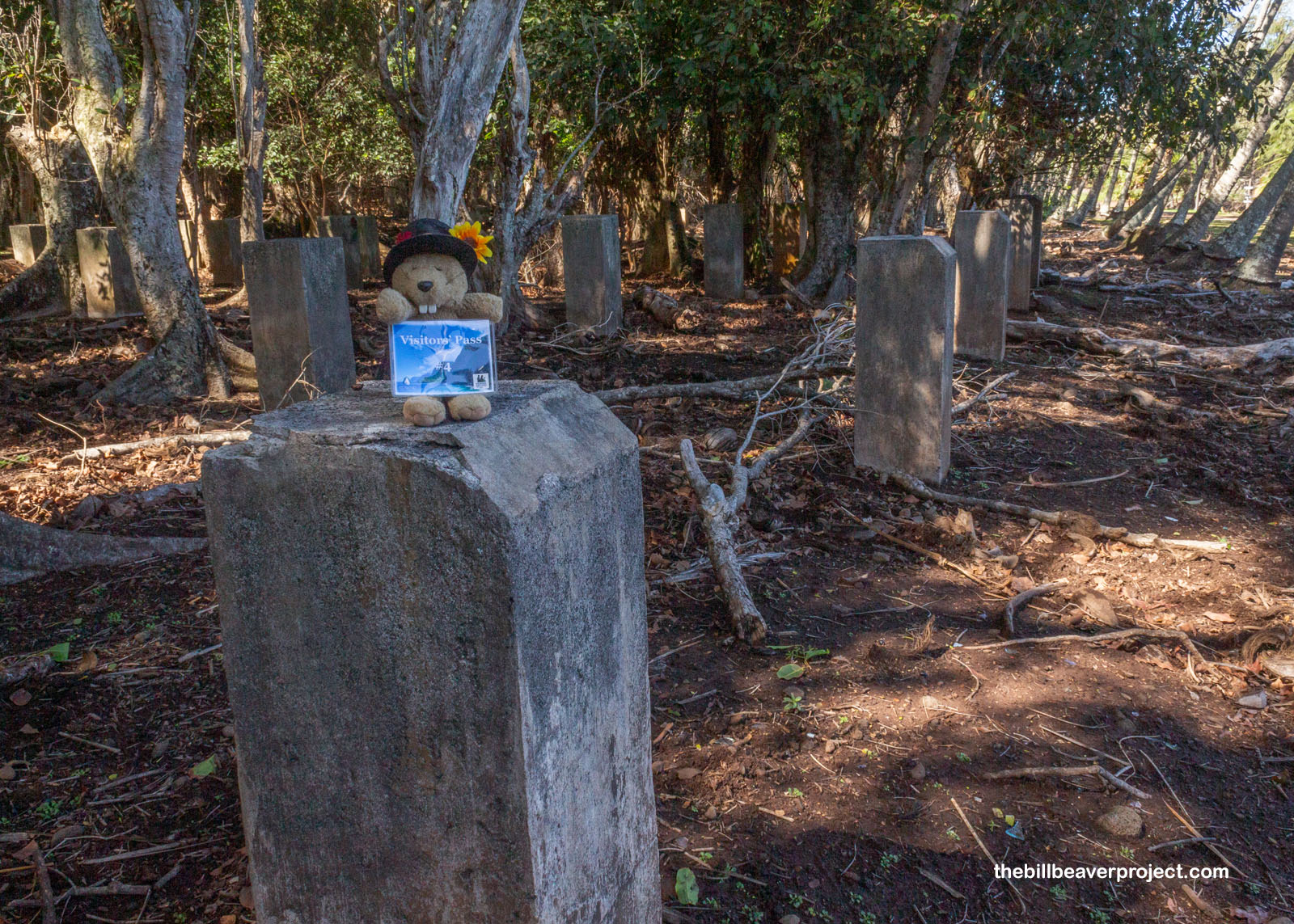
By far the starkest reminder from the height of Kalawao were the foundation pillars of the U.S. Leprosy Investigation Station. Built in 1909, it was designed to find treatments for Hansen’s Disease, but only nine of a possible fourteen patients volunteered for research here. The enormous facility closed after only four years, got dismantled, and had its lumber repurposed into other buildings around Kalaupapa!
 |
 |
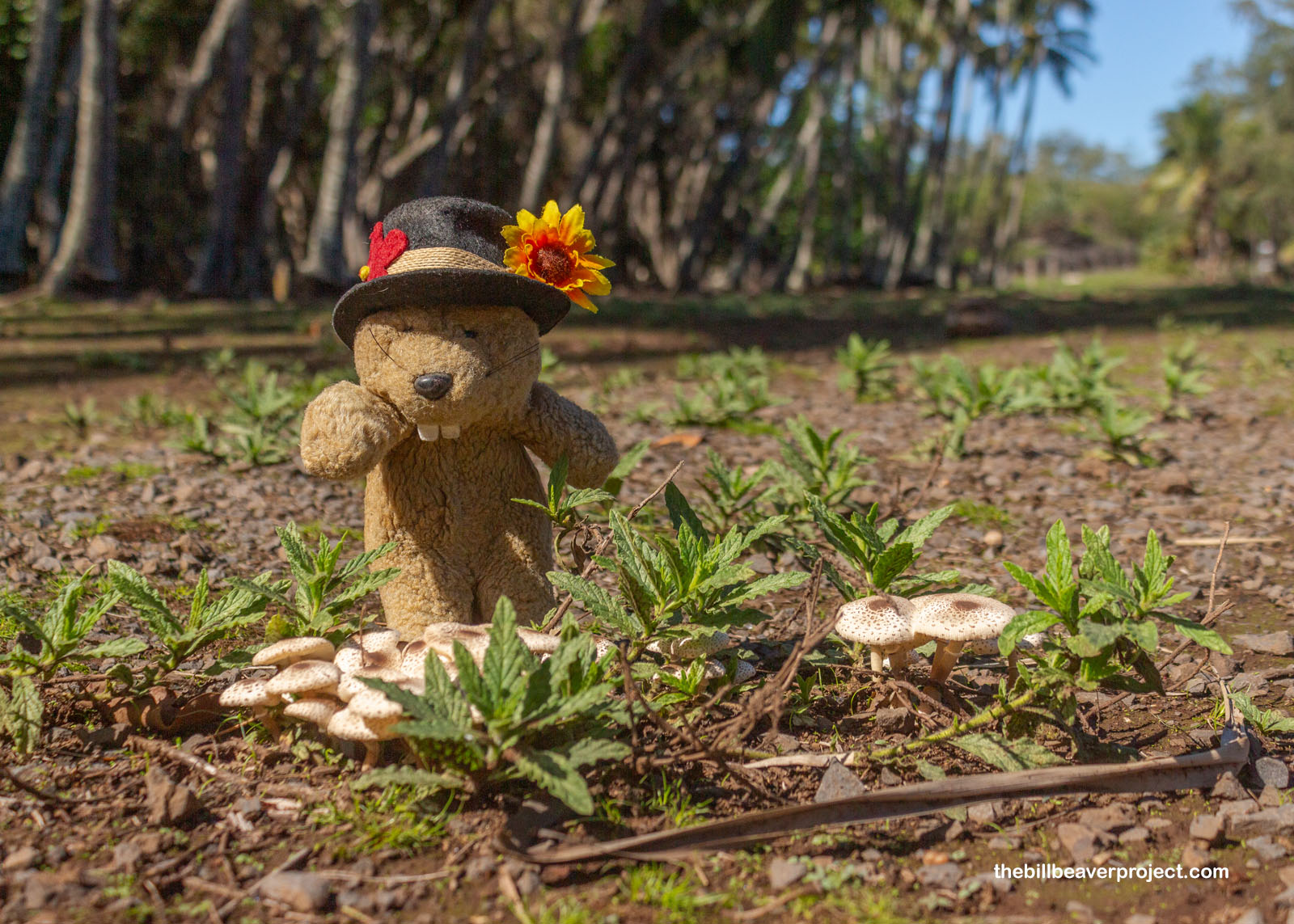
With that in the rearview mirror, it was time for lunch! We stopped at the pavilions in (Superintendent Lawrence) Judd Park to pull out our lunches, which we had to remember to bring with us. I’d picked up a peanut butter and jelly sandwich from the airport last night, and even though it was pretty basic, in these settings, it really hit the spot! That didn’t mean I wasn’t tempted to snack on these cool mushrooms growing nearby. You know how I am about mushrooms! Still, unlike berries, these are not snacks I’d take chances on, but I’ll still appreciate how cool they look!
 |
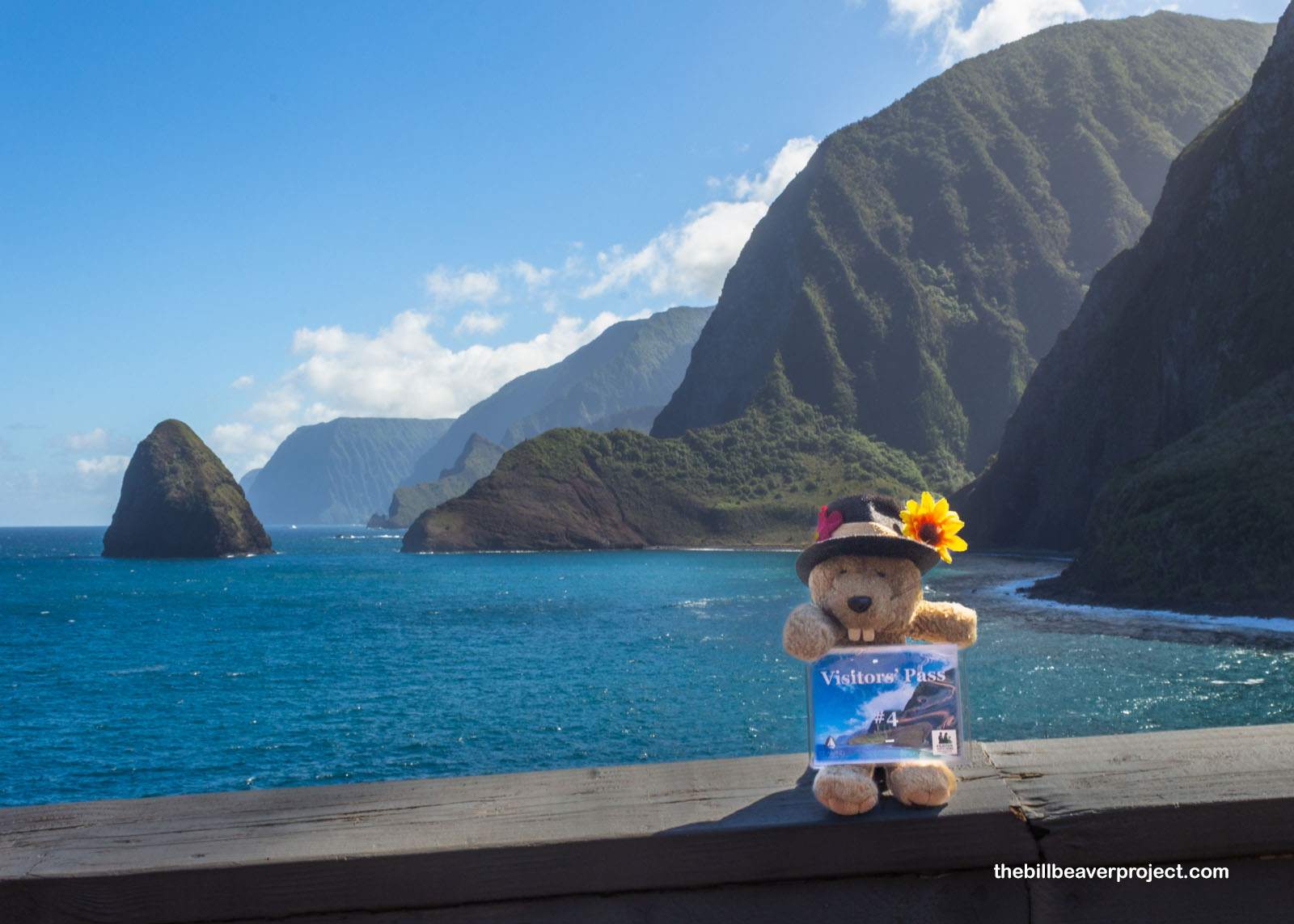
Before heading back from Kalawao to Kalaupapa, we took in the stunning views of Molokaʻi’s northern cliffs and the tiny Okala Island. It made me wonder, if I’d been banished here, would I have found any comfort in all this breathtaking beauty? It was a sure step up from the Topaz Internment Center; that much is for sure!
 |
Our appetites for lunch and beauty satisfied, for now, our van trundled back into Kalaupapa for our 1:00 souvenir and passport stamp appointment at the National Park Service bookstore! While waiting for the others to finish their shopping, I took a look at the Bishop Home Complex, where the Sisters of St. Francis stayed when they arrived on Kalaupapa. Hawaiʻi’s Reform Government rankly could not have cared less what happened to these patients, so it was banker, Charles Reed Bishop, who funded the construction of a convent and cottage complex for 125 girls, to be led by Reverend Mother Marianne Cope, who arrived here on November 13, 1888.
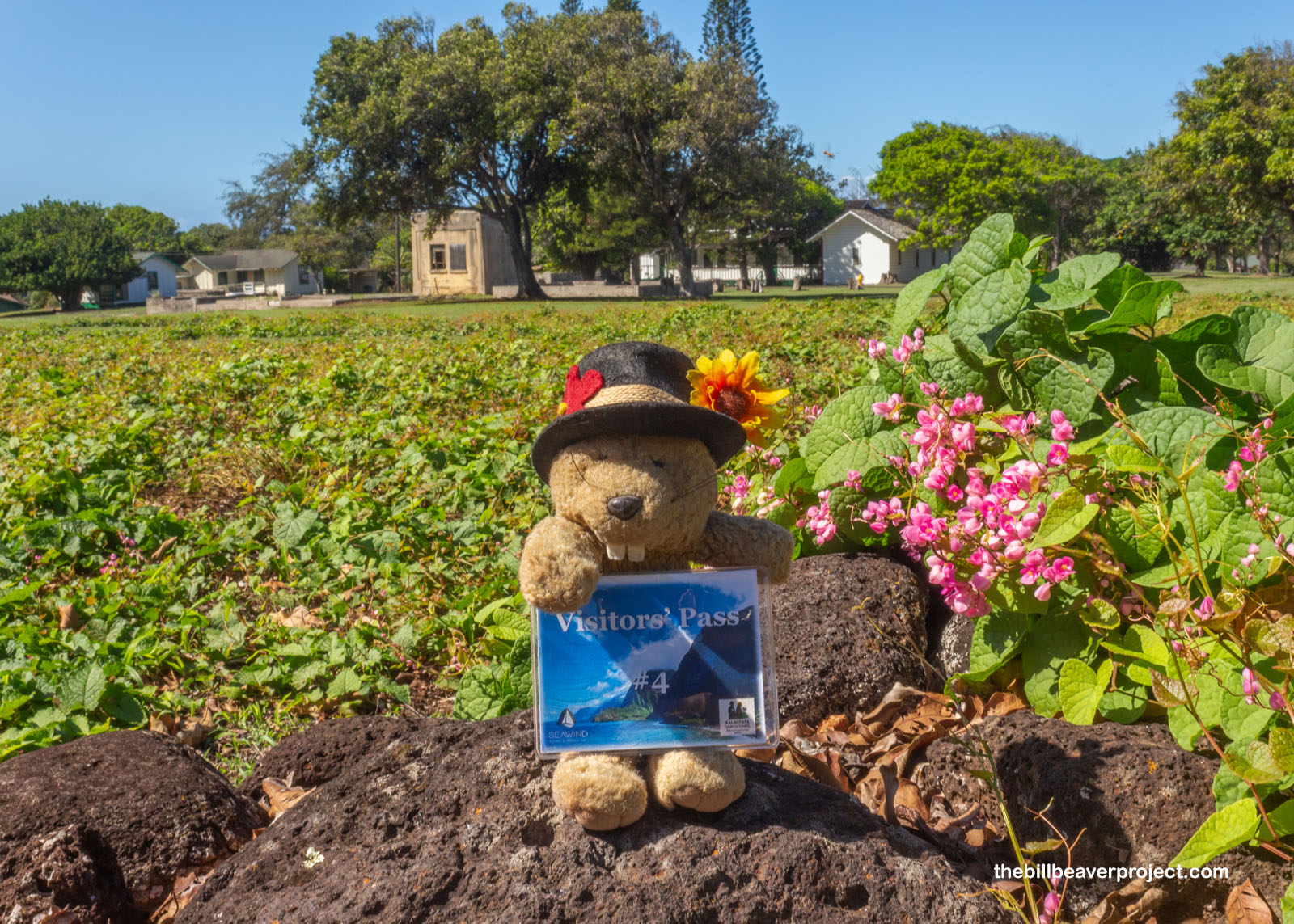 |
Though this photo was taken near a monument to Father Damien, we gathered nearby at the grave of Mother Marianne—you know how I am about graves and cemeteries—to listen to two very-much-alive Sisters Barbara Jean and Alicia tell us more about the saint. Mother Marianne really broke the mold, insisting that patients still deserved education, cleanliness, and privacy! She aimed to make life here as cheerful as possible for the girls she was protecting, and she did so for thirty years! Like Father Damien, when she died, there was some debate over what to do with her body. The patients wanted her buried with them, but since no one on Kalaupapa actually owned the land, they didn’t want some future shopping mall built over her grave. Telling the patients that, since Mother Marianne had osteoporosis, pieces of her bones (a.k.a. relics) would always be part of the ground here. In 2005, she was returned to Syracuse, New York, then brought back to Hawaiʻi and enshrined in the Cathedral Basilica of Our Lady of Peace in Honolulu. She was made a saint in 2012!
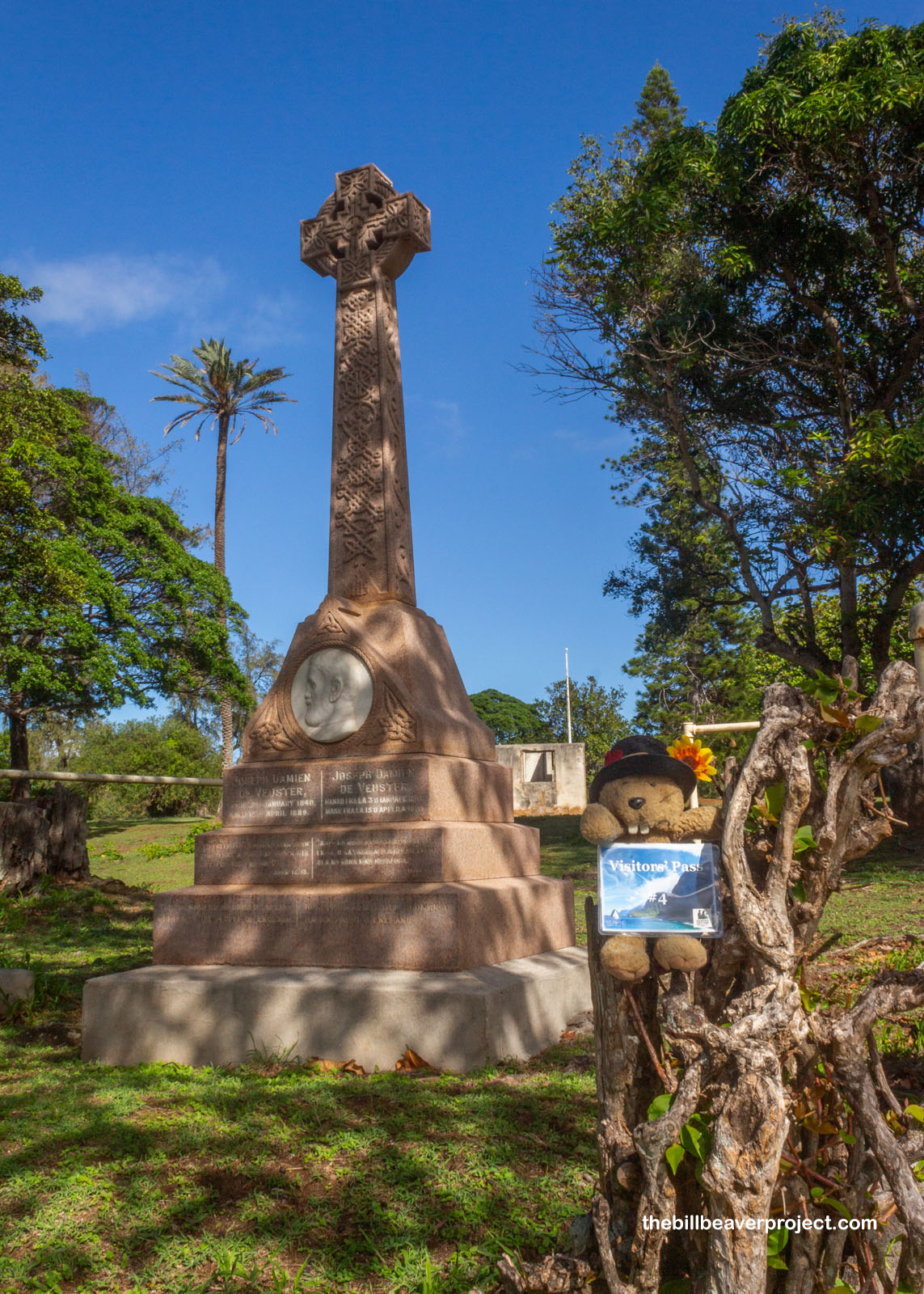 |
The sisters sent us on our way but said they would hang out with us at the terminal later. We moved on to visit a typical patient’s home. The rules against photographing patient homes were very strict, but we did get to visit one that the Park Service was working to turn into an exhibit. This was the home of Kenso Seki, who arrived here in 1928 at the age of 18 and spent 70 years making life better for Kalaupapa residents! He invented can openers and button hooks for folks who didn’t have full use of their hands, and had many careers from pig farmer to truck driver to fisherman! He worked hard to teach these skills to newcomers as well. Once the cure for leprosy was discovered in 1949 and quarantine ended, Mr. Seki took off to travel the world, bringing back souvenir pennants and even meeting a longtime pen pal, face to face, in New Jersey!
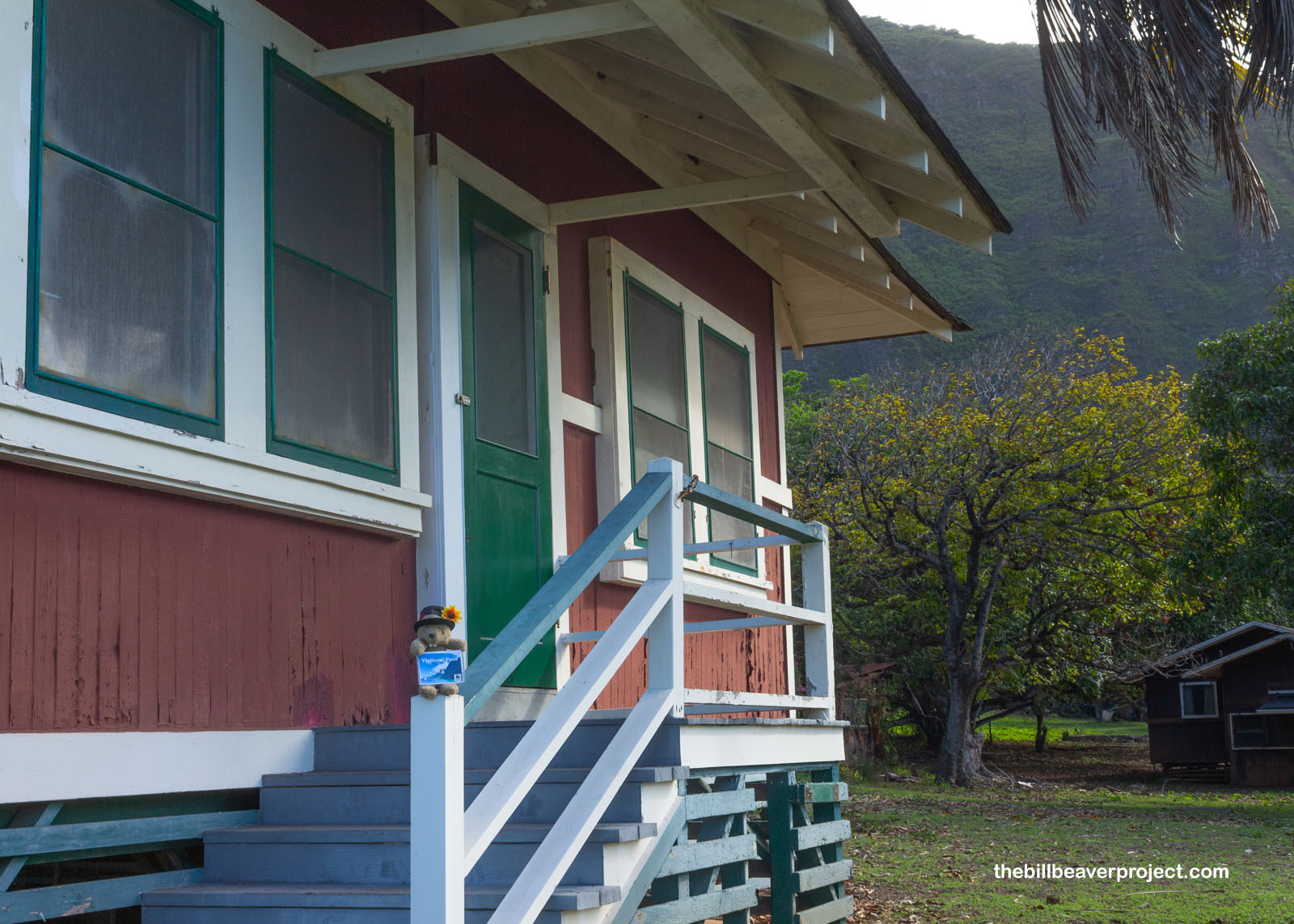 |
Next, we visited Paschoal Hall, Kalaupapa’s community center and social hall! Originally built in 1916 for sports and music, thanks to Representative Manuel G. Paschoal, who led the legislative appropriations, it also became a venue for screening early movies, through the silent era and into the age of sound! Famous folks performed here too, from Red Skelton to John Wayne, Shirley Temple to the von Trapp Family Singers of The Sound of Music fame!
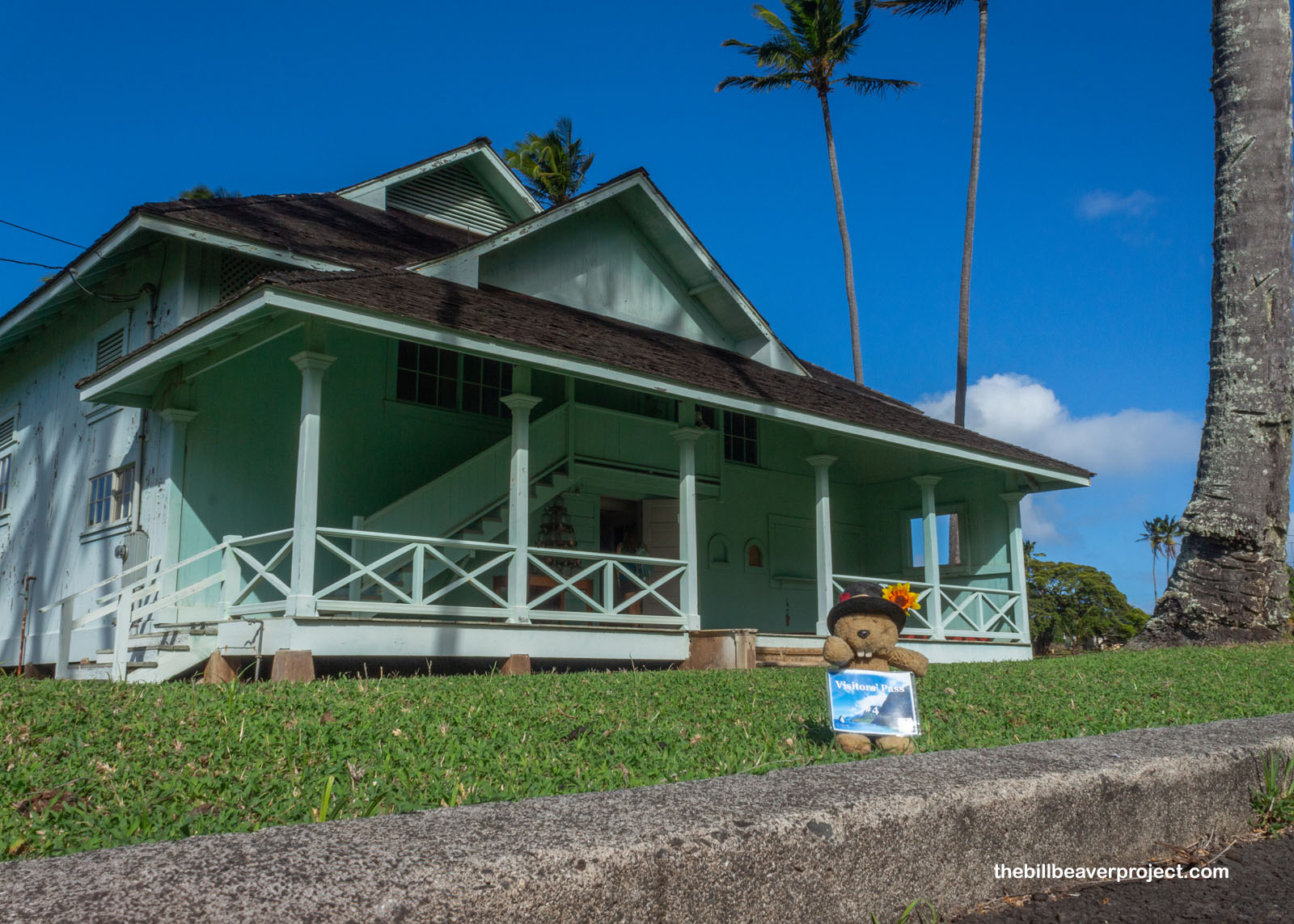 |
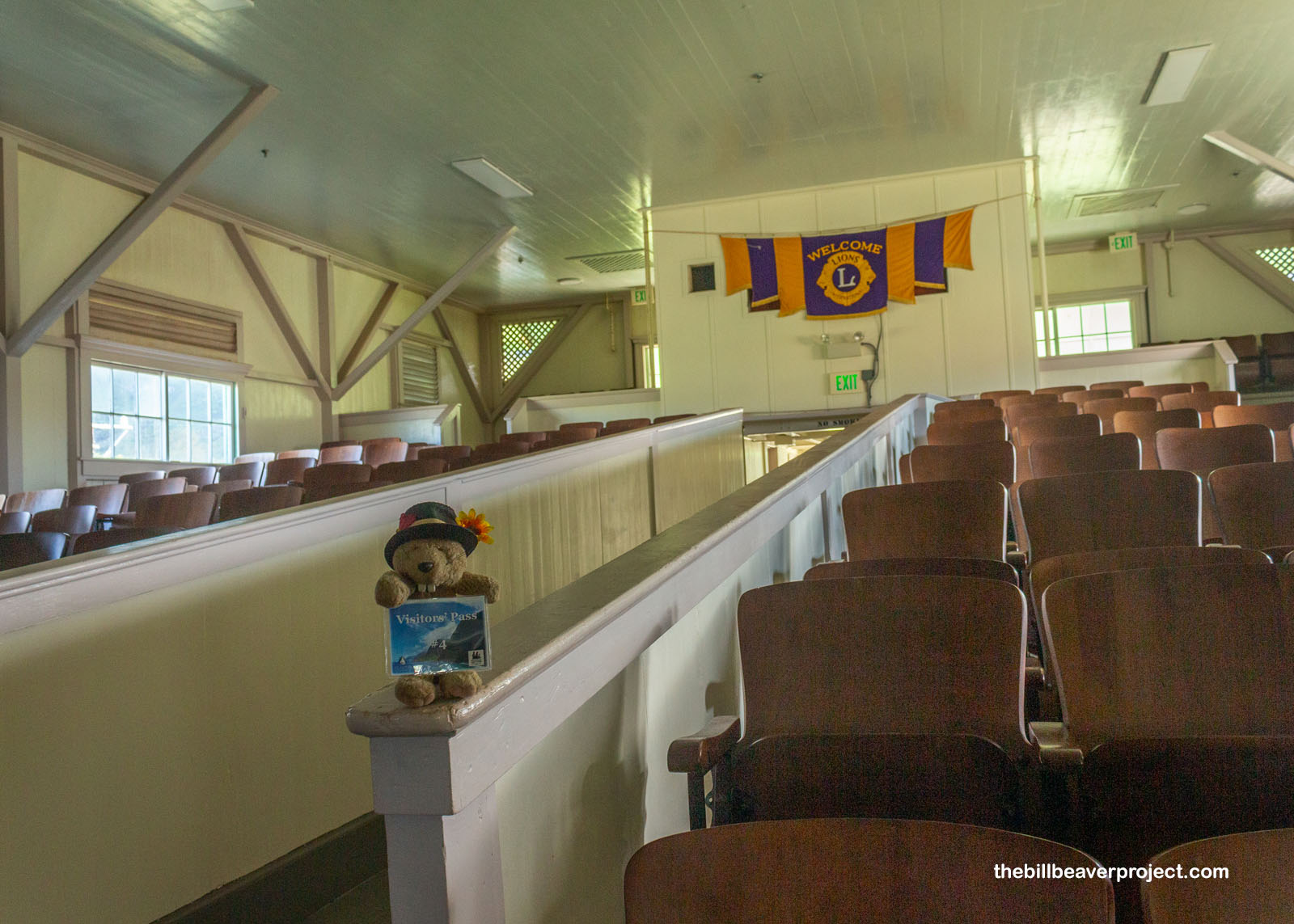 |
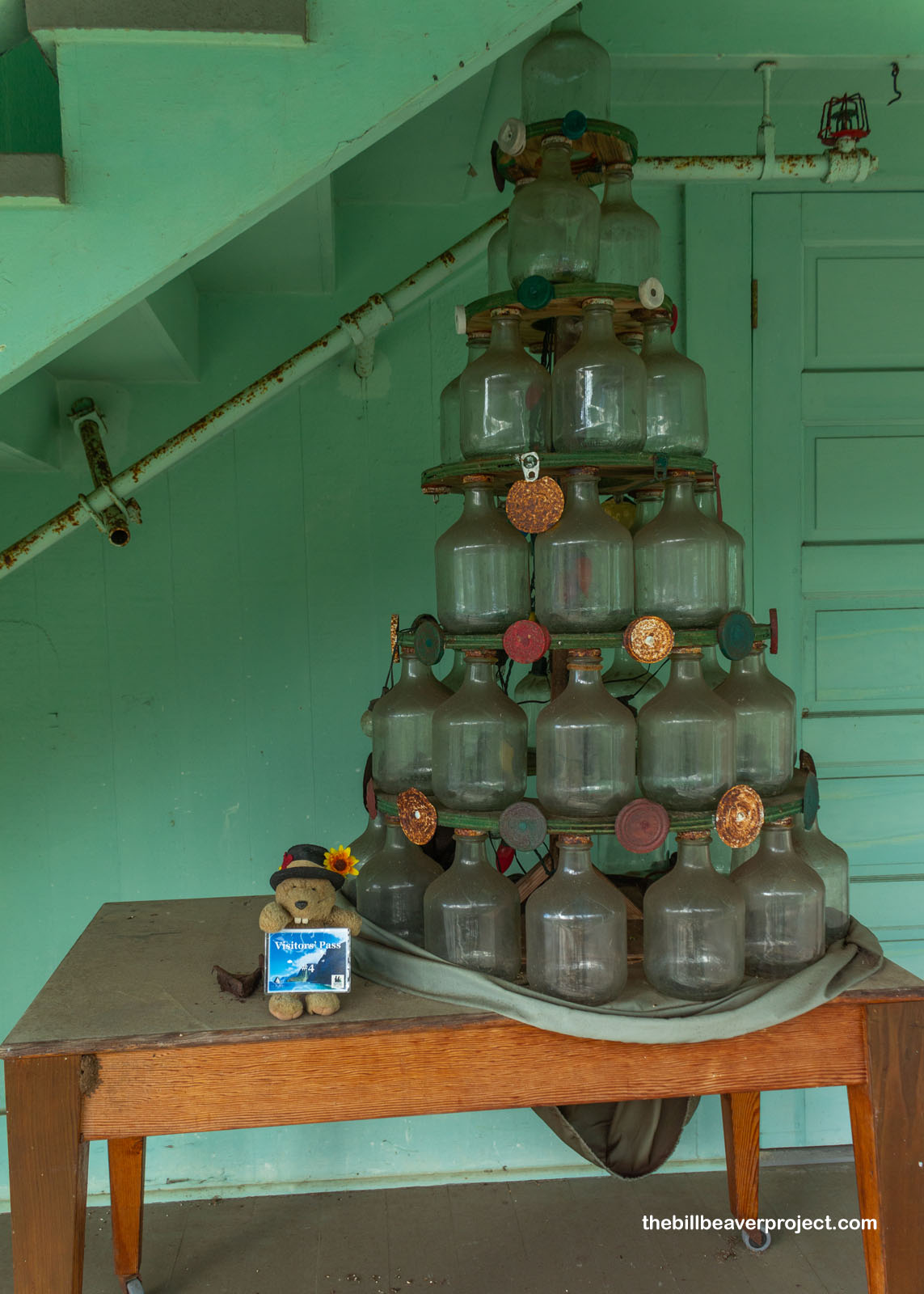
Outside the hall stood a little Christmas-tree shaped arrangement of jugs, reminding everyone that even in a place where folks were exiled, there could still be whimsy!
 |
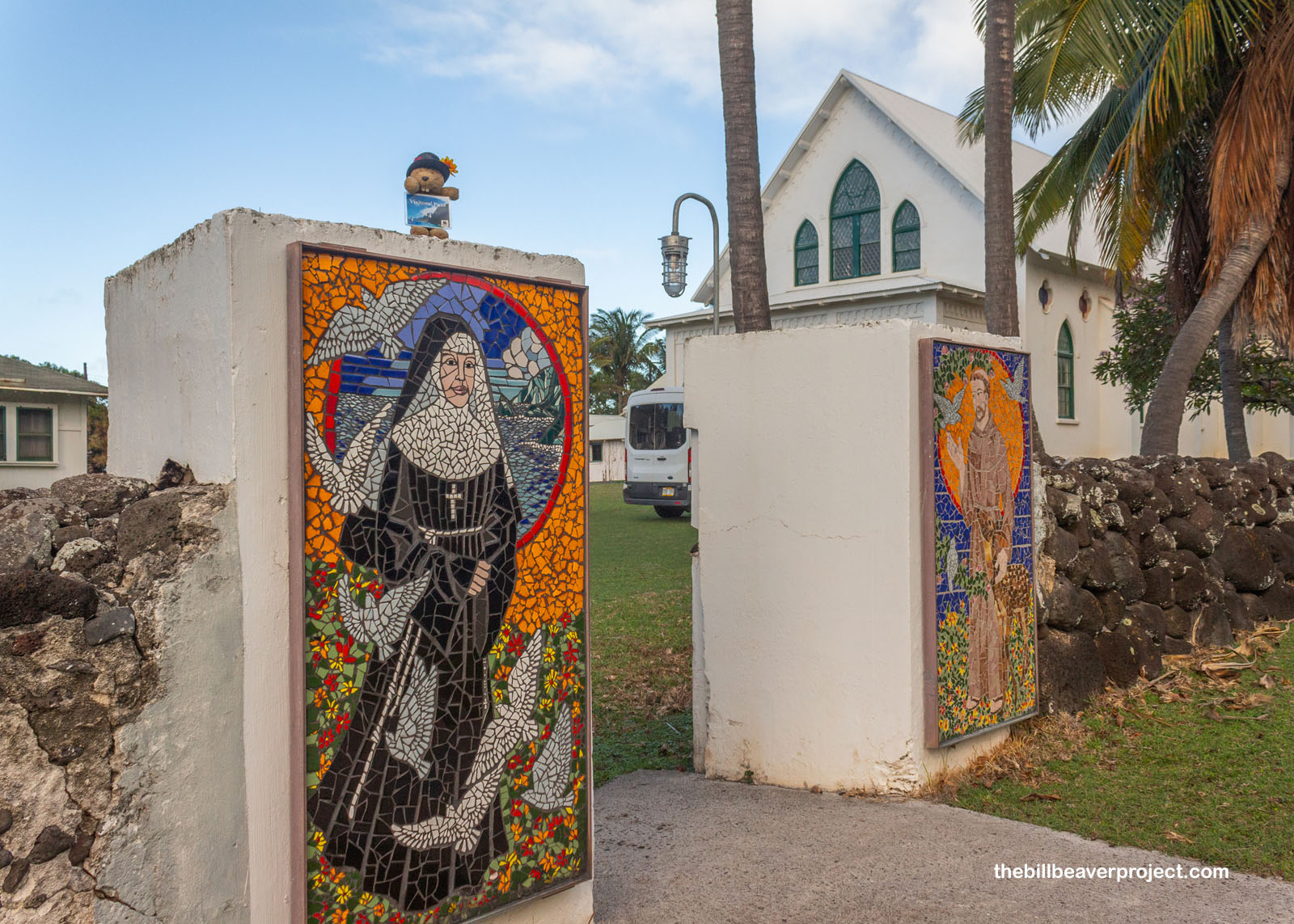
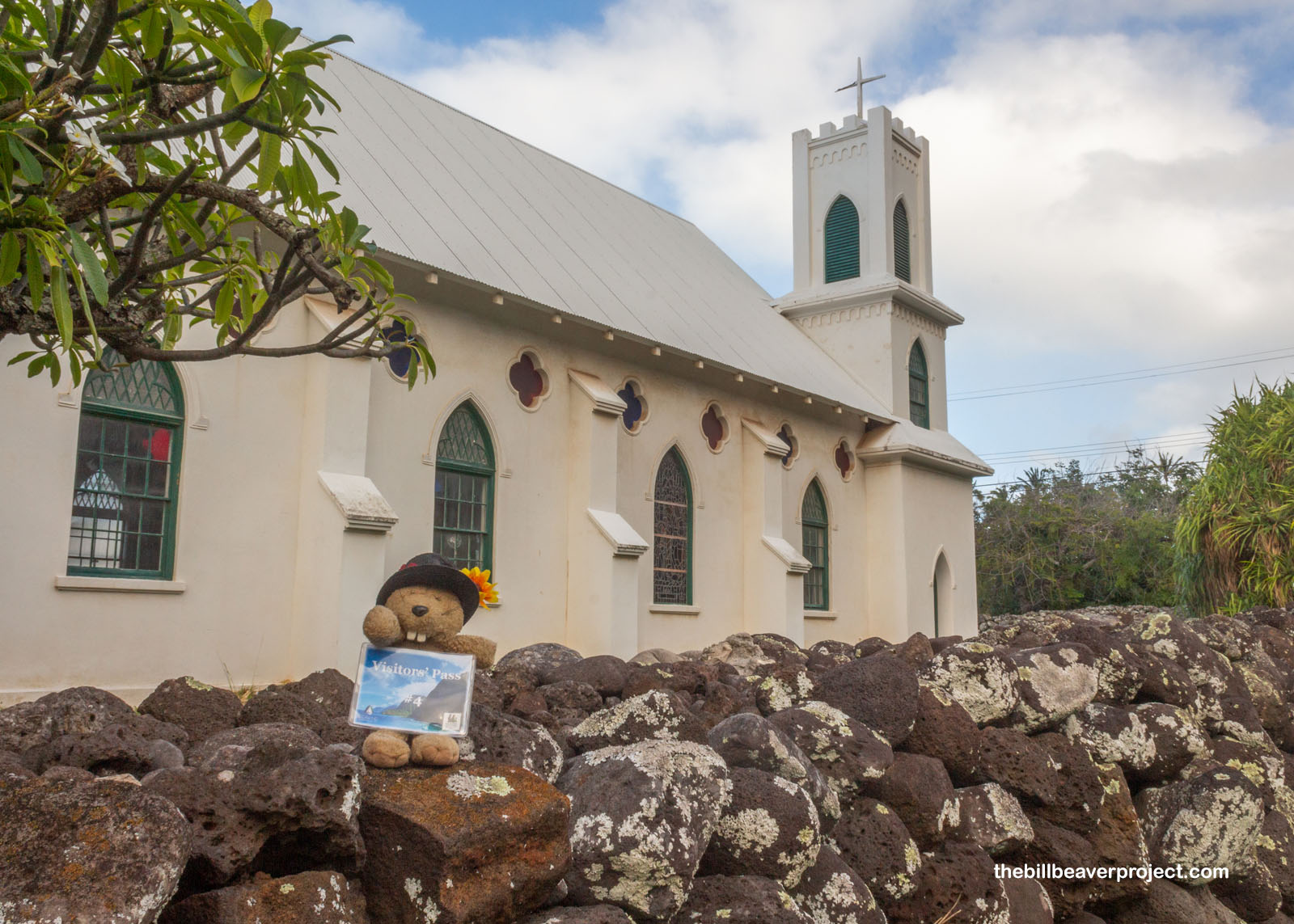
As storm clouds rolled in over the cliffs, we made our final stop of the day: St. Francis Church, the sequel to St. Philomena after the settlement moved from Kalawao to Kalaupapa. Out front, mosaics showed the peninsula’s two saints, St. Damien of Molokaʻi, whose feast day is May 10 and who is patron of those with Hansen’s disease, and St. Marianne Cope, whose feast day is January 23 and who is patron not only of Hansen’s Disease patients, but also outcasts, folks with HIV/AIDS, and Hawaiʻi at large!
 |
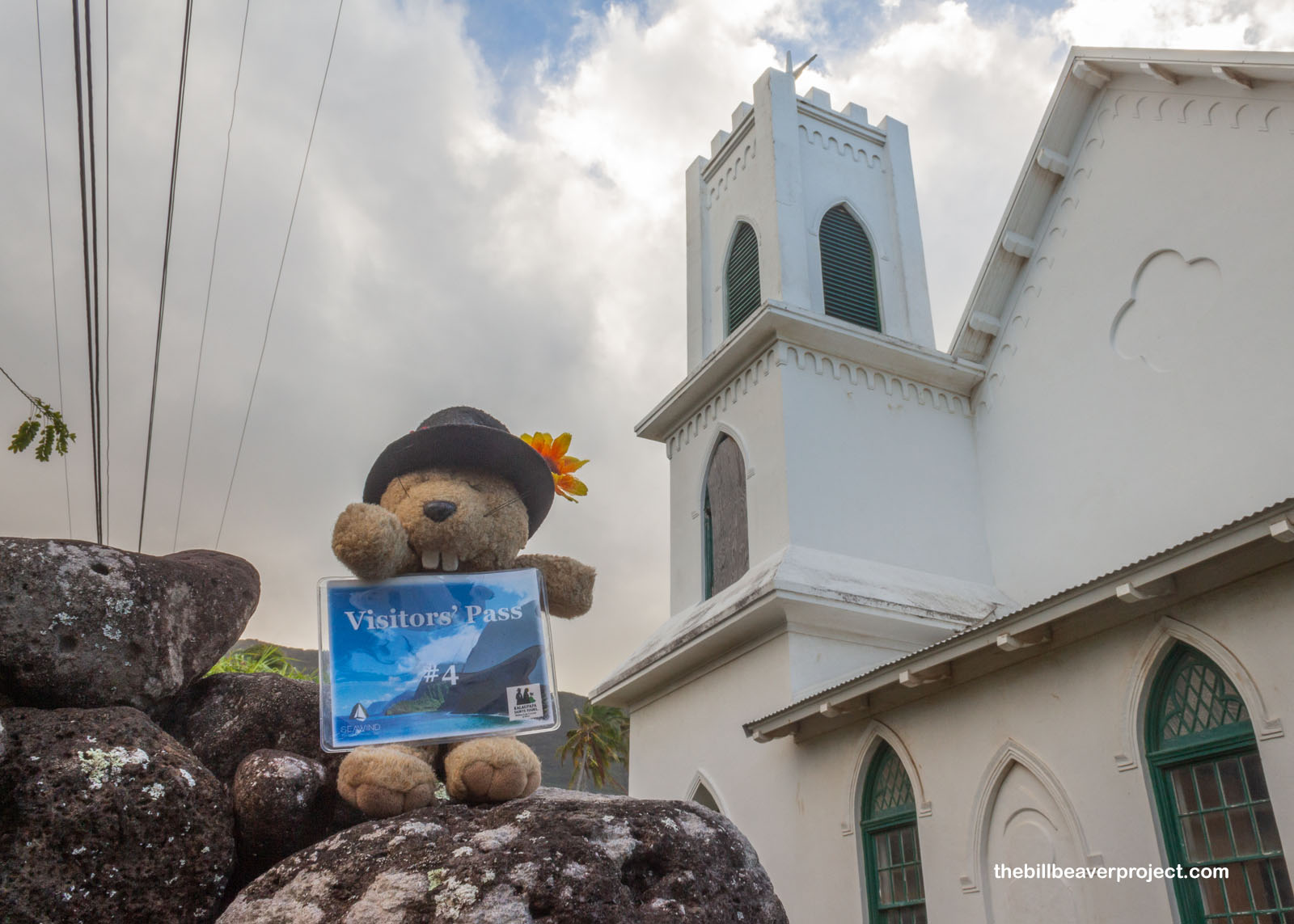
This church was originally built in 1873 but burned down after coals spilled out of a censer, so the current version has been standing here since 1908! Resident priest, Father Killilea, opened the door to let us see all the lovely statues inside, including one of St. Marianne made out of a huge piece of marble! He chatted with us about the saints for a while until it was time to depart for the airport after a long day of roaming around Kalaupapa.
 |
 |
Sisters Barbara Jean and Alicia were waiting for us, which was great because 1) Mokulele Airlines called to say they couldn’t pick us up until 6:00 PM and Sister Alicia had to go all the way to the top of the chain to have someone come pick us up before dark, and b) Sister Barbara Jean brainstormed with us on how a pizza and Heineken party would look over at the convent. Meanwhile a random passenger plane landed on the runway, making us all a little uncomfortable because of all the island’s restrictions, but it turned out this terminal had a bathroom, which was very convenient for small planes making long trips. They were back in the air within 20 minutes! But not us!
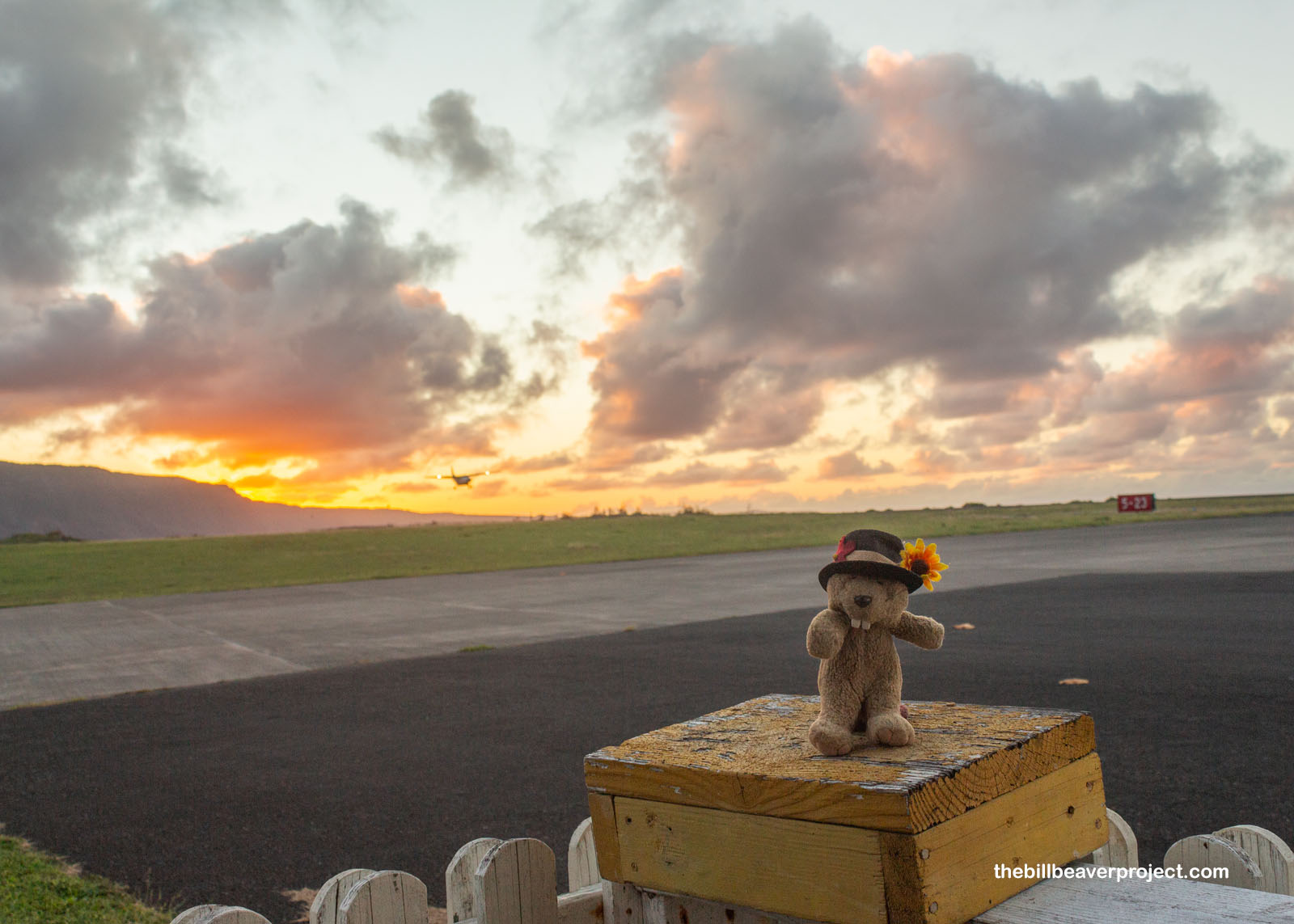 |
Officially, no one is allowed to take off from the Kalaupapa runway after 6PM, so we were watching the sun set with some real concerns. Then, at 5:50, a plane appeared! We all piled in lickety split and, thanking the Sisters profusely, were officially off the runway by 5:55! What luck! As we soared up over topside Molokaʻi, I looked back and marveled at how so much was given up to make Kalaupapa what it is now, and what a privilege it was for me to fly back to Honolulu and gorge on poké nachos while listening to a ’70s groove cover band in the Shark’s Den. These are important things to be grateful for! All in all, this day trip had been well worth the wait and left me with much to think about for my journey back to the mainland, bright and early!
A hui hou!

More 2025 Adventures |
Total Ground Covered: 8.8 mi (14.2 km) |
More 2025 Adventures |