 More 2026 Adventures |
Cruz Bay, VI → Virgin Islands National Park → Cruz Bay, VI 23.0 mi (37.0 km) |
 Next Day |
Wha you sayin, ahyou?
I’m back, back, back in the U.S. Virgin Islands for another 3-day weekend adventure, this time on the island of St. John! Getting here took a lot of transfers, from LA to Miami overnight, then Miami to St. Thomas, then a taxi to the east end of St. Thomas, then a ferry ride to Cruz Bay on St. John! Why’s that, you ask? Well, St. John is mostly national park, and for that reason, it has no airstrip! So after settling in at the Inn at Tamarind Court, I was ready to see what Virgin Islands National Park had in store!
 |
After a lackluster park experience on St. Croix, I was ready for more on St. John: more sights, more culture, more immersion! Plus, it was Valentine’s Day, which I planned to spend with my one true love: adventure! I figured the best way to dive right in to this national park was to explore the the Reef Bay Trail, home to historic ruins and ancient petroglyphs! Since neither the buses nor the guided treks by the Friends of Virgin Islands National Park were running over the weekend, I decided to wing it by taxi to the trailhead, a feat by itself as taxi drivers by the ferry port practically drew straws not to take me. Each taxi had rows of seats, and no driver wanted to leave the dispatch station with any empty seats! After about half an hour of waiting, one brave soul offered to make the outrageous drive of 4.9 miles to drop me at the trailhead!
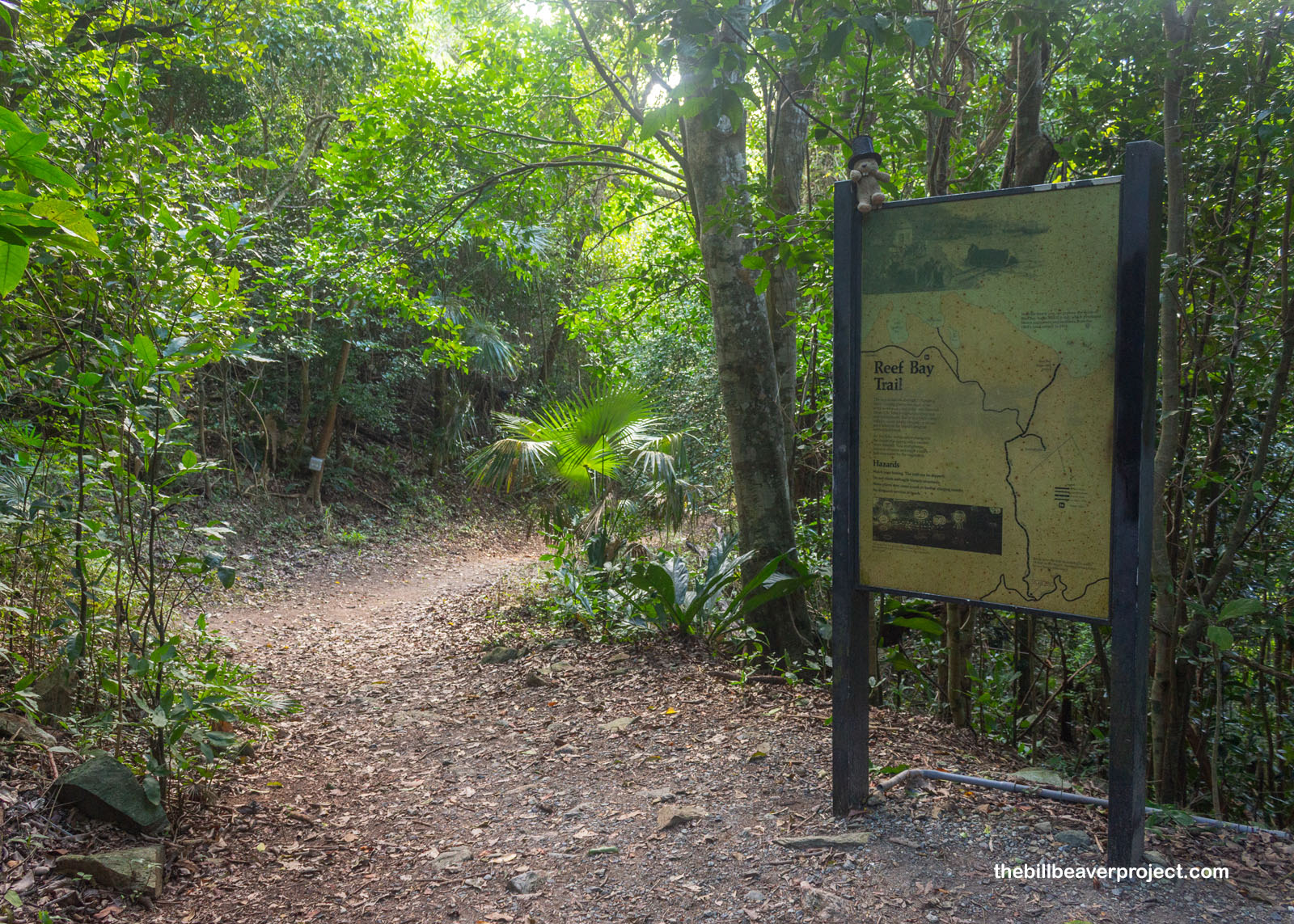 |
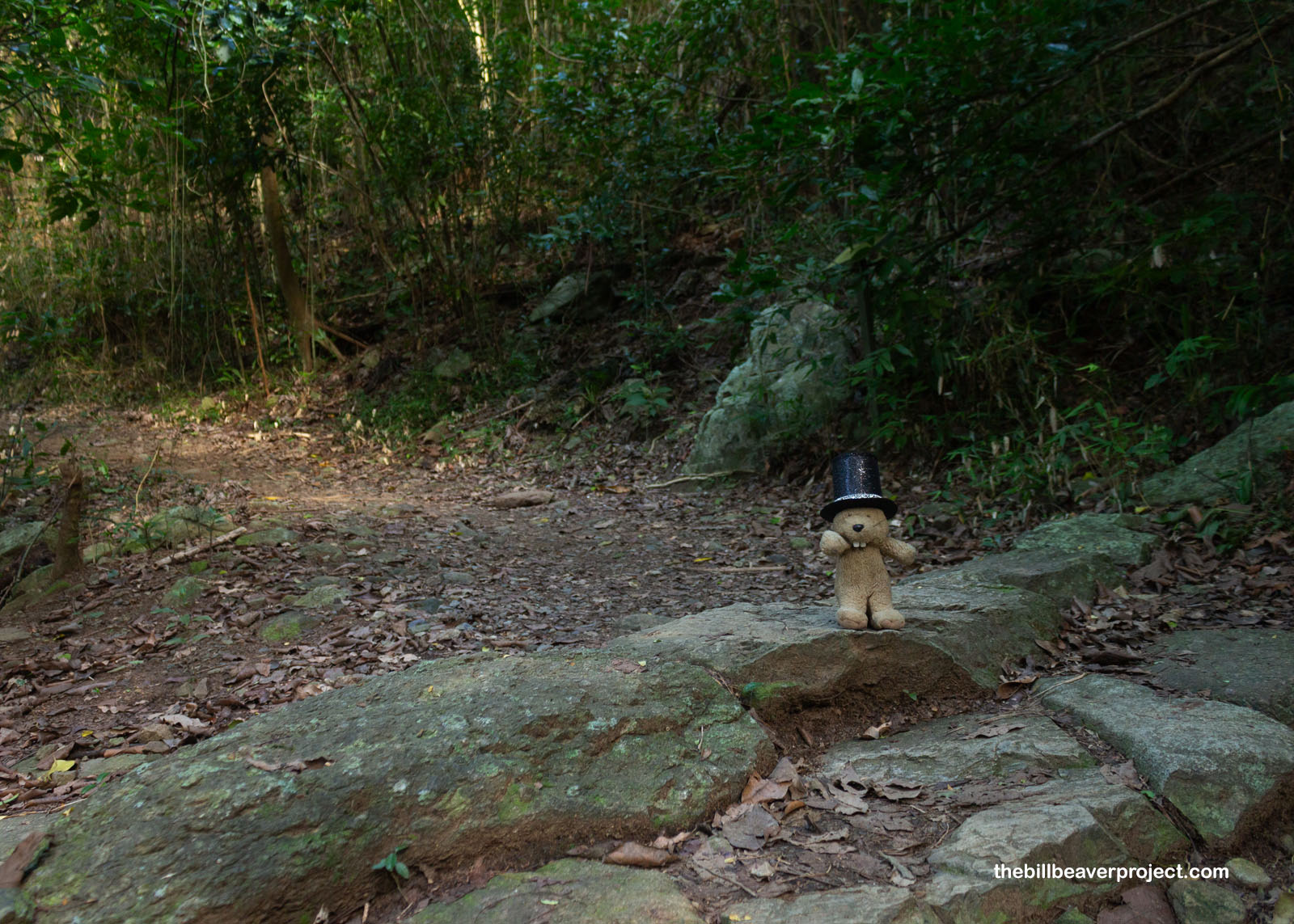
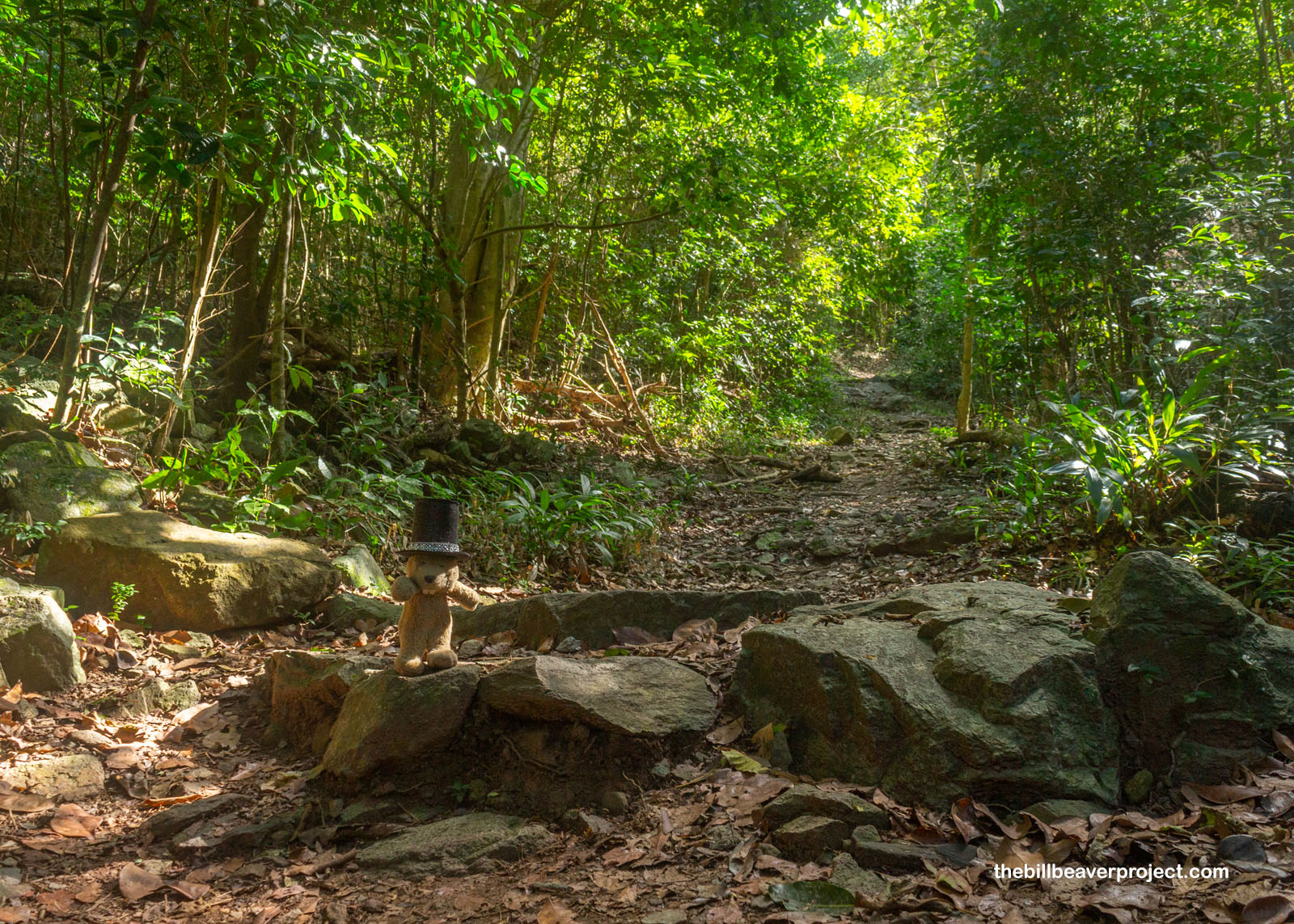
The trail kicked off with a steep downhill, past historic rain gutters that have preserved 18th and 19th Century Danish roads on St. John by diverting water off the edges and minimizing erosion! As I went, I was super glad for the thick tree cover, because down by the taxis, it had been getting hot!
 |
 |
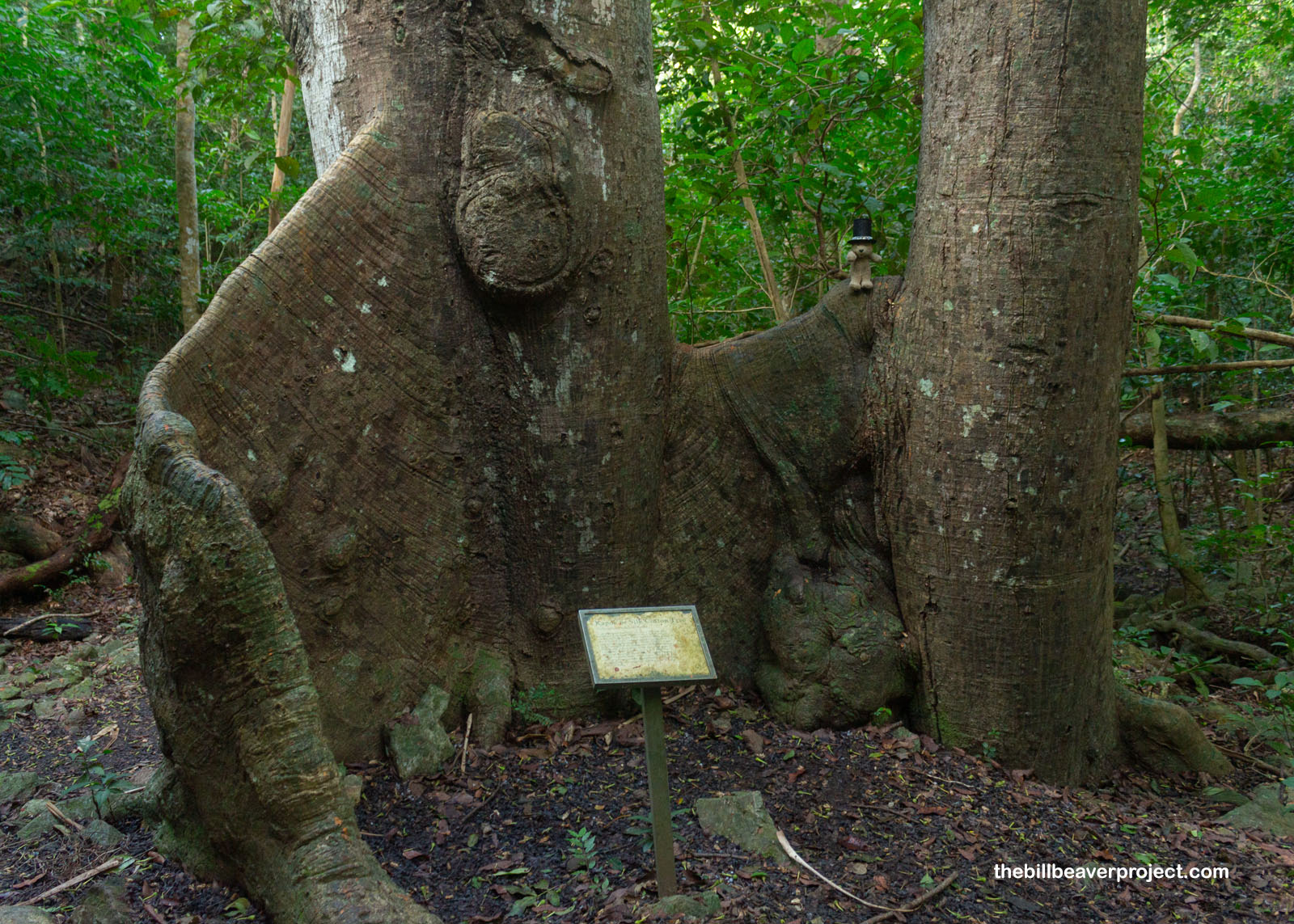
And speaking of thick trees, check out this huge kapok, or silk floss tree! The Reef Bay Trail boasts some of the island’s biggest and oldest trees, and this was no exception. I’ve seen fat silk floss trees before in Los Angeles, but this one had two trunks merged into one! Its soft wood made it just right for making canoes!
 |
About half a mile in, I came across my first ruins, an old sugar factory owned by Hans Henrik Berg from the 1820s until 1862! Sugar was a major industry in the Caribbean, rooted in the cultivation of sugarcane, a native of Southeast Asia! Using enslaved labor to tend the fields, build factories, and process the sugar, the Danish on St. Croix exported sugar from here for about a hundred years! This particular factory was built along a creek called Jossie Gut, using stone, coral, and brick, all held together by a mortar of seashells, sand, and even molasses!
 |
 |
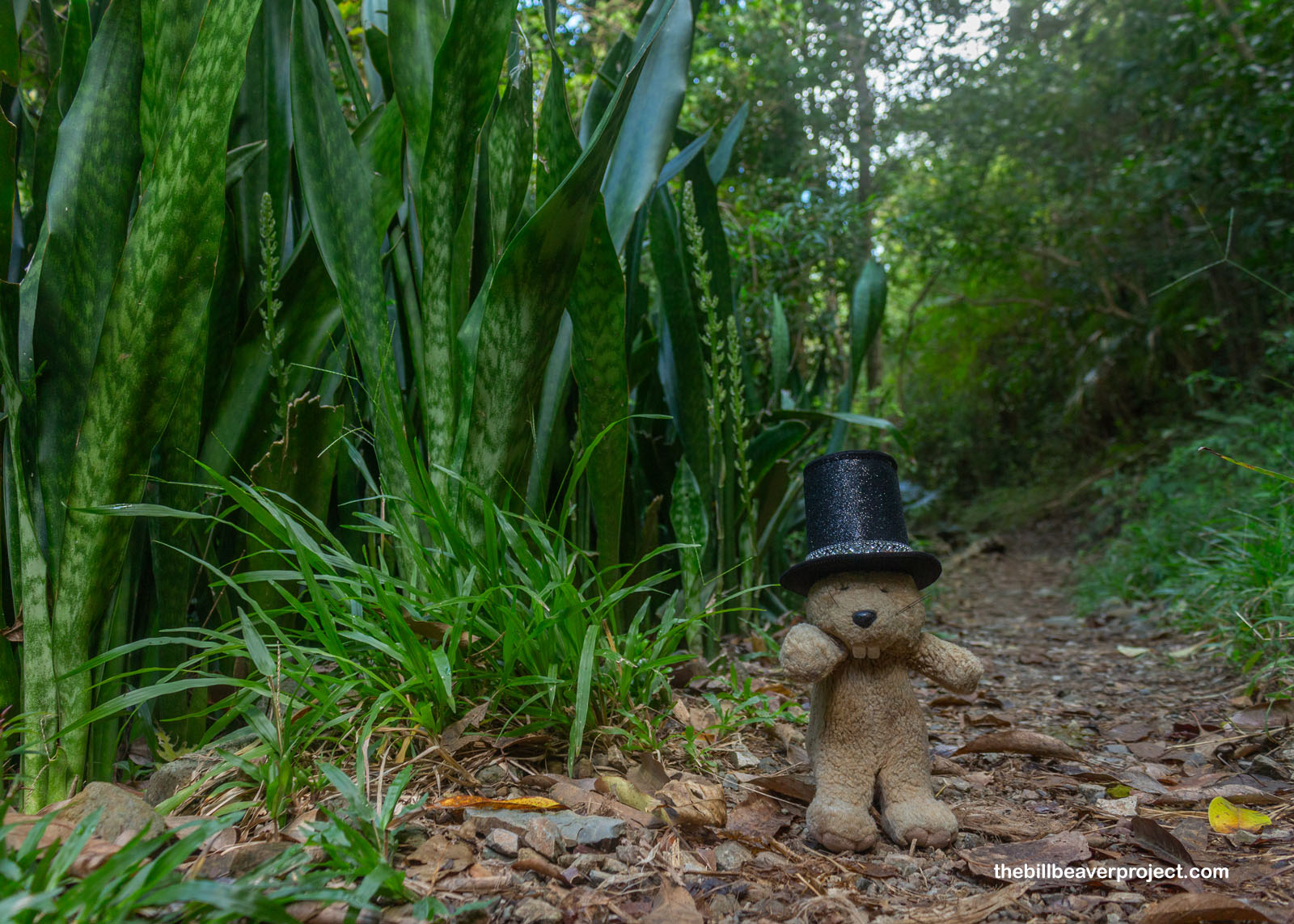
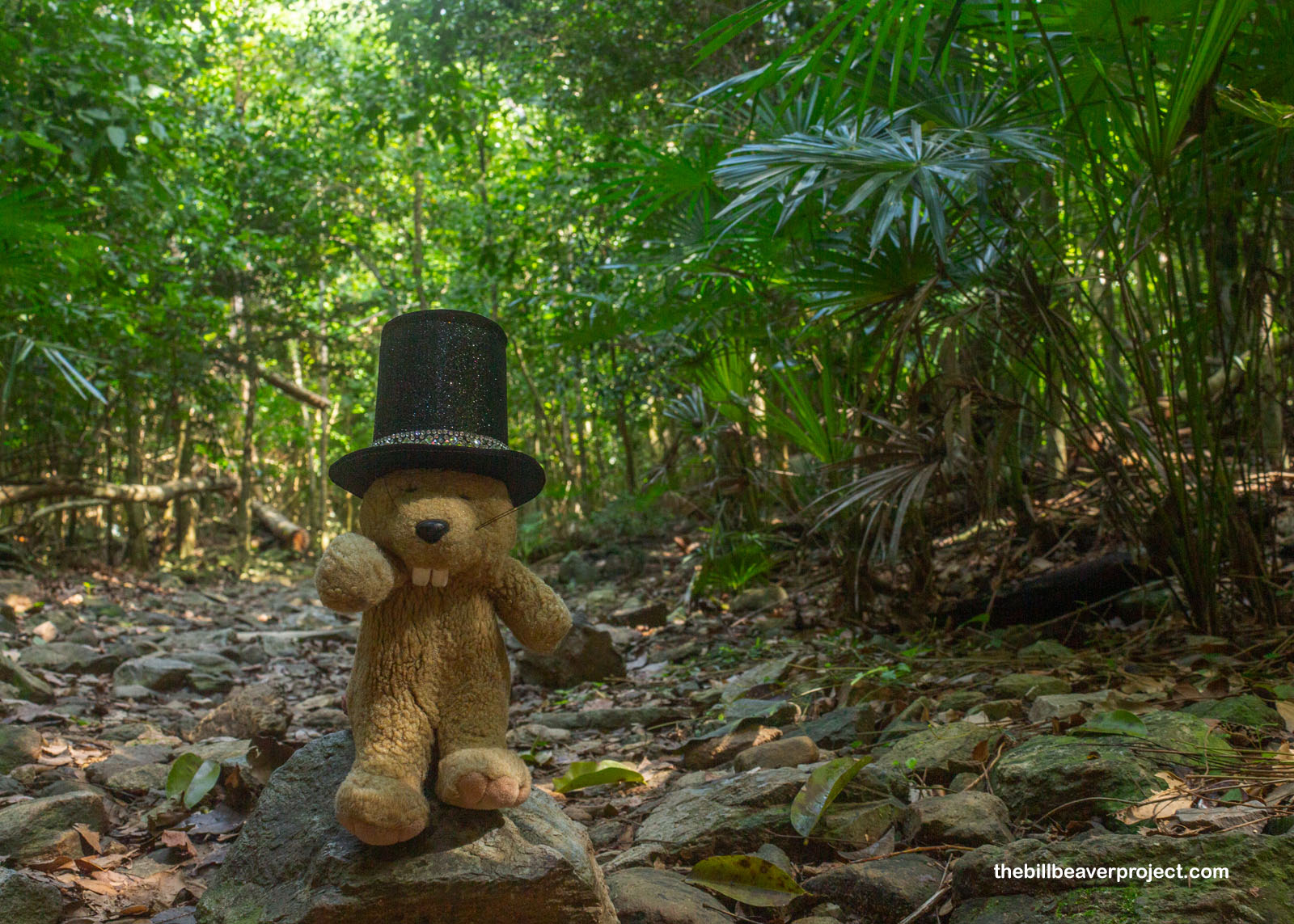
As I walked along, I encountered some really neat plants, including that office staple back on the mainland, the snake plant (Dracaena trifasciata)! Originally brought to the Caribbean from central Africa, this incredibly hardy plant, fibrous enough to make bowstrings, has truly taken over. I’d never seen them flower until now! But the trail also housed some Virgin Island natives, like the Tyre palm (Coccothrinax alta), once used for thatch roofs, now mostly a snack for snails and millipedes!
 |
 |
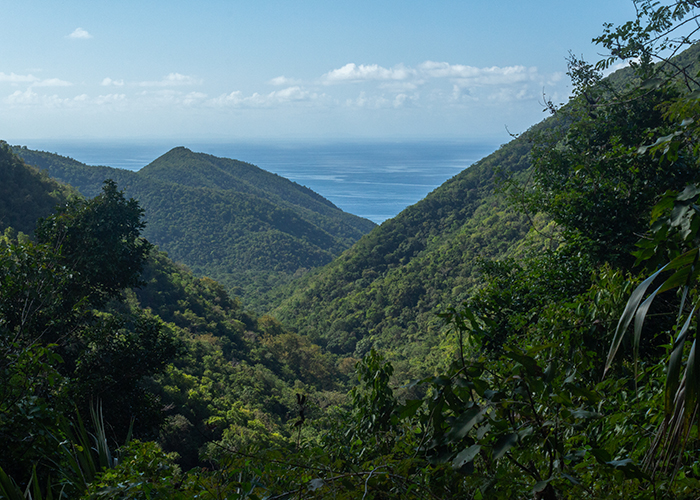
Only twice on this trail did the dense foliage clear long enough for a view, and gosh, what a pretty vista overlooking Reef Bay way off in the distance! With practically every square inch covered in greenery, this dry tropical forest has made an amazing comeback since the days of the Danish sugar industry! After careful conservation and stewardship, this whole valley is the epitome of lush!
 |
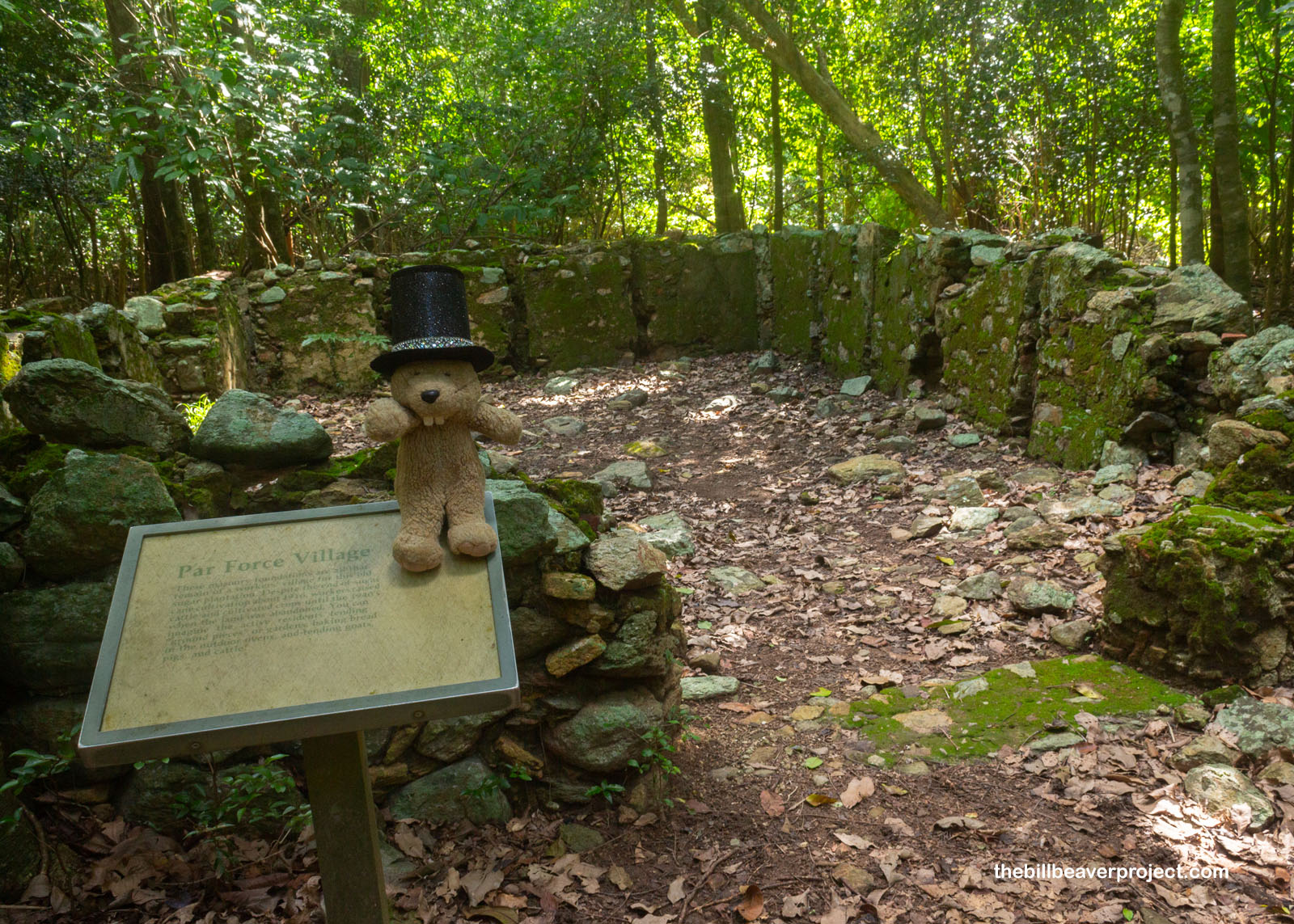
Hans Berg wasn’t alone here back in the 1800s, and soon enough, I came across part of his neighbor’s estate. Anthony Zytstems opened St. John’s first sugar factory on his Par Force Estate in 1725, and this corral-shaped structure was the remnant of his enslaved workers’ village. In 1733, the slaves of St. John rose up in revolt, led by former Akwamu nobles from Ghana! It’s easy to overlook the history of folks before they were enslaved, but many of these Akwamu folks had been successful merchants and elites before their kingdom was overthrown and they were imprisoned then sold to the Danish! Although they were able to capture a fort in Coral Bay, the rebels were ultimately overpowered by French reinforcements on August 25, 1734!
 |
What I was really interested to see, though, was something much older than these ruins: petroglyphs, left behind by the Taino somewhere between 700 and 1500 CE! Petroglyphs like these are found all across the Caribbean Islands, but many require some serious trekking to see. I was really lucky to be on a trail leading to these ones!
 |
I was going to find them at the base of a trickling waterfall, a special place where ancestral spirits could gather! The spring water fed a pool that never rose or fell despite the rains, home to crayfish and freshwater shrimp!
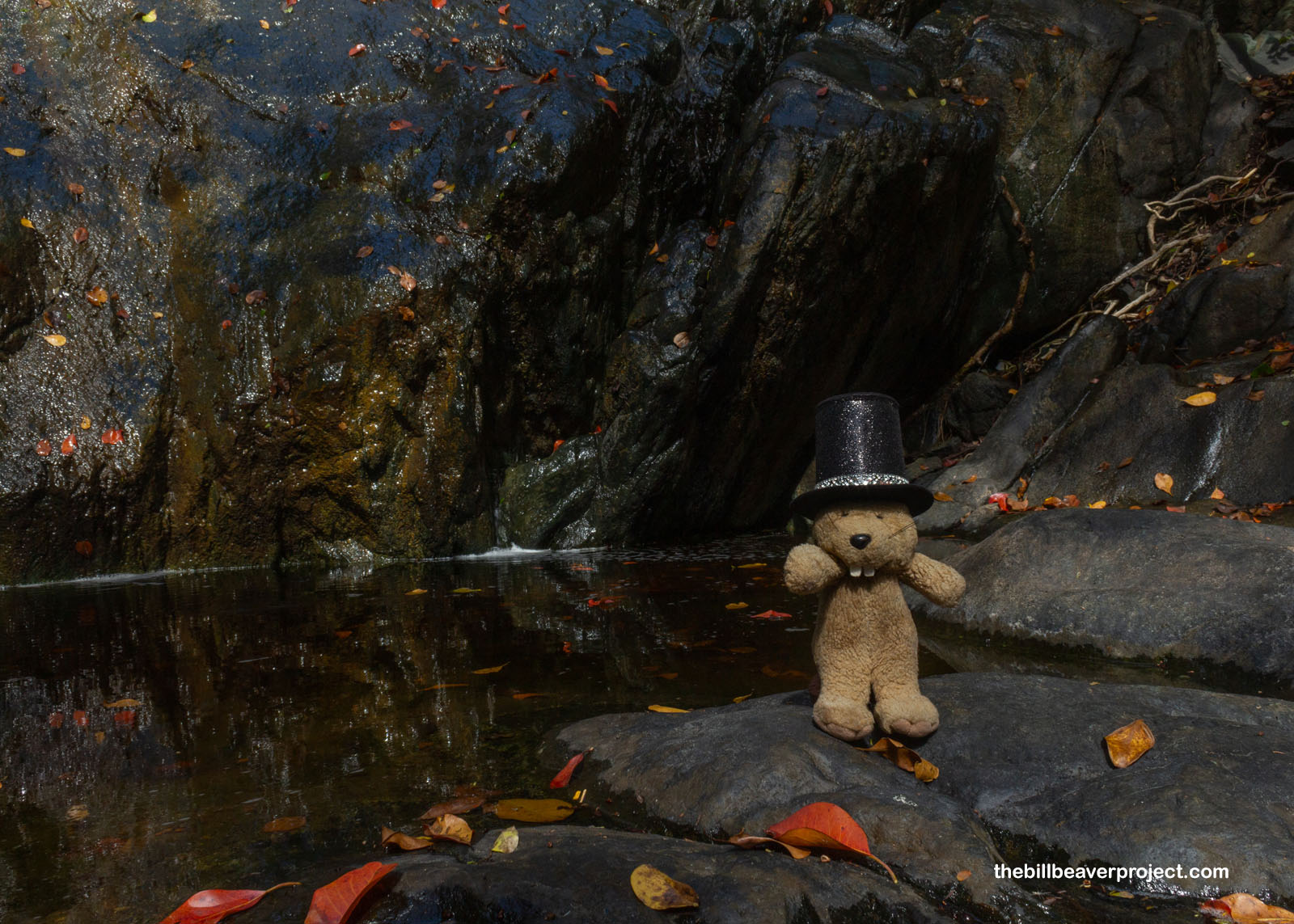 |
I saw two panels of petroglyphs on this slanted rock face! It’s hard to know exactly what they represent, since the Taino left St. John either just before or just after Columbus arrived, but based on clues from Puerto Rico, these faces likely represent ancestors, setting aside this space as a gathering place for them in the living world! Some even have a bat-like nose, and bats were seen as spirits able to travel between the lands of the living and the dead!
 |
Down below, another panel was carved specifically to be reflected in the spring water, giving the impression of existing between this world and the next! I couldn’t help but notice how they were heart-shaped, since it was Valentine’s Day, but I imagine they were not carved just to tell someone “Be Mine!”
 |
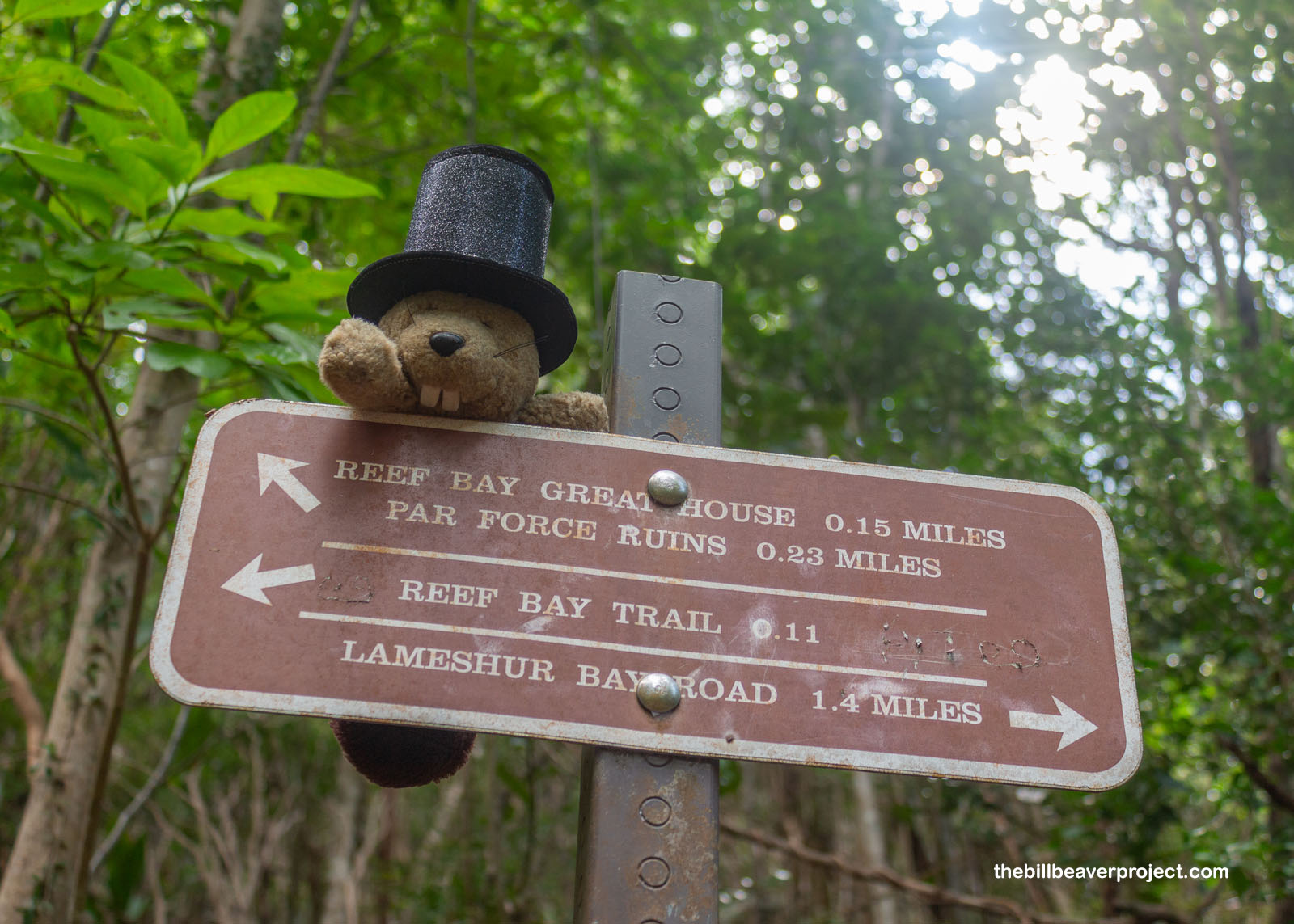
After some reflections of my own, I began my wiggle down toward the bay that gives this trail its name. A spur trail led off to Lameshur Bay, home to the island’s oldest archaeological site, but I wasn’t going to get too far off course. Instead, I aimed toward a nationally registered historic place, the Reef Bay Great House!
 |
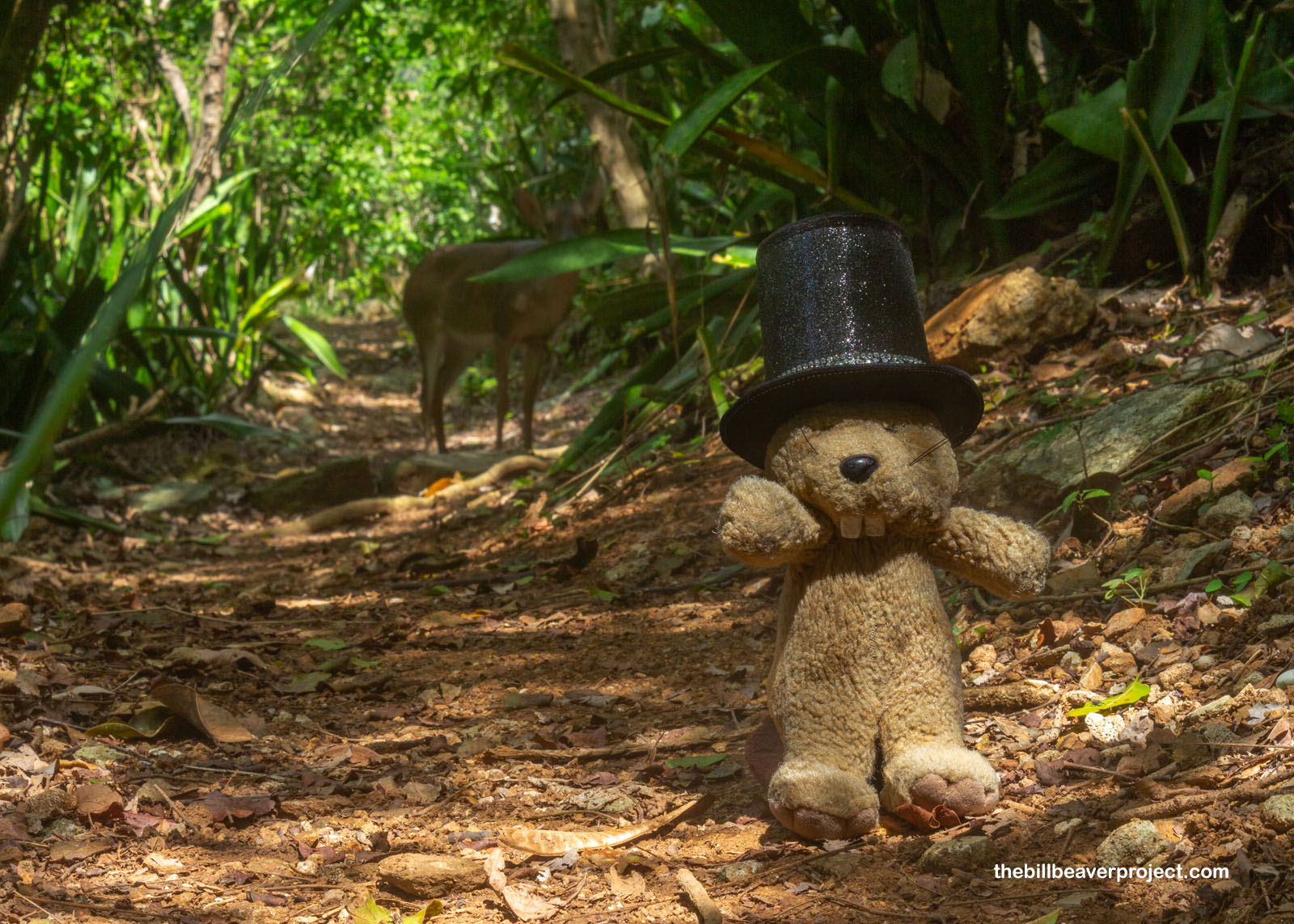
Along the way, I met some deer on the trail! Even though the only native mammal on St. John is a bat, white-tailed deer have been here since at least the 1800s, unbothered by predators, including, in the national park, hunters! Being unused to danger, these normally skittish critters browsed along the trail as I went along, a fine life for them, but a tough one for the island! Because they are so numerous and so hungry, they’ve completely changed the forest, eating vast clear patches so what used to be solid green is now open space! We exchanged pleasantries, and I continued on my way.
 |
The Great House really lived up to its name in size and scale! Surprisingly, it’s not super clear who had it built! While the gate posts say 1844, that was long after John Vetter acquired both Par Force and neighboring Reef Bay Estates! A.M. Porth, who owned the estate in 1844, only kept it for a few months before selling it! After 1908, when a workman died in the sugar factory, the estate shifted to cattle ranching, and the Great House was left to nature. Like the petroglyphs, the original records have been lost, and historians have to rely on old maps and general understanding of architectural periods to craft a story!
 |
 |
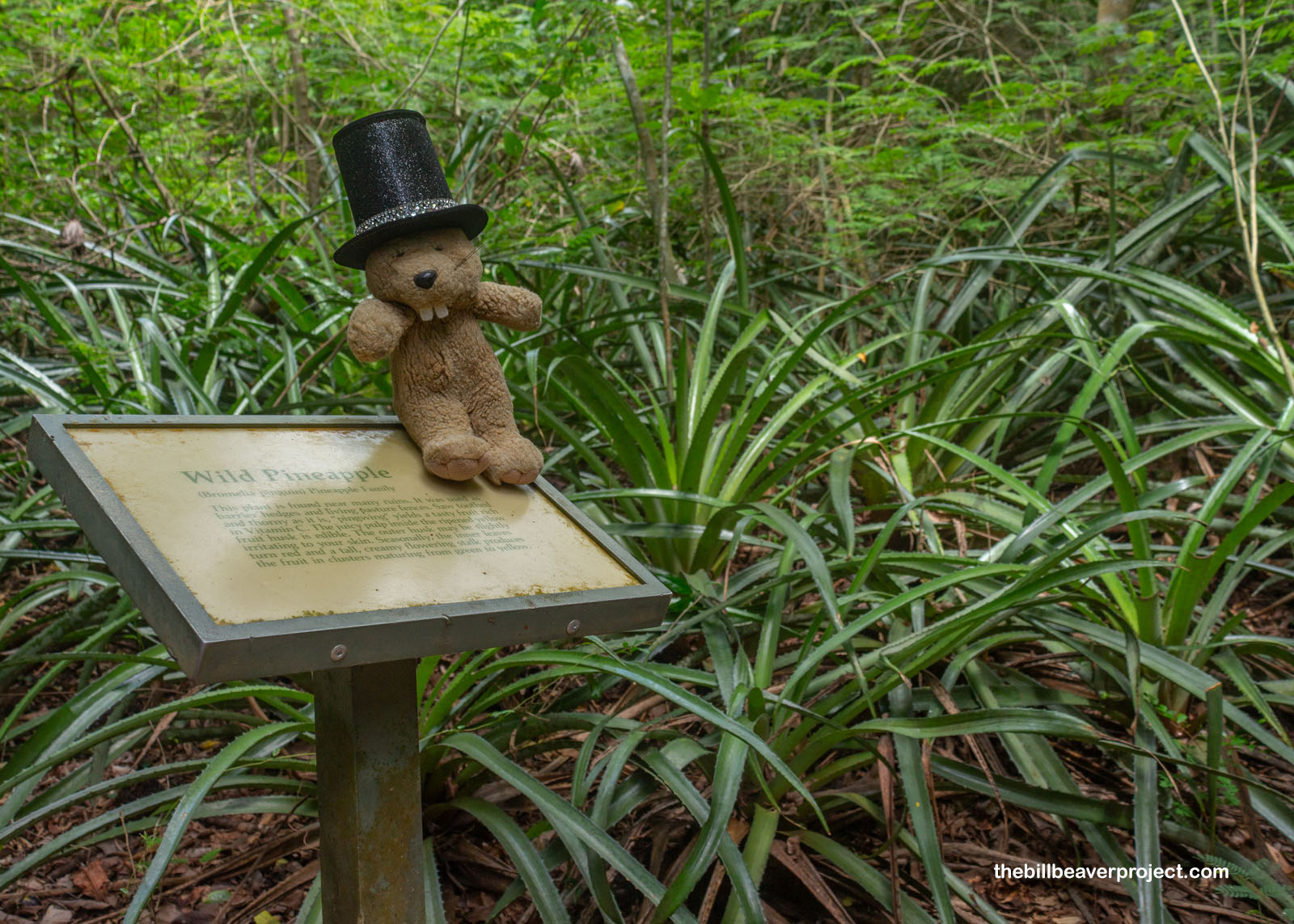
My next stop was that estate factory, but first, I had to pause and admire the huge cluster of wild pineapples growing on the side of the trail! Also called false pineapples (Bromelia pinguin), they were introduced to St. John by plantation owners to form natural fences out of their spiky leaves! Like grocery store pineapples, these ones produce edible fruit, but unlike the familiar ones, false pineapple fruit form little clusters on a stalk! I was clearly here at the wrong time of year to enjoy it!
 |
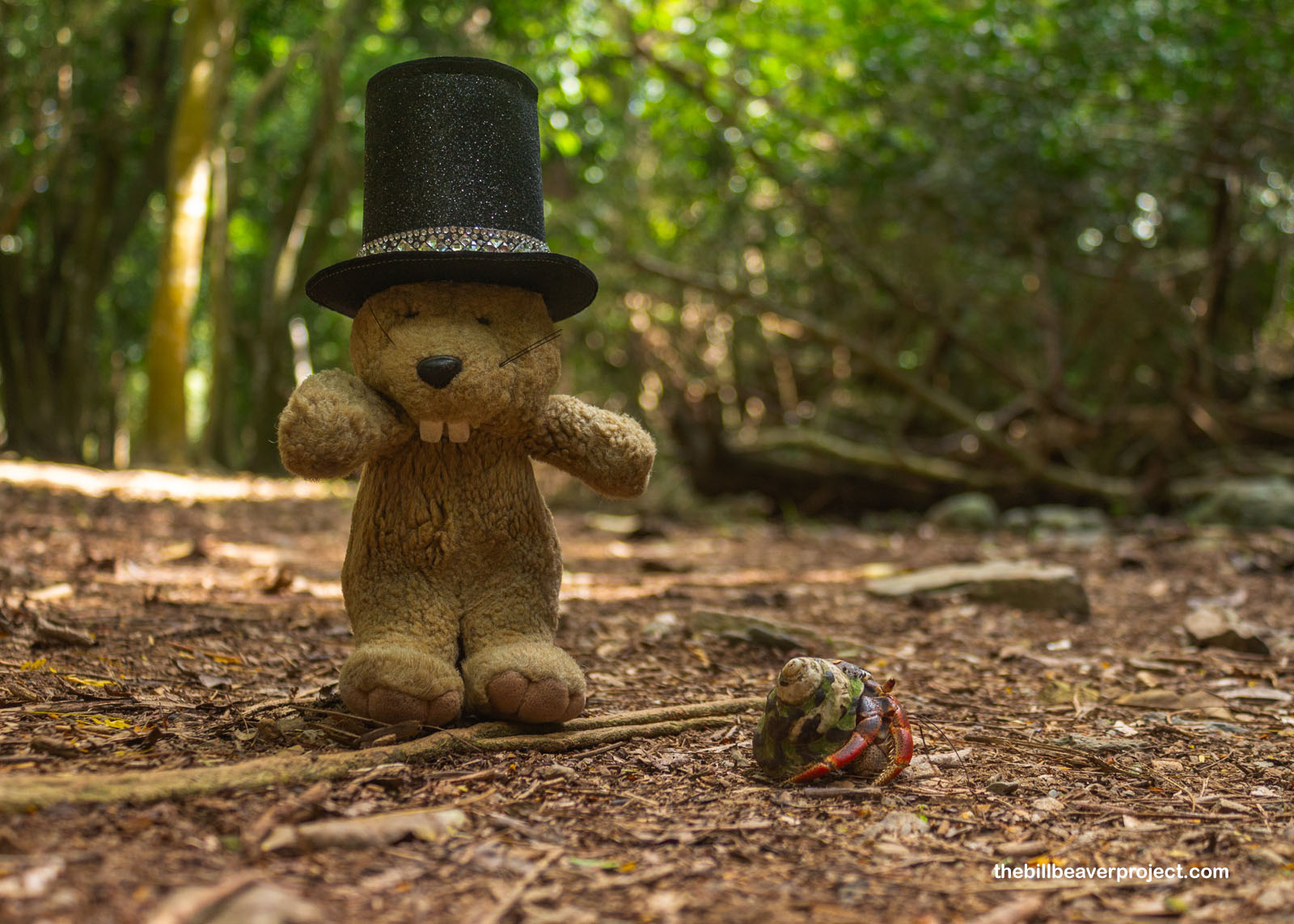
Not long after, the trail turned sandy, and the leaves began to rustle. I discovered that I was surrounded by Caribbean hermit crabs (Coenobita clypeatus) just going about their business, completely fine out of the water, just like their huge cousins, the coconut crabs of American Samoa! In late summer, this whole forest will come alive with marching crabs on their way to lay their eggs in the bay, which is how these land crawlers got so widely spread across the ocean, but for now, it’s one crab at a time. I paused my trek to let them pass. It’s only polite, after all!
 |
At the bottom of the trail, the terrain flattened out, opened up, and revealed the Reef Bay Sugar Factory, the best preserved sugar factory in the Caribbean, thanks in part to, of all organizations, J.D. Rockefeller’s Jackson Hole Preserve! Like with the Great House, there’s little known about the origin of this factory, though there was a plantation and mill here as early as 1800. Most likely, like the Great House, the renovated factory sprung up after John Vetter combined Par Force and Reef Bay Estates into one!
 |
Early processing of sugarcane relied on horses turning a mill that crushed the juice out of sugar cane. Workers carried that juice into the boiling house, where it was “tempered” with caustic lime powder, skimmed for impurities, then ladled into a line of huge copper boilers, a process repeated until the syrup made it from the largest boiler to the smallest, which was called the “teache!” Now imagine working over boilers all day in the hot tropical sun from December to May, and you’ll get a new appreciation for those Valentine’s sweets!
 |
 |
And then my journey concluded down at Reef Bay itself! Wow! Just look at that brilliant Caribbean blue! And the houses over there! Could you imagine waking up to a view like this one every day? It would be a real Valentine’s treat this day, and all 365 of the year, even though it was mighty balmy by the shore!
 |
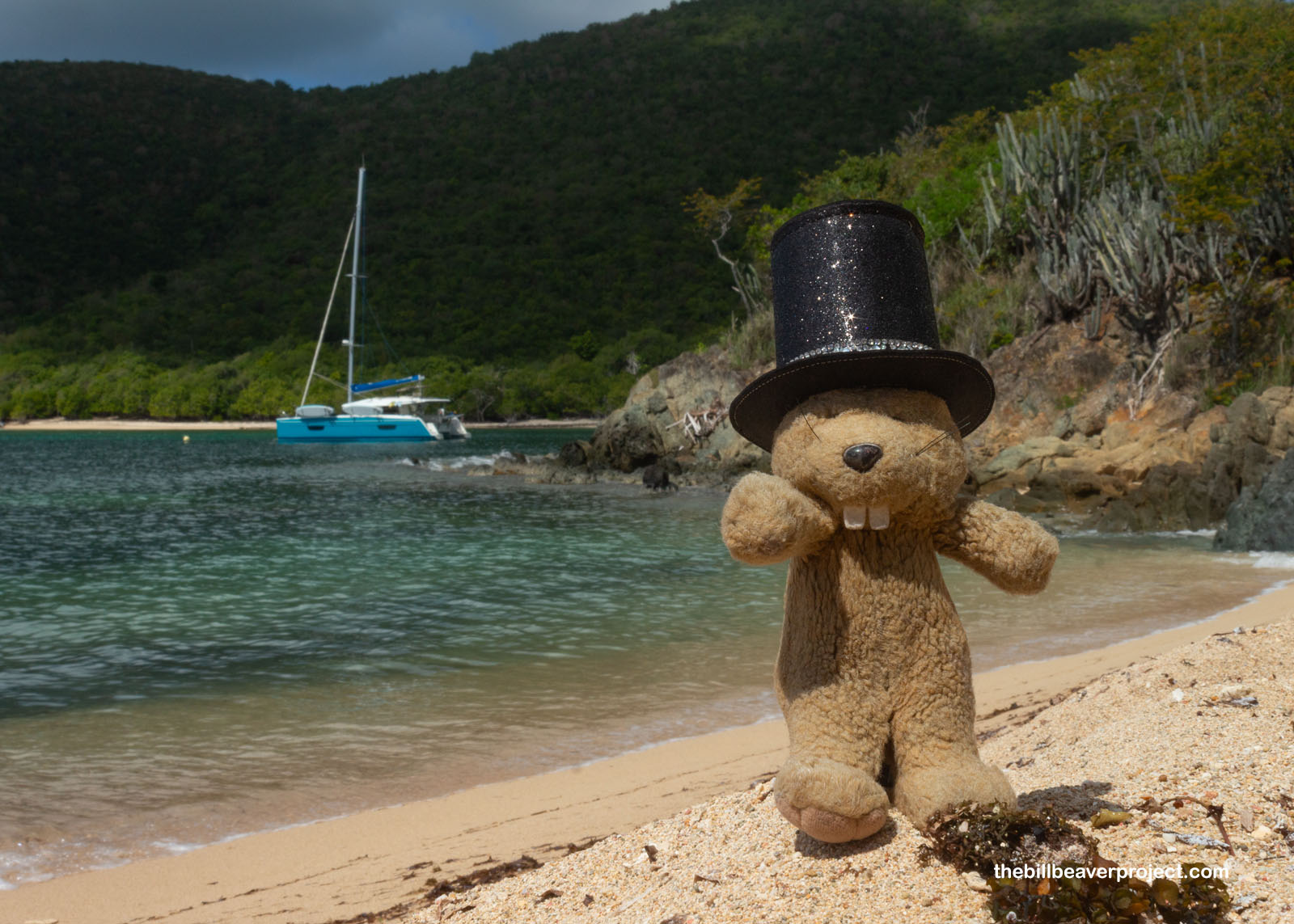
Off to my right, I spotted a sailboat that reminded me a lot of the one I took to Buck Island last month. In fact, there were folks out there snorkeling too! A dip sure sounded great in this hot weather, and the water sure looked calm, only I had completely forgotten to bring any kind of snorkel gear! My beaver eyes are built for freshwater, not saltwater, so if I had any chance of seeing the reefs of the Virgin Islands, I’d need more gear. I hustled back up the trail and hitched a ride back to the Inn to collect my dive suit.
 |
And here it is, folks, my state-of-the-art dive suit! After lackluster results in Biscayne National Park, I whipped up a new one with plumbing supplies from Home Depot and a craft bowl from Michael’s. After a morning land trail, I was ready to explore the famous underwater trail of Trunk Bay! Or so I thought…
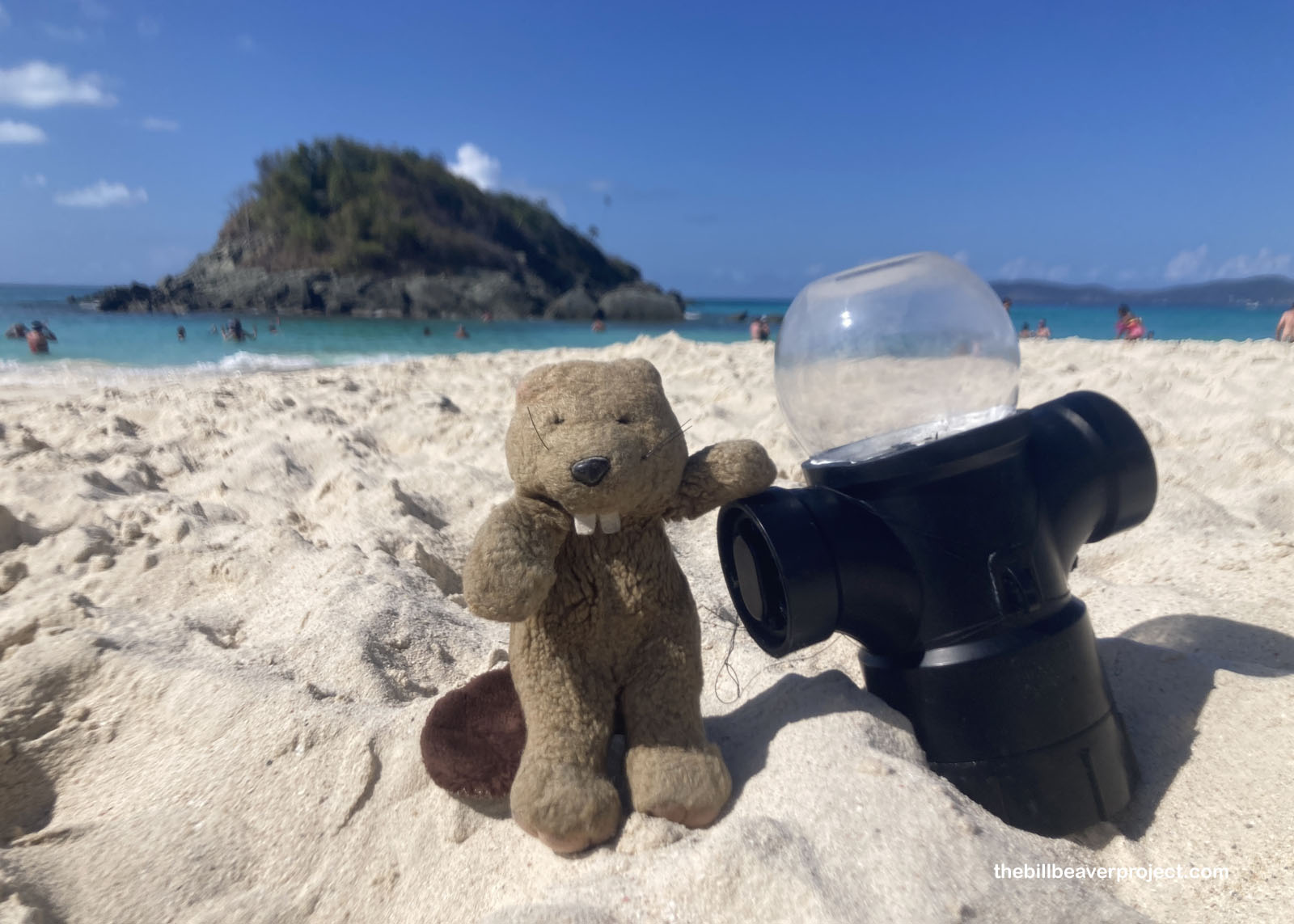 |
On the one hand, my dive suit worked great! I stayed nice and dry with air pumping in from the back, propelling my way around. What did not work was my camera! I tried out a GoPro, but the battery was dead! I had a waterproof case for my phone, but I obviously couldn’t touch (or see) the screen from inside my suit! In short, I made it out onto the water, bobbed about, saw a couple of parrotfish and a barracuda, and returned to shore as they were calling out closing time for the café and souvenirs. It was a far cry from the super cool photos I was hoping to bring home of reefs, fish, and underwater informative plaques!
So I nursed my pride over a Valentine’s root beer float and thought about giving it one more try, except that, as facilities closed, folks were beginning to go home, and with them, taxis! Was I going to be able to score a ride back to Cruz Bay if I went out again? I decided to get a ride home and charge my equipment. I saw a ton of cool stuff today in Virgin Islands National Park, and I want to make doubly sure I am ready for tomorrow, when the whole national monument will be underwater. No room for error there!
Happy Valentine’s Day!

More 2026 Adventures |
Total Ground Covered: 23.0 mi (37.0 km) |
Next Day |