 More 2026 Adventures |
Johannesburg, SA → Pretoria, SA 195.0 km (121.2 mi) |
 Next Day |
Morning morning, everyone!
We interrupt this final year of national park questing for one heck of a side quest! My pal, Buzz, who took me on Landmark Expedition 91, has been living in South Africa for the last two years, and is about to return to the States. “Come visit!” she said, and so, while waiting for my remaining parks to thaw out, I hopped on two back-to-back overnight flights, which is really a challenge on its own, from LAX to Heathrow to Johannesburg. Yes, folks, this week, I am setting foot on my 6th continent: Africa!
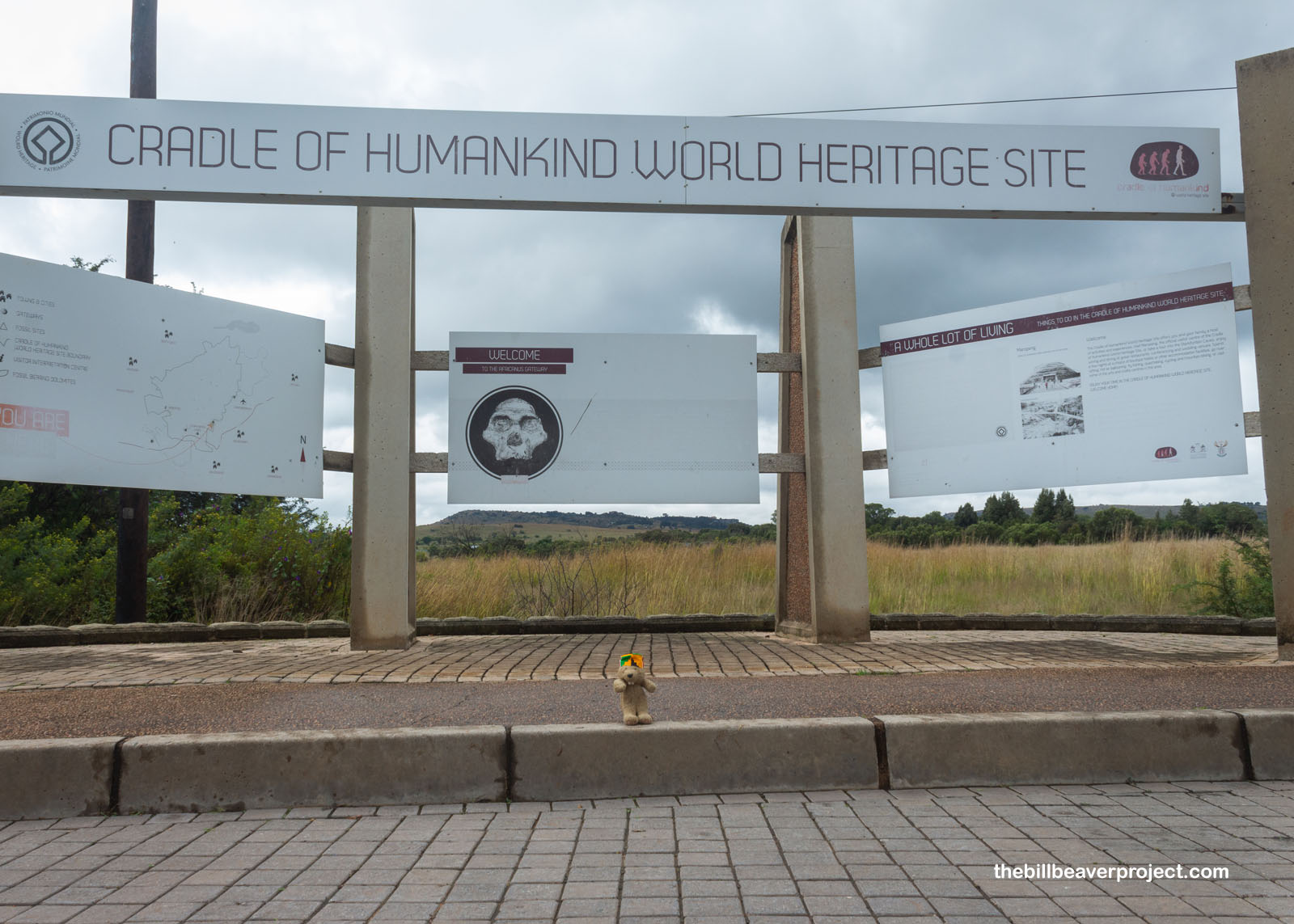
Buzz picked me up, bleary-eyed and woozy, and we immediately dove into adventure as she taught me some Afrikaans slang (“now” means “at some point maybe eventually”), how disappointing South African vanilla ice cream is, and the many, many, many dangers of being outside at night. It was unfortunate, because I really like wandering around places I’m visiting, but one should never overrule a local host! Anyway, we were on our way from Johannesburg to one spectacular place, so spectacular it has been recognized by UNESCO, the Cradle of Humankind!
 |
We started off at the Sterkfontein Caves, where Italian miners had begun blasting limestone as early as 1896, and where on August 17, 1936, Dr. Robert Broom received the cast of a primate’s brain from the mine manager! After rummaging through the mine dumps, Dr. Broom found corresponding parts of the skull, which he came to classify as Australopithecus transvaalensis (later africanus), a “missing link” between apes and humans!
 |
 |
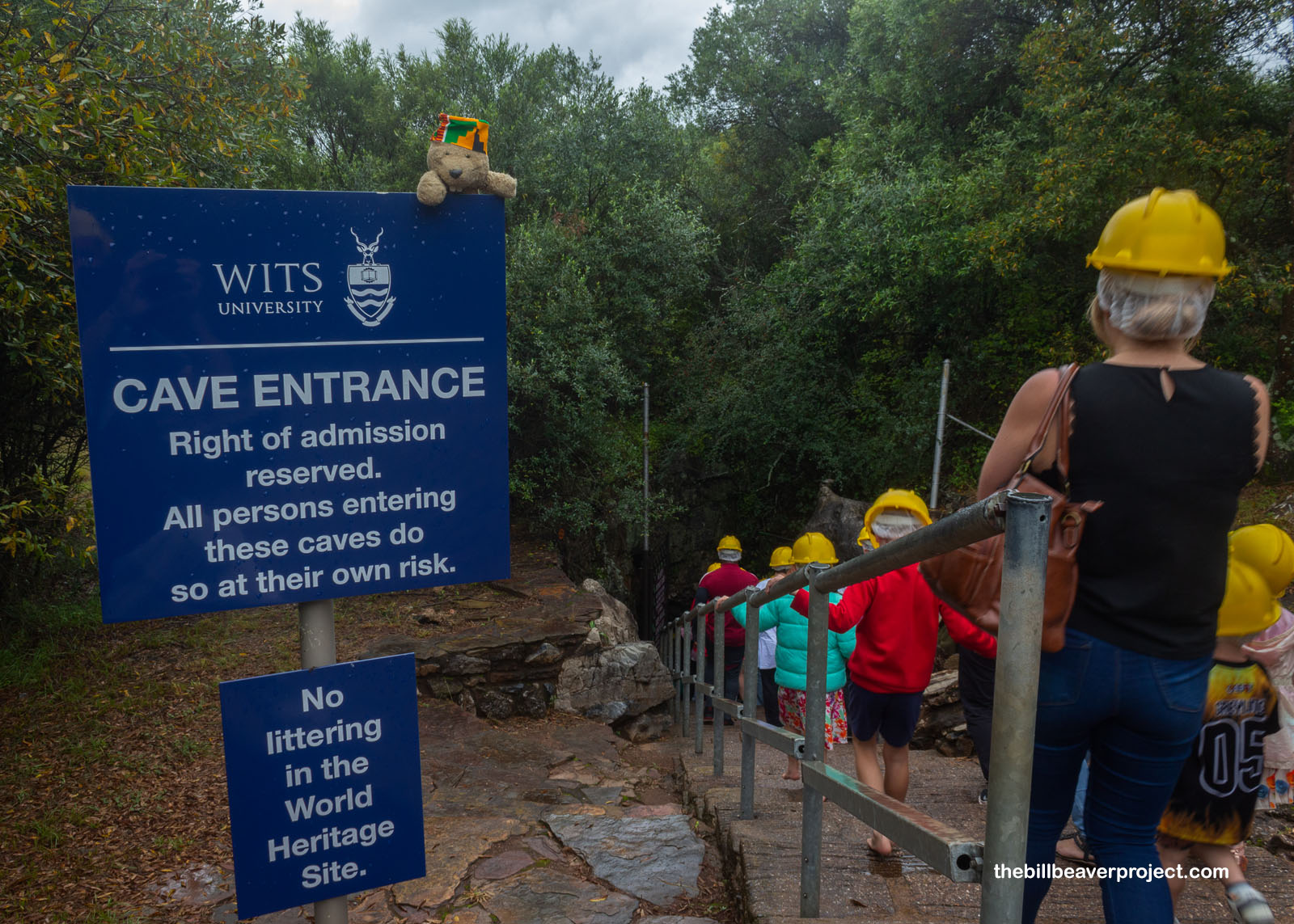
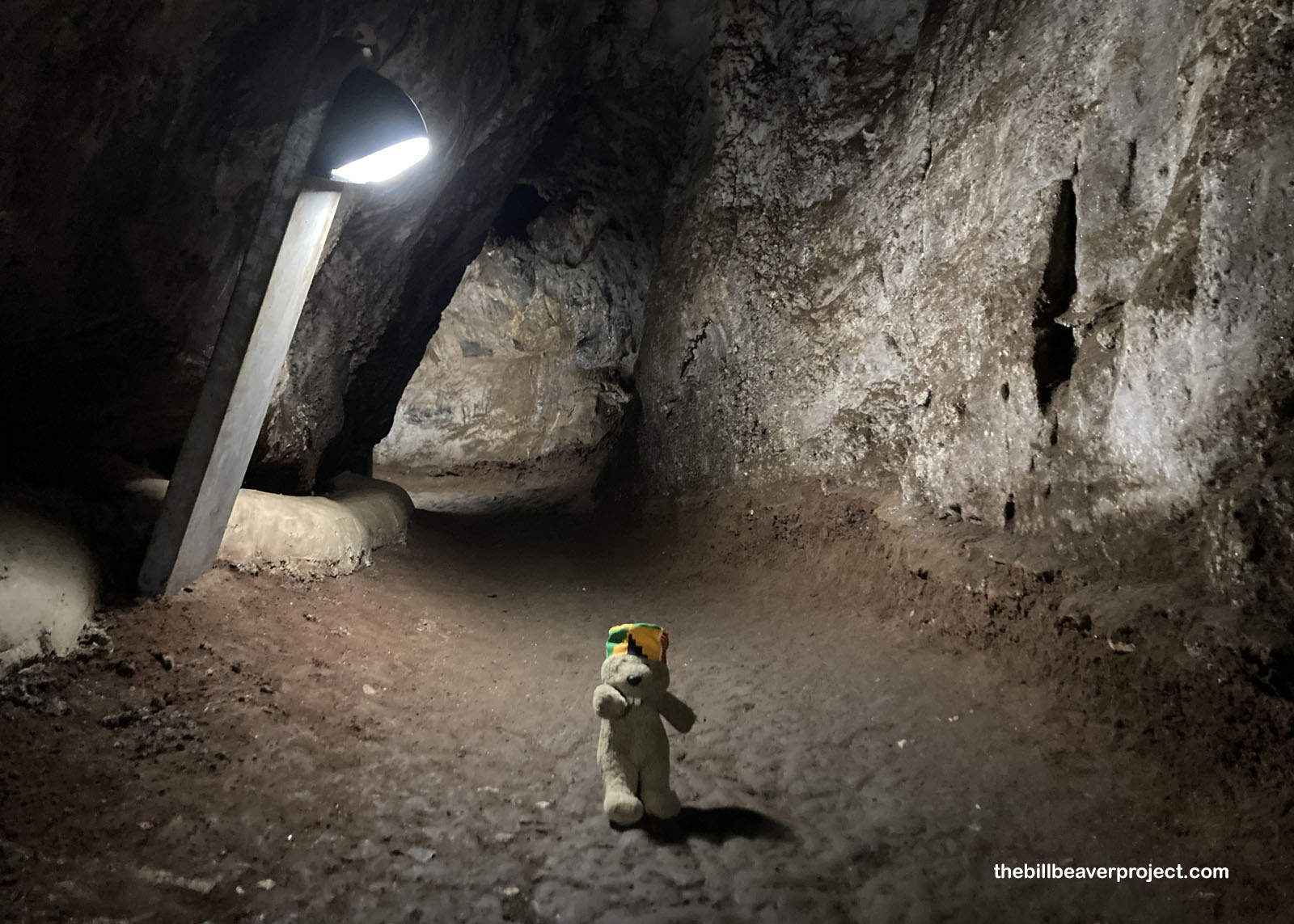
A good sized group of visitors had assembled on this drizzly morning, and our guide led us all down the slick steps into the depths of the cave, whose entrance had been blasted out by those Italian miners. He made sure we were all aware that we were dealing with ape-men, not cave men, because there’s no evidence that any of these ancestral hominids actually lived in the caves. Most likely, they fell in, got washed in, or were brought in by predators! Luckily for us modern visitors, the predators had moved on, and apart from some low ceilings, the path was set up for safety!
 |
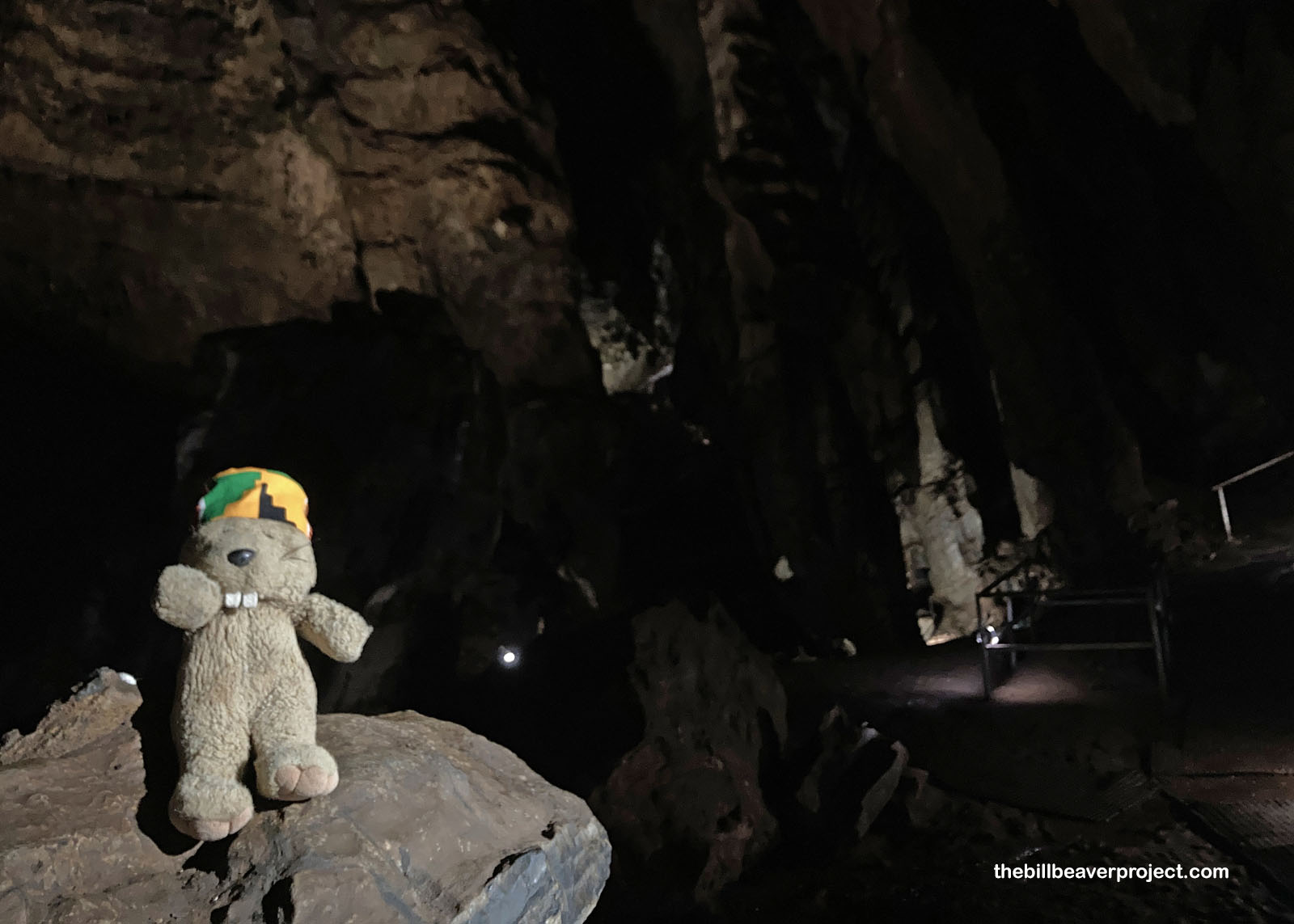
After we descended the stairs, we flattened out around 60 meters underground, where we could see the huge stalactites that had been hacked away for their limestone. Our guide asked everyone if they could still tell which way was north, then showed how the rock formations were all slanted. 2 billion years ago, an asteroid crashed down just south of here at Vredefort, creating ripples that warped all the surrounding rock for hundreds of miles! Here in the cave, that ripple was visible as a north facing tilt on the rock formations!
 |
Our guide then led us to a beautiful underground lake, which sits at the water table level for the region. It was totally still, unaffected by the nearby rivers, which is good because that means it isn’t being polluted. It’s a huge lake too, with passages that run for five kilometers underground! It also came with the sad story of Peter Verhulsel, an amateur cave diver who got lost in this lake in 1984 and was stranded on an island for three weeks of complete isolation and darkness. Sadly, unable to see or hear the rescue divers who passed within 40 yards of him, he died of starvation just hours before they found him, another body claimed by this cave.
 |
We continued up and down some treacherous stairs that had some folks sliding on their butts because they were so anxious. Some of the tunnels were awfully low too, by human standards, so while there was a lot of duck walking and crawling going on around me, there was no risk of me bumping my noggin on any of that hard ceiling rock!
 |
At last, we emerged back into the sunlight and were greeted by a copper sculpture of Dr. Broom, holding that first Australopithecus skull. His fingers and his nose were especially shiny because, like with the foot of St. Peter in his namesake basilica, there was a touching tradition with Dr. Broom. You should touch his fingers for wisdom or his nose for luck! I decided to go with the nose, because you can grow wisdom over time, but you can’t grow luck!
 |
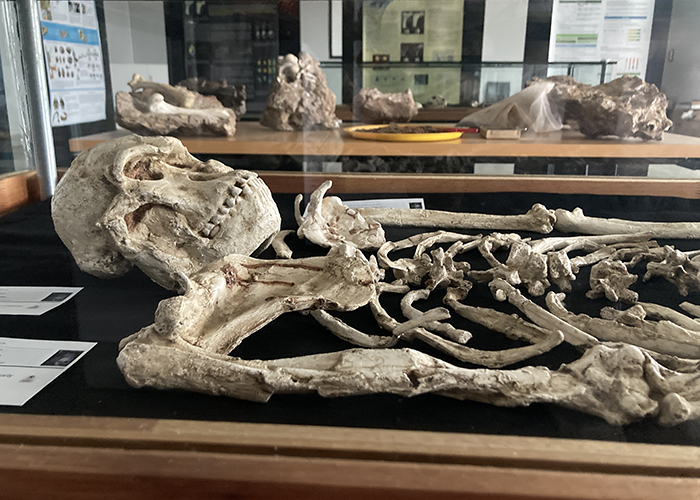
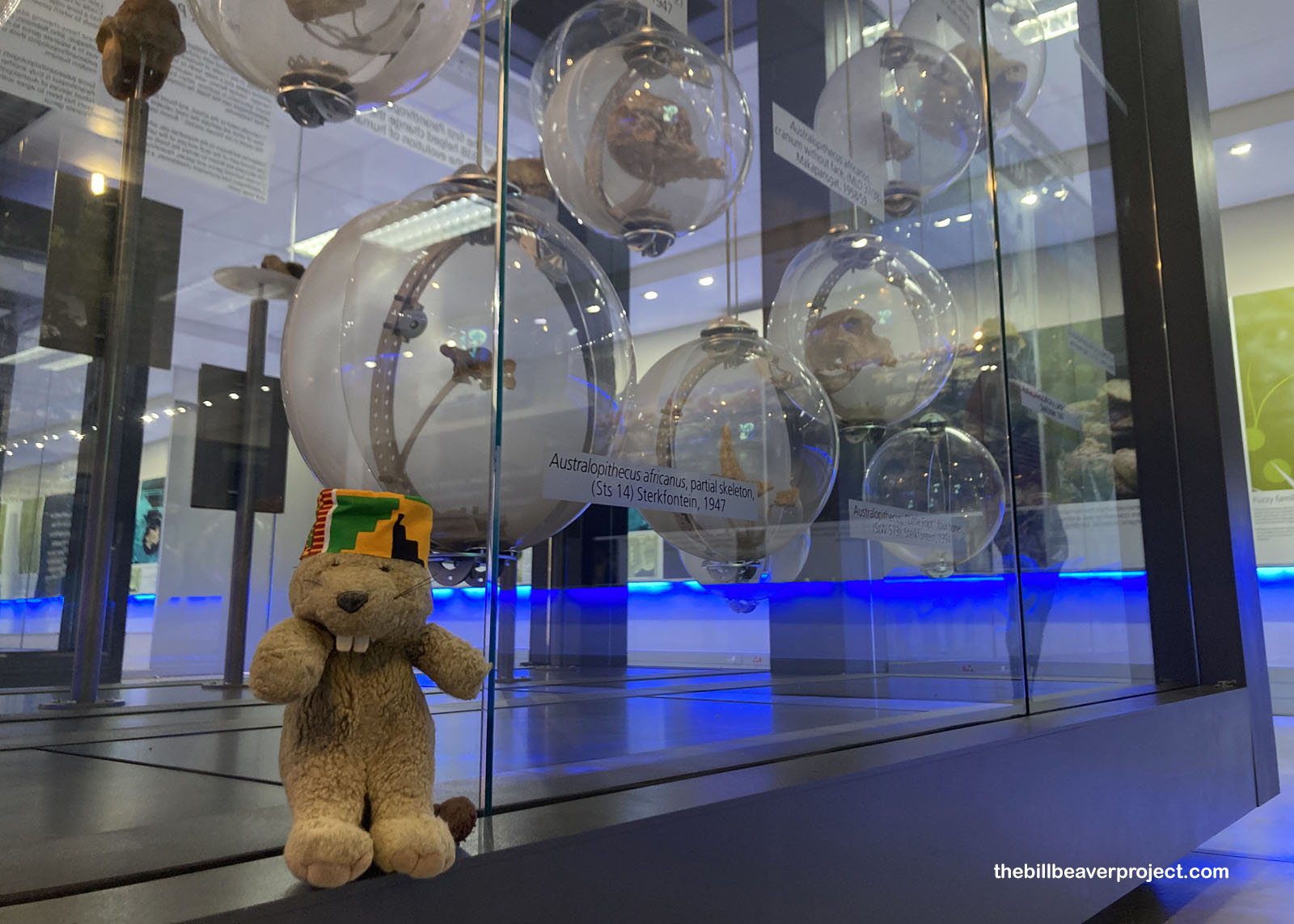
With the tour concluded, we went to wander the indoor exhibits and learned that, despite 40 years of mining that destroyed countless fossils, this site still produced the world’s largest assortment of Australopithecus skeletons and some of the oldest known stone tools! Most famous among the Sterkfontein discoveries were the amazingly intact skull of “Mrs. Ples” (1947) and “Little Foot,” the most complete ancient hominid skeleton ever found and so ancient (almost 4 million years old) that it might be an all new species of Australopithecus! Little Foot is still being excavated, so we only got to see a replica. Still, it was amazing to see 4 million years of change in reverse!
 |
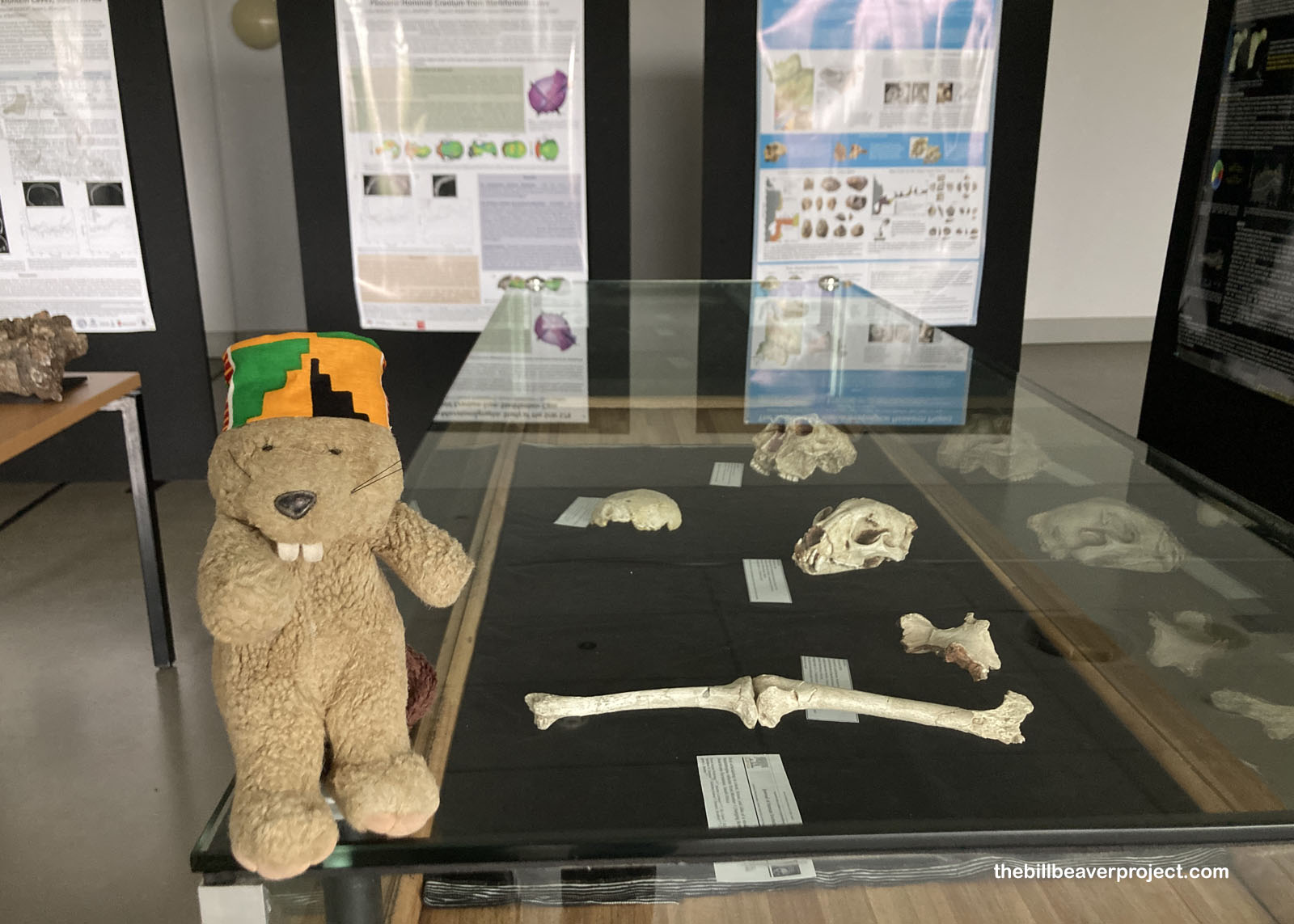 |
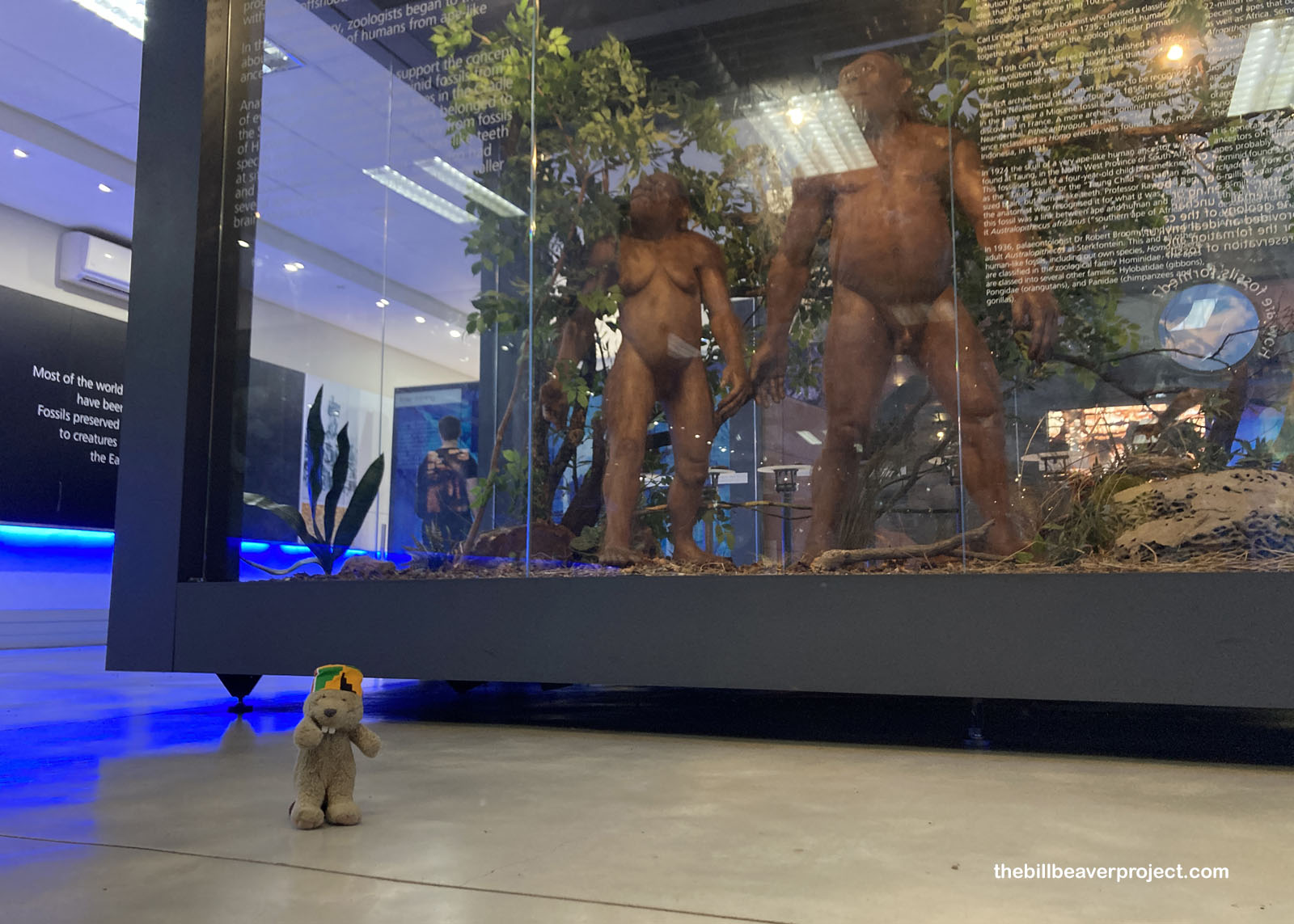
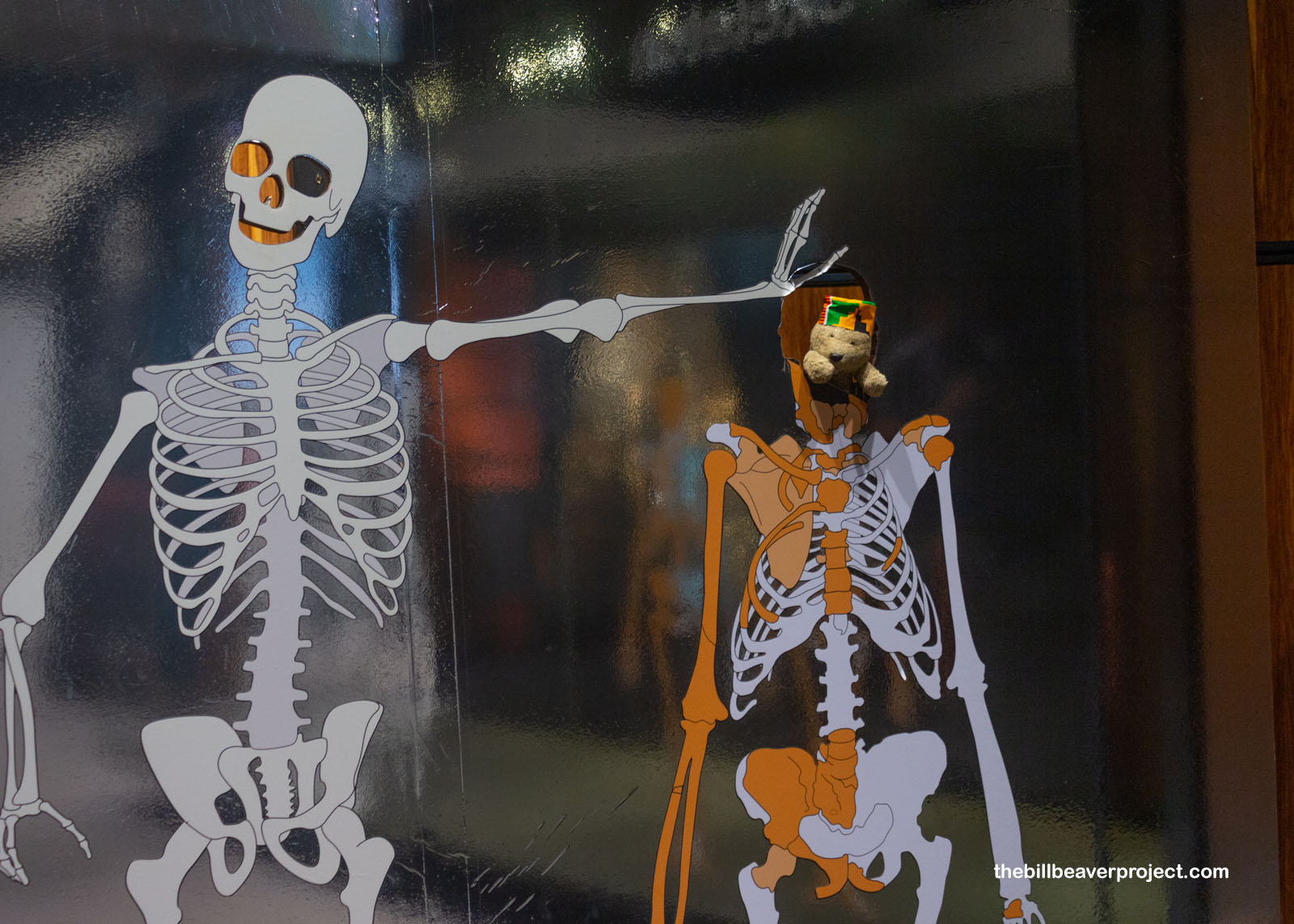
Inside the exhibit hall, many different pieces of excavated skeletons were displayed inside clear bubbles of plastic or glass, including a replica of the Piltdown Man hoax to demonstrate some of the difficulties in assembling a human timeline. Fossil hominids have been rife with controversy, even down to the mixing of roots in Australo (Latin) and pithecus (Greek), but enough evidence has been collected for artists to assemble lifelike models of how these humans ancestors probably looked in the flesh!
 |
 |
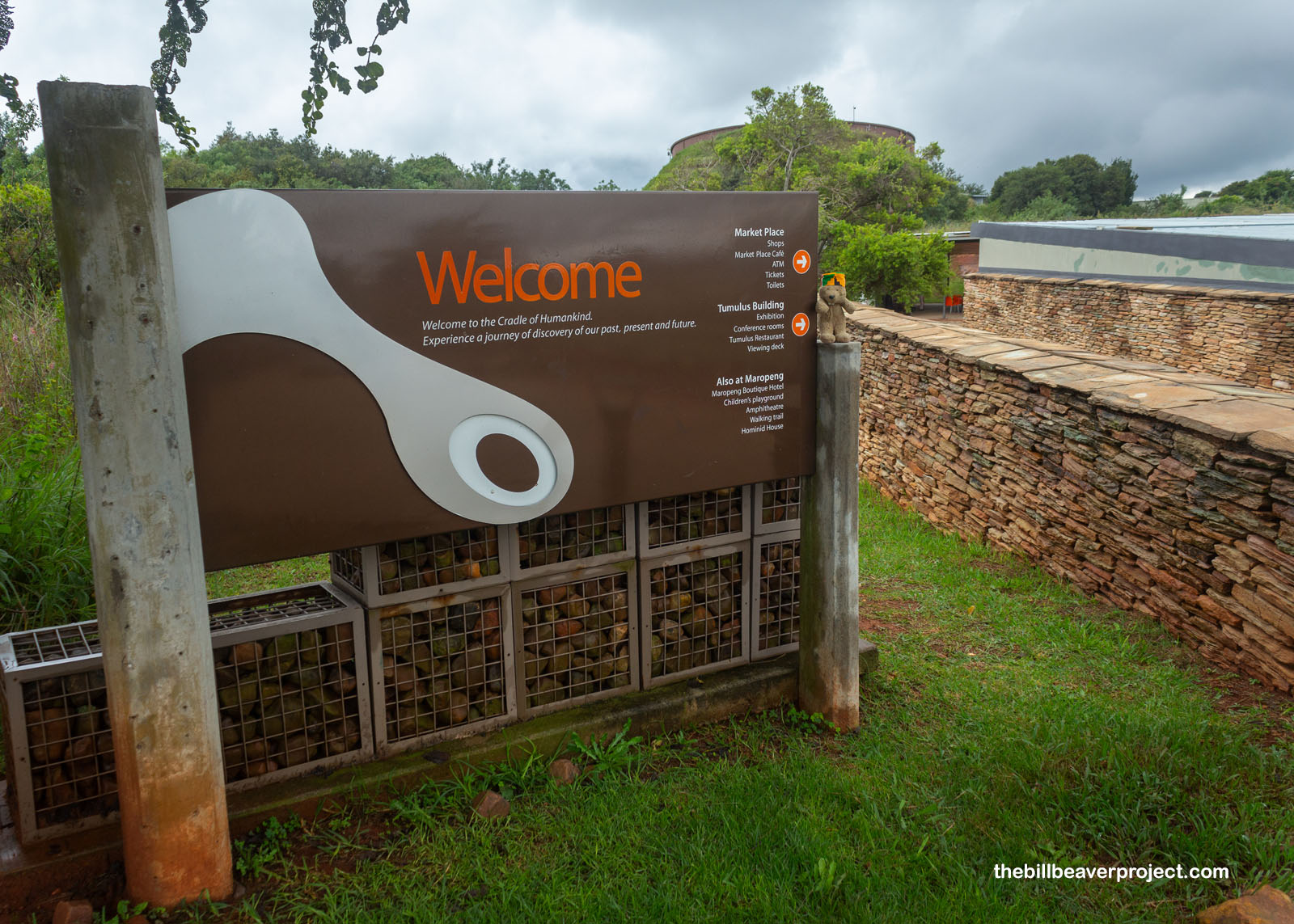
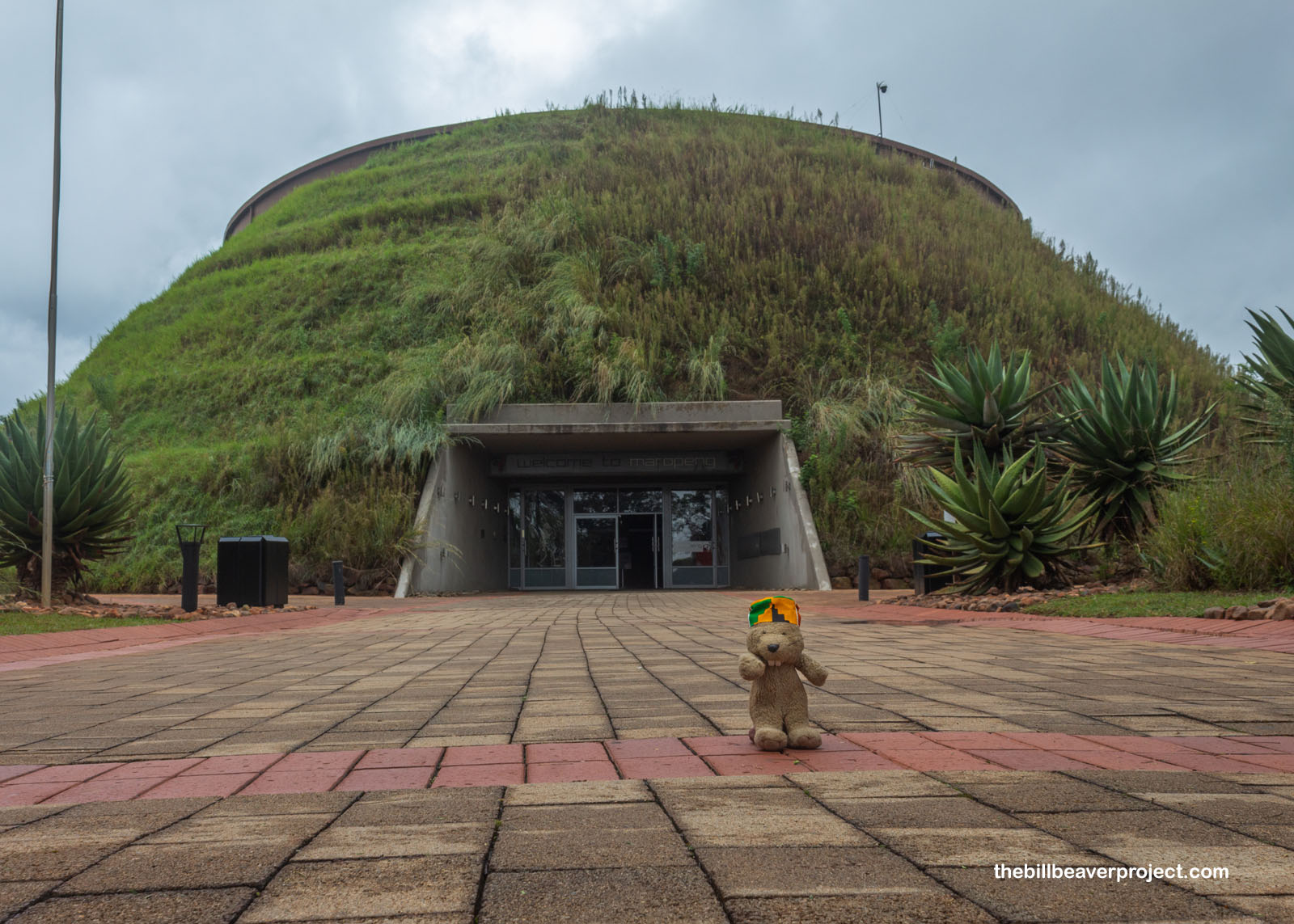
In order to learn more, we stepped over to the Maropeng Visitor Centre, the official one for the multi-location Cradle of Humankind, where I immediately learned about the South African custom of tipping five rand to the parking lot attendants for making sure your car doesn’t get stolen. Maropeng means “returning to the place of origin” in the Setswana language, and the building itself is designed to resemble a tumulus, or burial mound!
 |
 |
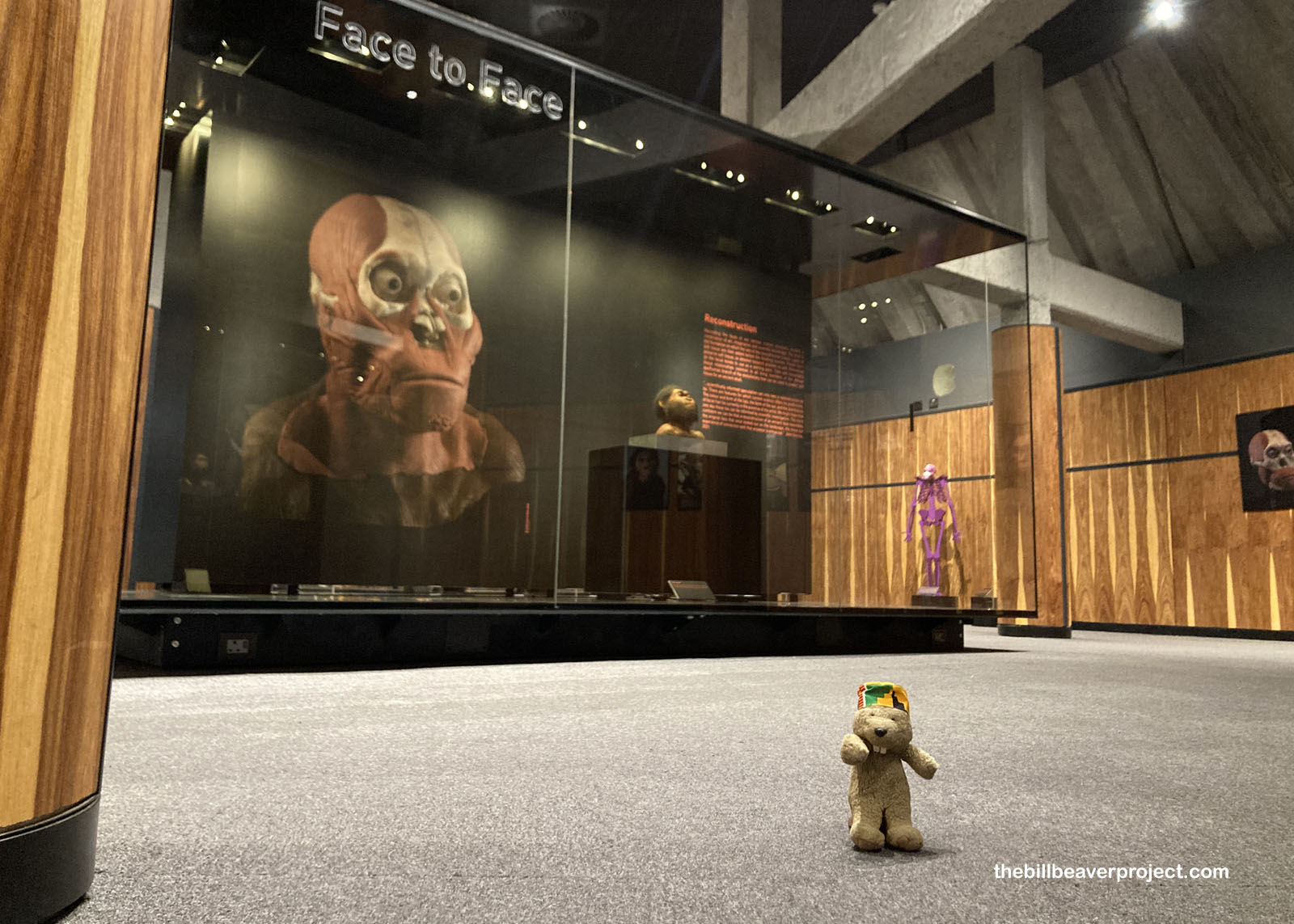
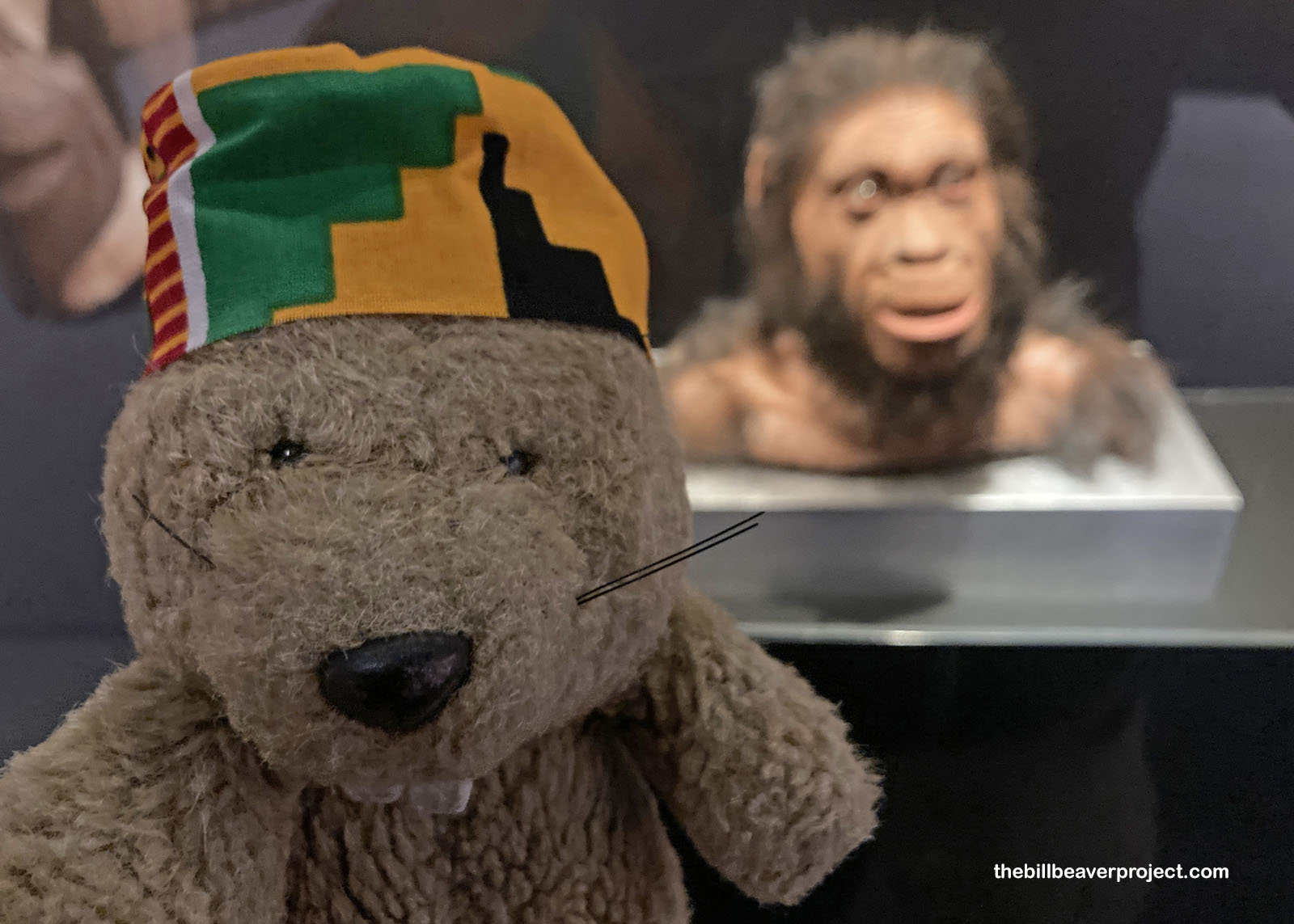
On the ground floor was a whole hall dedicated to South Africa’s ancient hominids, including the eight identified species of Australopithecus! Exhibits talked about reconstructing facial features, evidence of cancer in fossilized bones, and the unique ways that feet evolved! In fact, the feet fossils found in Cradle of Humanity proved that humans and chimpanzees diverged at the same time from a common ancestor, not that one preceded the other! Hominid toes shortened, ankles tightened, and heels became stronger!
 |
 |
We were then directed downstairs, where it was too dark for photos, and boarded a tire-shaped raft for a slow river journey through the four traditional elements (air, fire, water, and earth) to another exhibit on human progress, past, present, and (ominously) future! With some whimsical elements like a spinning dodo bird that talked about her plight in a polite lady’s voice, it was a fascinating hall discussing social structure, language, and environmental impact!
 |
Having toured through Maropeng and gotten a good taste of ancient history, though no beavers appeared in this story, Buzz and I concluded our day’s adventures and headed for Pretoria. Along the way, I learned that stop signs should be coasted for safety, South Africa is famous for dried meat called biltong, and that a comfortable home in Pretoria has four doors with six locks, plus an indoor safe haven gate, plus an alarm, plus emergency summoning buttons, all in a gated community with an armed guard and electric fencing! Yeesh! What an eye opener into the world of post-apartheid South Africa! I was glad we weren’t going to be hanging around Pretoria for long, since tomorrow, we are off on safari, where we only have to worry about feline predators instead of human ones!
It’s a pleasure!

More 2026 Adventures |
Next Day |