 Previous Day |
Pretoria, SA → Welgevonden Game Reserve 236.0 km (146.6 mi) |
 Next Day |
Thobela kamoka!
A trip to Africa practically demands going on safari, and in case you were wondering, safari is a Swahili word, adopted from Arabic, meaning “journey!” While the word is now as pan-African as my kufi cap, in the place where Buzz and I decided to make our wildlife journey, the language isn’t Swahili at all, but Sepedi, also called Northern Sotho! Foregoing the big-name, big-budget lodges of Kruger National Park, we got ourselves one heck of a deal at the Welgevonden Game Reserve, about three hours northwest of Pretoria. Welgevonden, meaning “well found” in Dutch, spans 36,000 hectares (89,000 acres), boasting more than 65 mammal species, 100 kinds of reptiles, frogs and fishes, and 320 bird species! Over four game drives, we were going to search for as many as possible, even the famed Big Five: lions, leopards, elephants, rhinos, and cape buffalo!
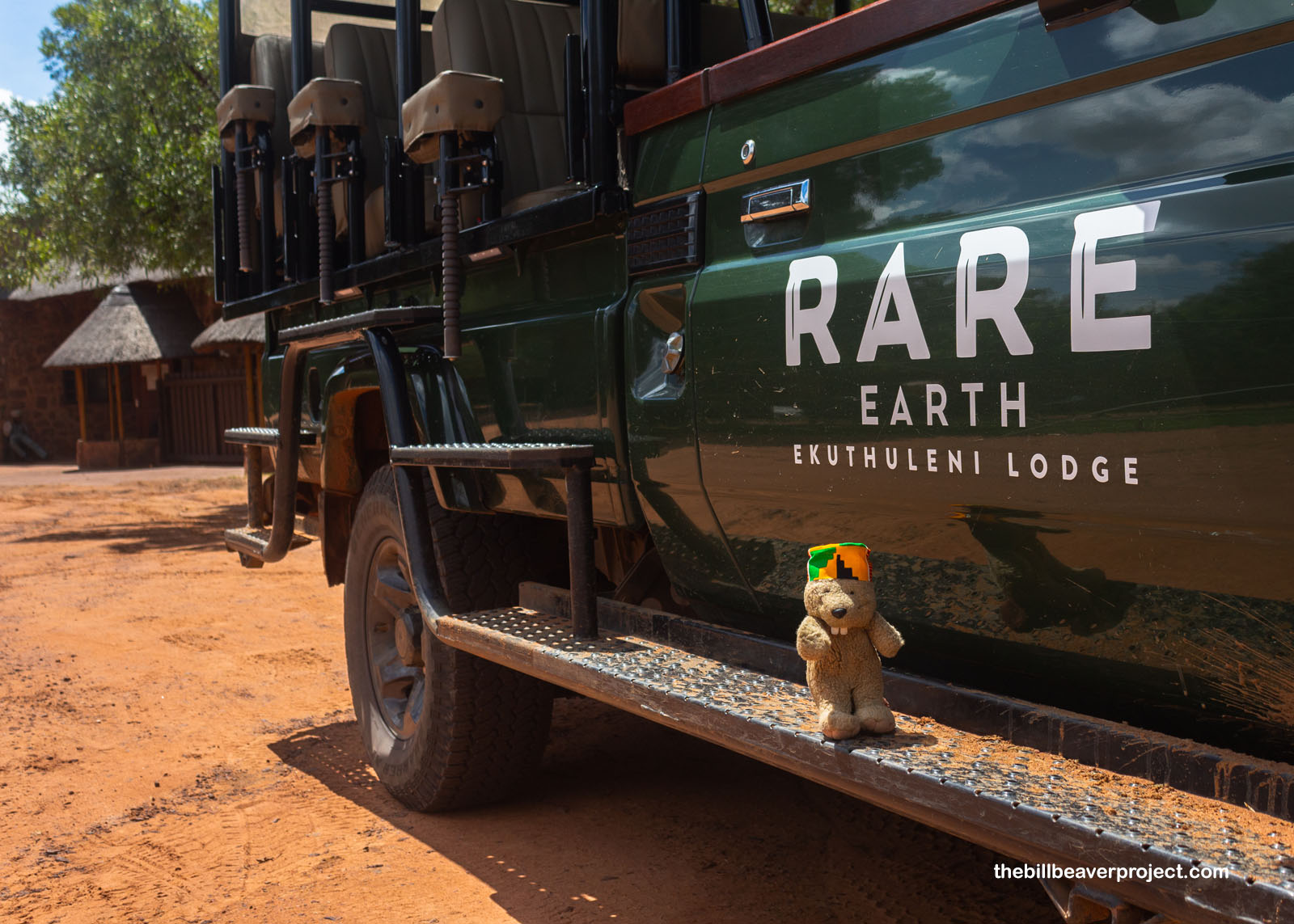 |
After a long drive that introduced me to South African traffic stops and “High Crime Area” signs, where it was always a bad idea to stop, we pulled into the main gate at Welgevonden just in time for our 12:30 pickup by Phin(eas), who would be conducting our first two drives before going on holiday himself! Phin’s favorite animal was an elephant because of their intelligence and emotions! We climbed into the back of Phin’s 4×4 safari-mobile with three stacked rows of benches and motored down the dirt road into the welcome area, where only herbivores were allowed, and gradually into the full-wildlife area, en route to the Ekhutuleni Lodge, which, it turned out, we would have to ourselves!
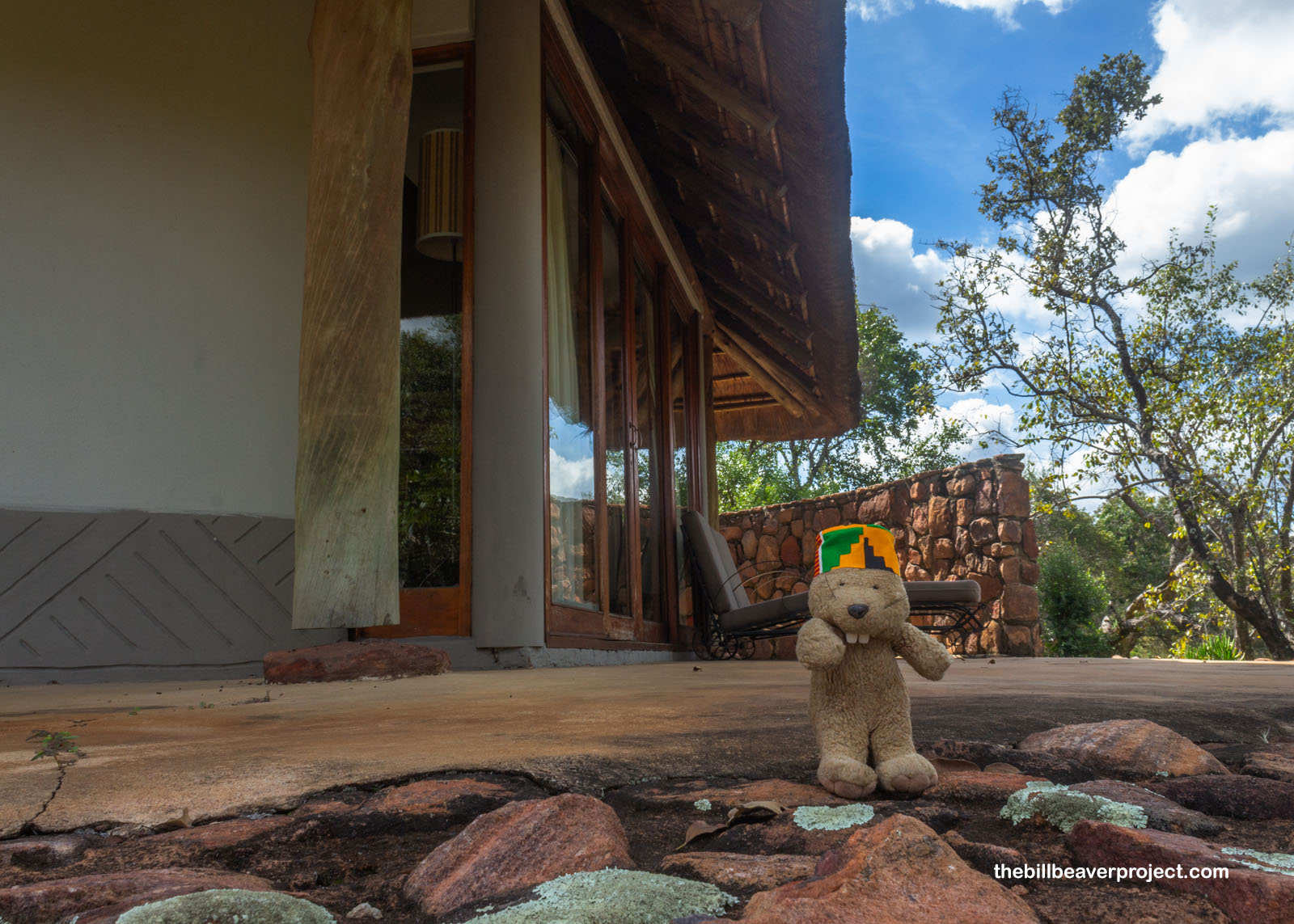 |
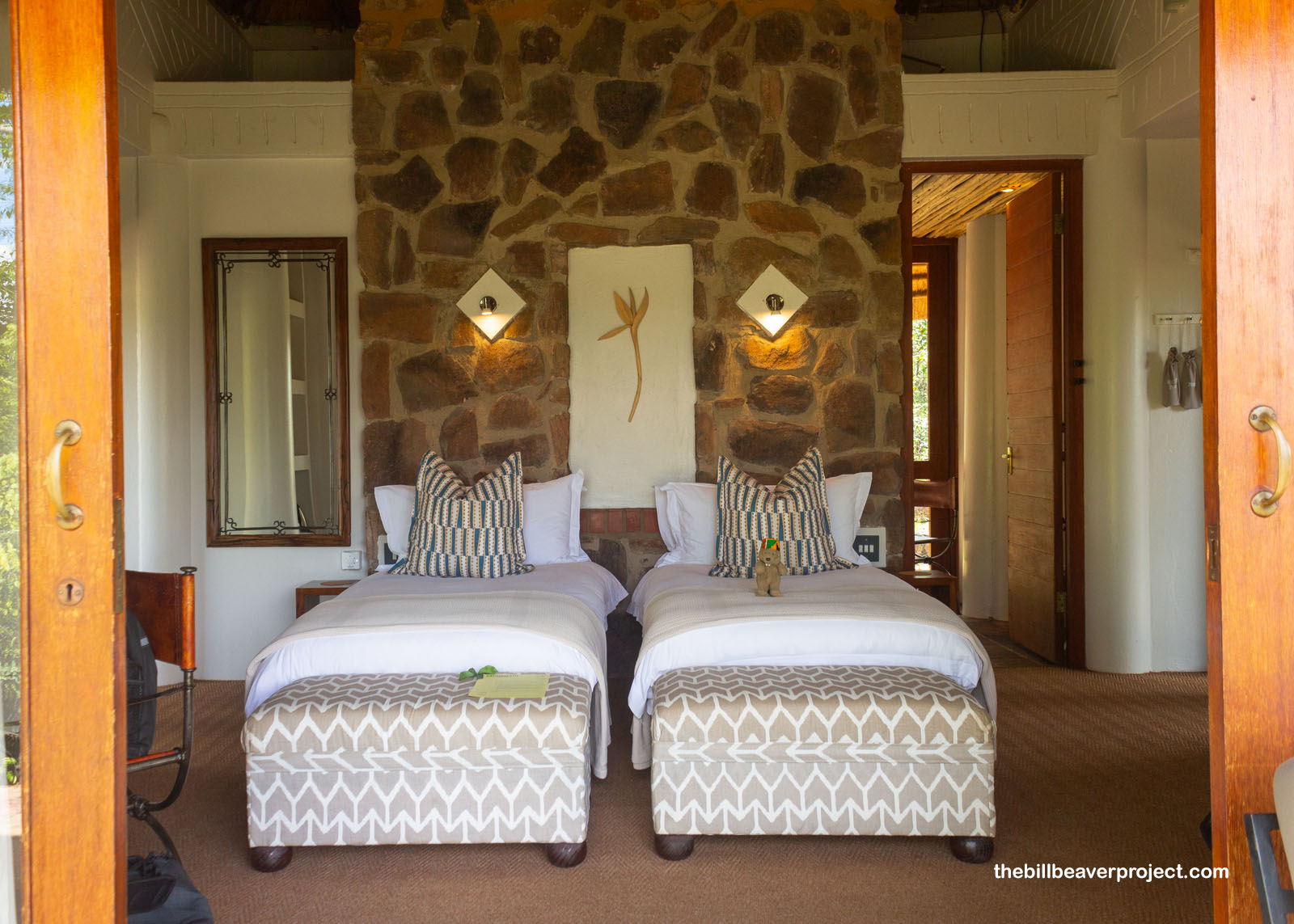
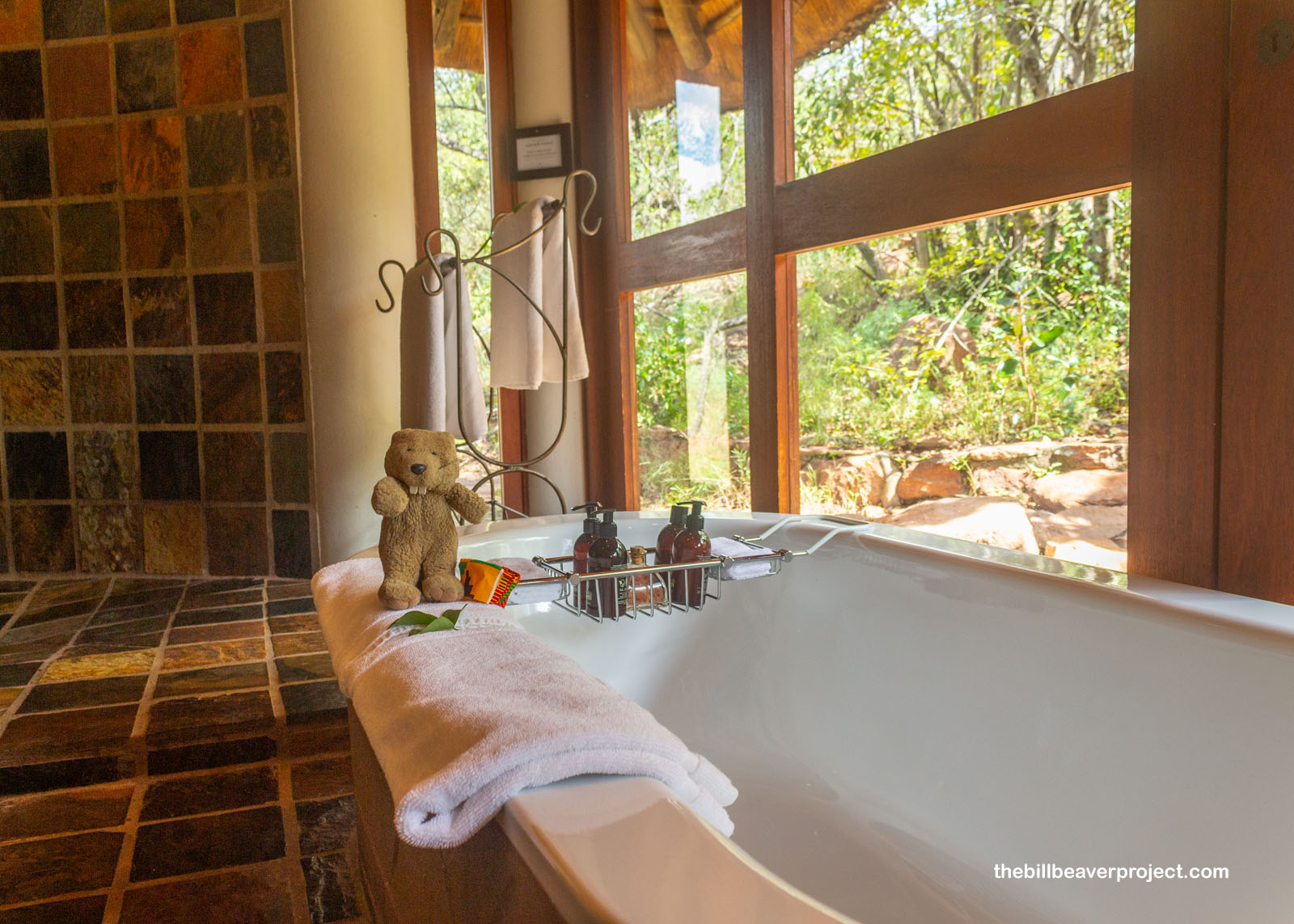
It was a very fancy place to stay with a sliding glass door opening to the valley below and a deluxe bathroom with a soaking tub and two showers, one indoor and one outdoor! Skinks crawled about on the stones outside, and a family of warthogs milled about just outside our door! They were too skittish for photos, though. Pretty hungry, we unloaded our stuff and made for the dining patio to have lunch.
 |
 |
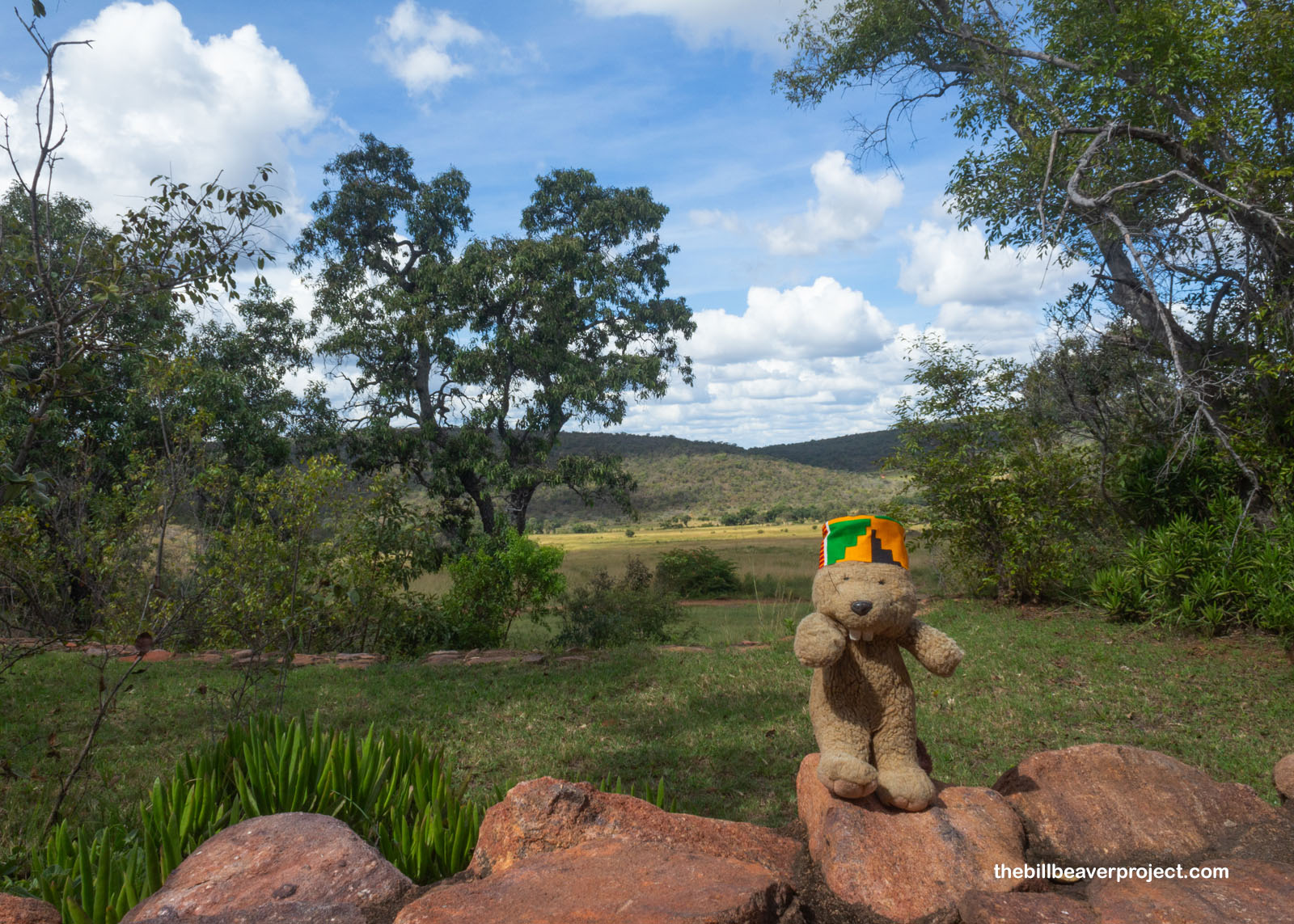
While there, we received the lodge rules: have all the fun you like during the day, but do not go wandering around at night. Our doors slid right open into animal habitat, and it was not uncommon for zebras, rhinos, even lions, to pass through Ekhutuleni in the dark! Even though this was an enclosed reserve, with electric fences to keep poachers out and animals in, it sure did not feel like a zoo! I couldn’t wait for our first drive, departing the lodge promptly at 4:30!
 |
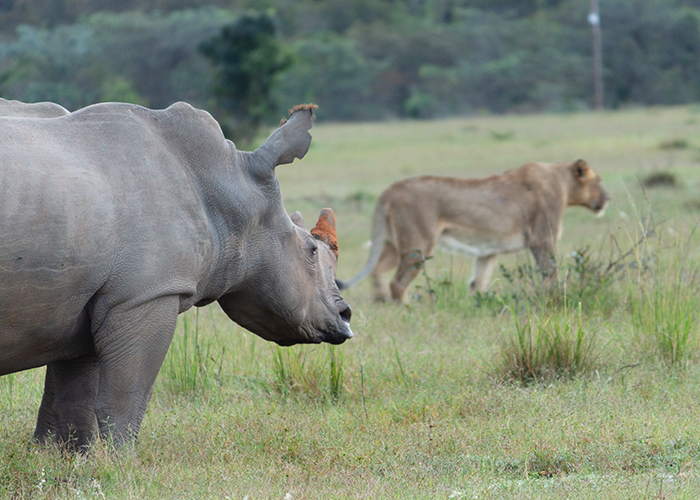
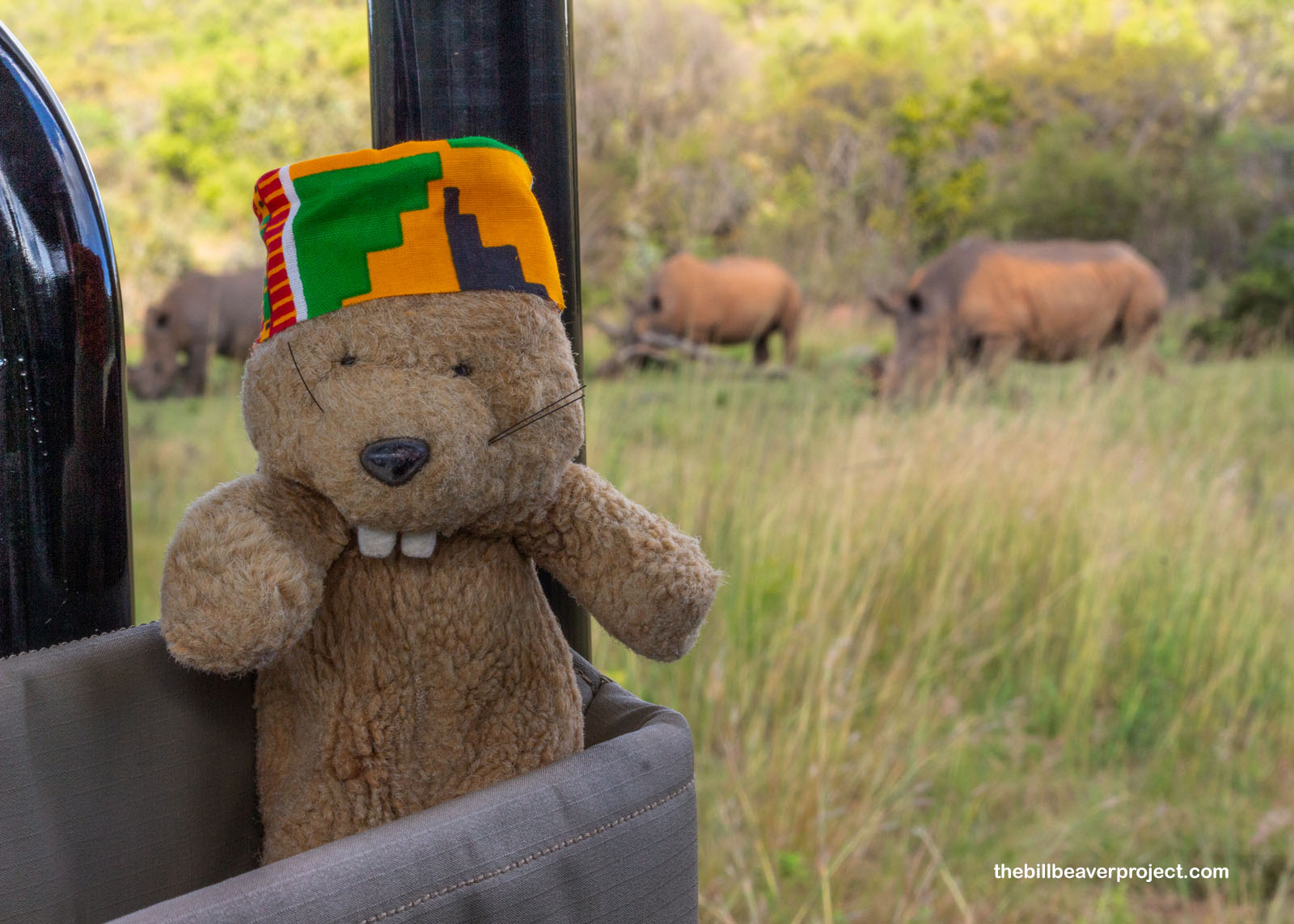
Right off the bat, we encountered a herd of white rhinos having a nice evening graze. One of Big Five, check! What a nice surprise to see them so early on, when they are becoming scarcer across the rest of Africa! Fun fact: white rhinos should really be called “wide” rhinos, because they’re named for their wide lips, good for grazing. By contrast, black rhinos have tapered lips, which help them browse from trees!
 |
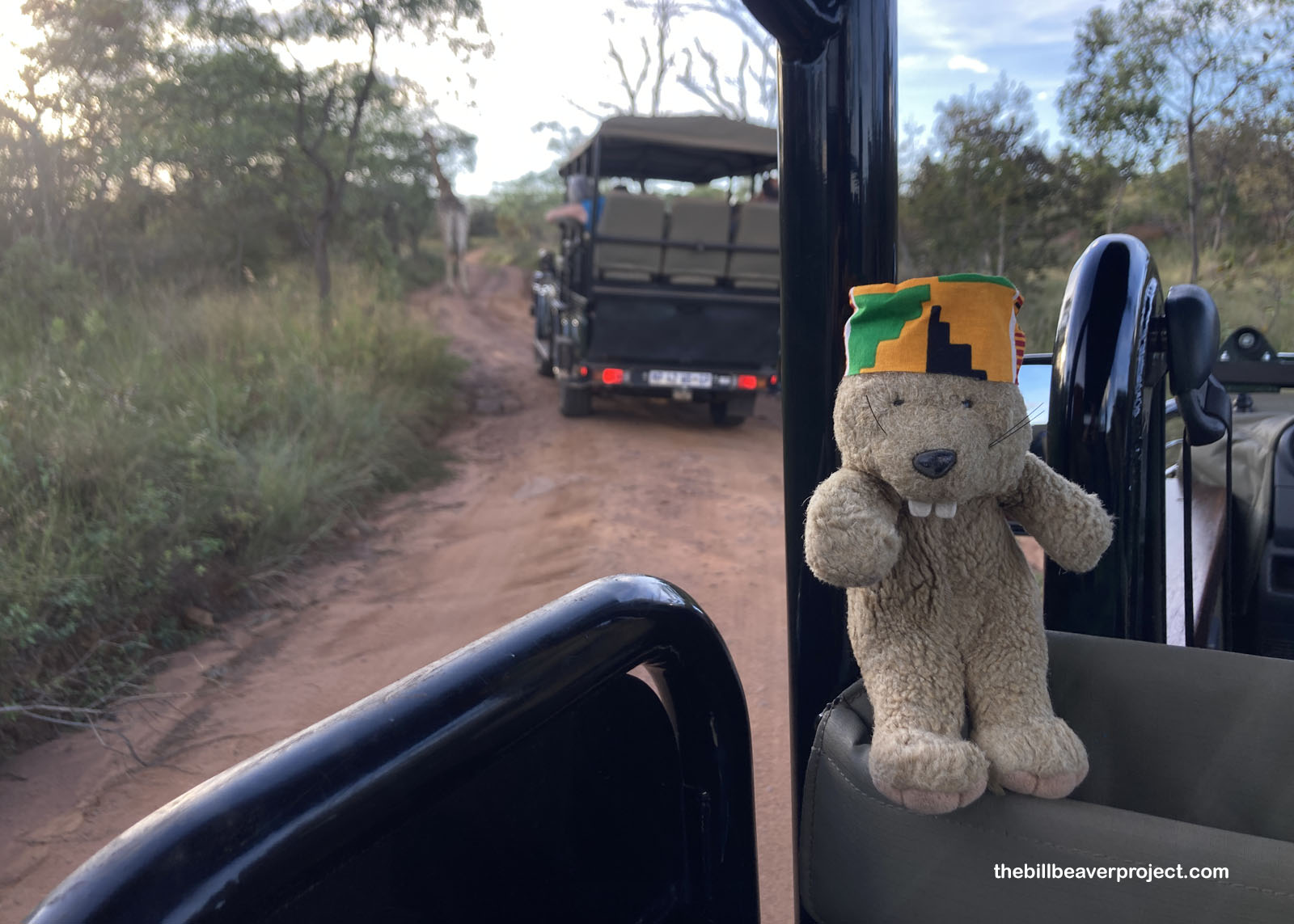
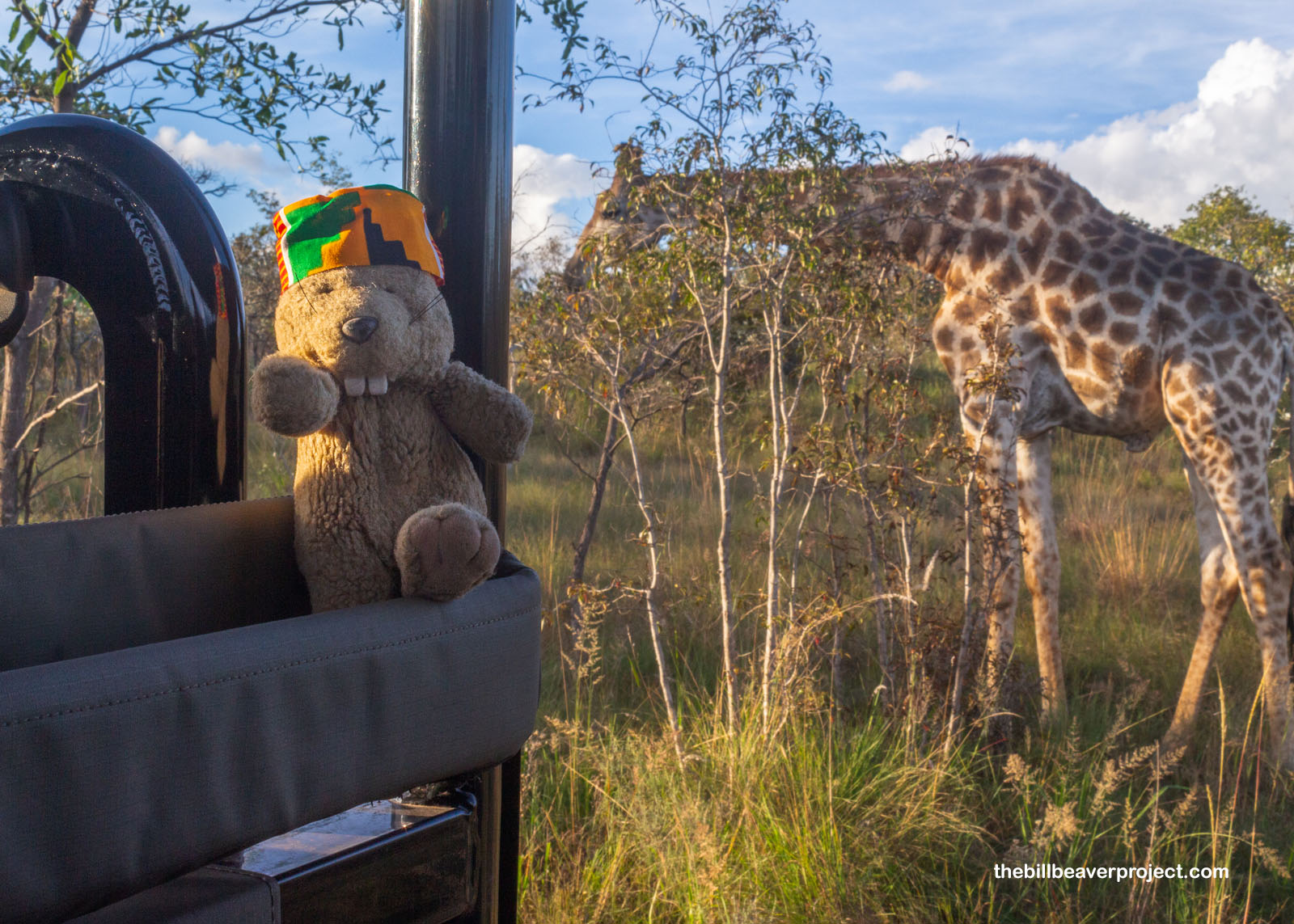
What I quickly learned about safari is, unlike taking a hike or visiting a historic site, both you and the wildlife are constantly moving, which makes it tricky to get good photos. From afar on this drive, we spotted zebras, warthogs, baboons, and even hippos, but the stars of this evening drive were the giraffes, five of them, all hanging out by the road munching leaves and paying us exactly no mind! Phin told us that all giraffes are born with tufts of fur on their horns, but when male giraffes fight, that fur gets worn away! It’s one easy way to avoid a misgendering faux pas!
 |
 |
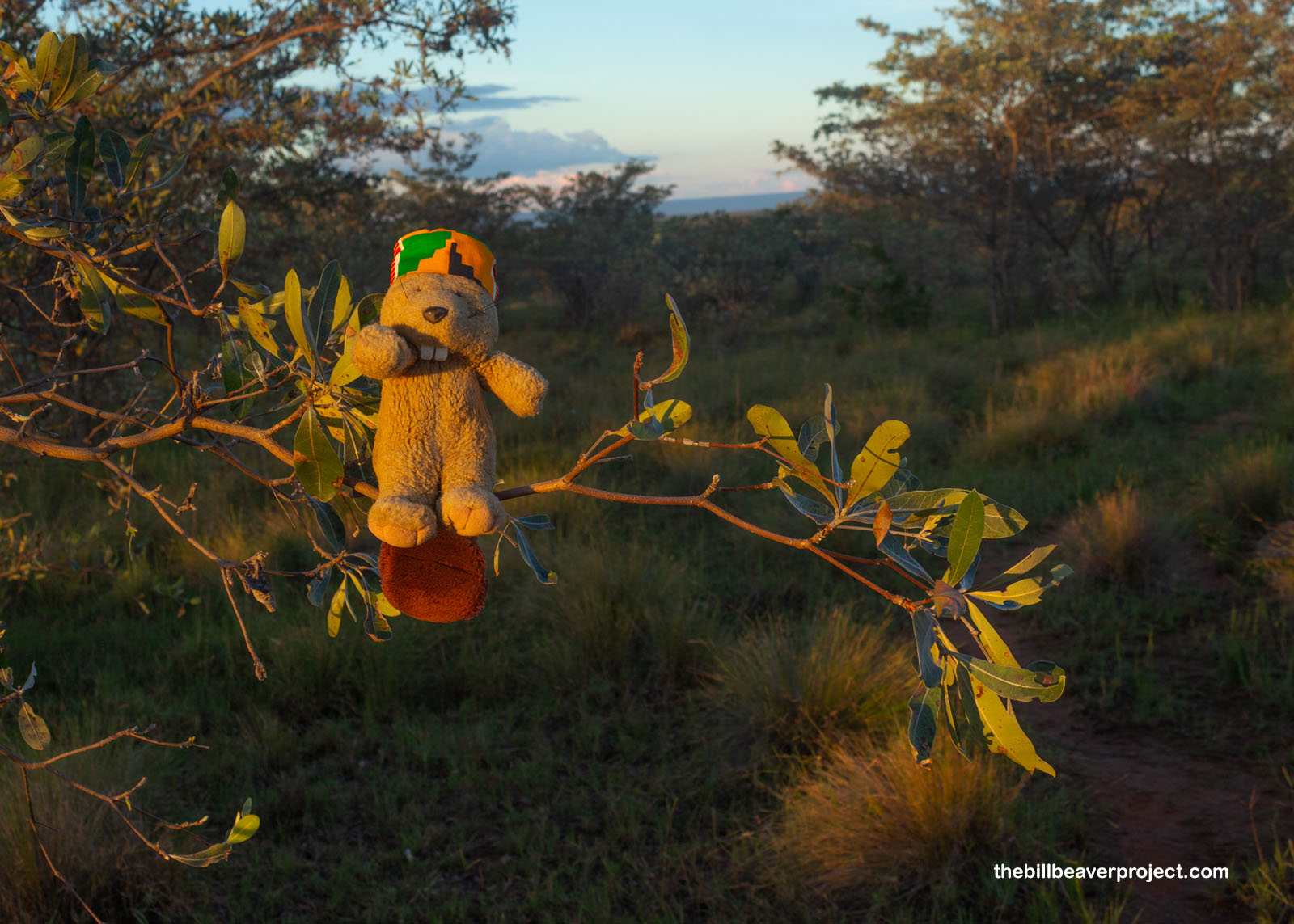
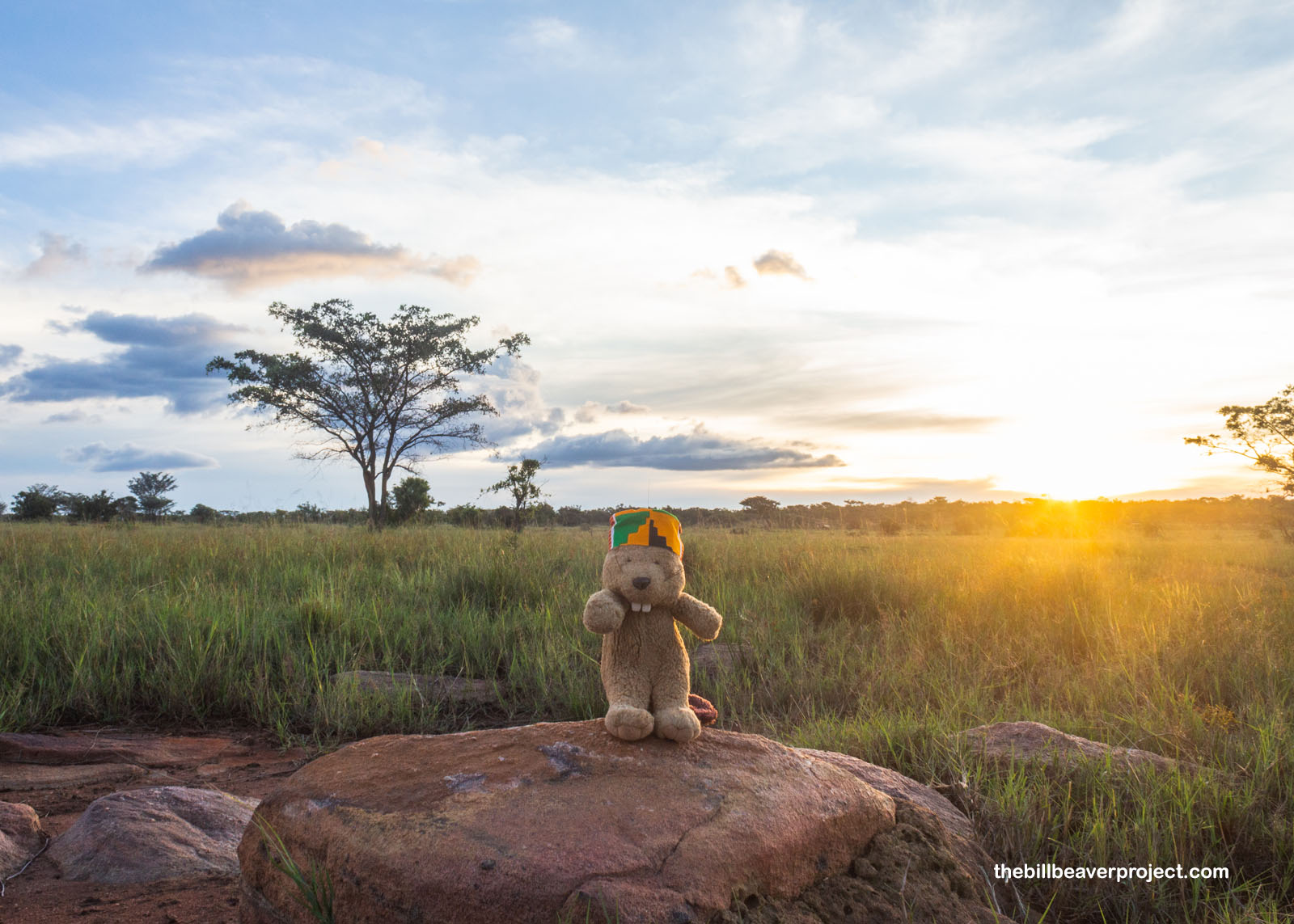
We spent three hours motoring around the bush observing critters of all sorts getting in some good grazing before slumber. Phin had an evening ritual for us too: the sundowner. I’d never heard of such a thing before, but a sundowner is a snack and a beverage enjoyed while watching the sun set! So Phin took us to a spot where lions had been reported, but all we saw was one jackal who got spooked when I sneezed! Within sight of a bunch of other safari trucks, we pulled to a halt in a grove of Silver Cluster-leaf trees (Terminalia sericea), my favorite tree on this safari, just as they were fading from silver to copper in the twilight! The sun set over the grassland as we munched on chips and sipped sodas. As a pescatarian, I did not sample the dried venison biltong, venison being any number of antelope in these parts, though biltong is both abundant and popular across South Africa!
 |
From Day 1 of safari in Welgevonden, a lot of my preconceptions were flipped upside down. First, most of the animals we saw were either traveling solo or in small groups. Males liked to be solo all the time, and females would split off from the herd to have their babies! Second, the emblematic camel thorn trees and towering termite mounds I always associated with African safaris were not to be seen here, being much farther north! And third, it turns out fall, not spring, is baby animal season in South Africa! We saw baby warthogs and kudus, and I wondered what else we’d spot in our next three game drives.
 |
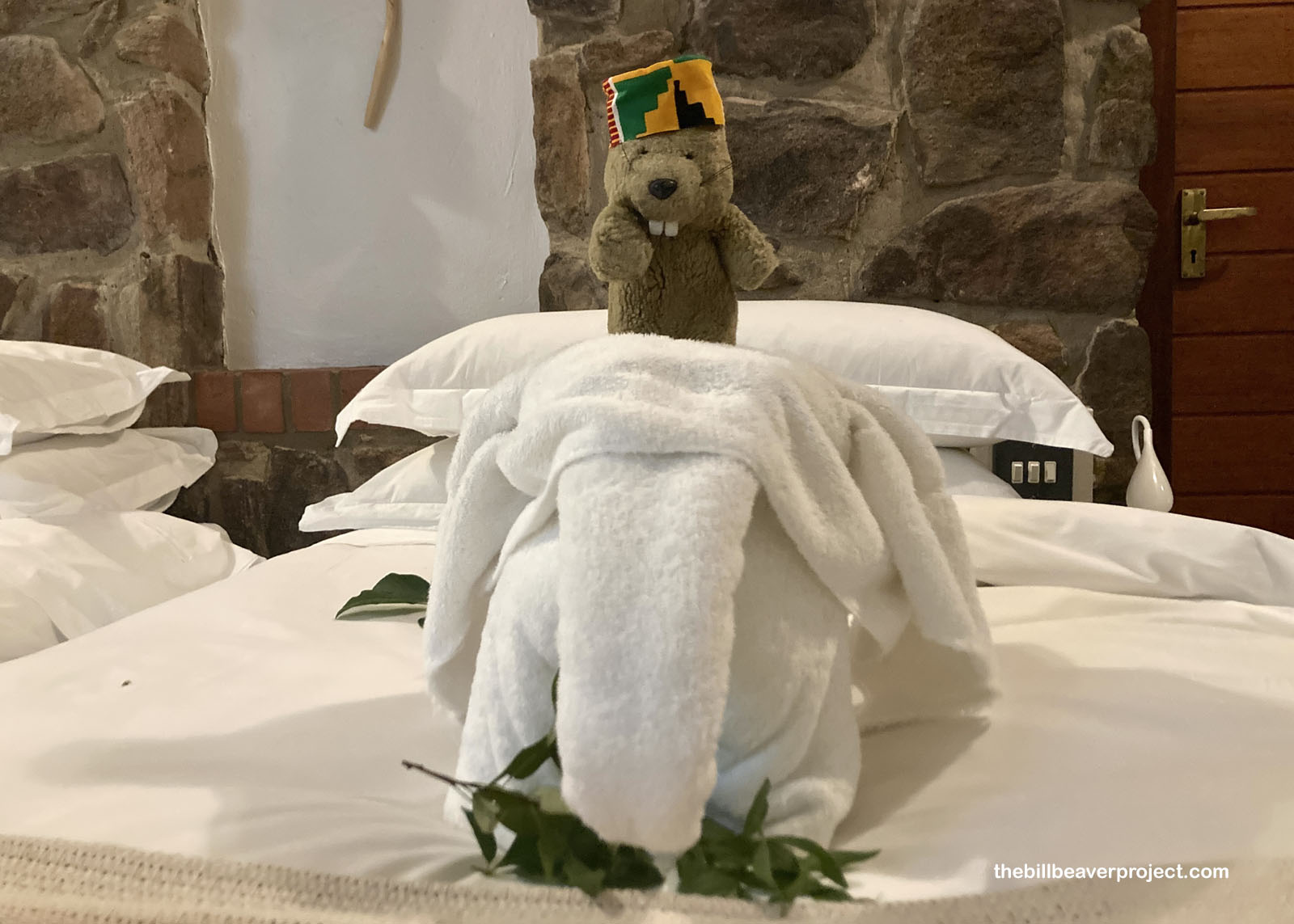
Back at the lodge, we’d been visited by towel fairies, who folded up our towels into elephants and left us a story about how an elephant once tried to eat the moon, and it’s the bite marks that give it its changing shape over each month! We were served a sumptuous meal outside by the pool, including pap lasagna served in a little iron potjie! Pap is known by many names across Africa, having been introduced with corn back in the 16th and 17th centuries, but it’s a tasty corn cake that’s really useful for absorbing sauces! After we finished eating, the whole staff, even Phin, came out and performed some local songs for the two of us, which was both very sweet and super awkward!
 |
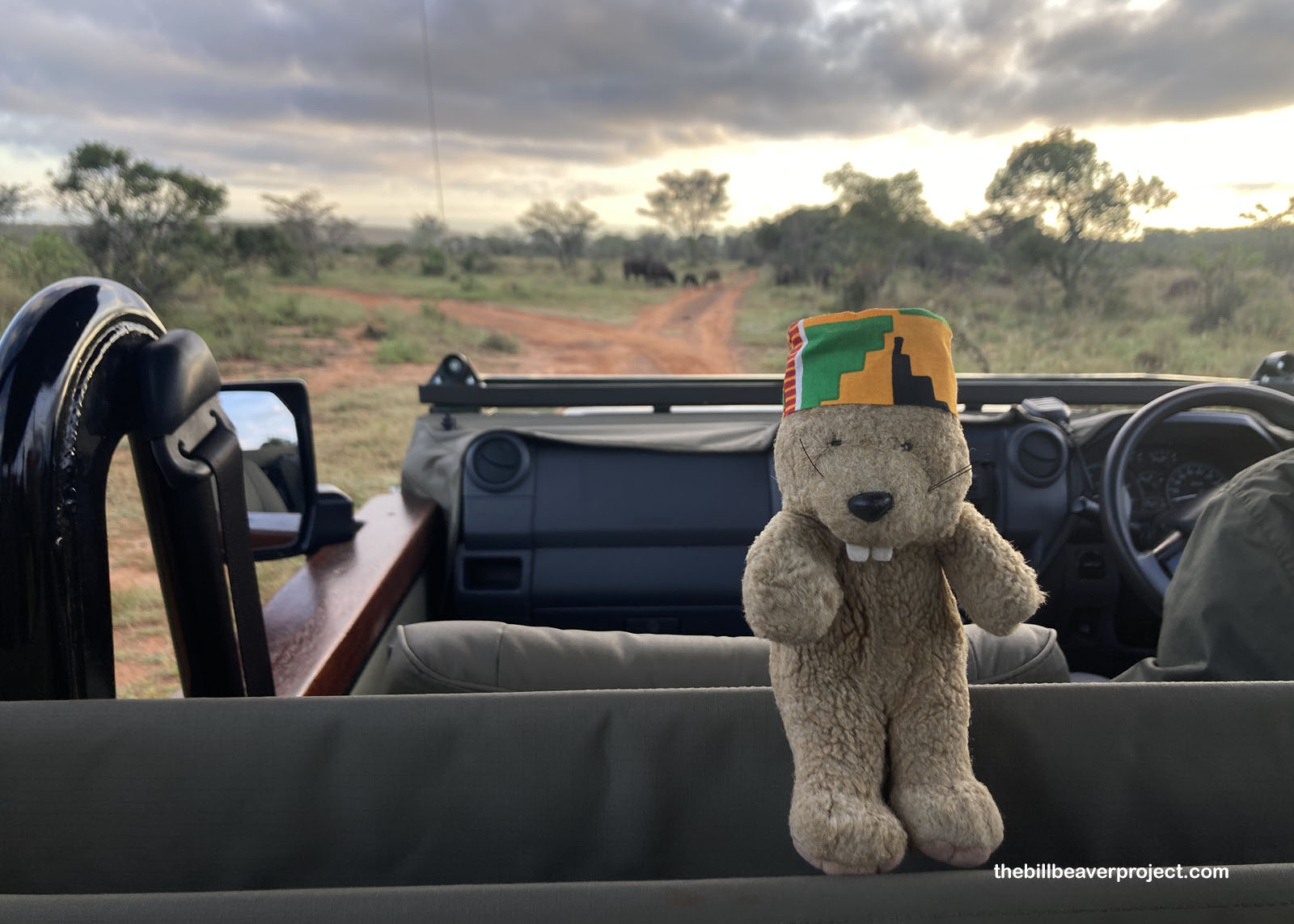
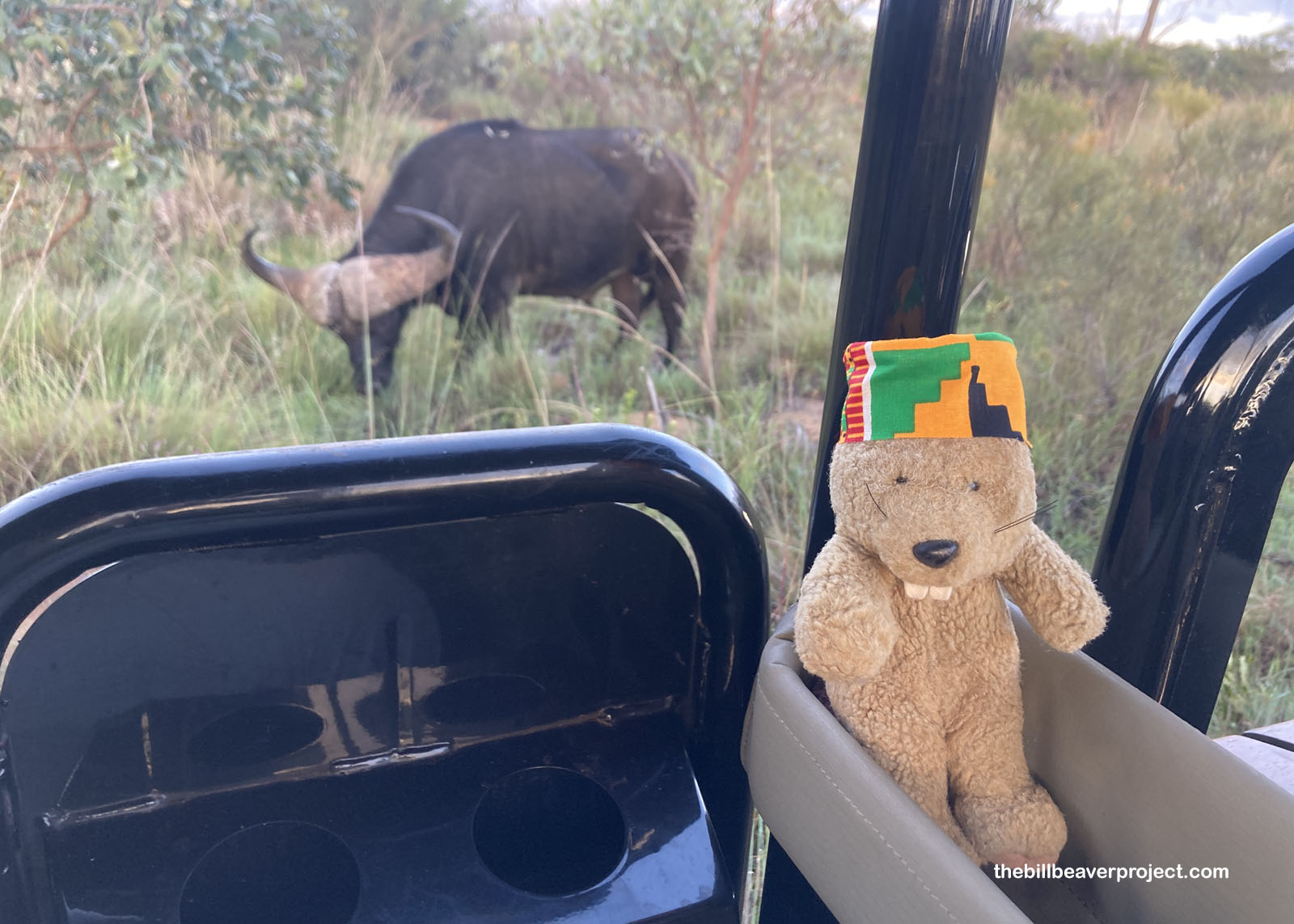
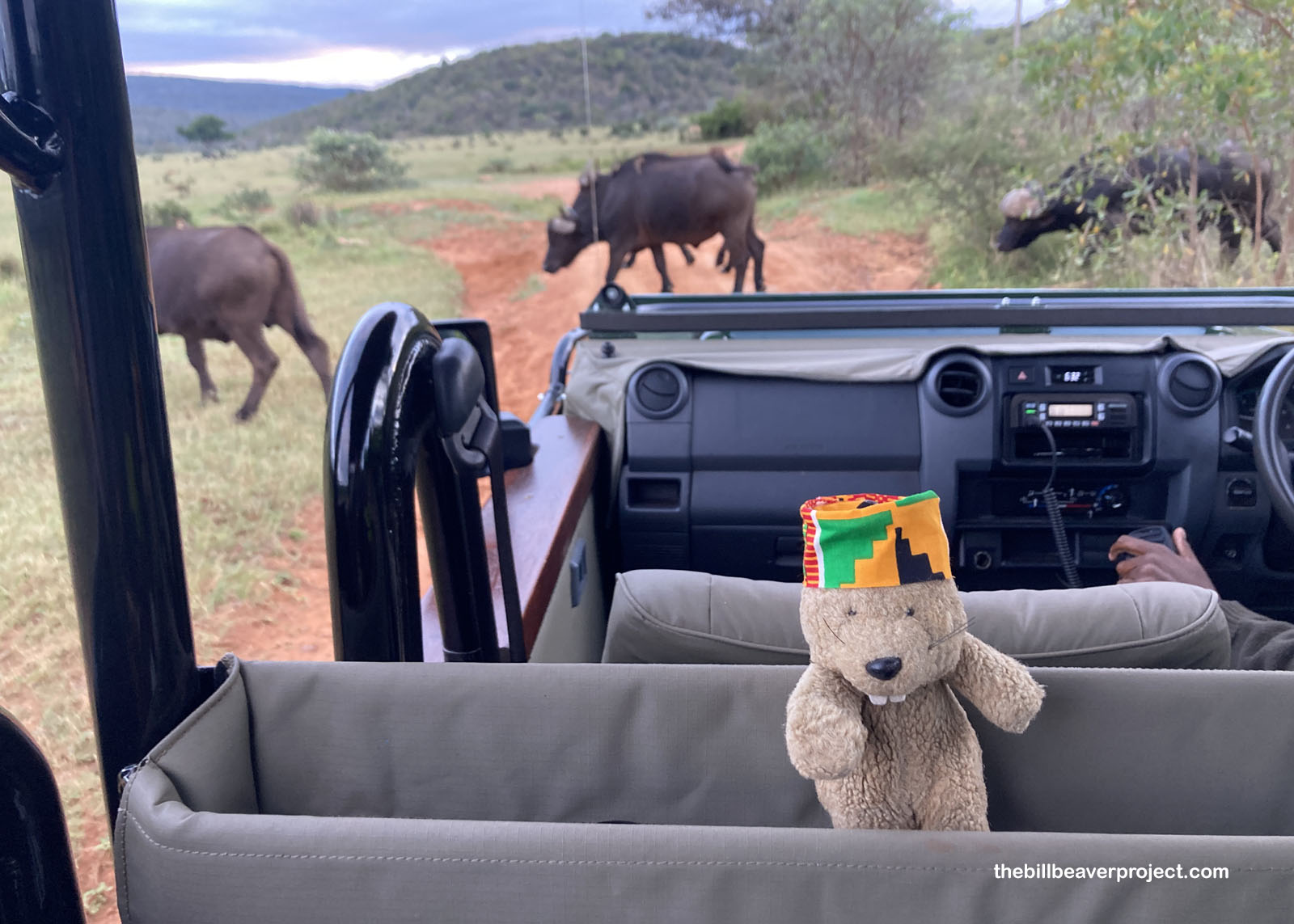
After sleeping off our feast, we were up at 5:00 AM the next morning for game drive number 2! Early morning and late afternoon are the best times to see animals being busy, because all through the middle of the day, they’re usually resting in the shade. We drove in roughly the same direction as last night, if a little farther west, toward Site 25—Welgevonden is divided into more than 50 sites and lodges, which helps coordinate animal spotting—and came upon a big herd of cape buffalo (Two of Five!). I was astonished by how absolutely enormous their horns were, sturdy at the base and spear-sharp at the tip! They were perfect for fending off huge predators, who’d now be on the prowl looking for the two calves wobbling across the road with their wary parents!
 |
 |
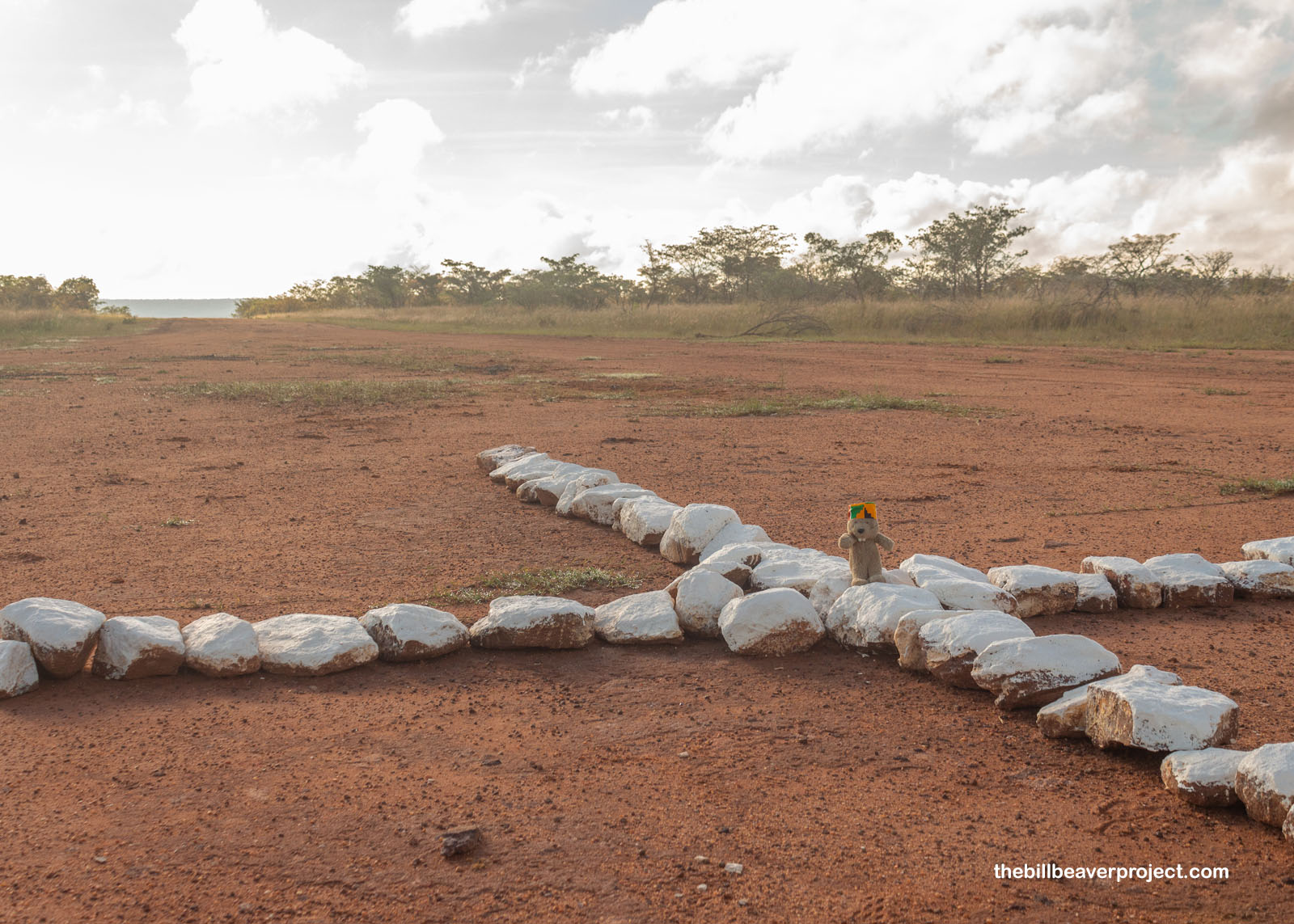
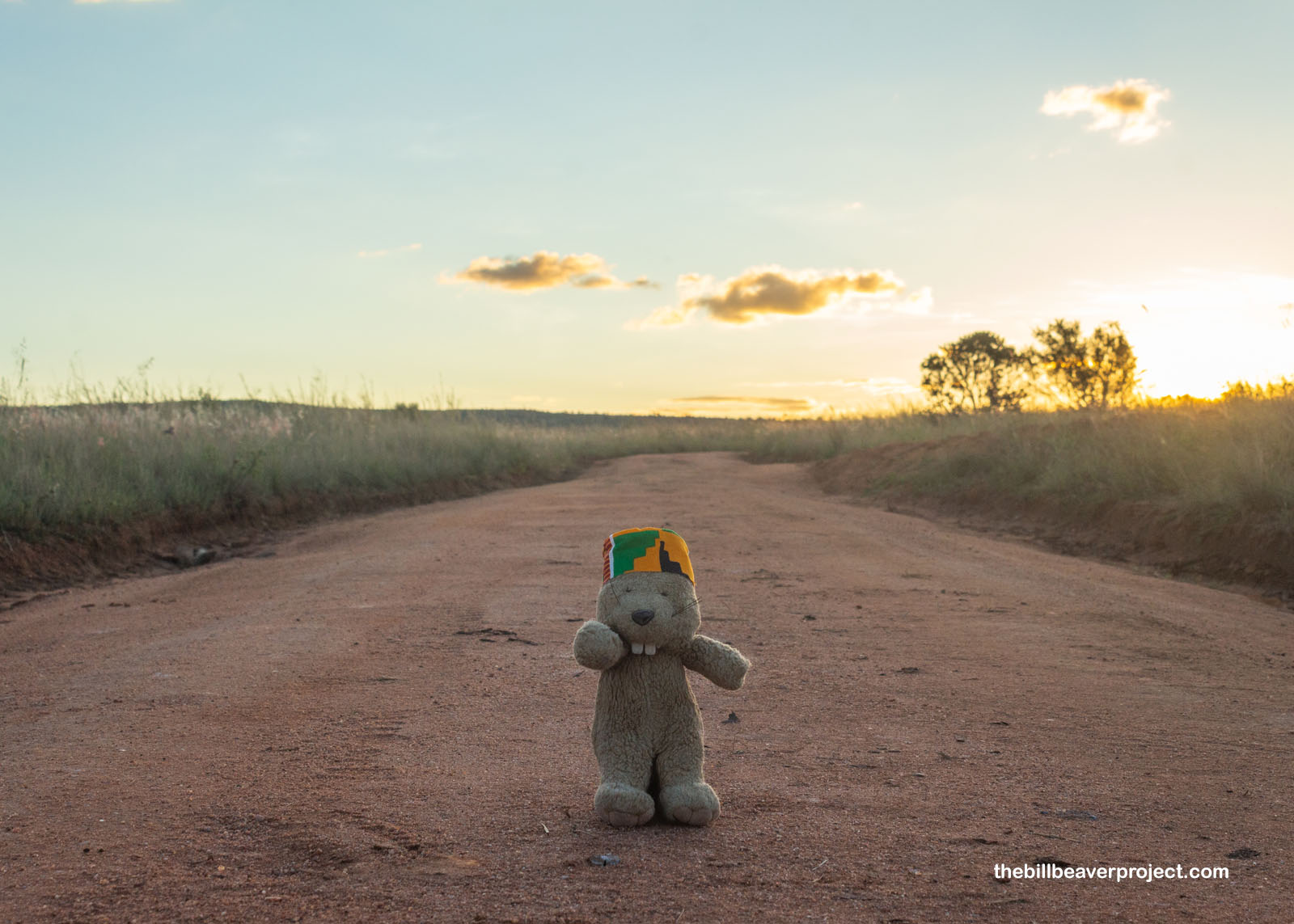
After pausing a while to watch a bull elephant wandering at a distance through the trees (Three of Five, even if not photographed), we paused for our morning snack at one of Welgevonden’s airstrips. It turns out, extra fancy folks who don’t want to drive can fly in to the reserve and get picked up to go to the lodge from here! This airstrip was temporarily closed, so there was no risk of us getting run over. Instead, as I dipped some buttermilk rusks in coffee, I inspected the many different animal prints criss-crossing the red dirt!
 |
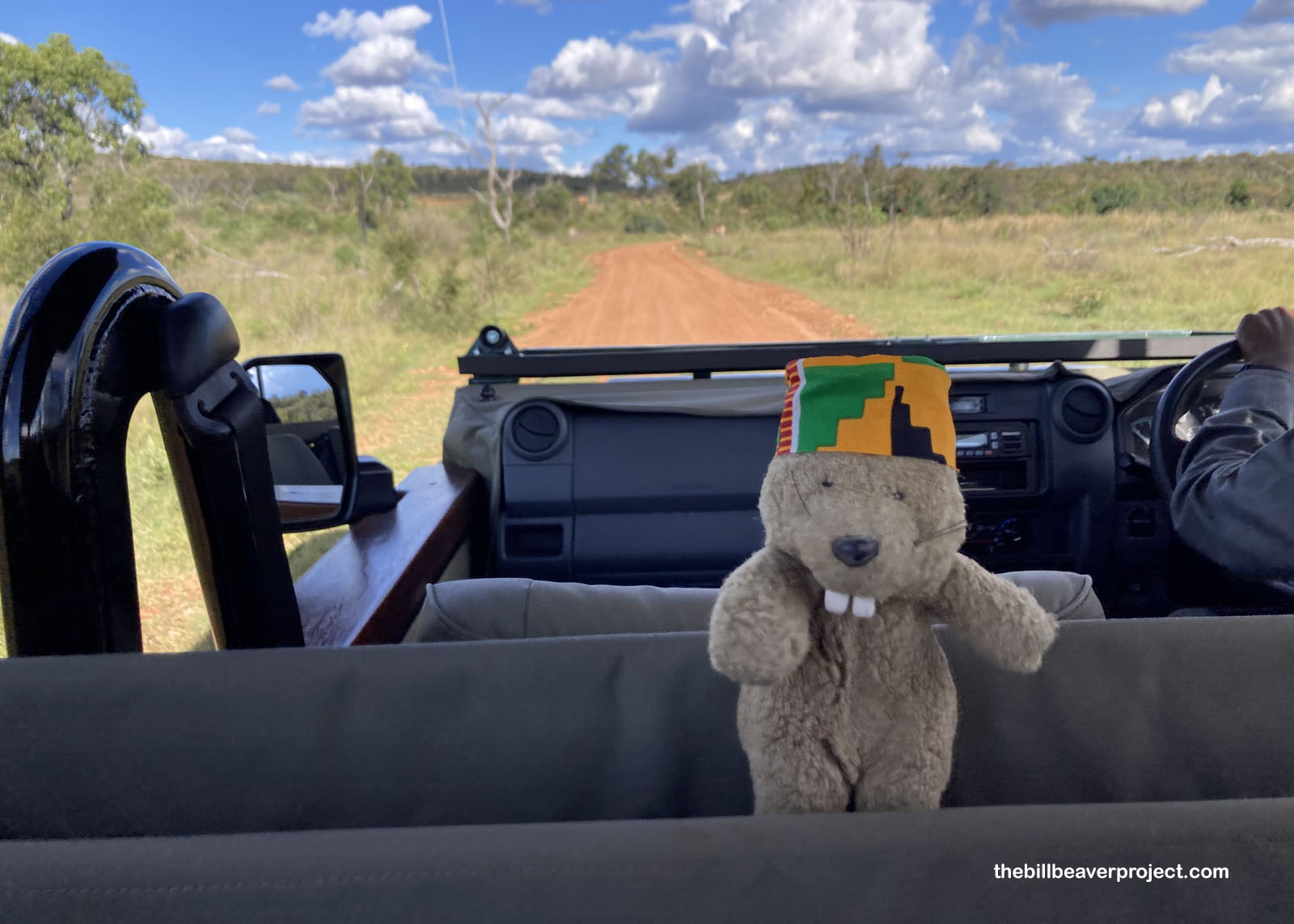
And then, after breakfast back at the lodge, we had a good six hours of leisure: reading, looking through photos, stretching on one of the yoga mats they provided, and scrambling to evict a large skink that had crawled in and was clinging to the bottom of Buzz’s bed! Apart from that kerfuffle, we had an excellent breakfast, a nice light lunch, and met up with Jonas, who would be taking over for Phin and whose favorite animal was a super rare pangolin! Jonas took us south for game drive number 3, and right away, we were in for some fine sightings!
 |
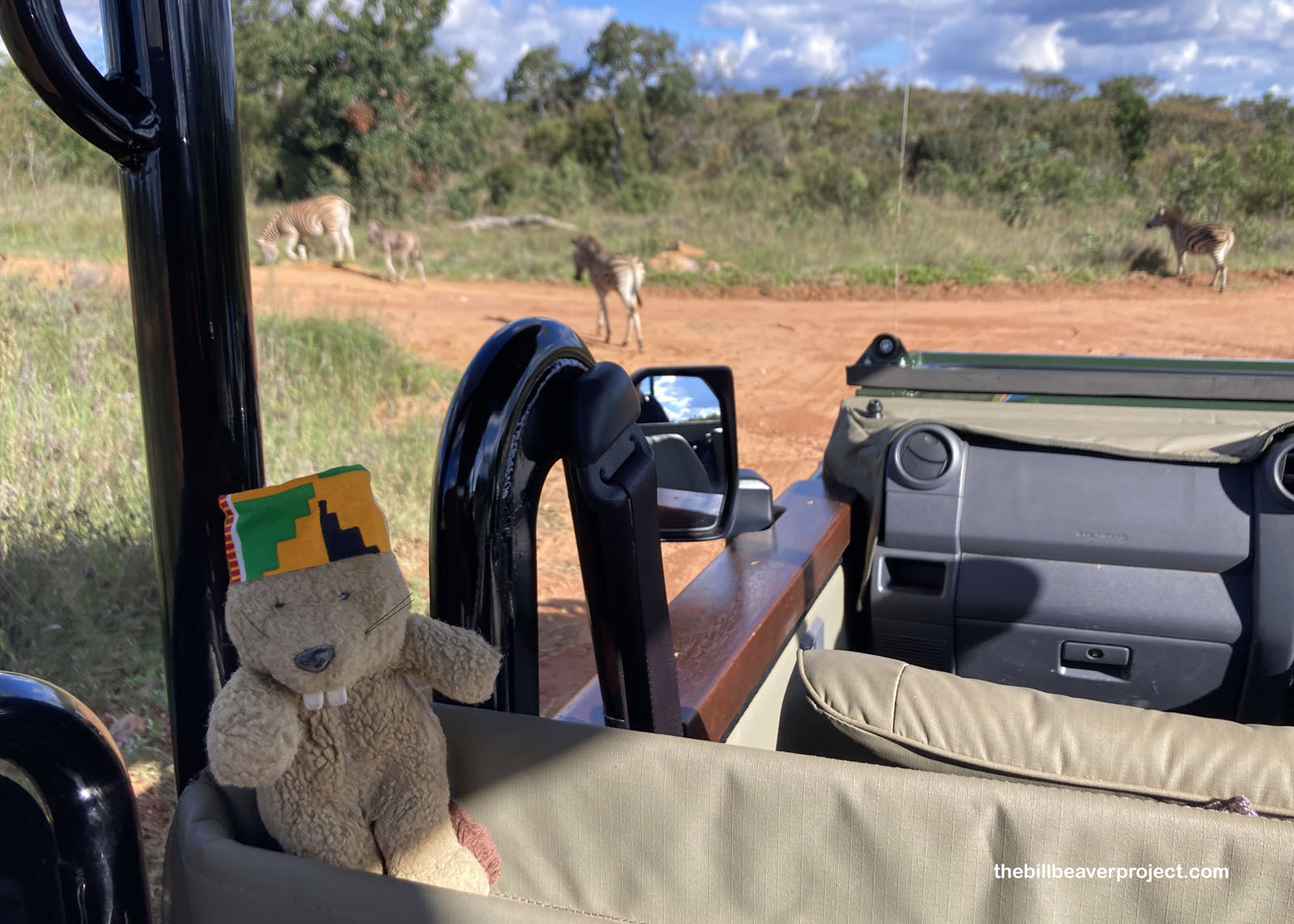
We motored past a herd of zebras and spotted some very young foals scampering around with their adults. Jonas said the way to tell male and female zebras apart is by their swimwear. Male zebras have a thin, black “g-string” down their butts, while female zebras have a thicker “thong!” I didn’t want to be rude by staring at their butts for too long, but it was good to know!
 |
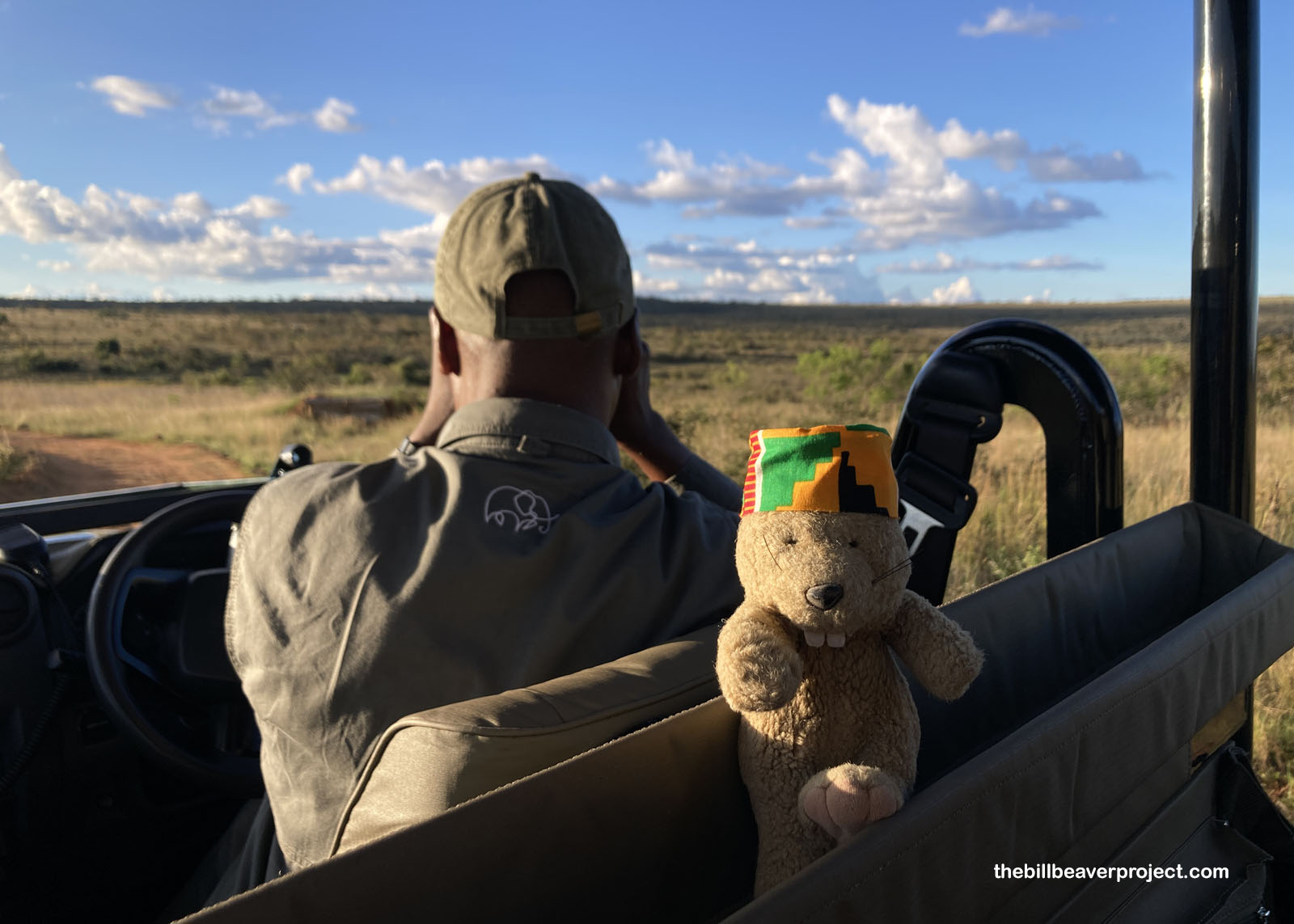
We motored up through a lush river valley with kudu, impalas, and more baby zebras, until we summited past some rhinos into a high grassland looking for lions. We didn’t see those lions, but we did see a cheetah resting in the shade of a tree, a herd of eland—the largest antelope—crossing the vast expanse, and another black-backed jackal off the side of the road.
 |
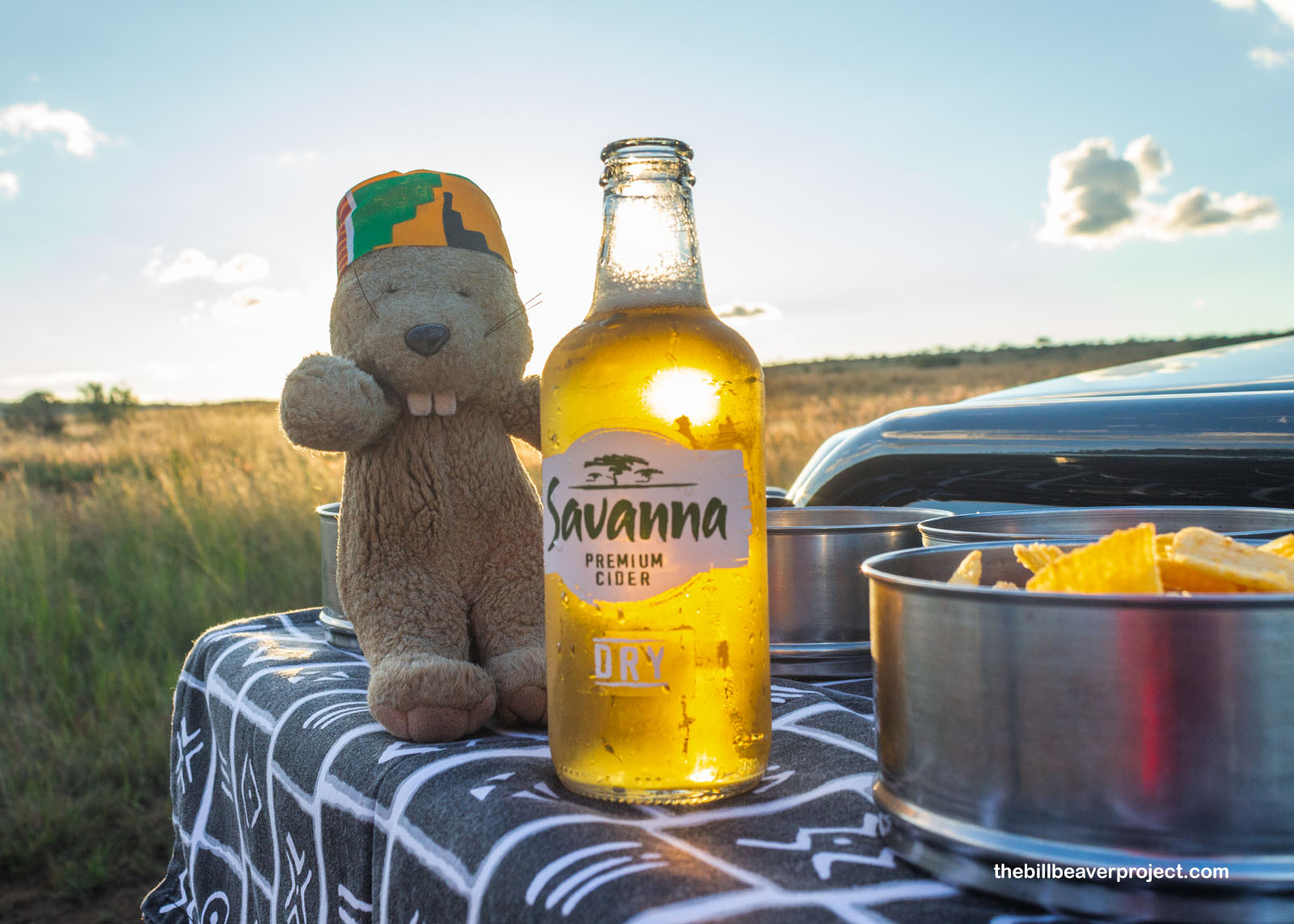
As we stopped for sundowners, our jackal friend kicked up a chorus of howls, revealing that we were practically surrounded by jackals! It reminded me of being surrounded by coyotes in Anza-Borrego Desert State Park, but unlike that experience, there were enough tall humans around to make these little carnivores think twice! Ah, chips and cider…
 |
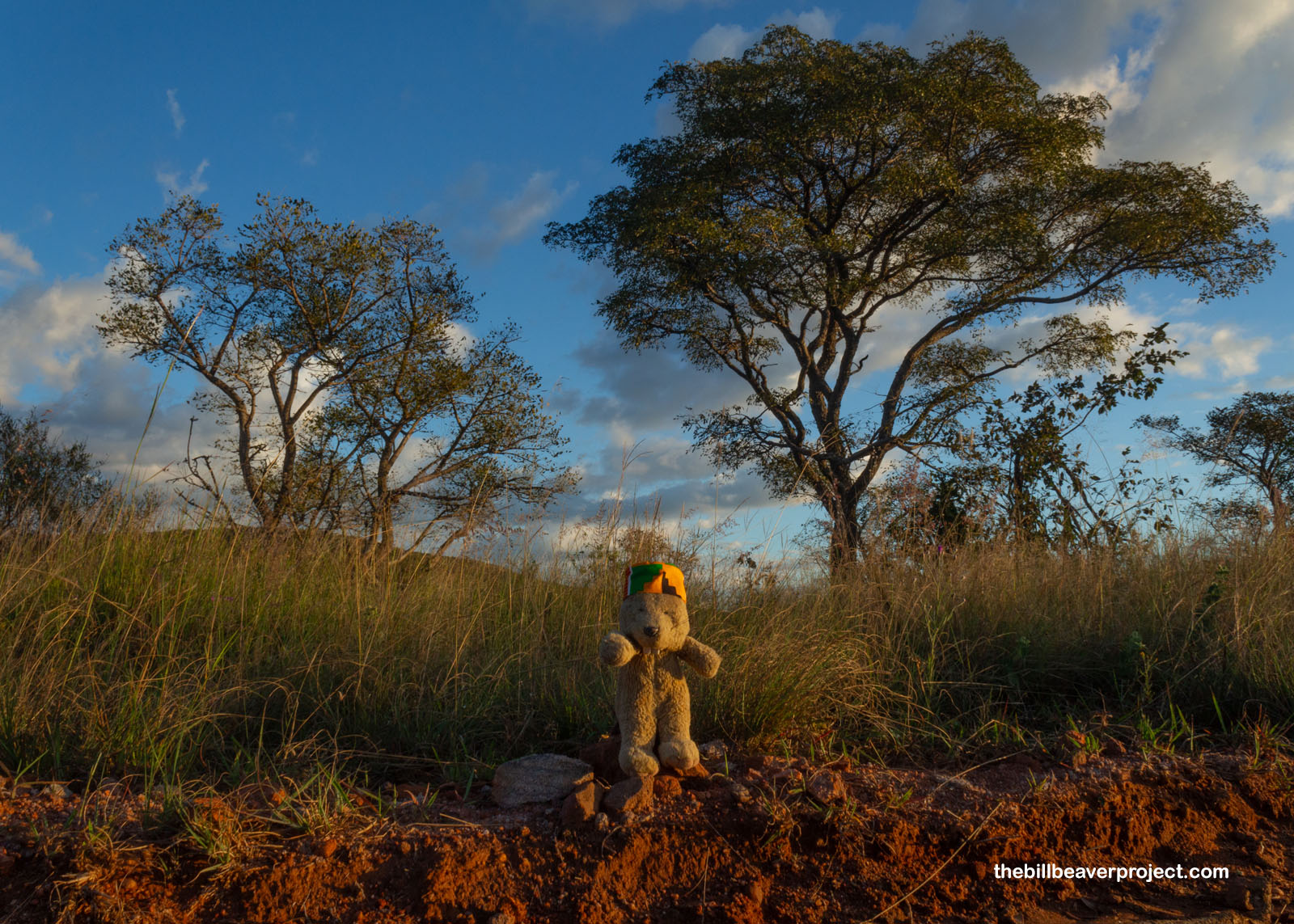
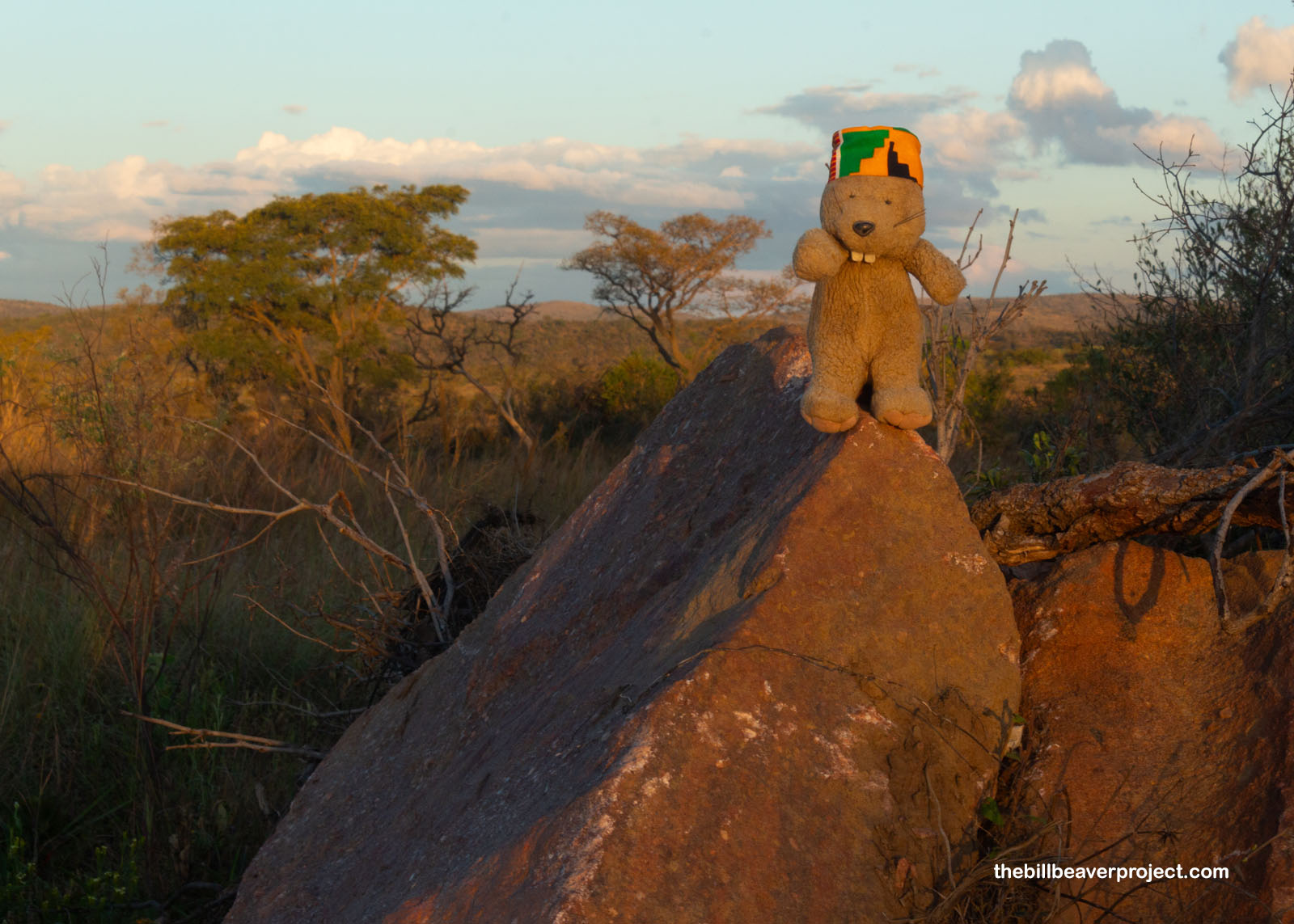
Since we’d stopped a bit, I thought I’d wander a little and really feel the African dirt under my feet. The light of the South African sunset, cast the whole landscape, in the dazzling copper hue that the soil had all day, making the mopane trees (Colophospermum mopane) pop with contrast! Mopane are super important in this ecosystem, not just for browsers but also as host plant for the mopane worm, an emperor moth caterpillar that’s so widely eaten in Africa, it’s actually commercially farmed and exported in bulk! I’ll stick to my chips for now, but what a unique industry I had no idea existed!
 |
 |
As the sun set over the distant hills, the call came in that lions had been spotted, and we rolled over to a shuttered lodge as darkness fell just to witness three enormous lions, one male and two females, lackadaisically strolling among the lodge buildings. I understood exactly why Ekhutuleni required escorts at night! Four of Five!
 |
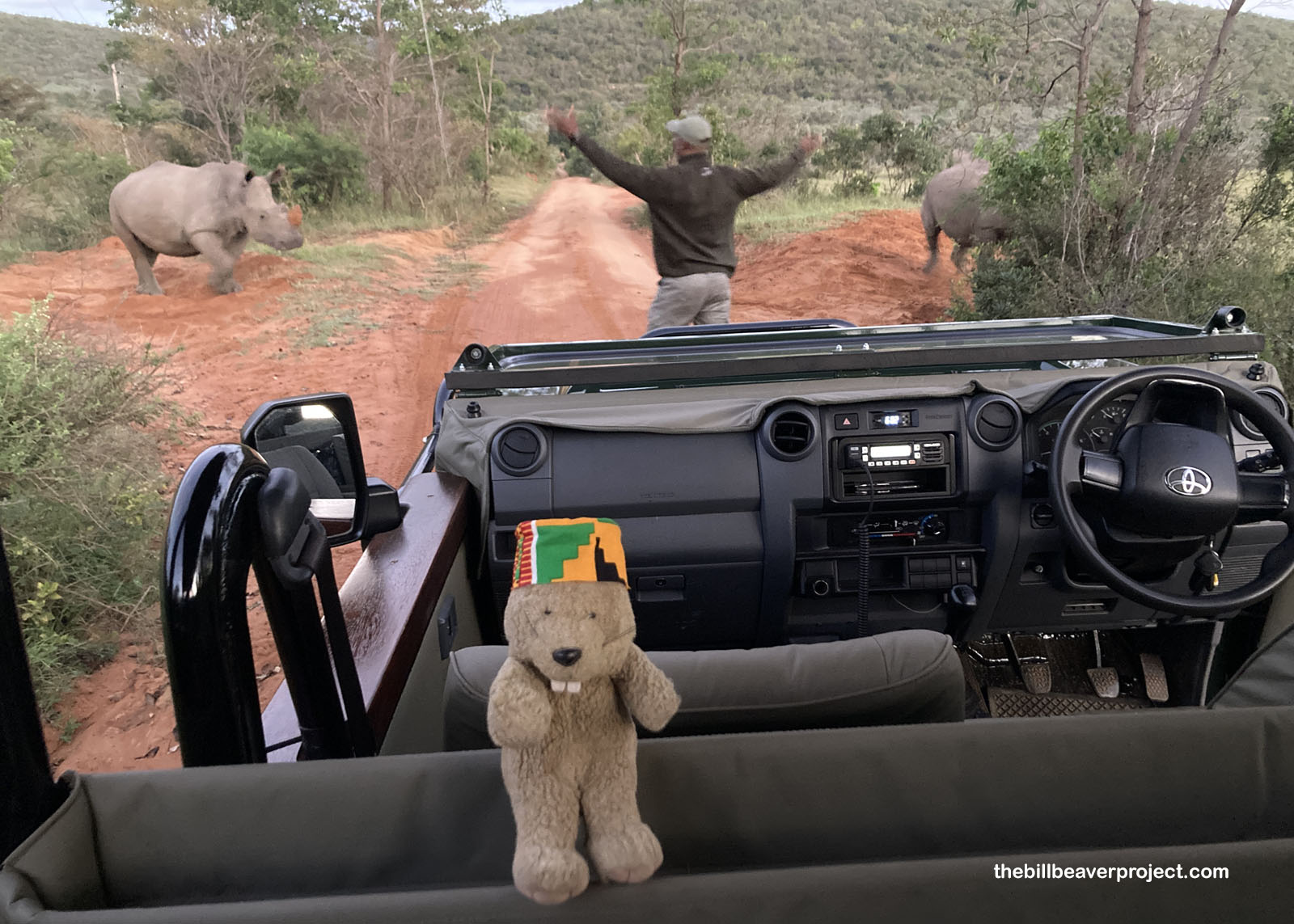
Game drive number 4 dawned cloudy as we rumbled away from the lodge, disturbing nightjars, who waited until the last second to fly up under our headlights, and nearly running into a big old kudu emerging from the bush! “Bush” is a widely used slang for wild country, which comes from the Dutch bos, and we were in the thick of the bos! We headed for the central Fig Tree Plains, where a rhino was lying down in the middle of the road. Jonas did something super unexpected! He got out of the truck and started making noise to scare them off! I thought that seemed super dangerous, but having terrible eyesight and hearing spooky sounds from out of nowhere, they lumbered right off the road!
 |
The Plains were popping this morning with all the herds gathered that we had been missing the last few days: rhinos, impalas, zebras… The same buffalo herd we’d seen yesterday morning was here too, but suddenly, an unseen baboon high in a fig tree barked out a warning. Everyone on this plain, especially the baby buffalo, were being watched!
 |
 |
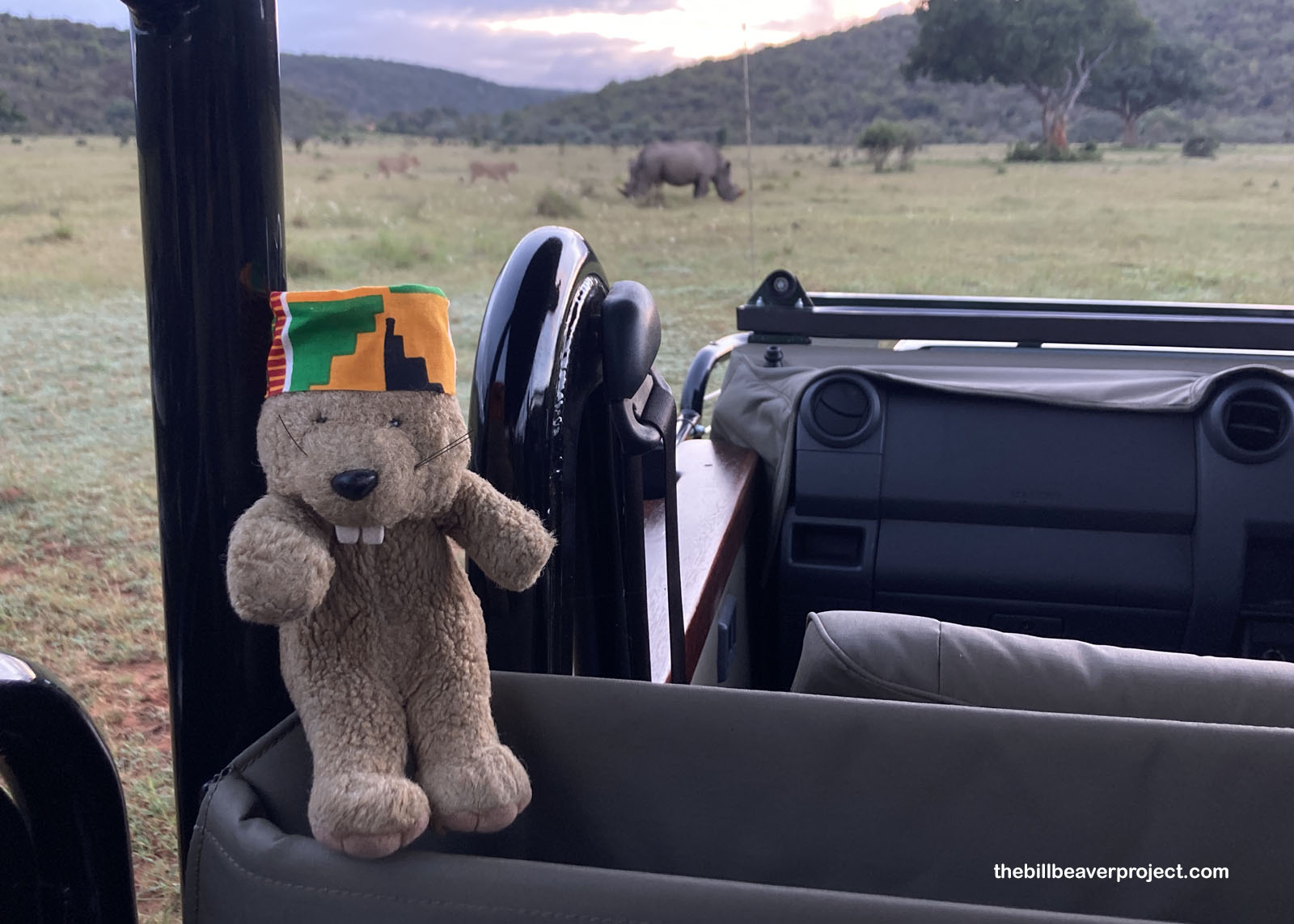
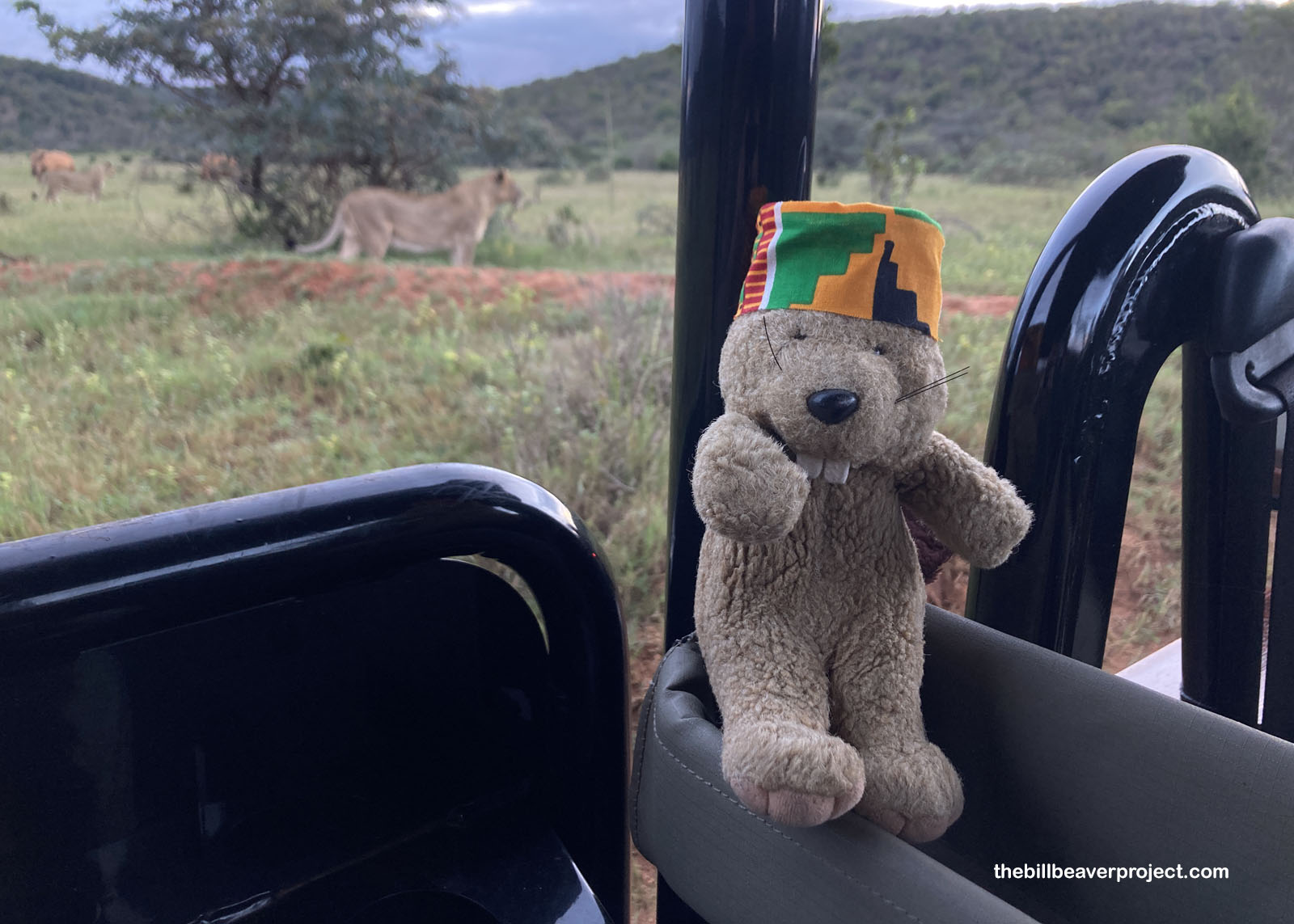
Two lionesses were slowly making their way across the plain toward the buffalo, but because of the short grass and the warning from the baboons, they weren’t likely to make any moves. One of them crossed in front of our truck—sometimes, said Jonas, they’ll use the trucks as cover to ambush their prey—and lay down. Boy, I’ll tell you, looking directly into the eyes of a wild lion is one chilling experience! Here in Welgevonden, since it’s a fenced-in reserve, lions aren’t the apex predators. When they can’t be sent to new reserves, they get culled to keep their population in check, a weird reminder that we were still in a semi-controlled environment, even if all the animals were behaving as they would in the true bos!
 |
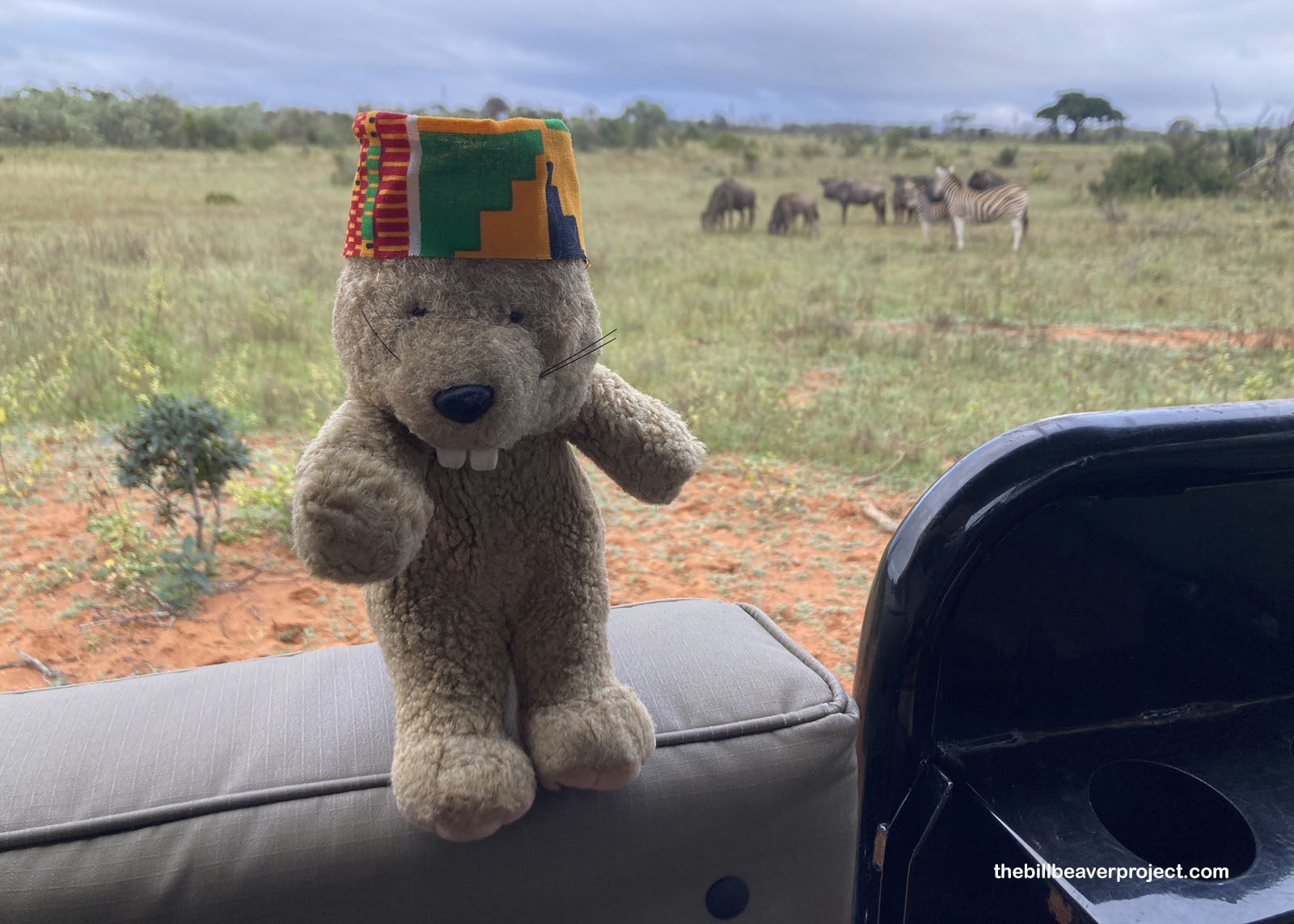
We left the Plains way earlier than I thought we should, but apparently there is a limit to how many safari trucks can be in one place at a time. So we headed up a ravine toward Site 20, where zebras popped among the shimmering Silver Cluster-leaf trees and giraffes browsed on the crowns. We saw a herd of zebras and wildebeest guarding their babies together. On their own, a group of wildebeest is called an implausibility, but they share space with zebras because of their keener senses and memory. Zebras benefit from the greater numbers against predators! Not far away, a big male wildebeest was giving out a warning call, which kind of sounded like a chainsaw being revved, but as far as we could tell, no threats were on the horizon!
 |
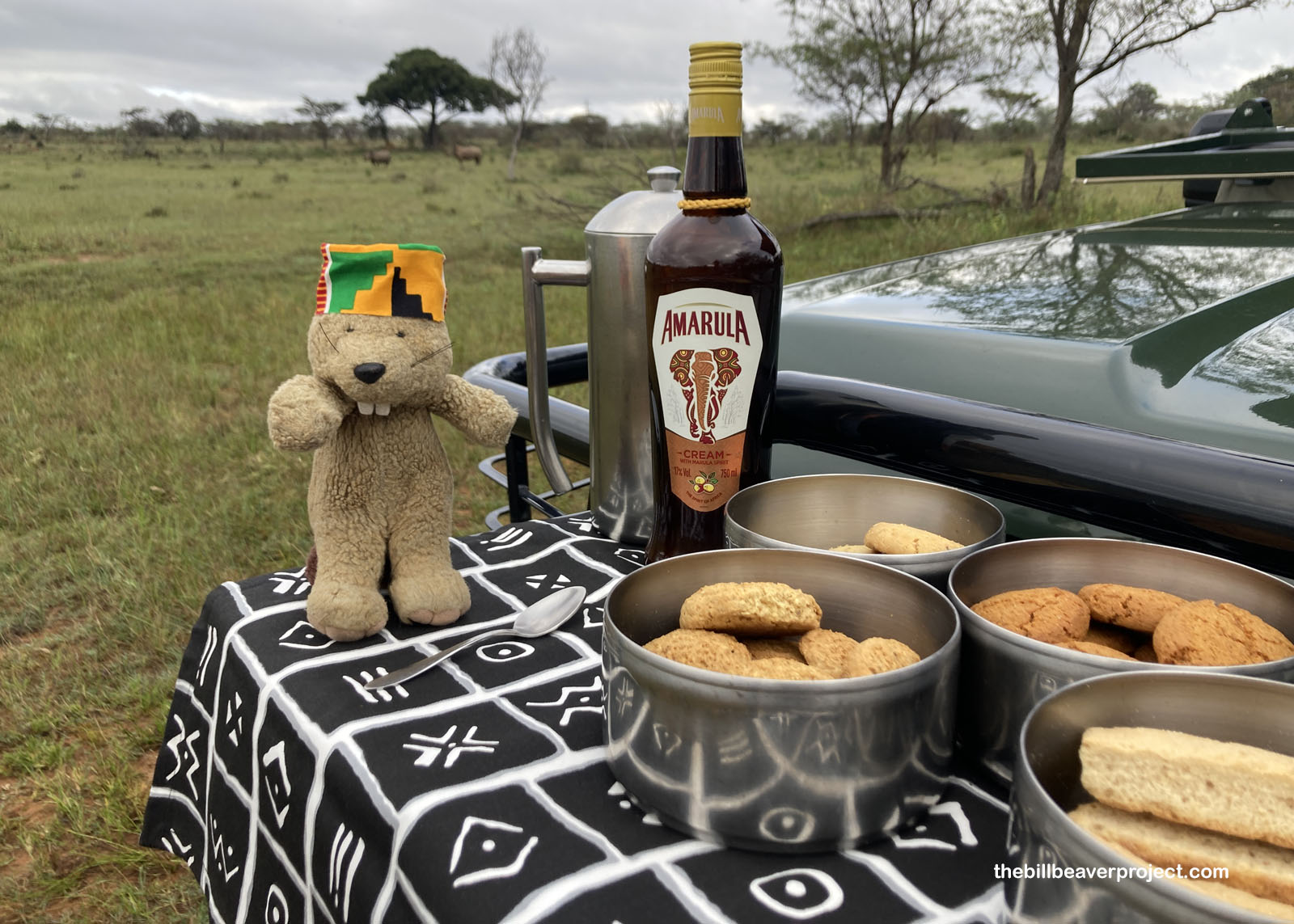
We stopped for snacks not far from the chainsaw bull, and Jonas laid out gingersnaps, chocolate chip cookies, and rusks alongside hot chocolate that he offered to spike with Amarula, a cream liqueur made from the fruit of the marula tree (Sclerocarya birrea), also known as the elephant tree. And wouldn’t you know it, a marula tree was directly behind us with a pair of rhinos milling about under the thickening clouds! What a view!
 |
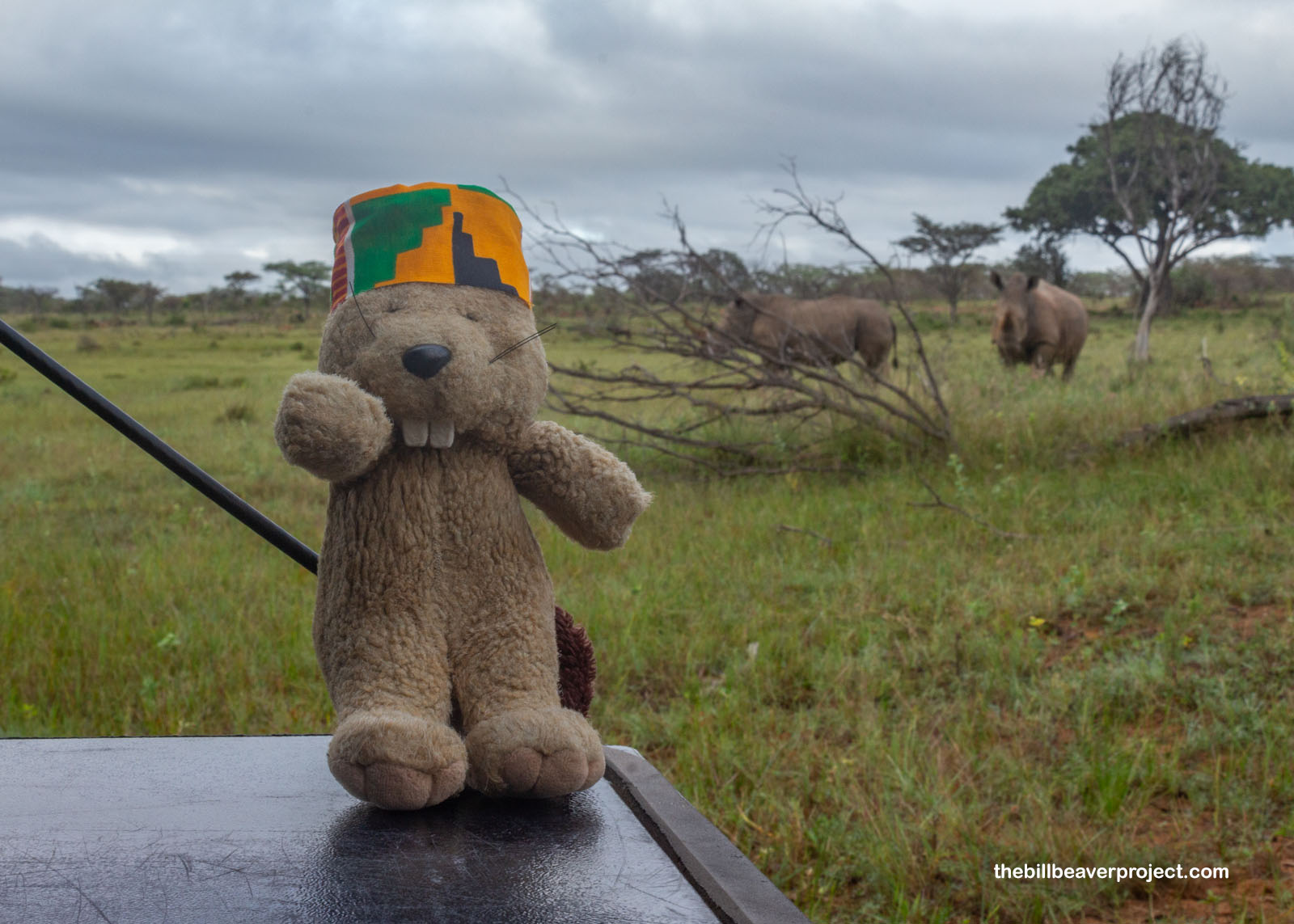
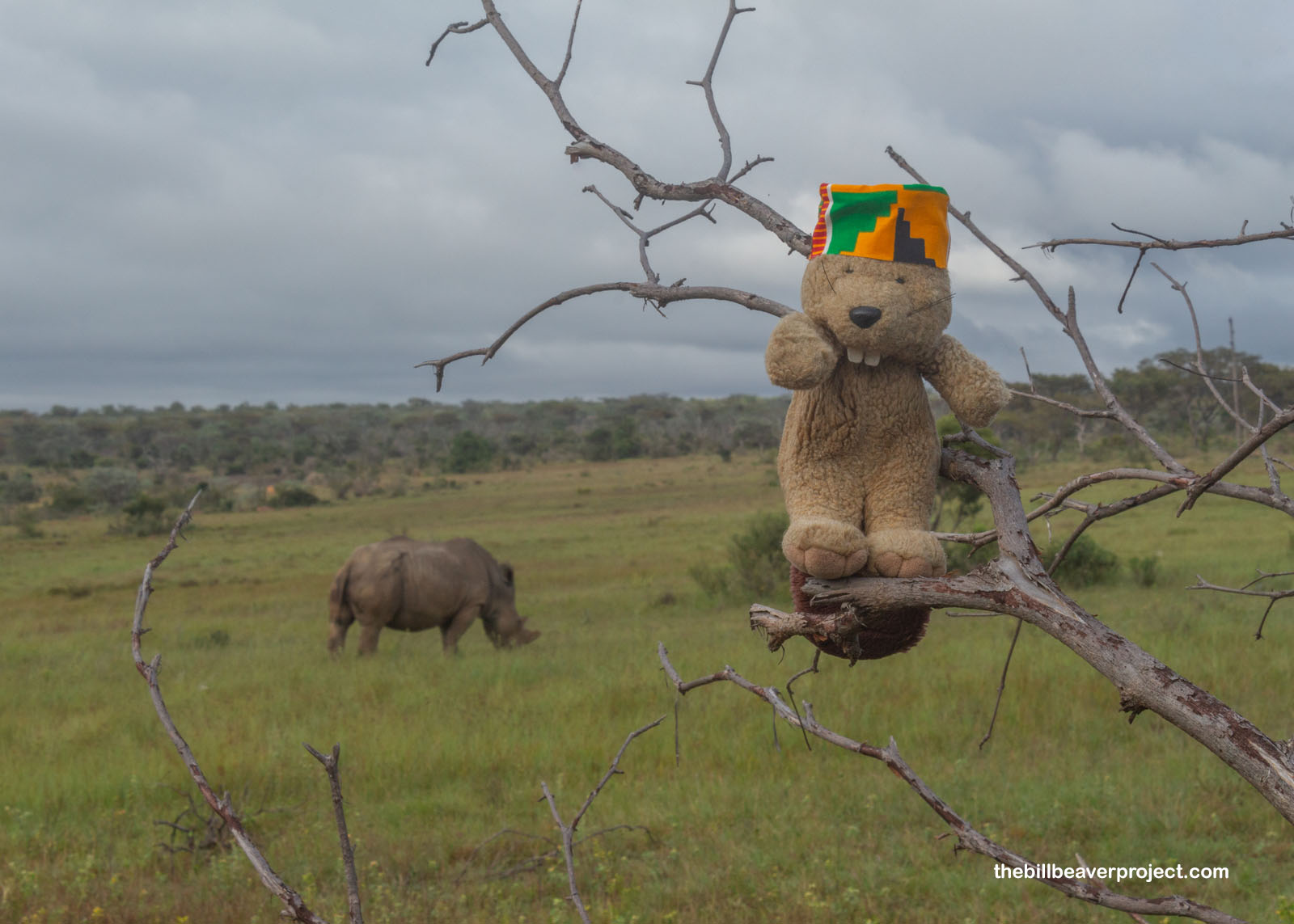
Those rhinos sure were curious about what we were eating, and they got closer and closer. It made me kind of nervous, because Welgevonden does such a good job with security that their rhinos’ horns are intact and sharp! But Jonas’ stunt earlier made me feel more at ease, and those rhinos went about their business, paying us no mind, as the wildebeest bull continued to rev his engine. What a remarkable safari, bookended by rare rhinos!
 |
 |
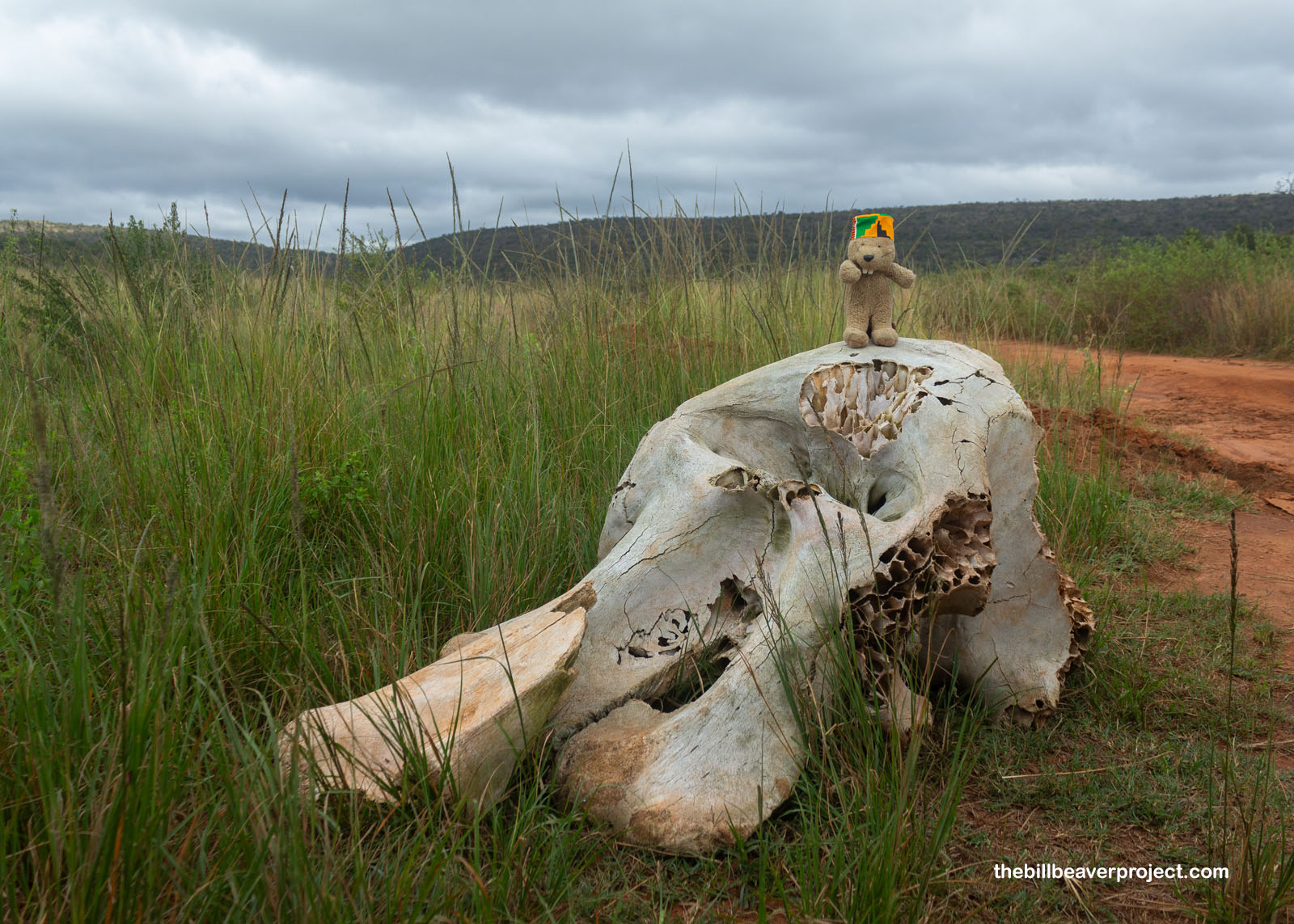
We made our way gradually back to the lodge, stopping to gaze at a small crocodile and search the shadows for the leopard that would complete our Big Five. We didn’t spot it! On the approach to Ekhutuleni, Jonas showed us an elephant skill that had been brought all the way down from a hill. Periodically, its relatives would walk this way and stand at the skull, remembering, which is truly one of the most beautiful things about elephants. And for sure, this trip into their home will be one I’ll never forget!
 |
At 11:00, Buzz and I loaded our stuff into the truck and departed for the main gate, learning how all the guides in the reserve speak slightly different languages, but they are similar enough that everyone can understand each other where it counts! Bidding so long to Jonas, Buzz and I headed back to Pretoria, stopping for milkshakes at the charming Lilies & Limes Country Shop, patrolled by three very attentive terriers. I may also have had to pick up a bag of rusks for the road! On arrival, we had to unpack and re-pack our bags, because our next adventure kicks off first thing in the morning!
Šalang gabotse!

Previous Day |
Total Ground Covered: 331.0 km (267.8 mi) |
Next Day |