 Previous Day |
Hounslow, UK → London, UK → Hounslow, UK 54.1 km (33.6 mi) |
 More 2026 Adventures |
Good day, everyone!
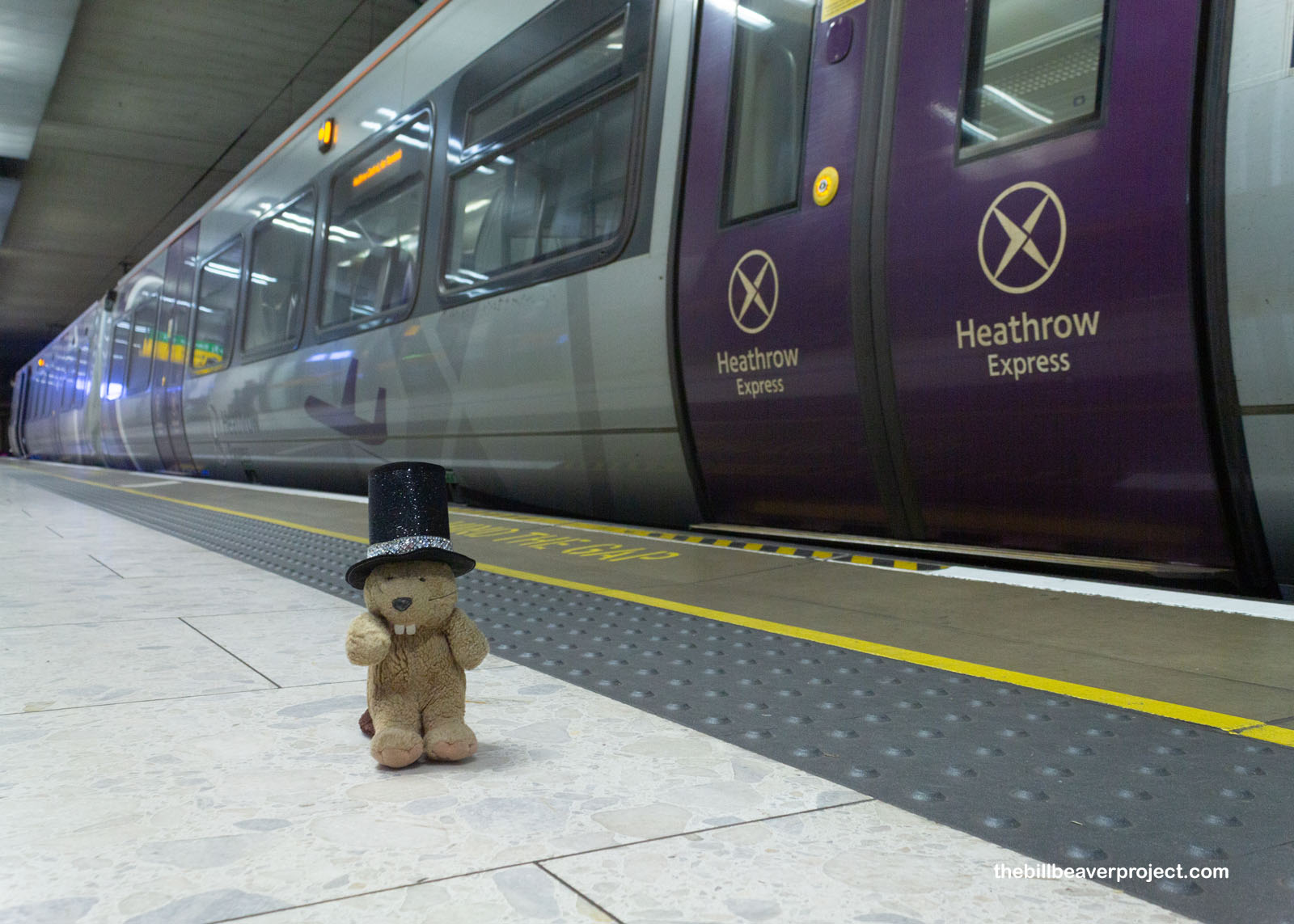
Overnight, I returned from autumn to spring, and you know what that means? It’s time for Firstbud! I barely had any time on my London layover, but I was determined to see as much as I could with what time I had and find a place to celebrate this joyous beaver holiday. Dragging myself off the plane at 5:35 AM, I was glad I’d already gotten lost in this airport en route to Johannesburg and sped through the trains leading to the airport entrance. But all that hustling was for naught! Not only was today a beaver holiday, but it was also Easter Sunday, which meant special limited Tube schedules! I had to wait until 7:30 for the first scheduled departure of the Heathrow Express. Oof! With time ticking, I made sure not to miss this train!
 |
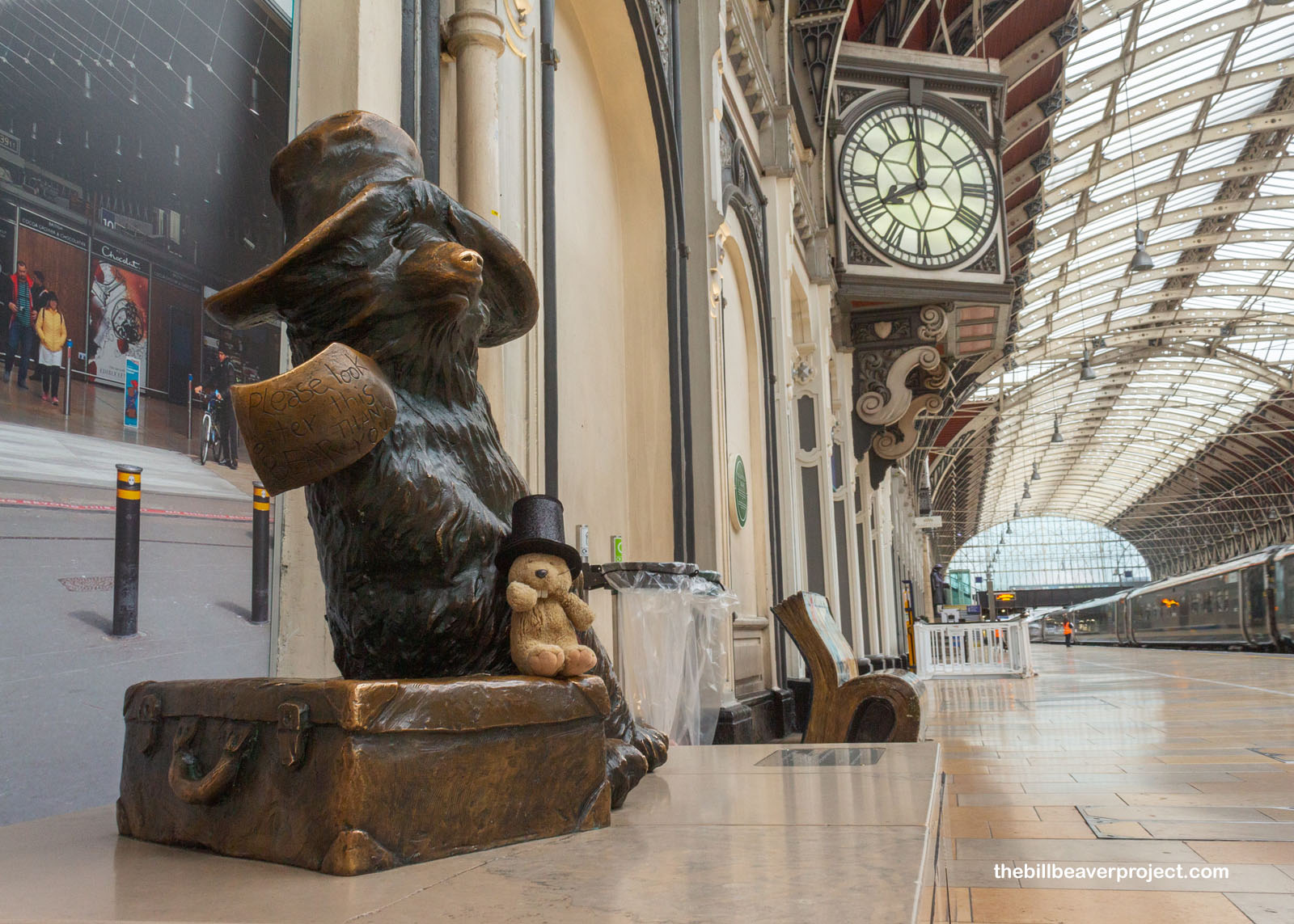
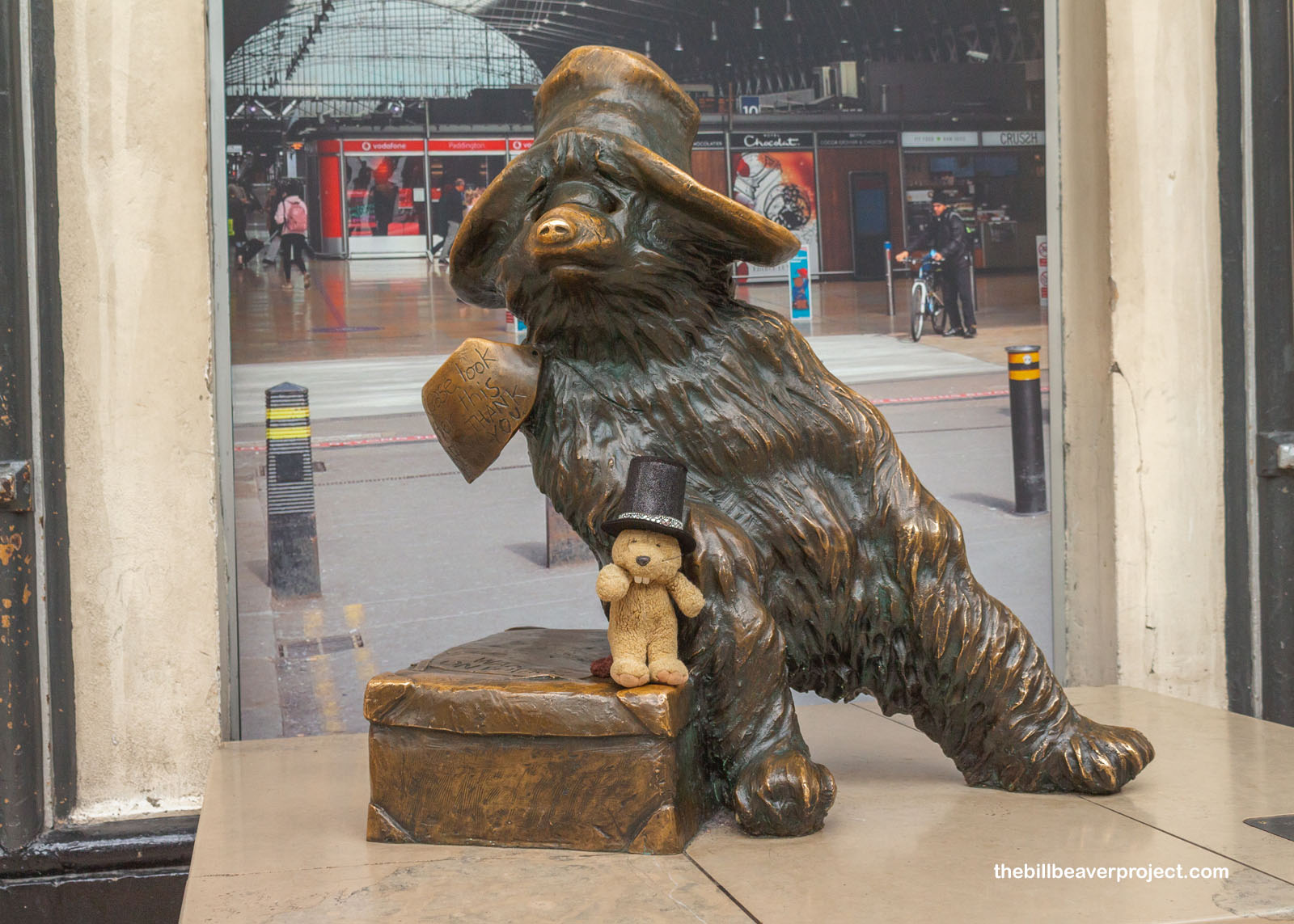
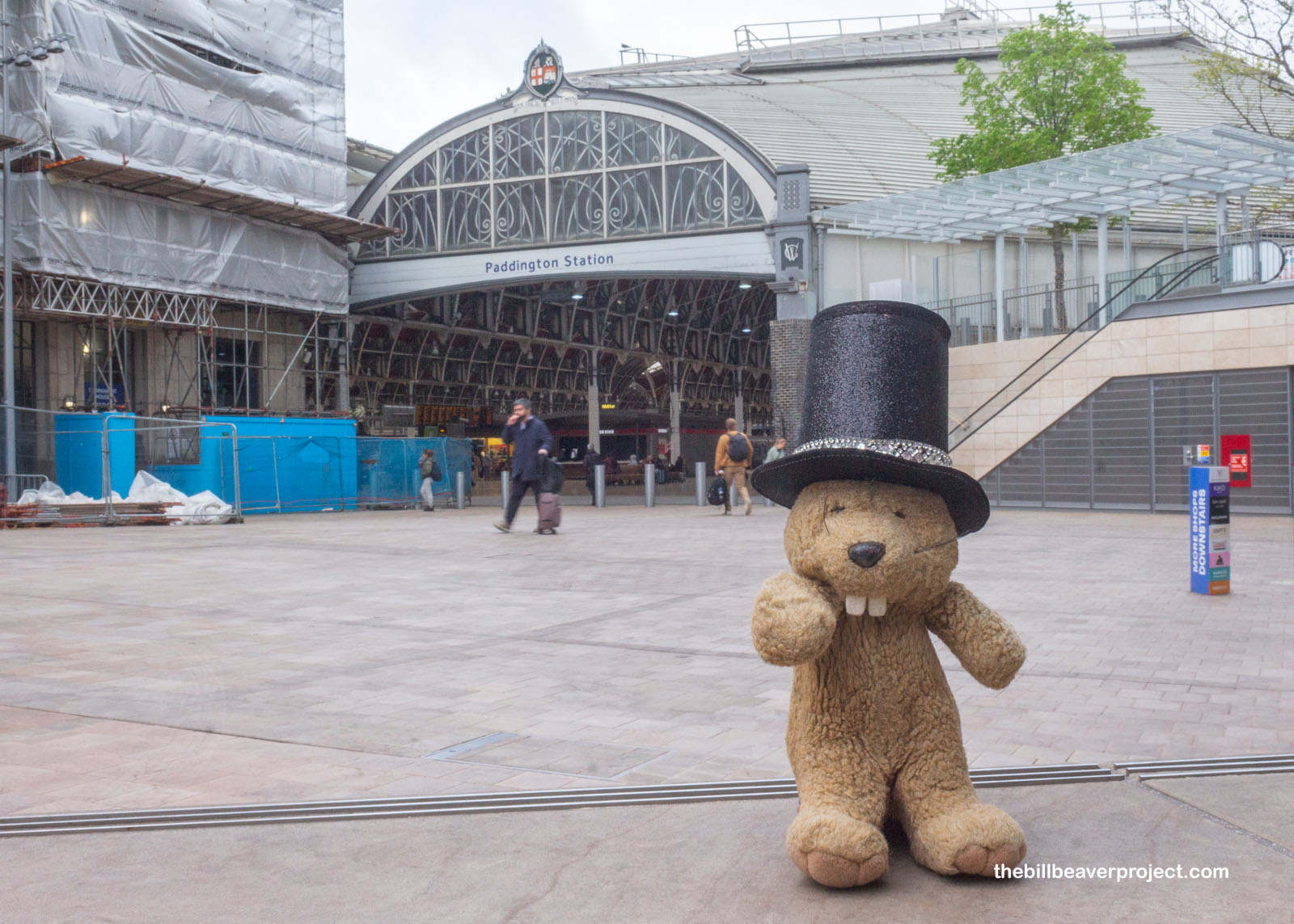
But it was a smooth ride the whole way into town. As you might expect, at that hour, there was no one else in my section, and the trip to Paddington Station went super smoothly! As soon as I got off the train, I was greeted by a familiar face: Paddington Brown, ursine star of over a hundred books and a couple of movies too! In Michael Bond’s original book, A Bear Called Paddington, this spectacled bear arrived in London from the darkest regions of Peru, and was taken in by the Brown family who found him at Paddington Station! And wouldn’t you know it, Mr. Bond’s idea for his hugely successful character came from a toy bear he’d bought in a shop near Paddington! What an amazing rise from tiny stuffed toy to big bronze statue!
 |
 |
And this was just a small corner of a huge transit station, once the largest train shed in the whole world! Paddington Station was designed to be the terminus of the Great Western Railroad, which connected most of Wales to London. It was designed by Isambard Brunel, who was inspired by the famous Crystal Palace built for the Great Exposition of 1851, and opened for business three years later! As transit expanded, so did the station, with more office space and more platforms, polycarbonate panels replacing the glass, but the roof frame is still intact! For being the terminus of one route, it sure was an excellent historic starting line for mine!
 |
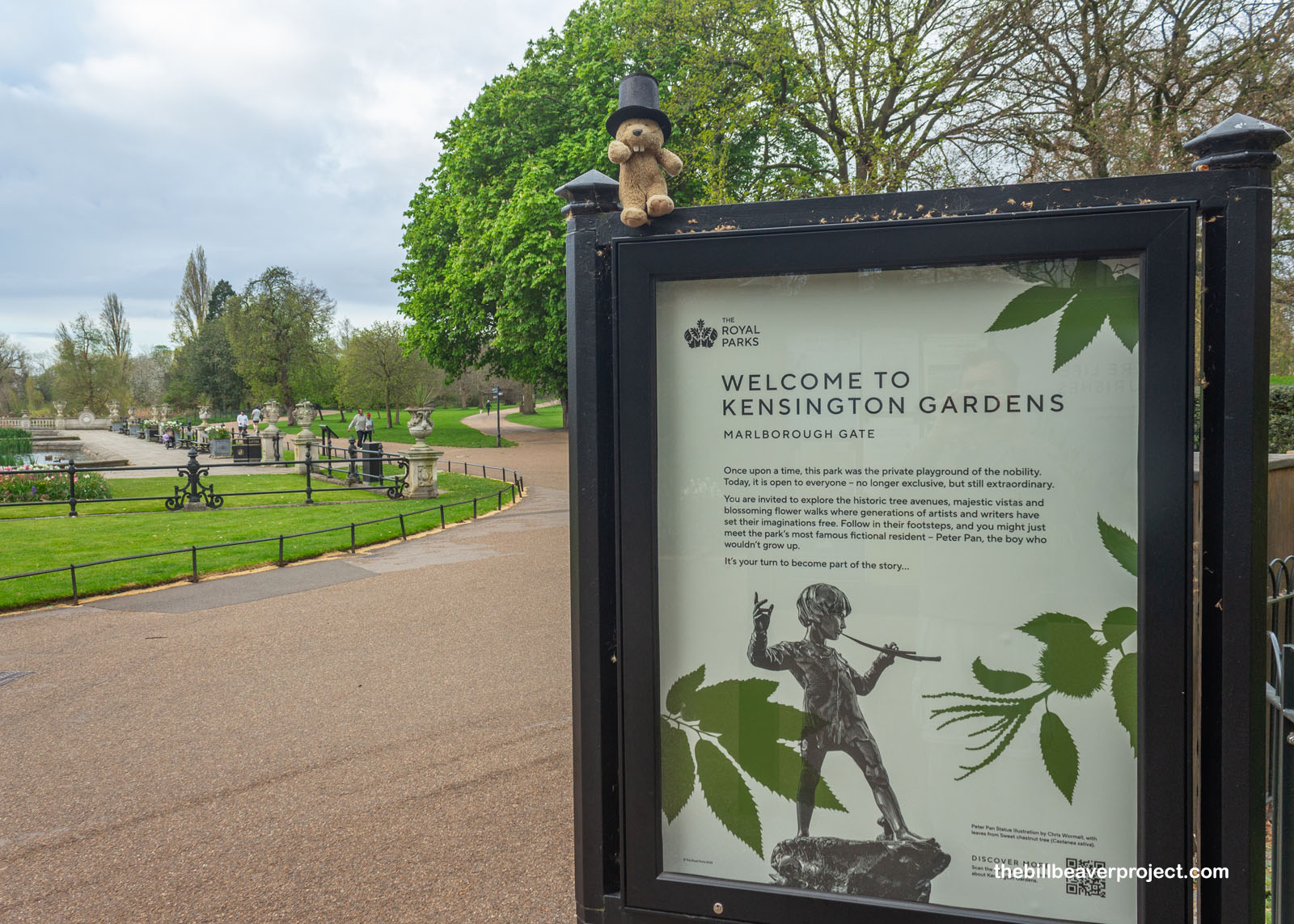
My route for today was going to lead me south into Kensington Gardens, where I immediately began looking for a place to celebrate Firstbud. Unlike the toasty days south of the Equator, this London Easter was pretty gray and chilly, incentive enough for me to keep moving. And I wasn’t the only one! There were lots of folks out walking, jogging, and otherwise recreating in the park that had been founded by Henry VIII in 1536 as a hunting ground! Queen Caroline had this park split off from greater Hyde Park in 1728, and for the next 113 years was an exclusive park for royalty! I sure felt fancy walking in their footsteps!
 |
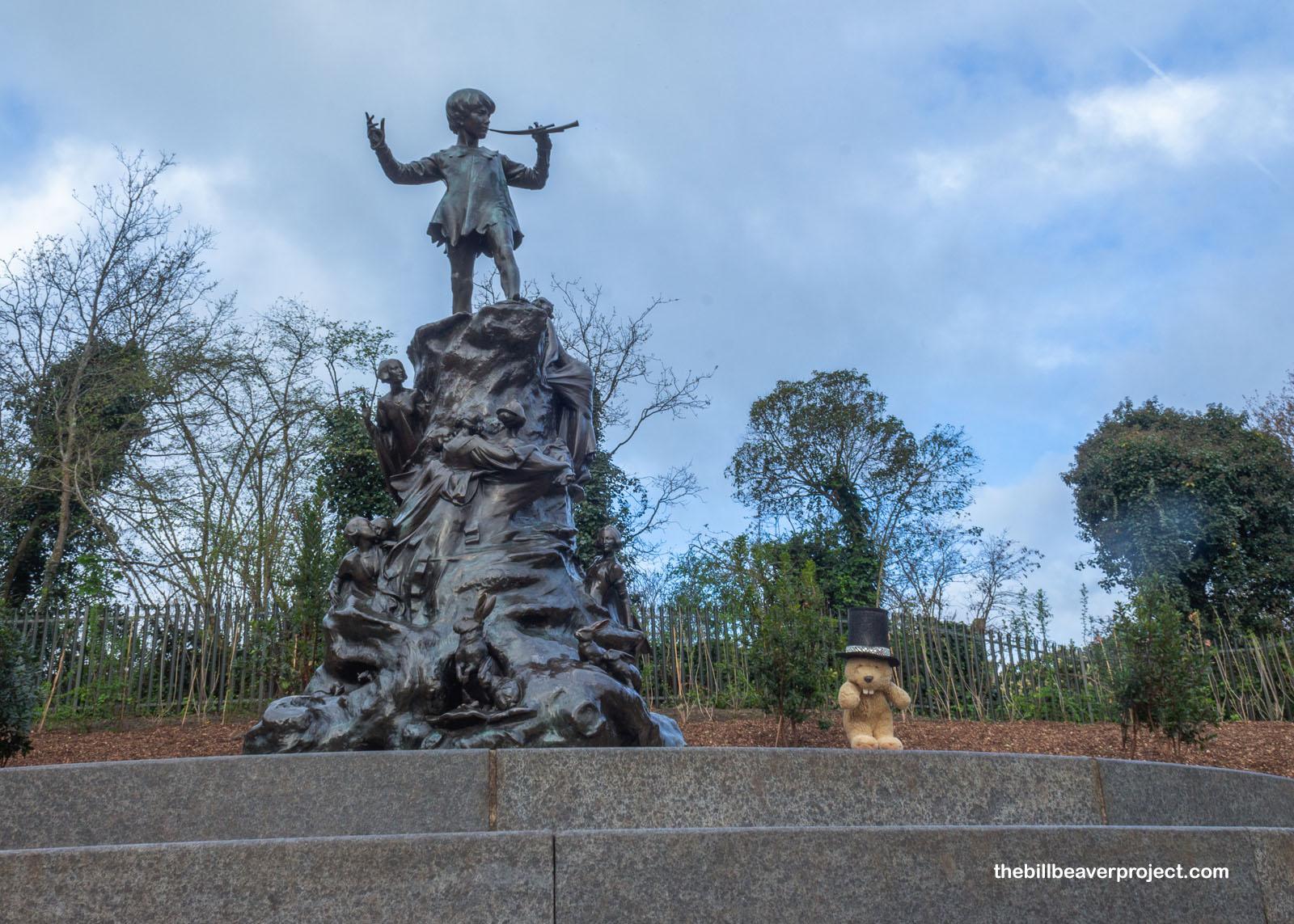
You might say I felt like I never grew up, just like Peter Pan! Did you know Peter Pan’s debut wasn’t in the play called Peter Pan? In 1902, he appeared as a baby in Chapter 14 of a different novel by J.M. Barrie called The Little White Bird, in which he flew out of his nursery and all the way into Kensington Gardens! To mark the spot where he landed—”on the open sward, between the Baby’s Palace and the Serpentine”—Mr. Barrie commissioned Sir George Frampton to create this bronze statue and had it installed overnight on April 30, 1912. They warned no one and asked for no permission so he could convince the children of London coming to feed the ducks the next morning that the statue had been left there by fairies! After all, it was well known that Kensington Park was the home of fairies at night when the gates to the park had been closed and locked!
 |
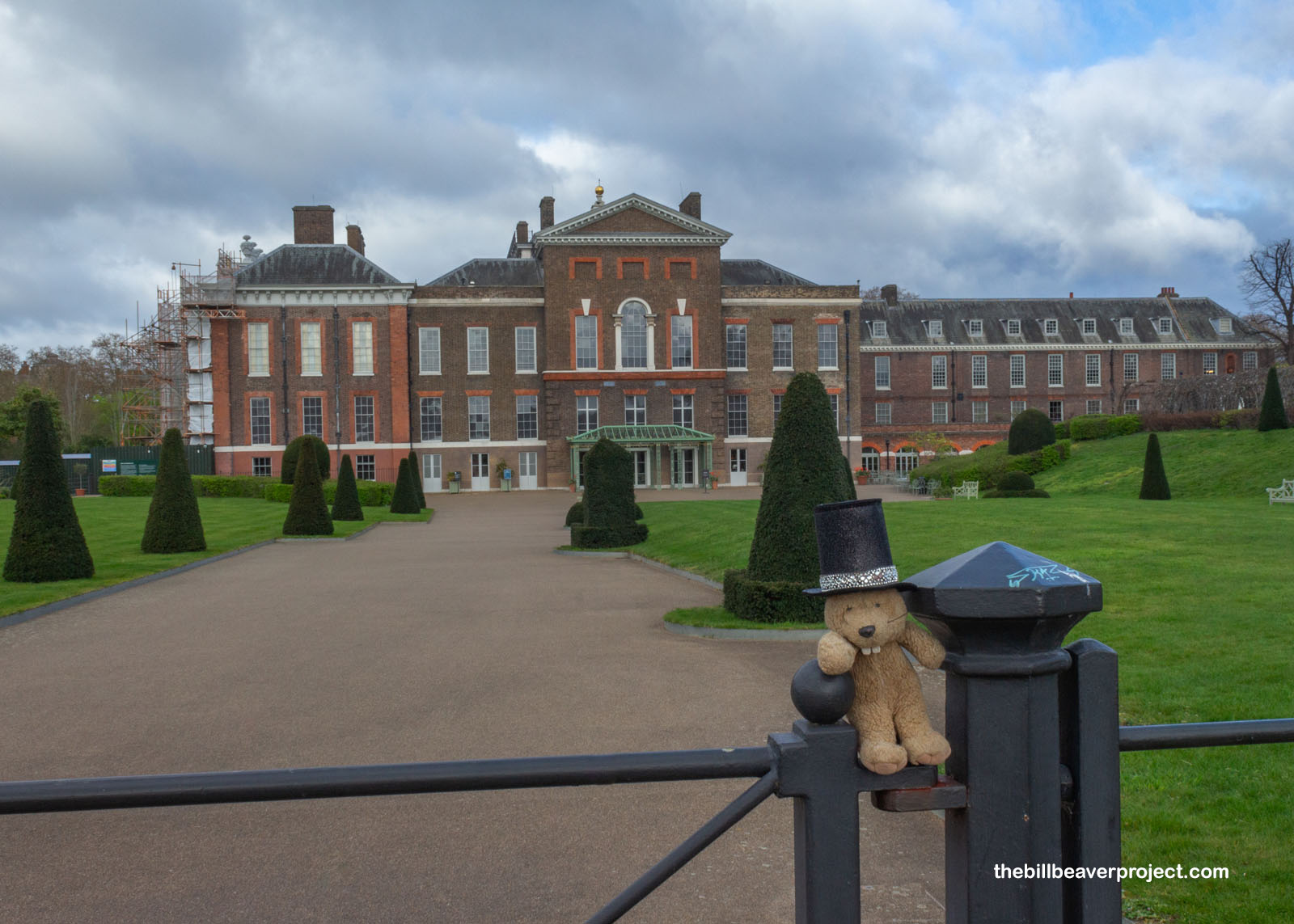
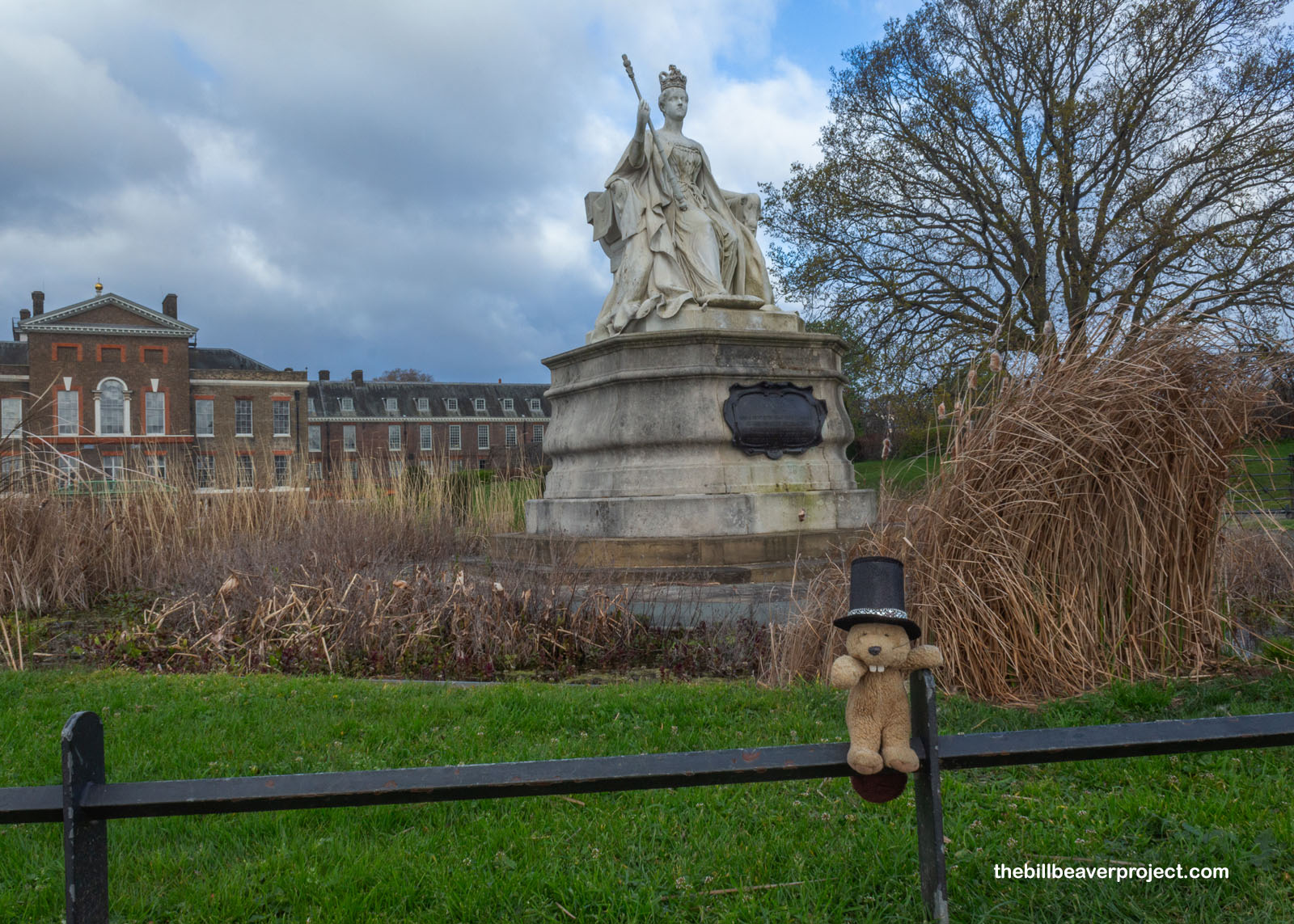
These fairy gardens were connected and named for Kensington Palace, once a small villa, transformed into a palace in 1689 by Mary II and Sir Christopher Wren! Here, William and Mary hosted extravagant balls from 1691 until 1694 when Mary died from smallpox, putting Kensington into a series of ups and downs! Queen Anne didn’t spend much time here but added an orangery in 1705. It really started to flourish during the Georgian time, with George I commissioning an artistic overhaul inside, and George II and Queen Caroline refining the gardens and putting them to full social use! But just like with Queen Mary, when Queen Caroline died, no reigning monarch stayed here for 70 years. During that time, though, the future Queen Alexandrina Victoria was born, raised, and educated, and here, on June 20, 1837, she held her first Privy Council meeting in the Red Saloon! The statue of her out front was crafted by her daughter, Louise, and unveiled in 1893 for the Queen’s Golden Jubilee!
 |
 |
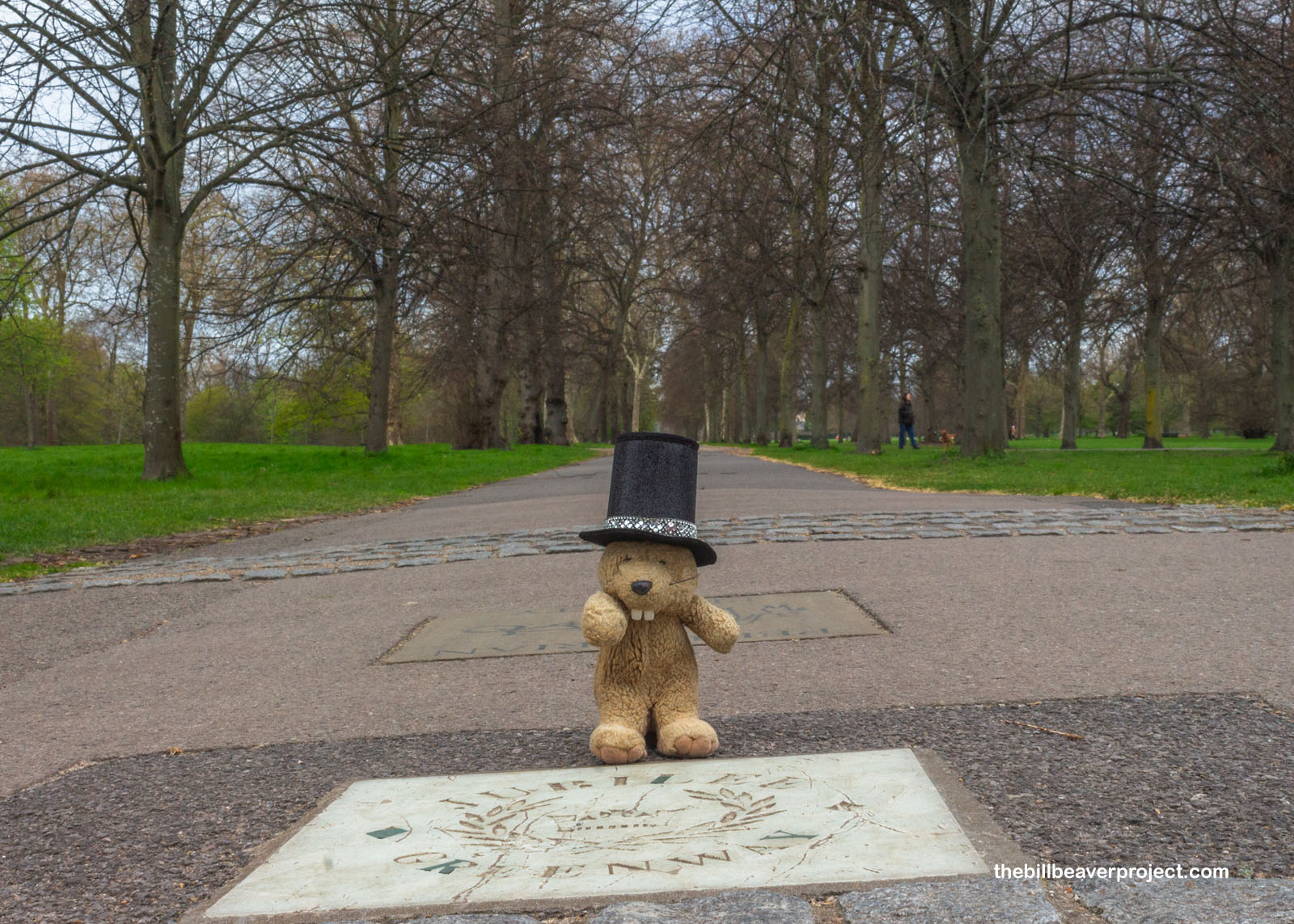
And speaking of jubilees, it was a different kind of jubilee that led me away from this storied palace! The double-looped Jubilee Greenway was laid out in 2012 in honor of Queen Elizabeth II’s Diamond Jubilee, with each of its 60 kilometers representing a year of her reign! While the Greenway spanned the city, connecting ten major sites from the 2012 Olympic Games, I jumped on it to cross Kensington Gardens on my way to the queen’s former home! It was one of a web of walkways and lines of leafless trees where folks jogged and trained their dogs on this blustery morning!
 |
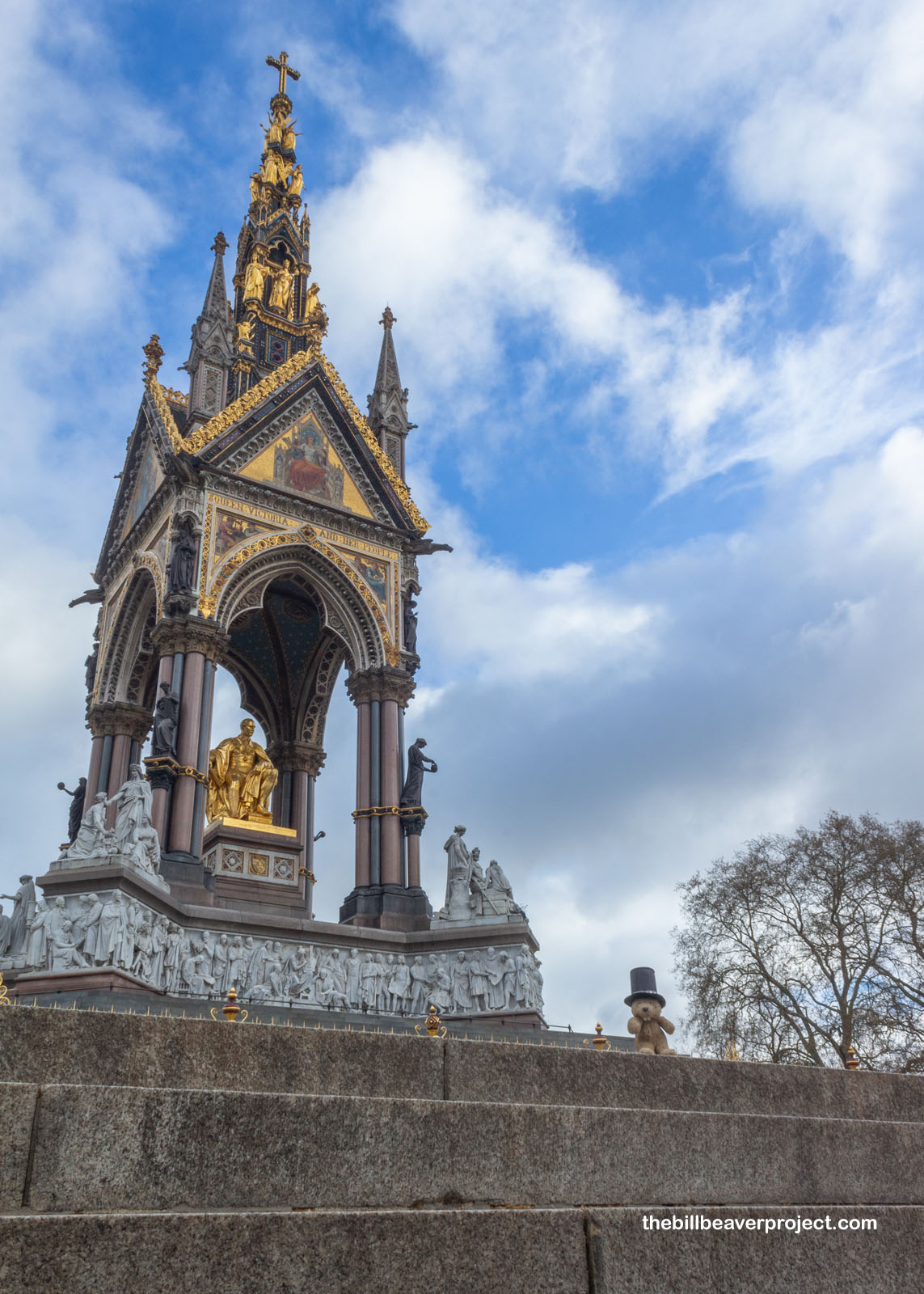
Then out of the clouds shone a burst of gold! This towering monument was Queen Victoria’s memorial to her husband, Prince Albert, who died of typhoid in 1861, and whom she outlived by 40 years! Designed by George Gilbert Scott, this gilded Gothic ciborium stood out to me especially because at each corner, it featured a notable marble animal from the height of the British empire: a bull from Europe, an elephant from Asia, a camel from Africa, and a bison from North America! These were on pedestals too high for me to photograph, but they sure were majestic!
 |
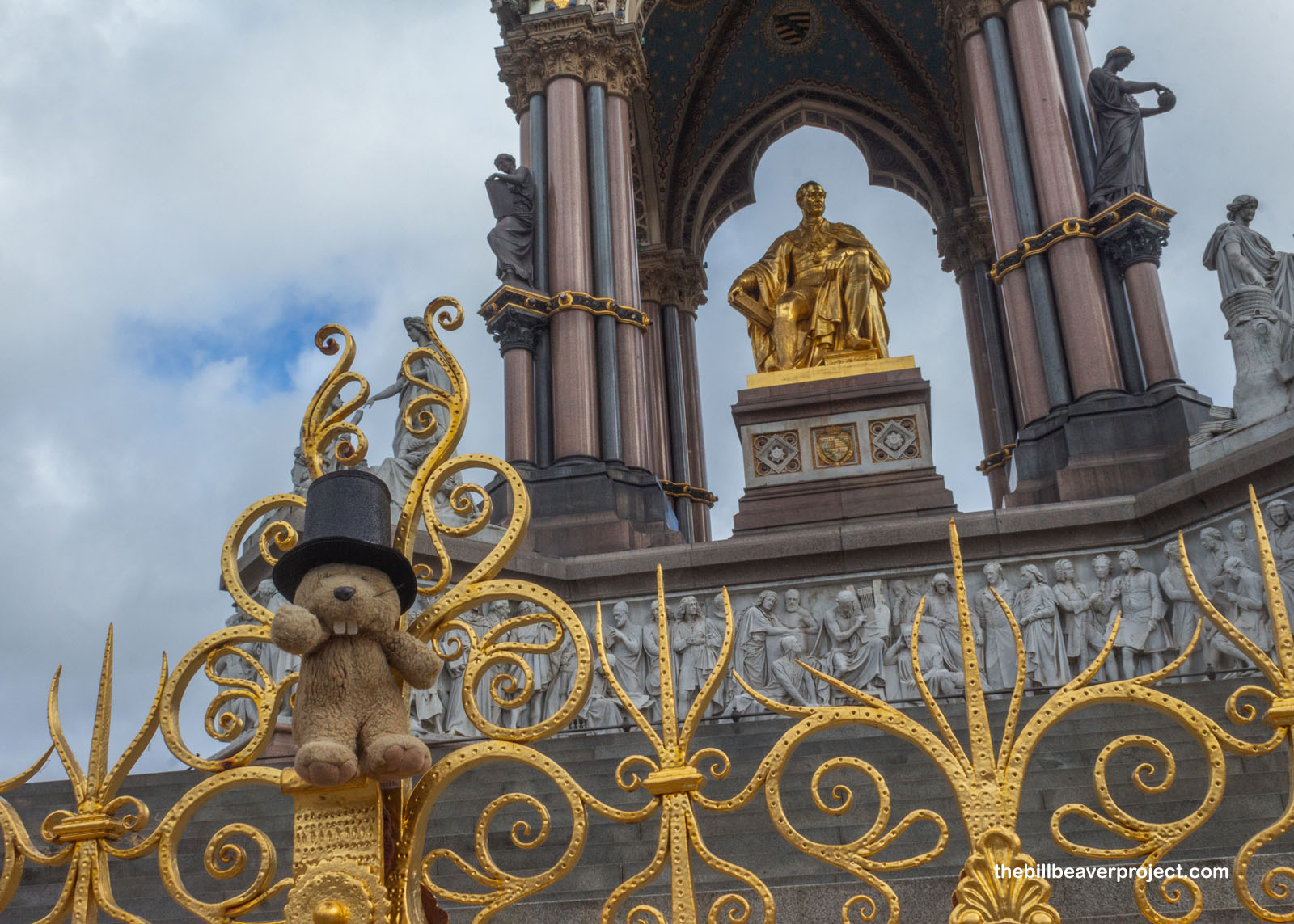
The gilded statue of Prince Albert is 14 feet tall and became a compound memorial when its designer, Baron Carlo Marochetti, died mid-sculpt and J.H. Foley took over! The prince himself is dressed as a Knight of the Garter, an elite order founded in 1348 by Edward III and limited to the reigning monarch, the Prince of Wales, and 24 living Companions! He’s holding a catalogue of the Great Exhibition of 1851, the world’s first major exhibition of culture, industry, and machinery, which was Prince Albert’s personal project along with Henry Cole. It was held right here in Hyde Park from May 1 to October 15th of that year!
 |
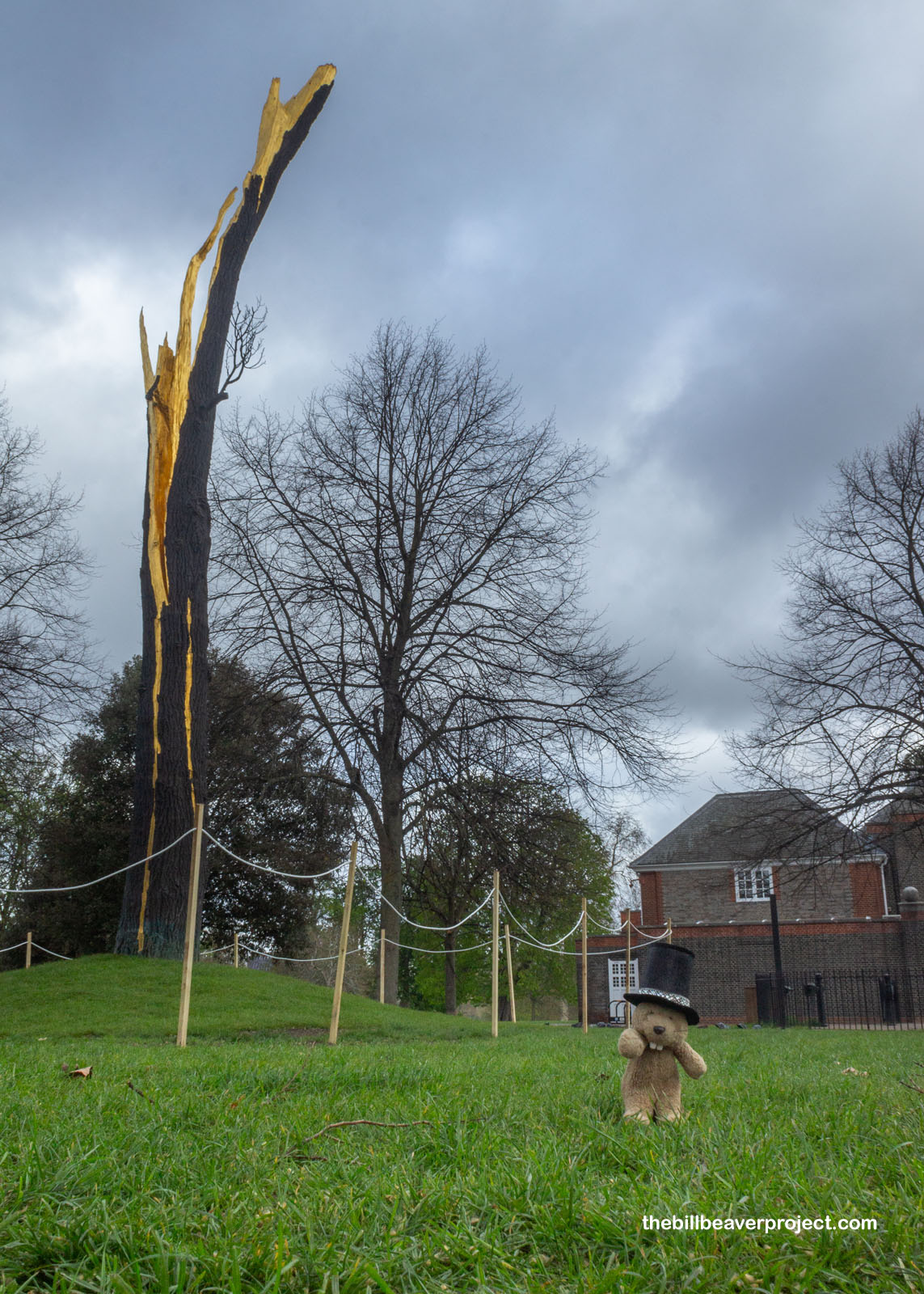
But art didn’t stop being made, or gilded, here in Kensington Gardens! Over by the Serpentine South Gallery, an enormous tree, half in gold, shone against the sky. This was Albero folgorato, “Thunderstruck Tree” by Giuseppe Penone! Also back in 2012, Signore Penone found a willow tree in Belgium that had been struck by lightning and cast the whole thing in bronze, highlighting its exposed insides in gold leaf! It’s on temporary display at the Serpentine until August 16th, so I felt super lucky to have been here on this day at this exact time to see it!
 |
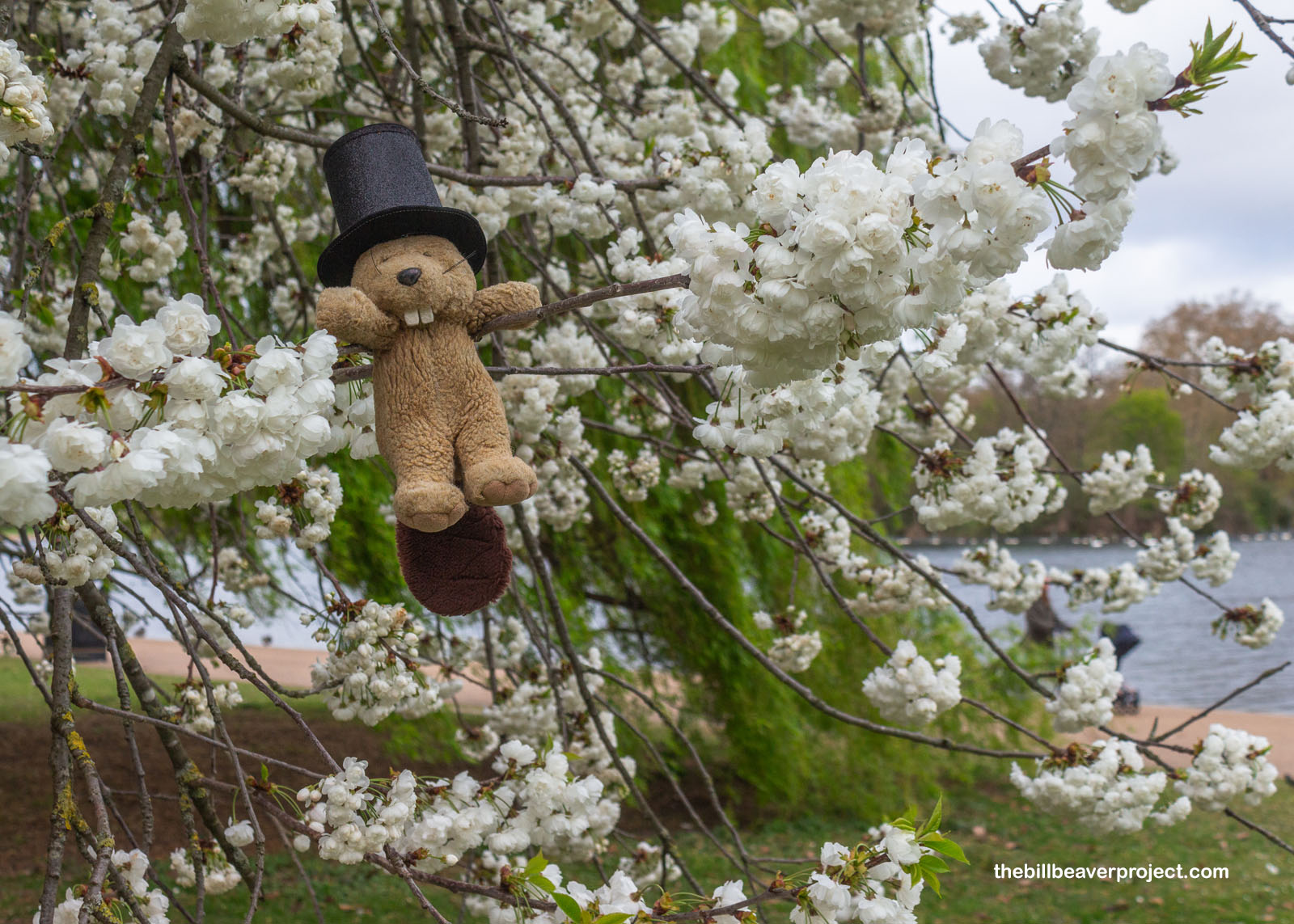
All this golden splendor got me in a fine mood, made even finer as I strolled into Hyde Park, past a club of chilly Serpentine swimmers, and right up to a resplendent flowering cherry tree! Wow! There were so many blossoms, and being right by the Serpentine, it meant I could take a few minutes to frolic for Firstbud! Whoo hoo!
 |
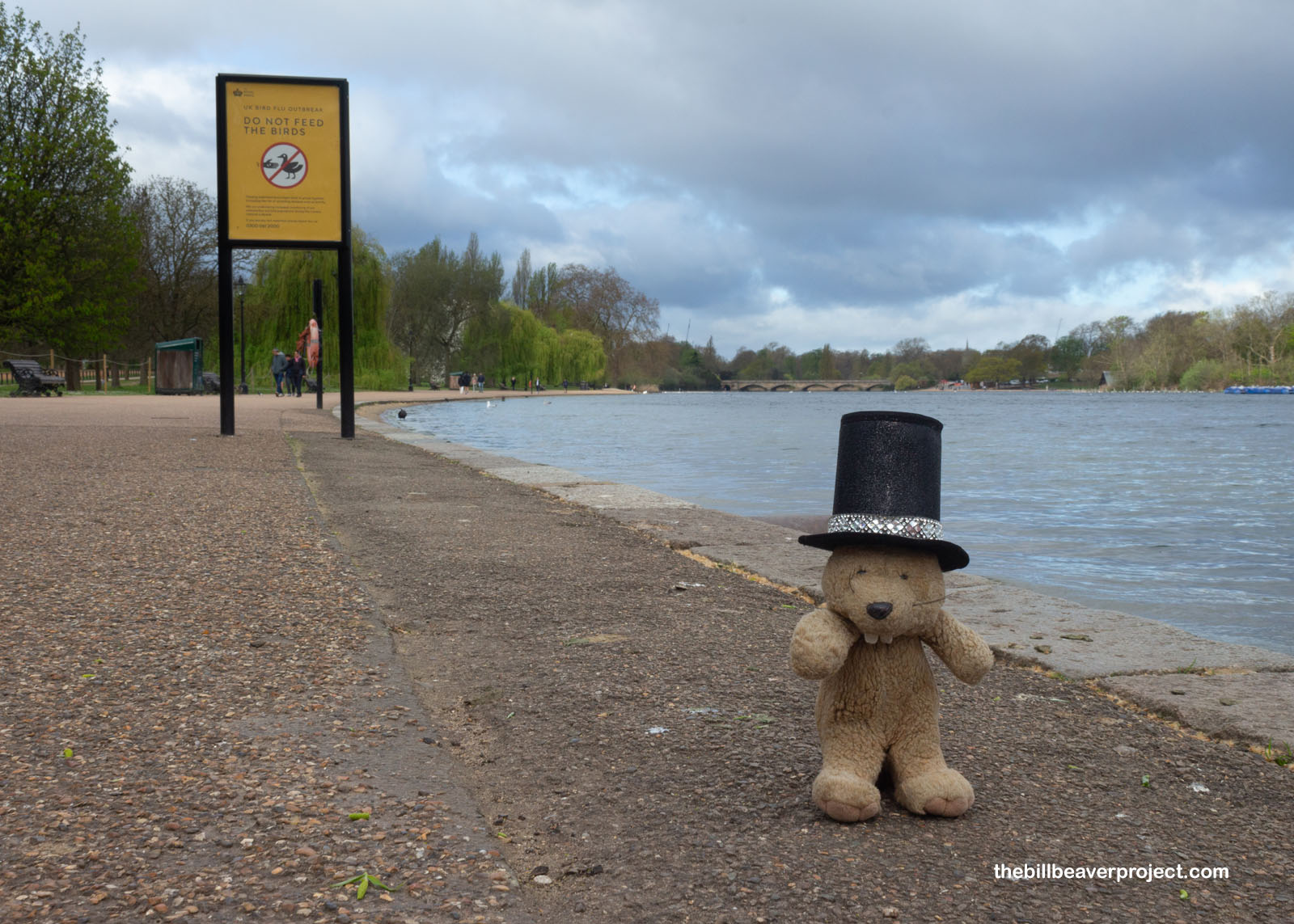
I tried to invite some of the water birds to join in my frolic, but I sure was in for a sobering surprise. There’s been a big outbreak of Bird Flu in the UK, and signs all along the Serpentine were warning folks not to feed the ducks, not just because bread in the water breeds botulism, but also because gathering birds together can make new sick birds! At very least, there aren’t any diseases that can pass between birds and beavers, but I kept hustling nonetheless.
 |
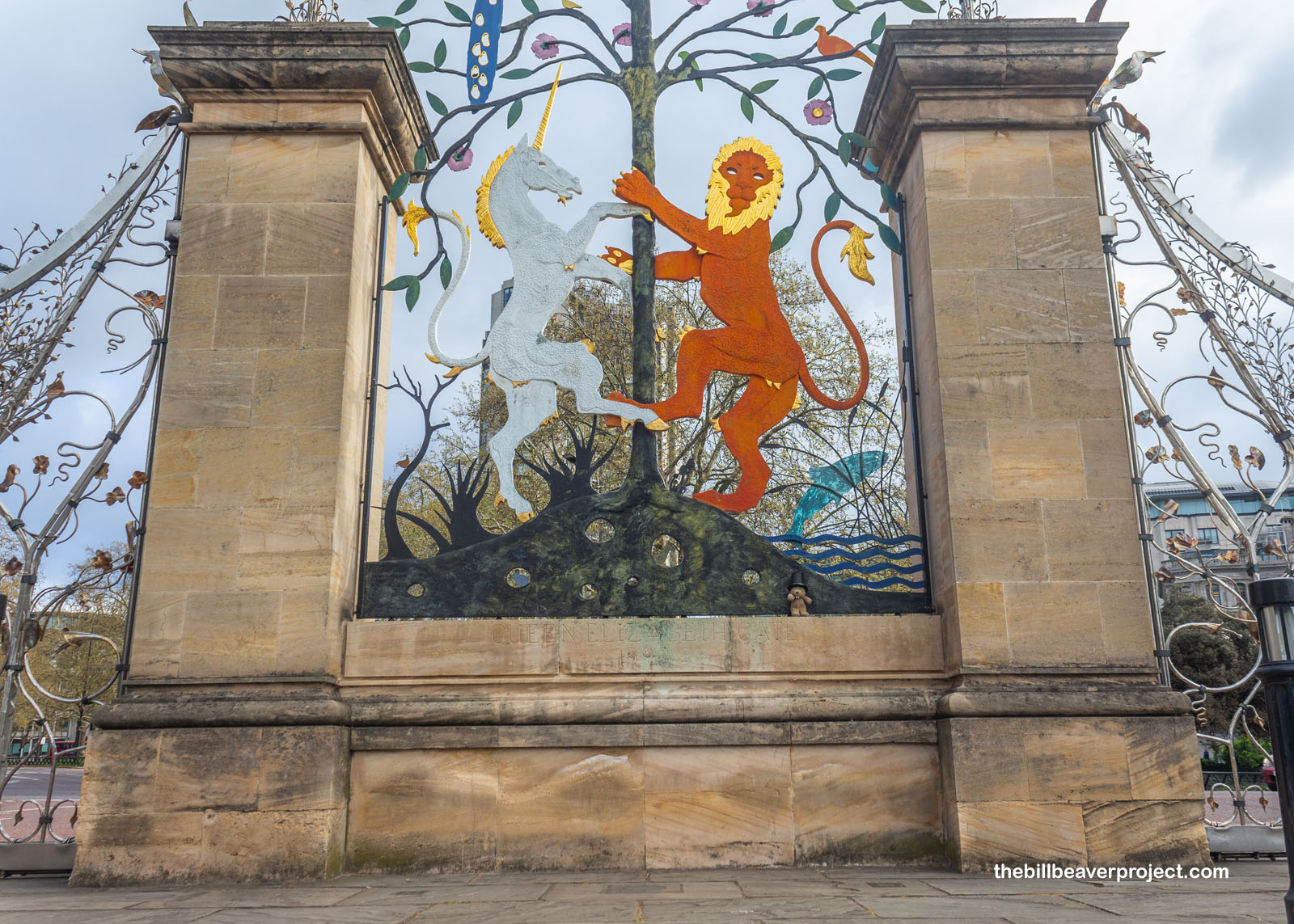
Exiting Hyde Park, I passed a magnificent gate featuring important symbols in British heraldry. The Queen Elizabeth Gate dates back to 1993 as a 90th birthday gift from Queen Elizabeth II to her mom, Elizabeth, who was better known as the Queen Mum to avoid confusion! On it are a red lion, which has symbolized the English monarchy since Richard I (the Lionheart) added three of them to his coat of arms, and a white unicorn, which came to symbolize the Scottish crown in the mid-1500s. Two unicorns and three lions merged into a duo in 1603 when James VI of Scotland became James I of England, making these two rivals for the title of “King of Beasts” the dual heraldic symbols of what would much later be known as the United Kingdom! The Welsh dragon has been left to Wales…
 |
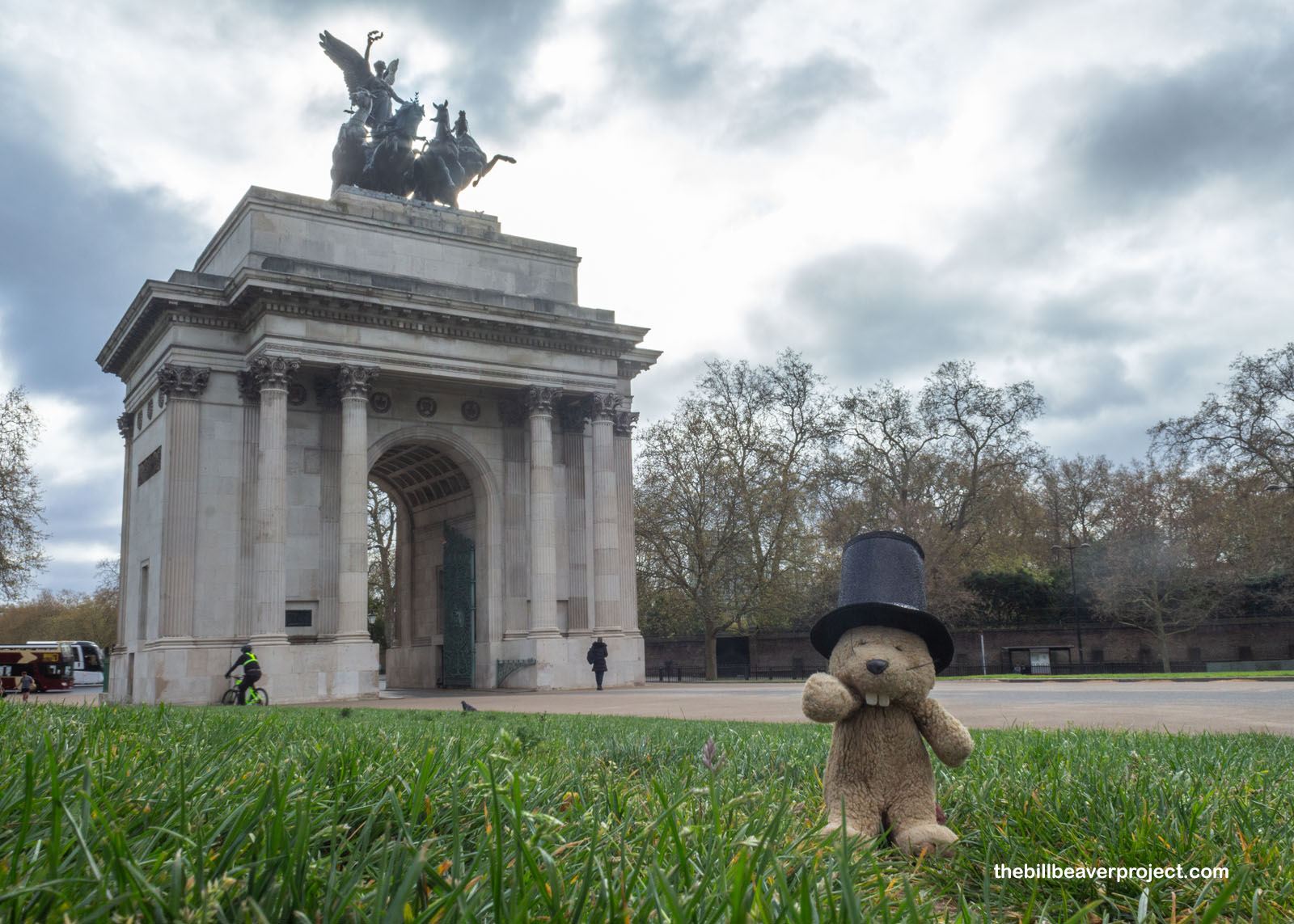
From there, I passed through the super famous and controversial Wellington Arch! First designed as the “Green Park Arch” by Decimus Burton, funding ran dry in 1828, only two years into construction, which meant the arch had its structure but none of its intended decorations! Ten years later, the Wellington Memorial Committee took over and railroaded through Europe’s largest equestrian statue to go on top of the arch, depicting Arthur Wellesley, 1st Duke of Wellington, Prime Minister of England, and defeater of Napoleon at Waterloo. It was completely out of proportion with the arch, but since the Duke of Wellington was still alive when it was installed, he held off all efforts to remove it, even by Queen Victoria herself! It was traffic that ultimately fixed the issue, causing the arch to be dismantled and moved in 1883. When it was rebuilt, it was without the huge statue. Much later, in 1913, the arch was crowned by a different sculpture, Adrian Jones’ Peace Descending on the Quadriga of War, still the largest bronze sculpture in Europe!
 |
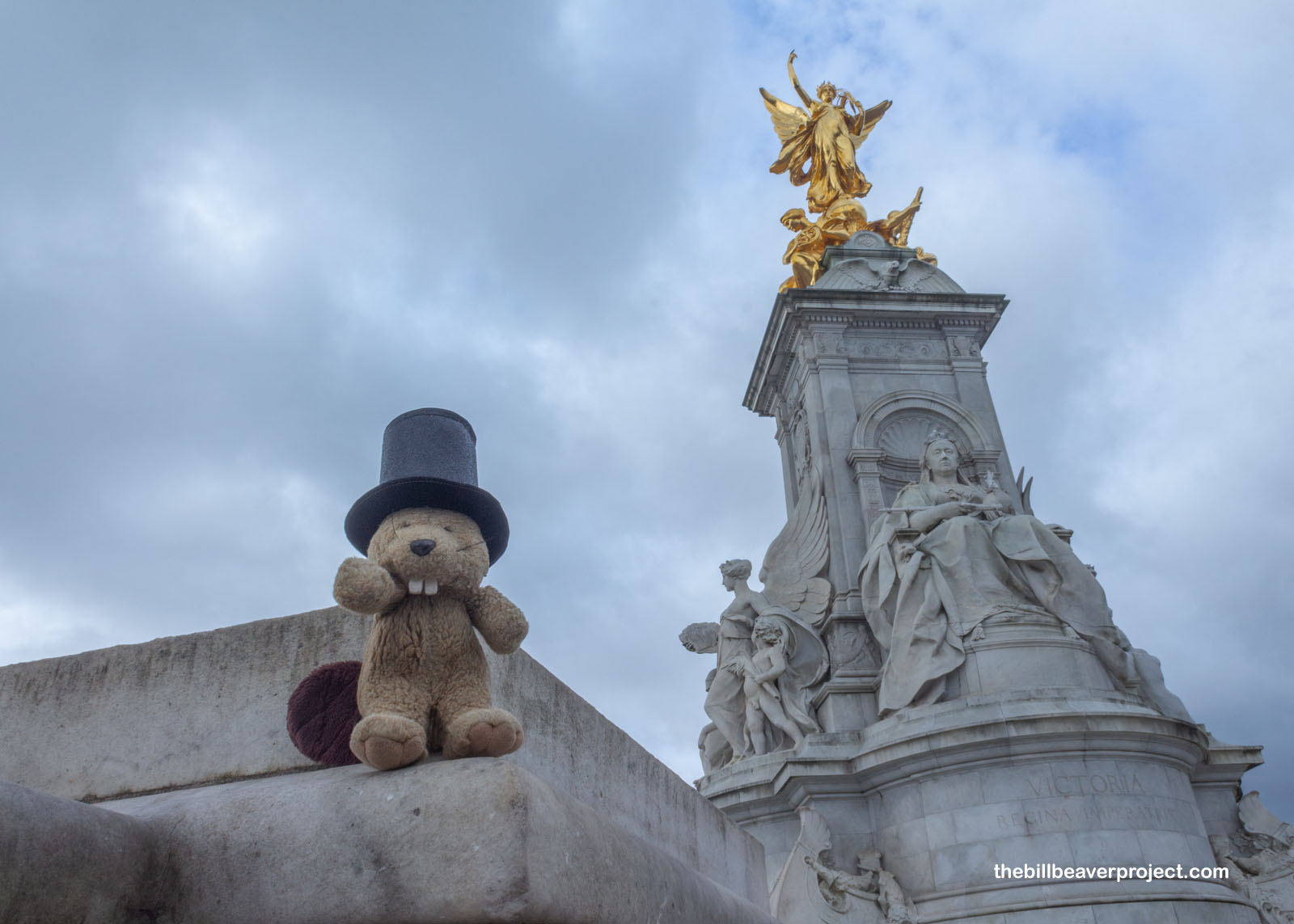
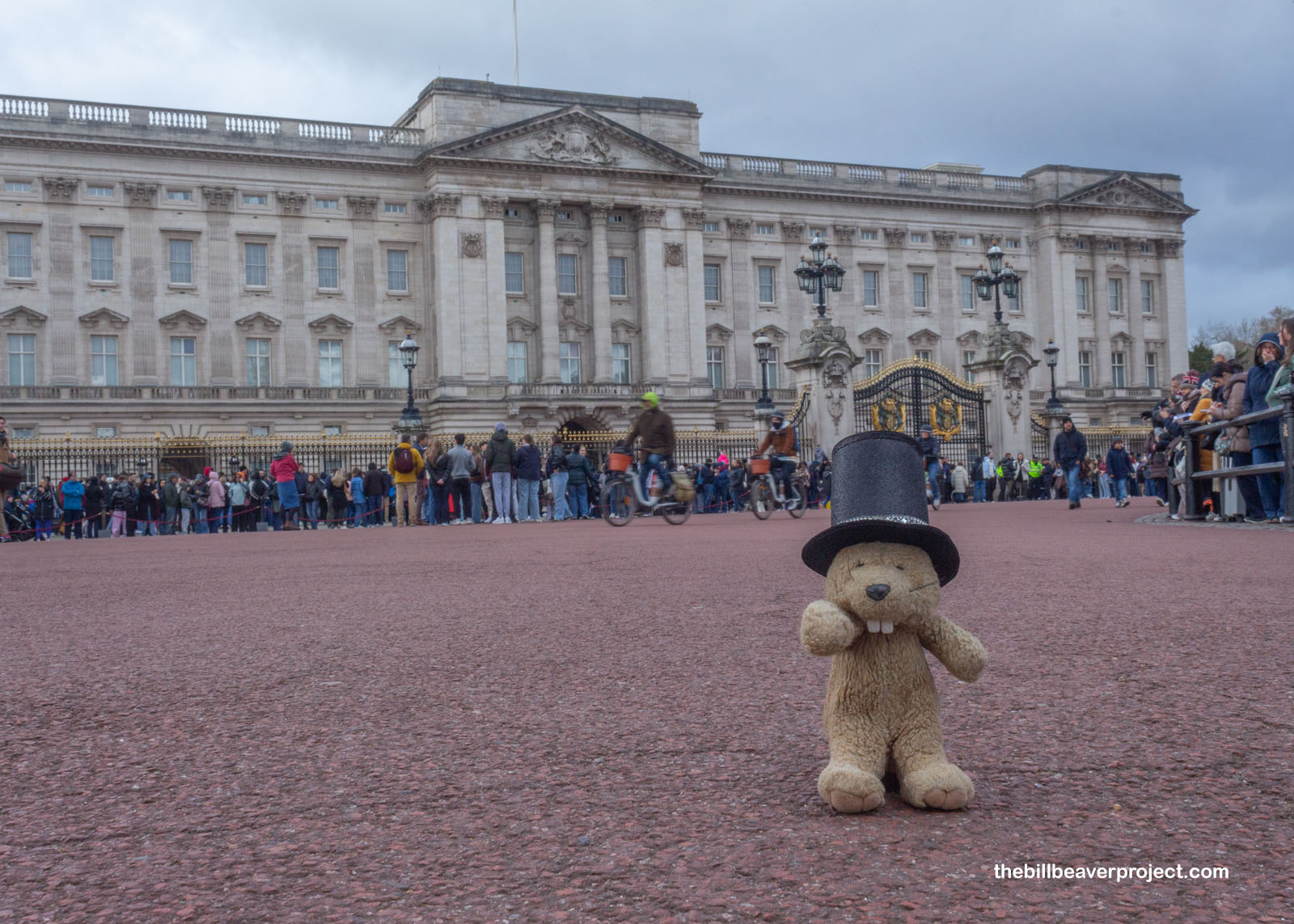
And wouldn’t you know it, but there was another statue of Queen Victoria way past the arch, crowned by an angel in gold! She was a super significant monarch who embodied the height of the British Empire and entire styles of architecture, clothing, and behavior in her amazingly long reign of 63 years! She was also the first to live in Buckingham Palace, the one that’s been universally known as the home of the British Crown for almost two hundred years, and which you might not realize from this photo was crammed up and down with hundreds of lookie-lous! For this was Easter Sunday outside the gates of the world’s most famous royal home, and everyone was jostling for space to see the hourlong Sunday Parade by the King’s Guard!
 |
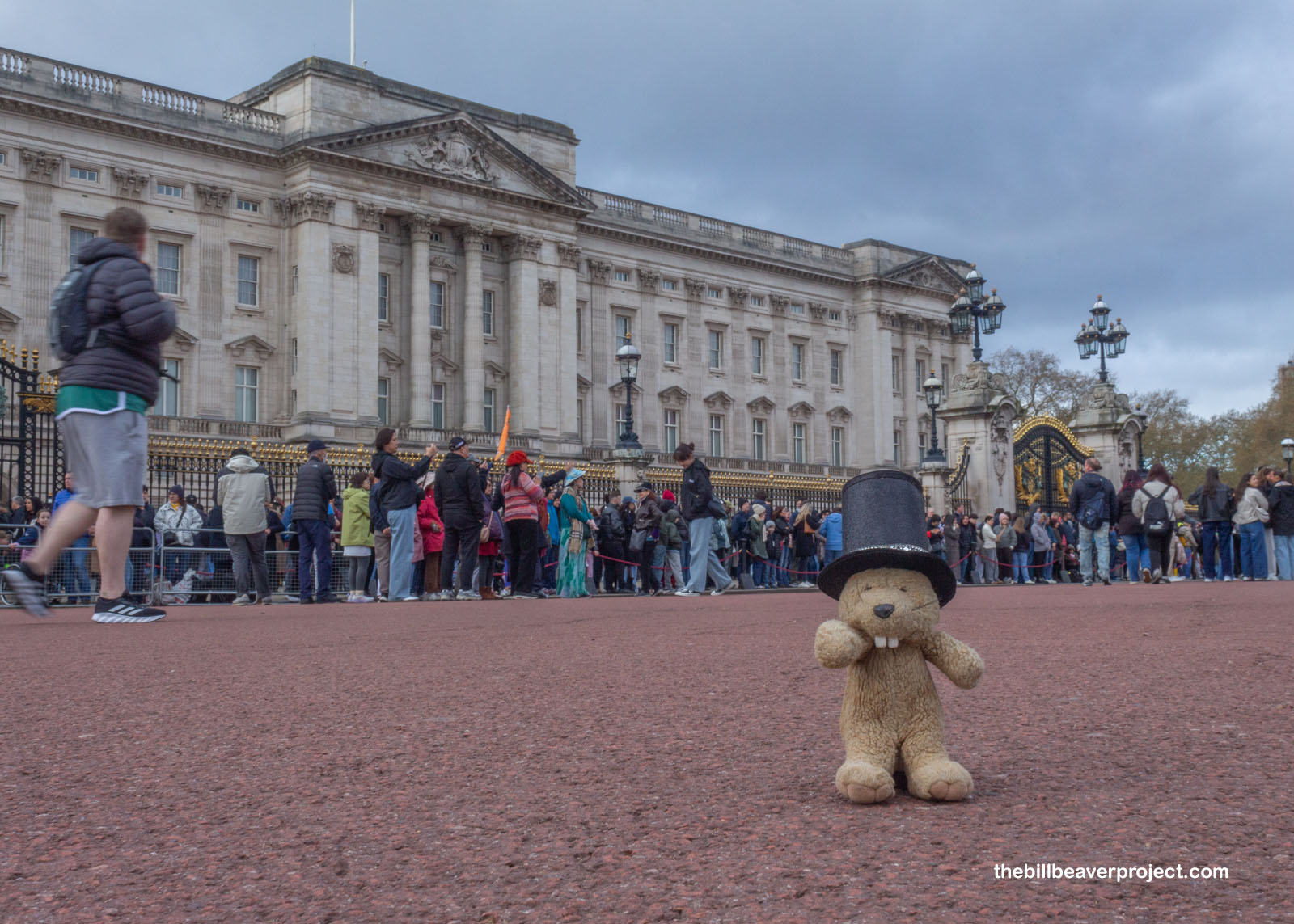
Sadly, since this was just a layover, I had neither time nor space to hang around for the parade, but I did hear the magnificent brass band exploding through the air from way down the Birdcage Walk! But I will tell you this! Like Kensington Palace, Buckingham Palace began as Buckingham House, which George III bought for his wife, Charlotte, in 1761, 15 years before the American Revolution kicked off, and where she had 14 of their 15 kids! One of those kids, George IV, began its expensive overhaul into a Palace with the help of architect, John Nash, but when George died and Mr. Nash went over budget, William IV finished the job with William Blore taking a more economical approach! Victoria moved into Buckingham Palace in 1837, requiring more nurseries and visitor bedrooms to be installed, and setting the standard that this would be the headquarters of the monarchy moving forward. This is famously where the high-hatted King’s Guard, recruited by Henry VII, hold their stoic watch and celebrated Changing of the Guard ceremony every two hours, but I couldn’t squeeze through the crowd to see them.
 |
 |
What I did see down the street was an even older and more consistent pillar of the British Crown: Westminster Abbey! Originally a small Benedictine monastery, in 1065 AD, King Edward overhauled it into London’s west minster, or monastic church, counter to St. Paul’s Cathedral, the east minster! Since Christmas Day 1066, every British monarch, starting with William the conqueror, has been crowned in Westminster Abbey, through Henry III’s Gothic reimagining in 1269, the English Reformation in the 1500s, and the English Civil War in the 1600s! That is, of course, except for Edward V, who was deposed as a child in 1483, and Edward VIII, who abdicated in 1936, a few months before his coronation was supposed to take place! Today, there are over 600 monuments and 3,300 burials inside the Abbey, but you know how I feel about photographing in churches and graveyards!
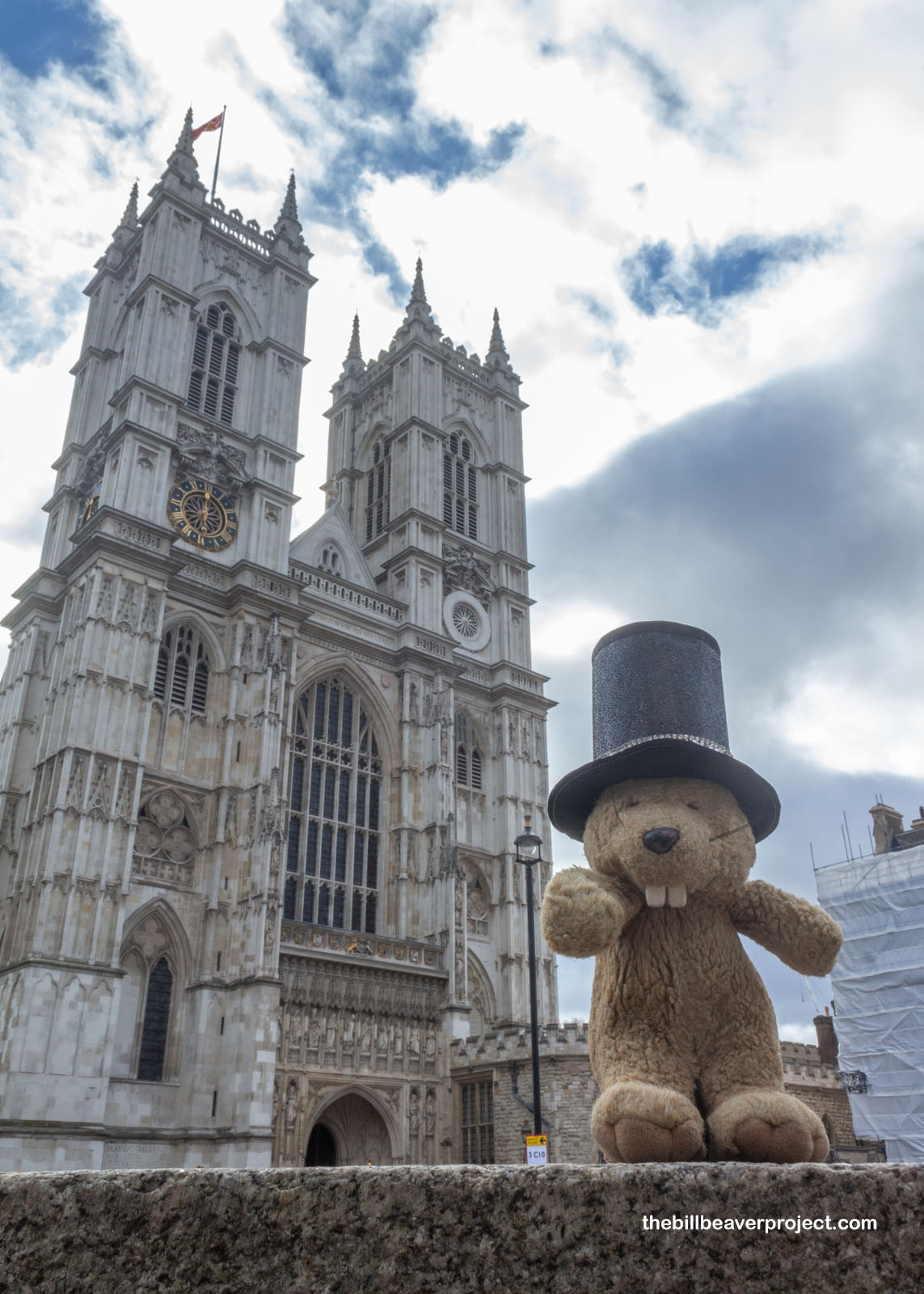 |
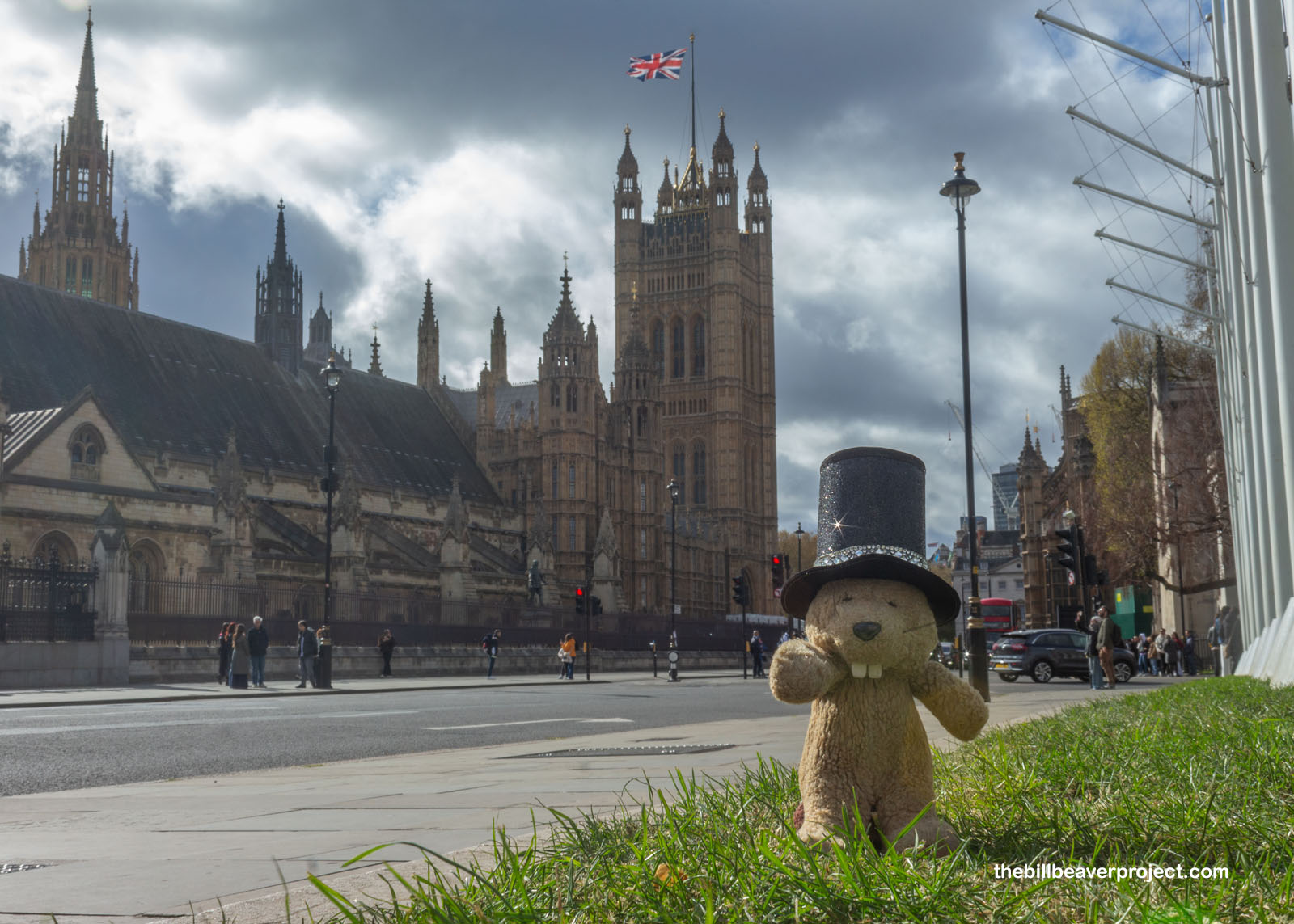
After passing through Parliament Park, which had statues of the expected—Benjamin Disraeli and Winston Churchill—and the unexpected—Abraham Lincoln and Mahatma Gandhi—I beheld what was, in 1097 CE, the largest hall in England and possibly all of Europe, when it was constructed by William II! Built to impress, Westminster Hall today, with its sloped, black roof, is the only part of the now more impressive Palace of Westminster, to still be intact after a devastating fire in 1834! While Buckingham Palace is home to the crown, the Palace of Westminster is home to one of the world’s oldest continuous representative assemblies: the British Parliament!
 |
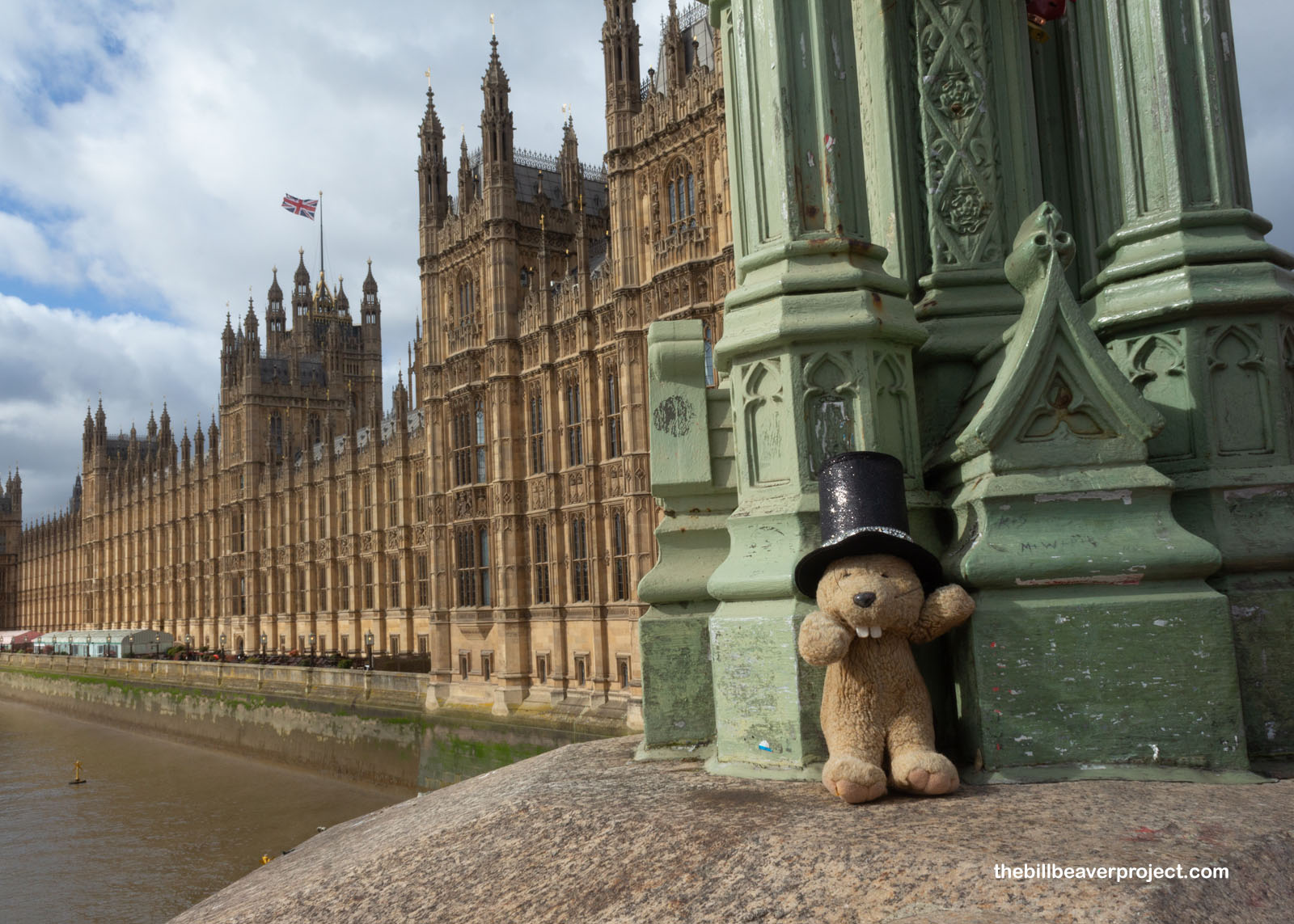
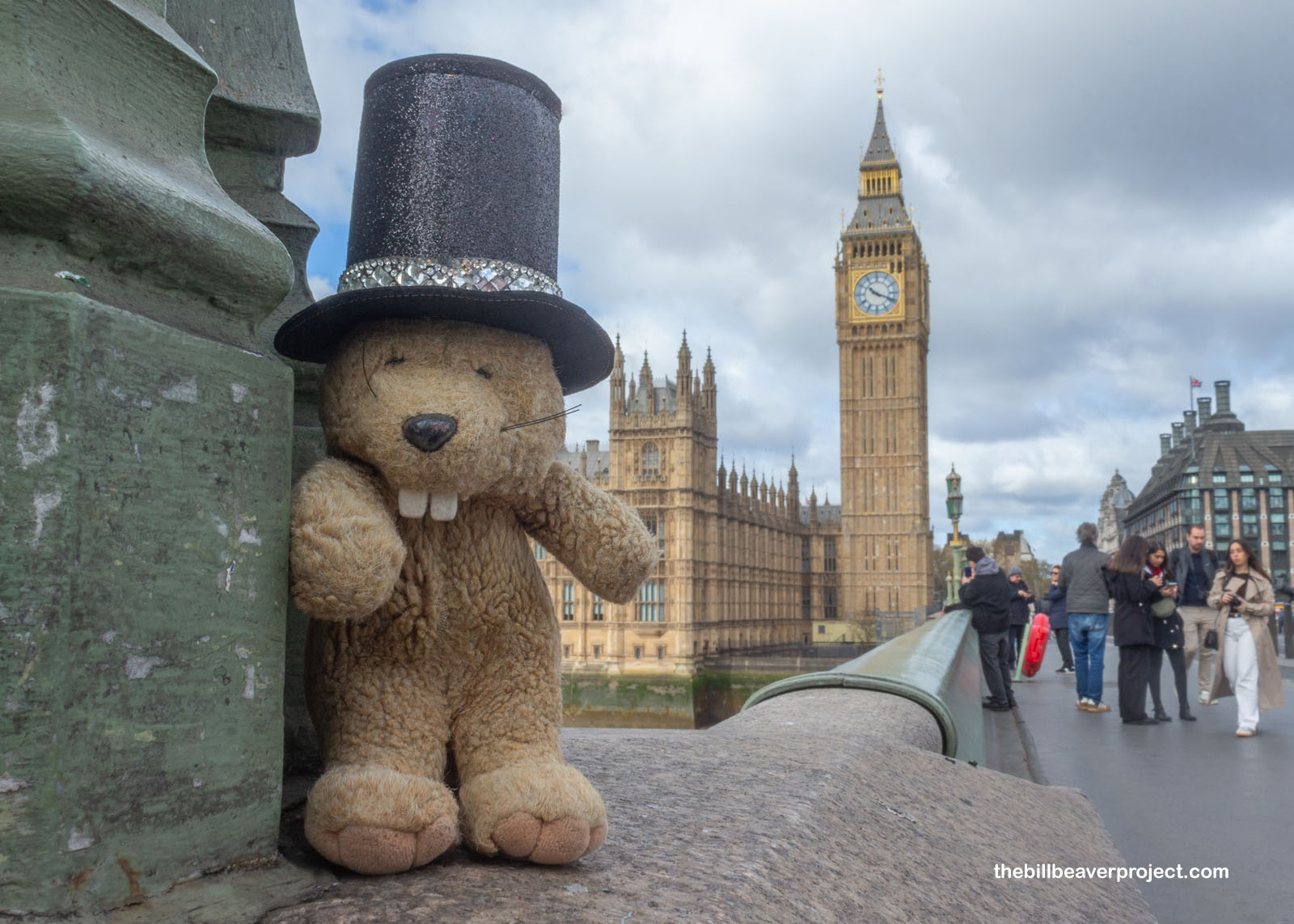
Parliament arose during the Middle Ages as a way to organize the kingdom and its many different needs. It made Westminster its headquarters in 1512 when Henry VIII moved out! That headquarters gone through a lot of reimagining, from Guy Fawkes trying to blow it up in 1605 to the destructive fire of 1834 to the Blitzkrieg bombings of 1941, but with enough restoration, the massive palace that’s home to the Houses of Lords and Commons, plus numerous courts, still has much of its original Gothic splendor from 1835! It was the work of Charles Barry and Augustus Pugin, who went mad over his hard work but is most responsible for the iconic Elizabeth Clock Tower at the Palace’s northwest corner! One part document archive, and one part prison for naughty Members of Parliament, this tower’s crown jewel was, of course, its clock and enormous bell, called Big Ben after Sir Benjamin Hall. Connected by telegraph wire to the Royal Observatory in Greenwich, the clock in this tower, adorned with gold and opal, was, at first chime in 1859, the most accurate in the world!
 |
 |
After crossing the Thames, I stumbled on something much more contemporary, and way more accurate than anything I’d seen back home. While the USA is officially pretending that the COVID-19 pandemic never happened, here in London, there is a 500-meter (1,640-foot) wall decorated in a quarter million red hearts in remembrance of those who were lost to the virus! It opened in 2021 and was maintained exclusively by volunteers to keep the colors fresh, but as of November 2025, Parliament made it an official memorial and will see to it that it will be preserved, using masonry paint to fortify the hearts against the seasons!
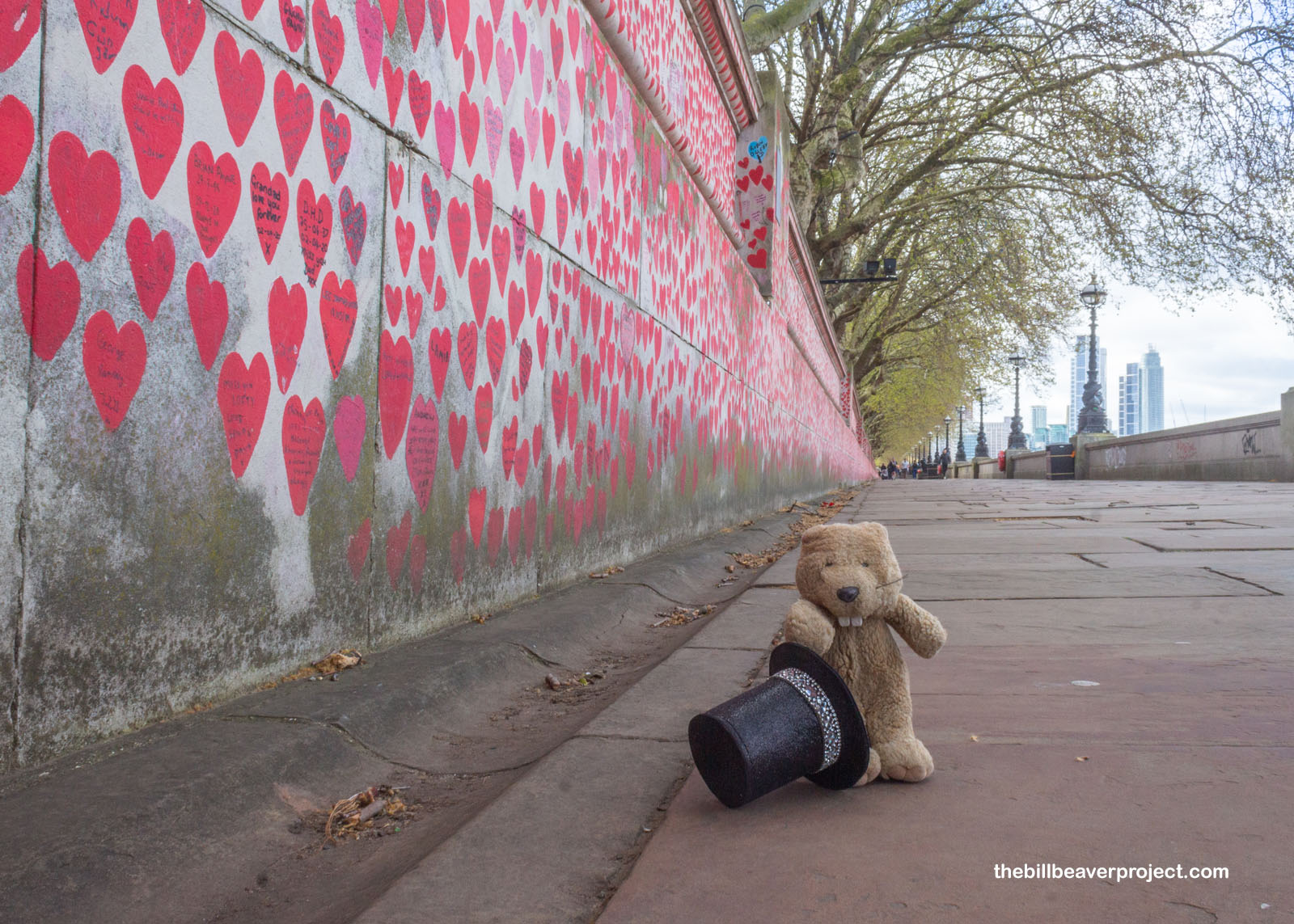 |
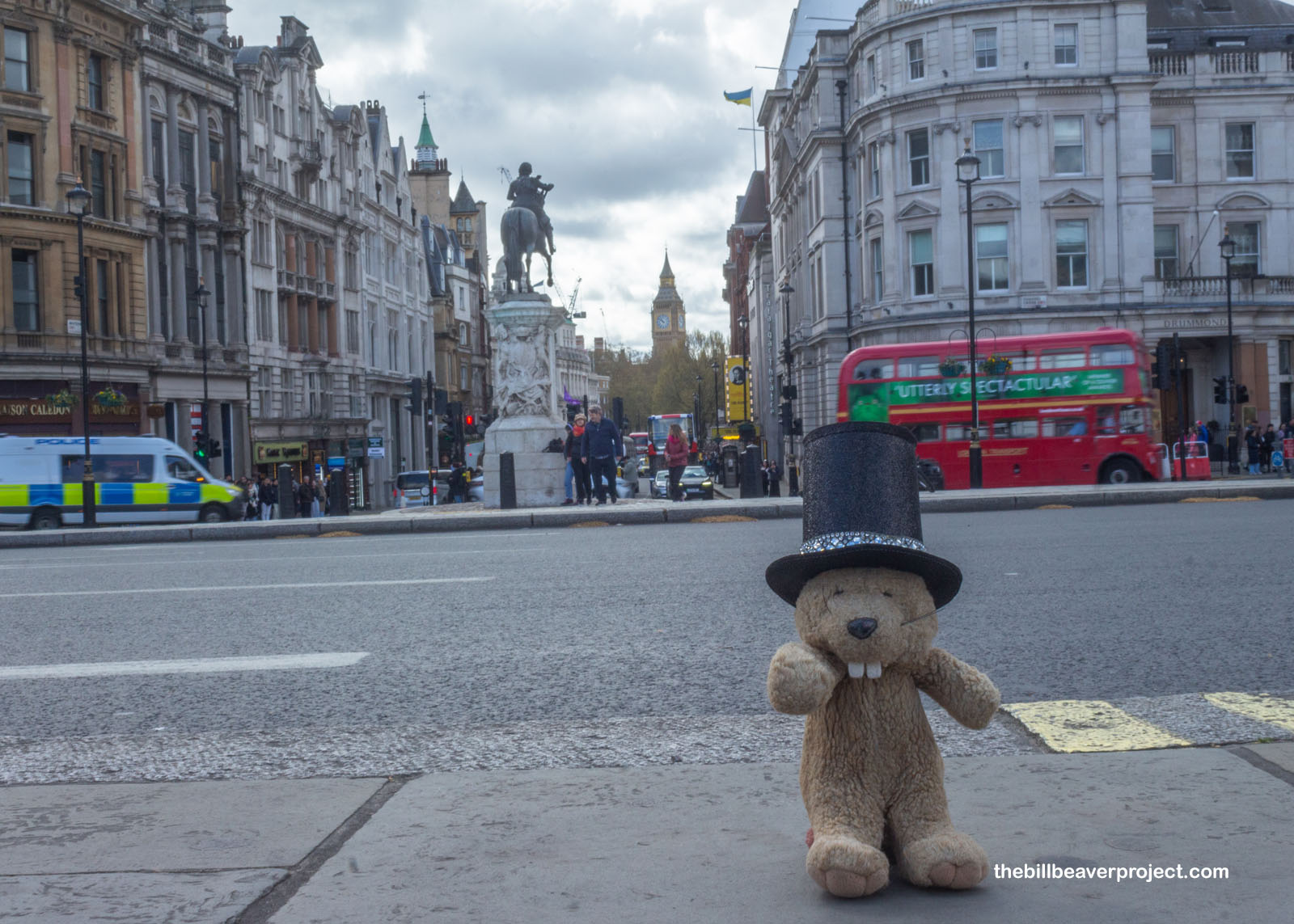
My London layover was growing short, which meant I had to bypass a ride on the famous London Eye and hustle past the historic Scotland Yard, but I at least wanted to see a few more London landmarks! The city’s famous double-decker buses whizzed round the circle known as Charing Cross—Charing or ċierring meaning a river bend and cross for the memorial cross placed here by Edward I in the 1290s to remember his wife, Eleanor—all of which is considered the center of London! The original cross was destroyed in 1647, on orders from either Oliver Cromwell or his Parliament, and ironically, the statue on horseback right at its center today is of Charles I, the king that Cromwell beheaded! It was installed in 1675 once Charles II had retaken the throne!
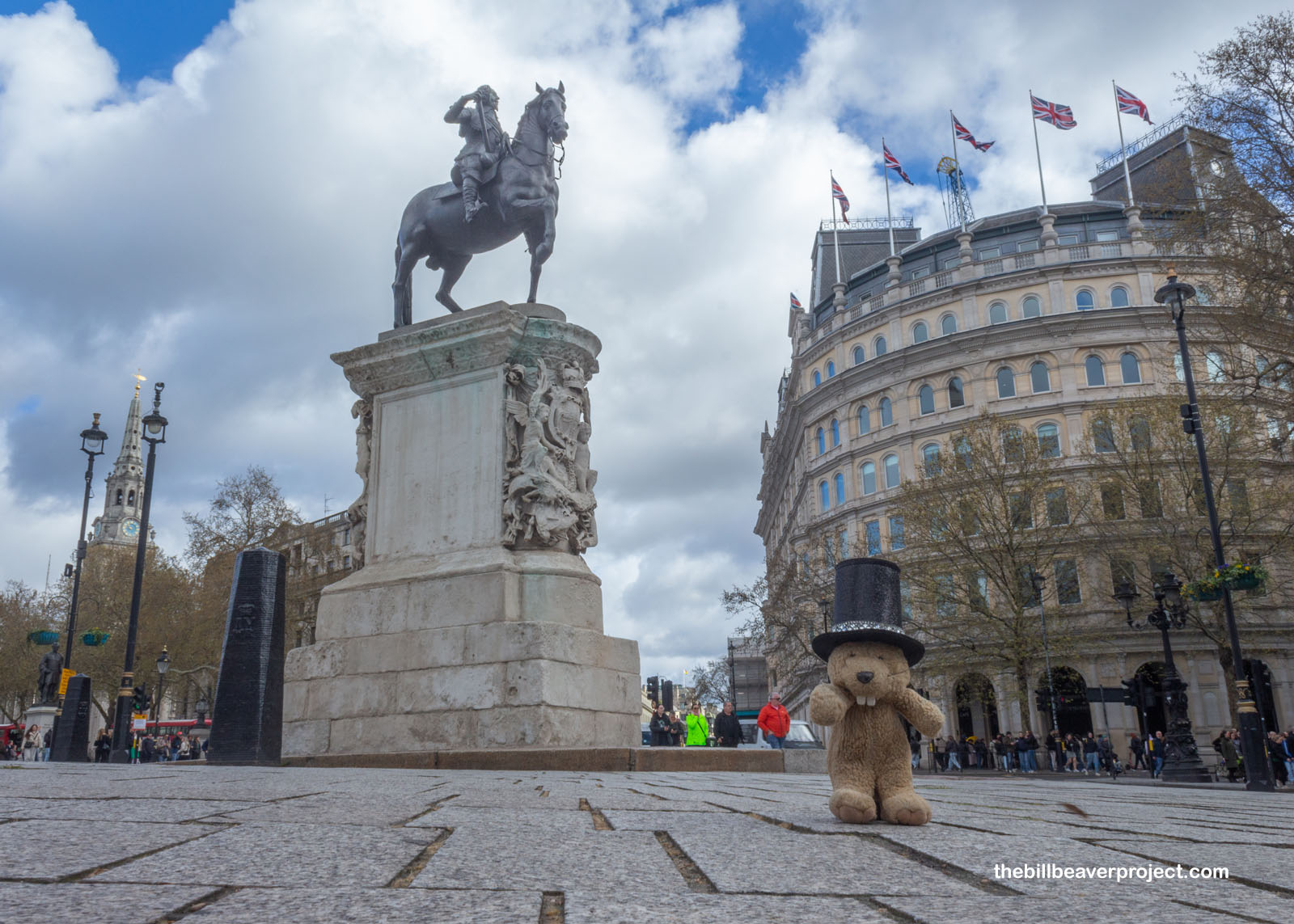 |
 |
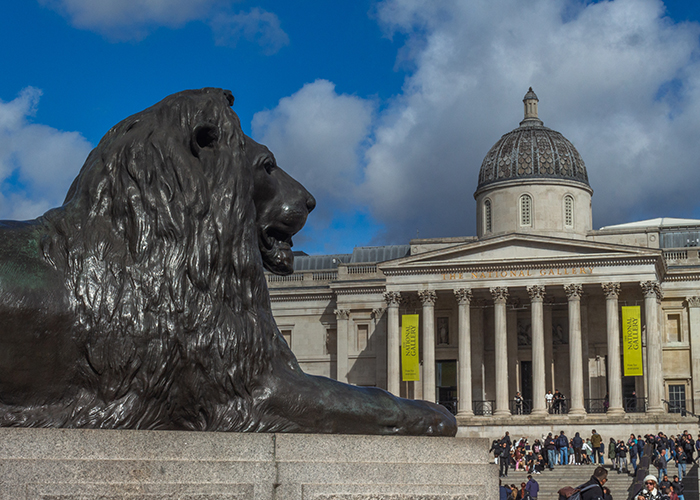
And all of this was seated just south of Trafalgar Square, like a very short, squat exclamation mark! Once just the King’s Mews, a place where Edward I kept his hunting hawks during molting, it evolved into a much grander open space between 1826 and 1844, following a design by William Wilkins! With the National Gallery on the north end, at its center is the huge Corinthian column topped by a statue of Lord Horatio Nelson, victor against Napoleon at the Battle of Trafalgar in 1805. This monument from 1845 swiped the name of the Square right out from under William IV, whose coronation in 1830 was supposed to be the reason for building it to begin with!
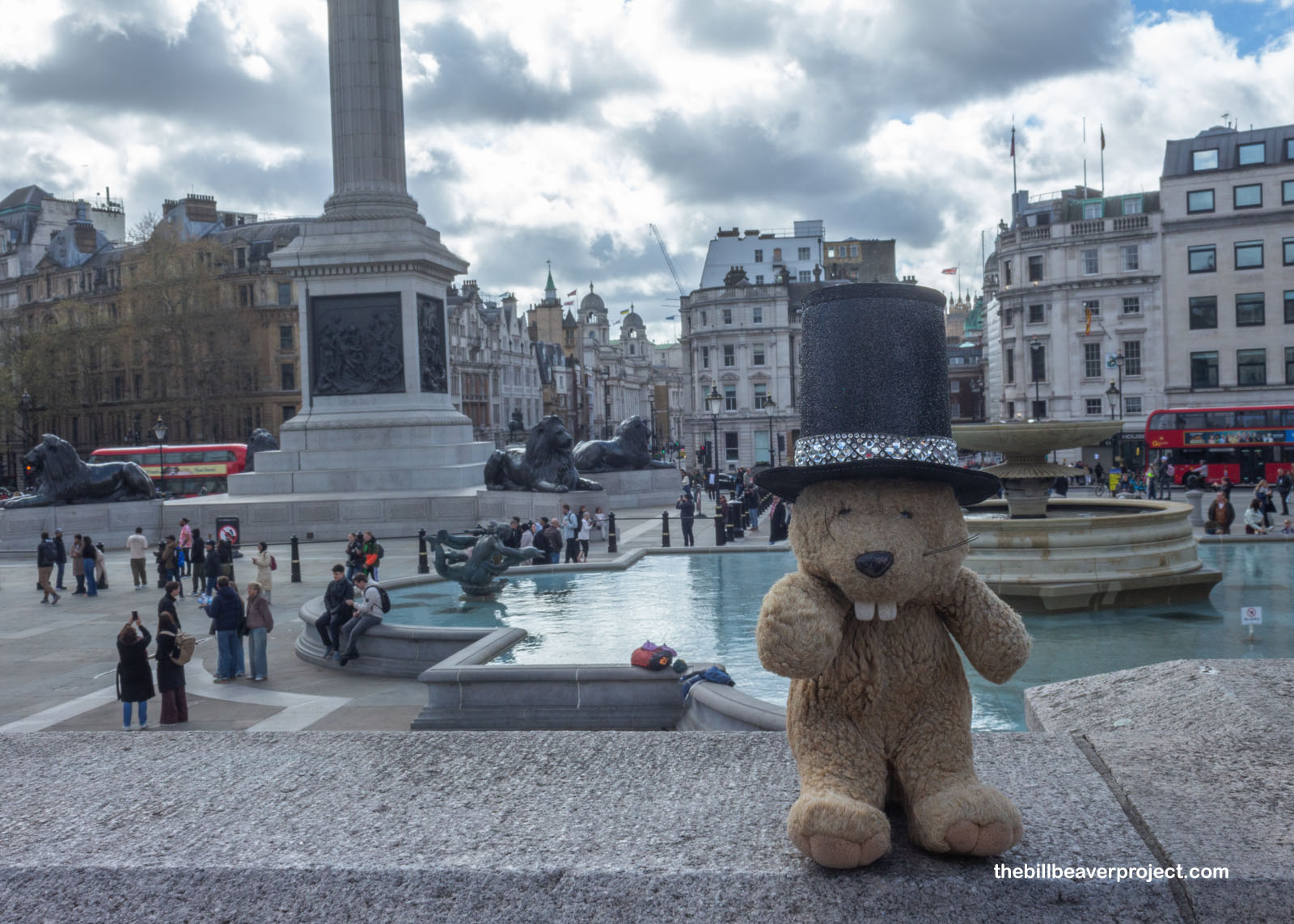 |
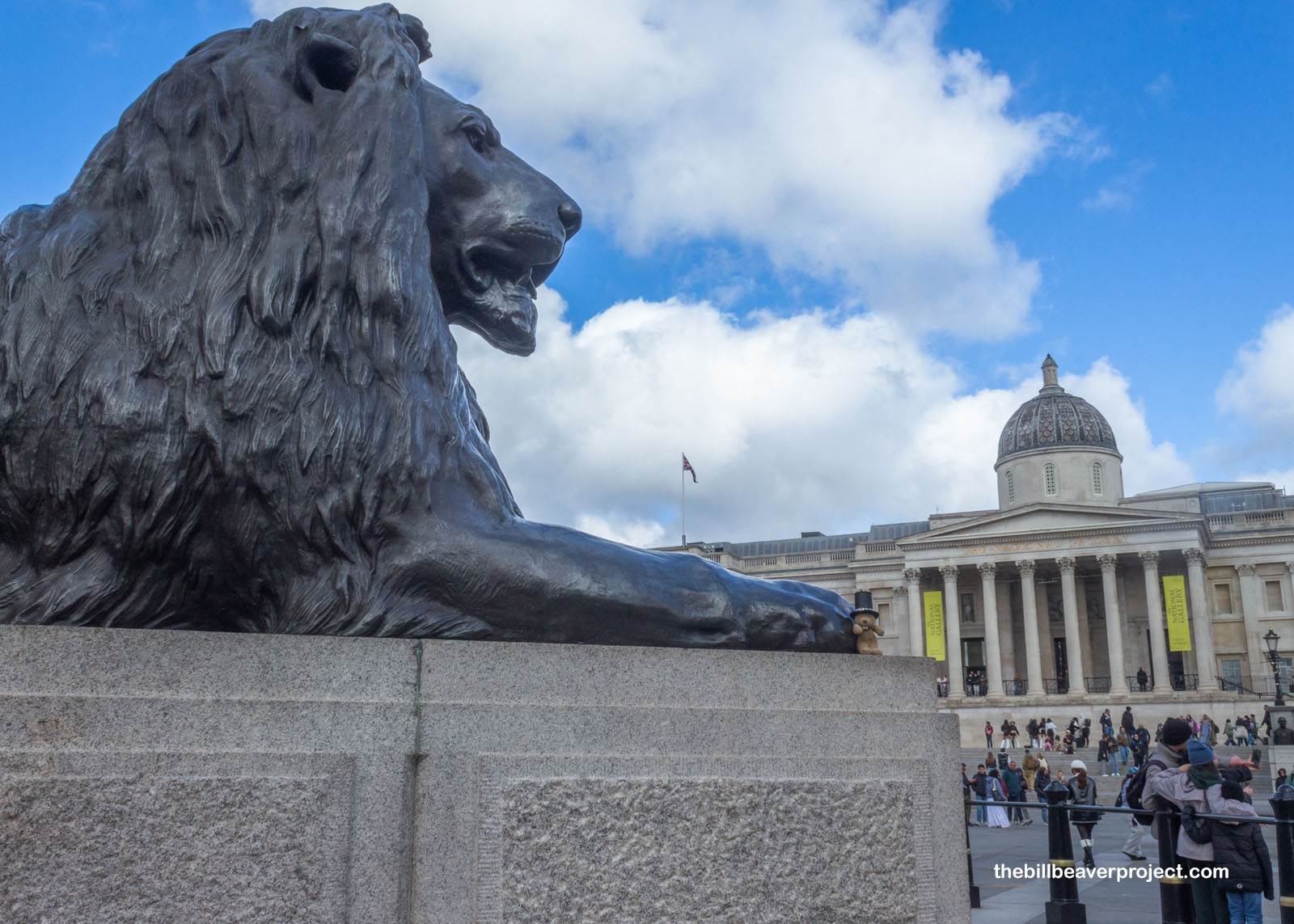
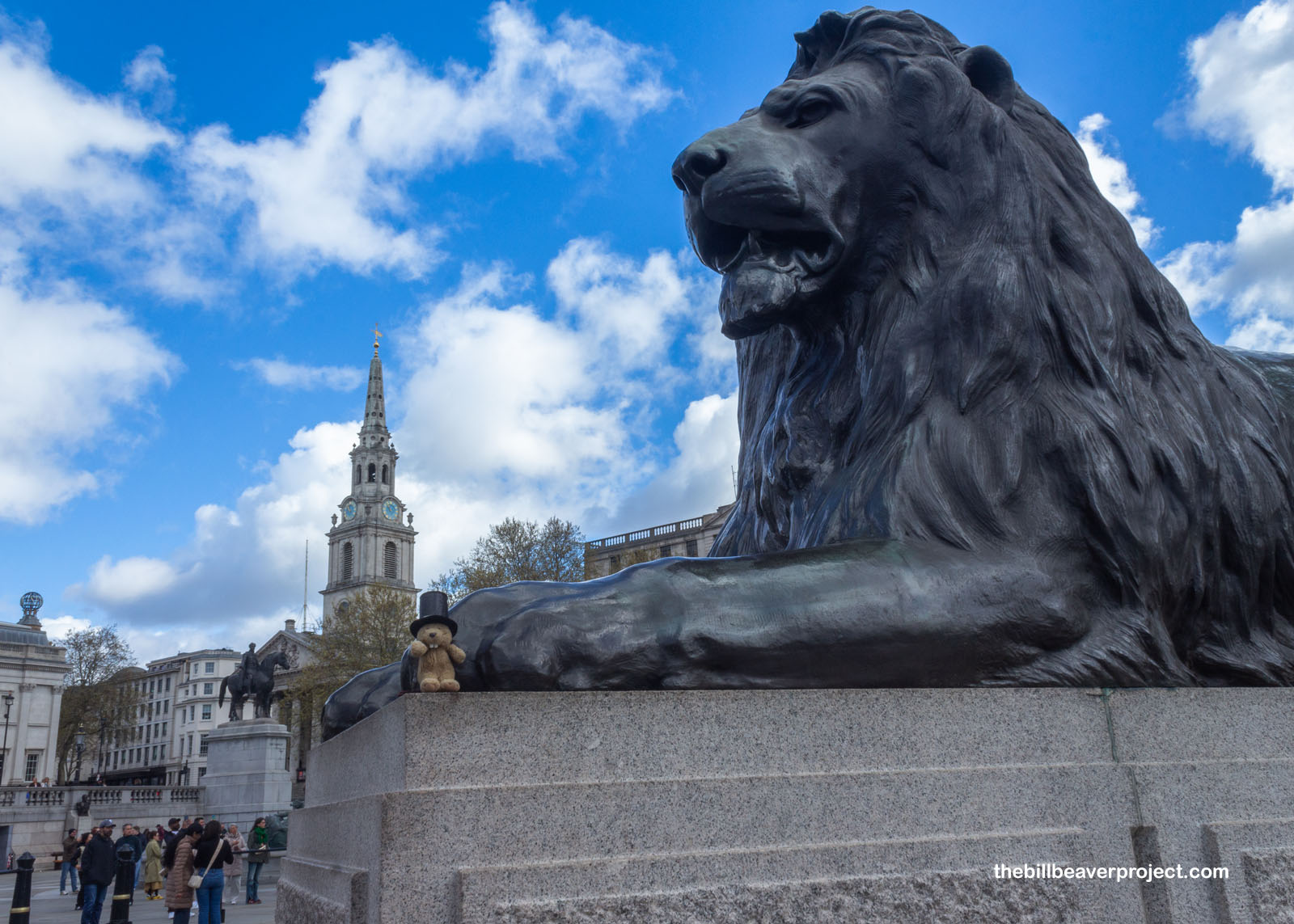
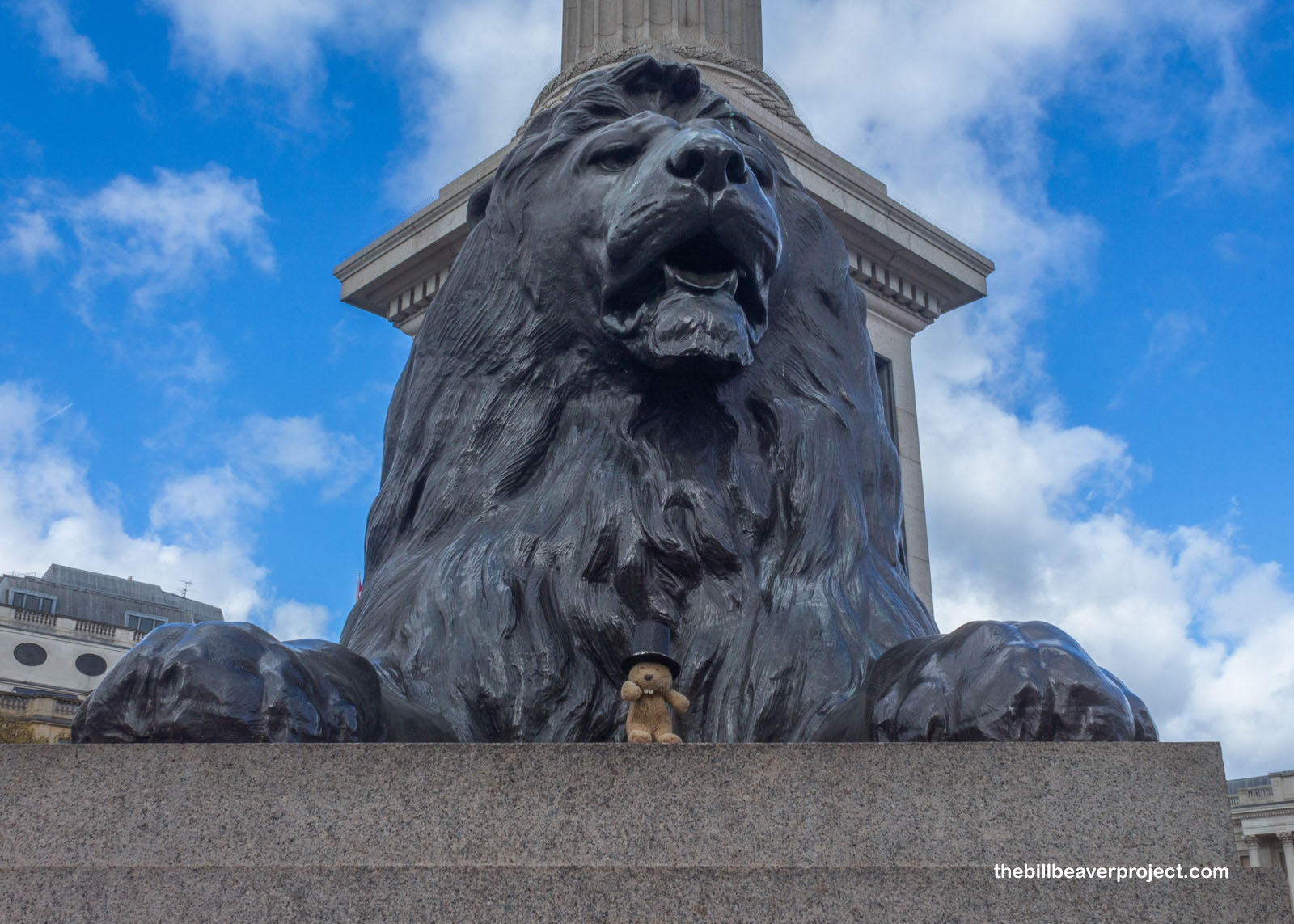
Surrounding Nelson’s column were four humongous, 7-ton, bronze lions, which, apart from buttoning up my trip to Africa, have a surprising story themselves. They weren’t added until 1867, twenty-four years after the Column went up! Their sculptor, Sir Edwin Landseer, started creating them off of a dead lion from the London Zoo, but his sculpting took so long that the body started to decompose. That’s the kind of smell that will interrupt the creative flow! So if you look really really closely at these lions’ paws, you’ll see that they’re much closer to those of a domestic cat than an actual lion!
 |
 |
Beep beep! Off went my reminder that I needed to get going! There were only going to be two more Heathrow Expresses before my 3:10 flight home to LA, and I decided to err on the side of earlier. There’s still a lot left to see in London and a lot of reasons to come back one day, but for now, I said “cheerio” to the lions and hopped aboard the Circle line back to Paddington Station. From there, I tipped my hat to the Bear, slid onto the Heathrow Express, and made it all the way back to the airport with ample time to relax for the long flight ahead and the inevitable time warp that would accompany it when I landed at the equivalent of dinner time, Pacific Time!
 |
The whole way home, it hit me that after two weeks on the other side of the world, I still had another major trip to get ready for in a few months: my final national parks! Only, there were a few obstacles in the way, namely three national monuments that had been rushed onto the list in 2024 before that presidential election. After such incredible sights in Africa and London, these seemed a little lackluster, but you know what? There’s always something neat to be learned at less trafficked places! I’ll get back to mapping.
I said good day!

Previous Day |
Total Ground Covered: 1,709.3 km (1,123.2 mi) |
More 2026 Adventures |