 Previous Day |
Vacoas-Phoenix, MU → Port Louis, MU → Plaine Maghien, MU 86.7 km (53.9 mi) |
 Next Day |
Nou dan lepor, zot tou!
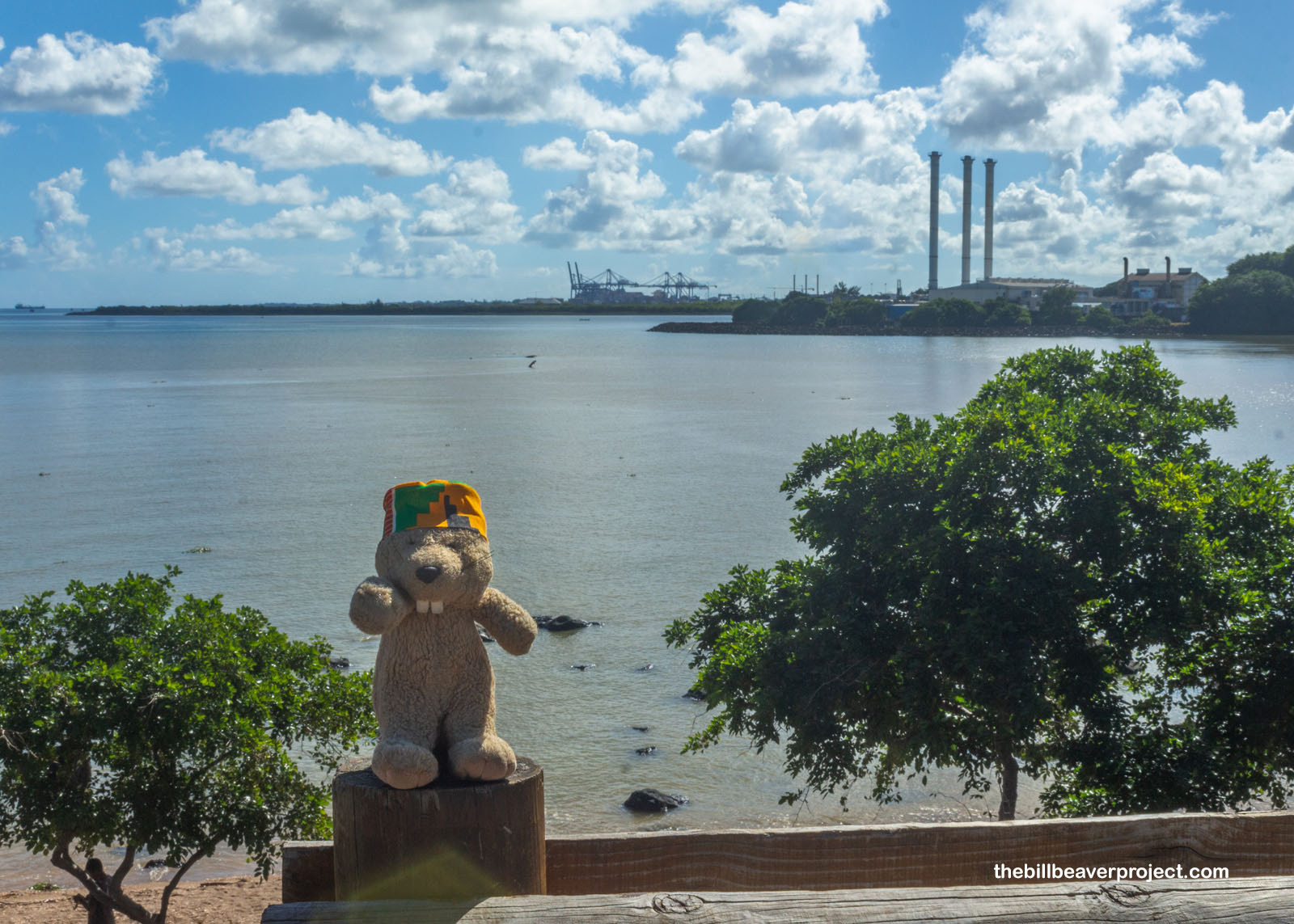
We’ve a port sandwich ahead of us today, starting with Port Louis and finishing with the airport, and boy I’ll tell ya, Port Louis beaches are a far cry from Flic-en-Flac! Buzz and I have motored north on our final day in Mauritius to see what we could see in spite of Sunday being a day of widespread closures around the island nation’s capital. It was a pretty long drive from the AirBNB, but because it was a Sunday, it was about as smooth as the murky rivermouth we were overlooking on our first stop.
 |
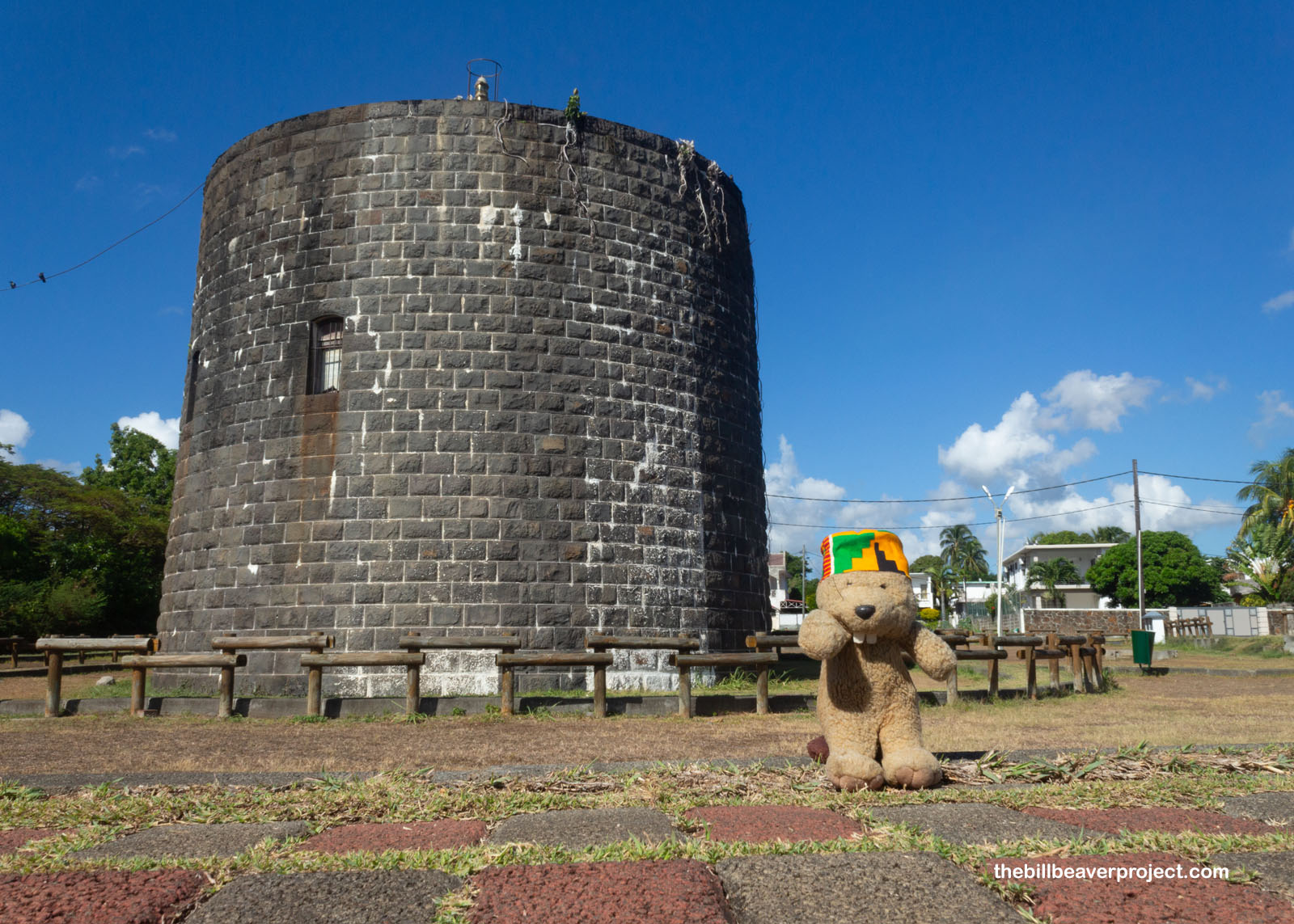
Buzz had built up an itinerary of cool historical places to check out, starting with Martello Tower Number 3! Martello Towers dated back to the first Napoleonic War when Captain William Ford proposed that Britain should more or less copy the coastal defenses of Corsica, stone watchtowers that had caused a headache for the British Navy back in 1794. The toughest tower had been located at Mortella Point, and so the British ones were a variation of Mortella: Martello, which also means “hammer” in Latin! On Mauritius, the Brits built five Martello Towers between 1832 and 1835 over all-new tensions between Britain and France that arose over Britain’s abolition of slavery!
 |
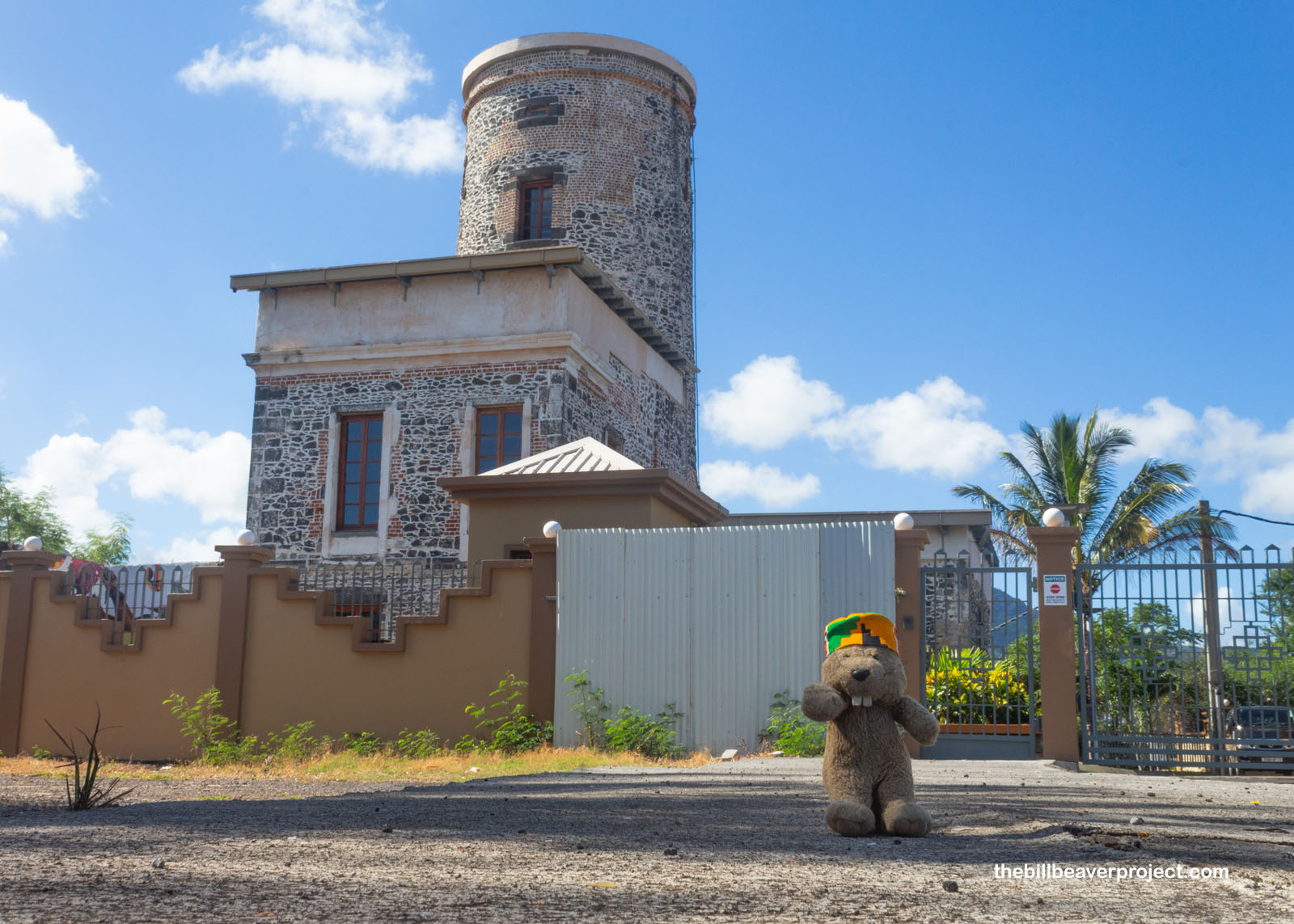
Next, we visited a different kind of tower, La Tour Koenig, which was commissioned just before the Martellos by Henry Koenig, who owned a huge estate here called Grande Rivière! Unlike the Martellos, this tower wasn’t for military purposes but as a gift to Mr. Koenig’s dad to remind him of home in Bavaria! It was never completed, but the reason isn’t very clear. It’s possible that a worker fell to his death! It’s also possible that it could have been a navigation hazard for being so tall and so near the port! Either way, today this historic tower is part of the Nelson Mandela Center for African Culture!
 |
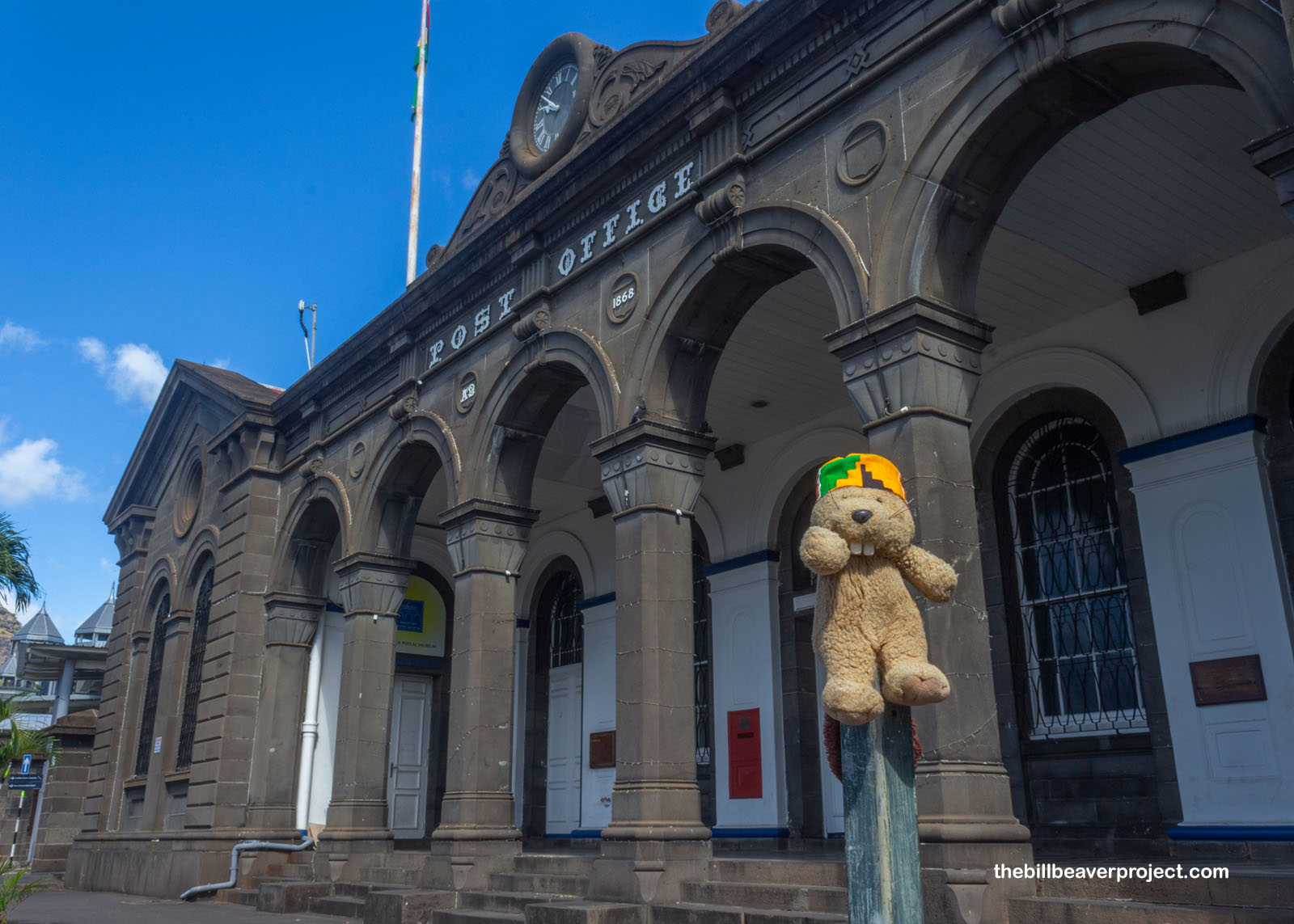
Once in downtown Port Louis, we sadly discovered that the Aapravasi Ghat, a UNESCO World Heritage Site where indenture was introduced to phase out slavery, was closed on Sundays, so instead, we stopped to admire the architecture at the nearby Central Post Office, which has stood here since 1868! Designed by James Barnsley, the Central Post Office took six years to build, and after all this time still manages mail on- and off-island! I dropped a couple of postcards in the off-island slot. Hopefully I picked the right kind of postage!
 |
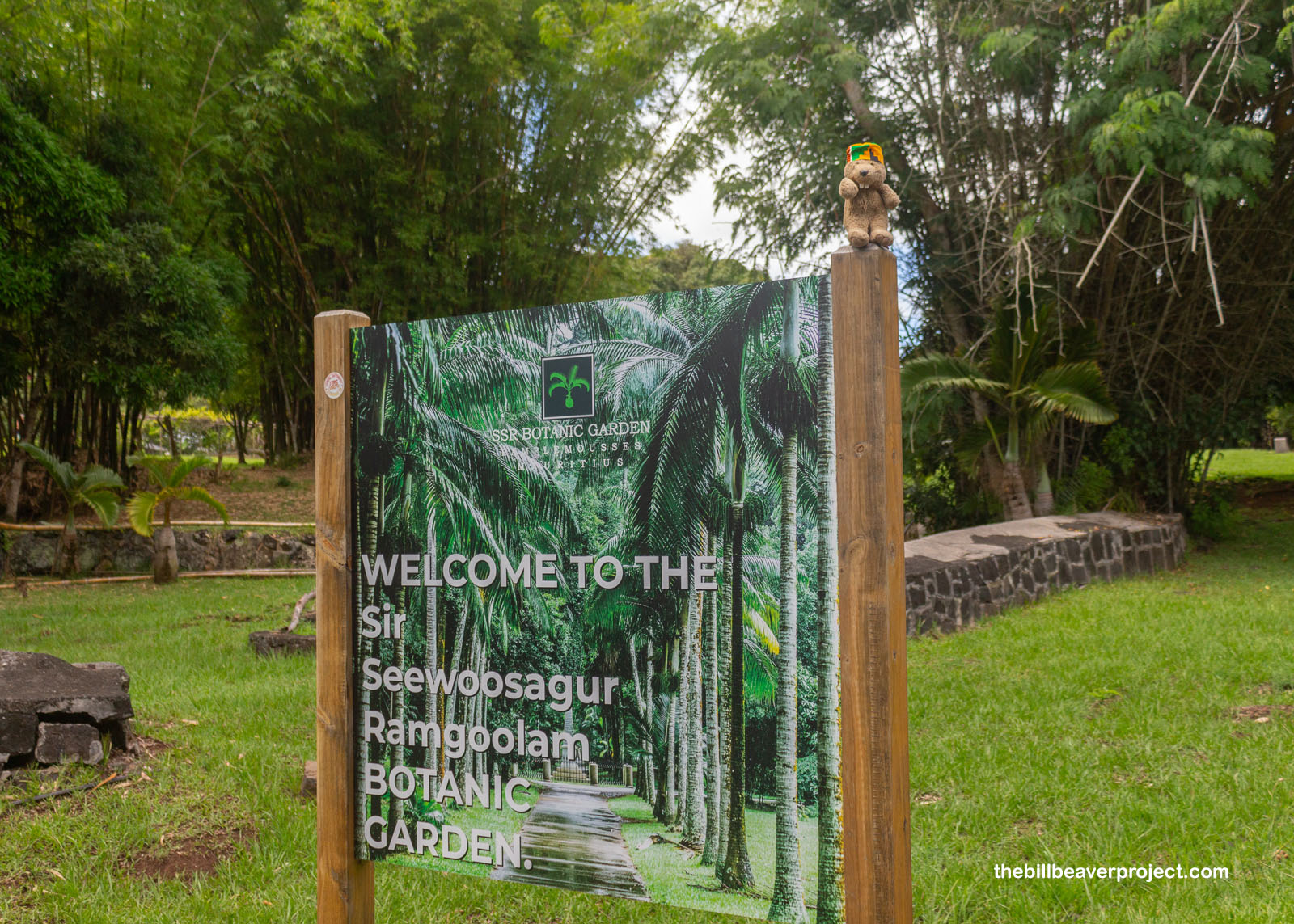
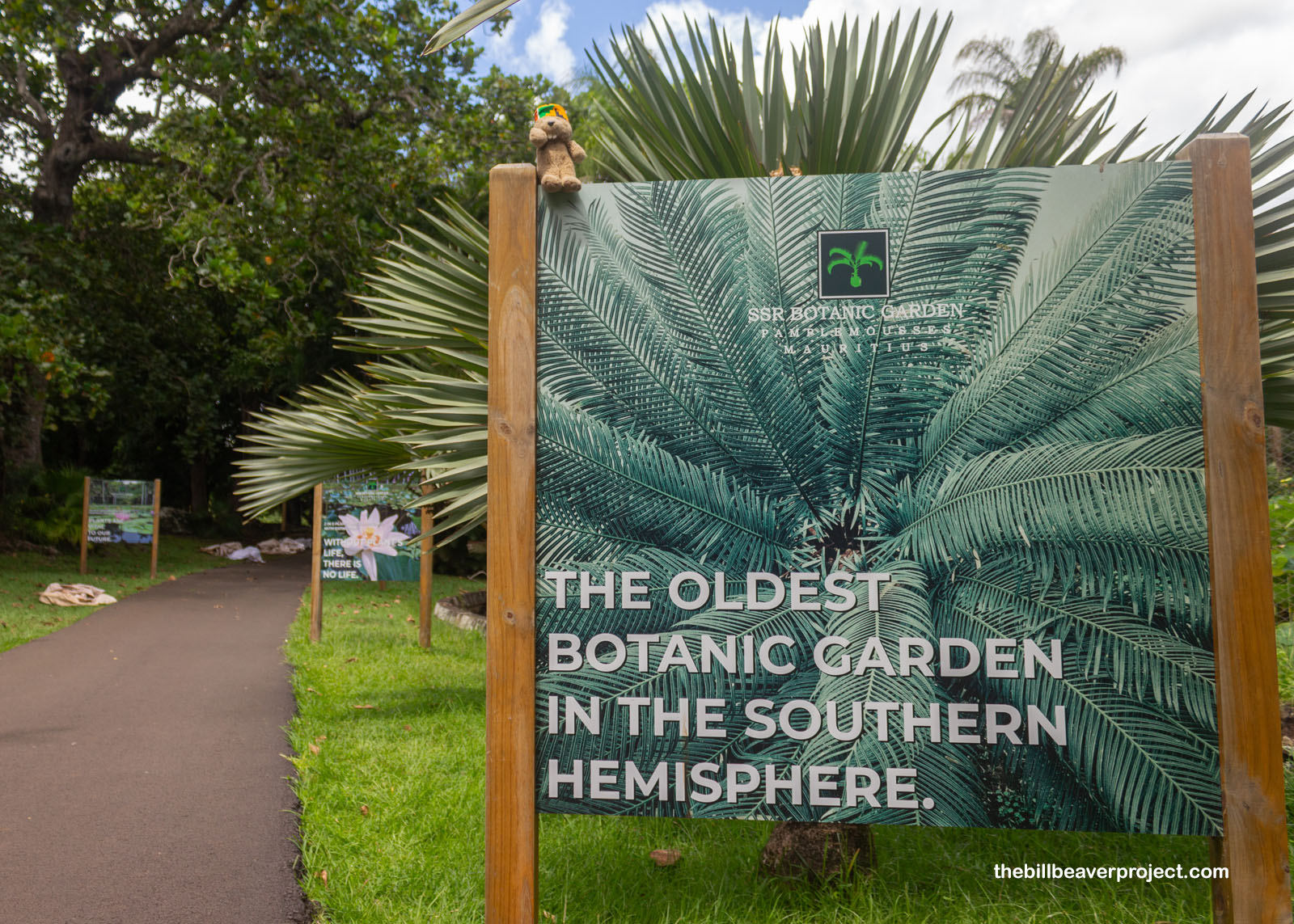
With many places being closed for the day, we decided to maximize our time in the charmingly named neighborhood of Pamplemousses for a visit to Sir Seewoosagur Ramgoolam Botanic Garden, the oldest (circa 1770) in the southern hemisphere! It was a real madhouse trying to find parking here—it seemed everyone else had the same idea we did—but we lucked out and squeezed into a spot that had just opened up! We were now ready to explore the acres that had once made up Governor Mahé de Labourdonnais’ private garden, Mon Plaisir, in 1735!
 |
 |
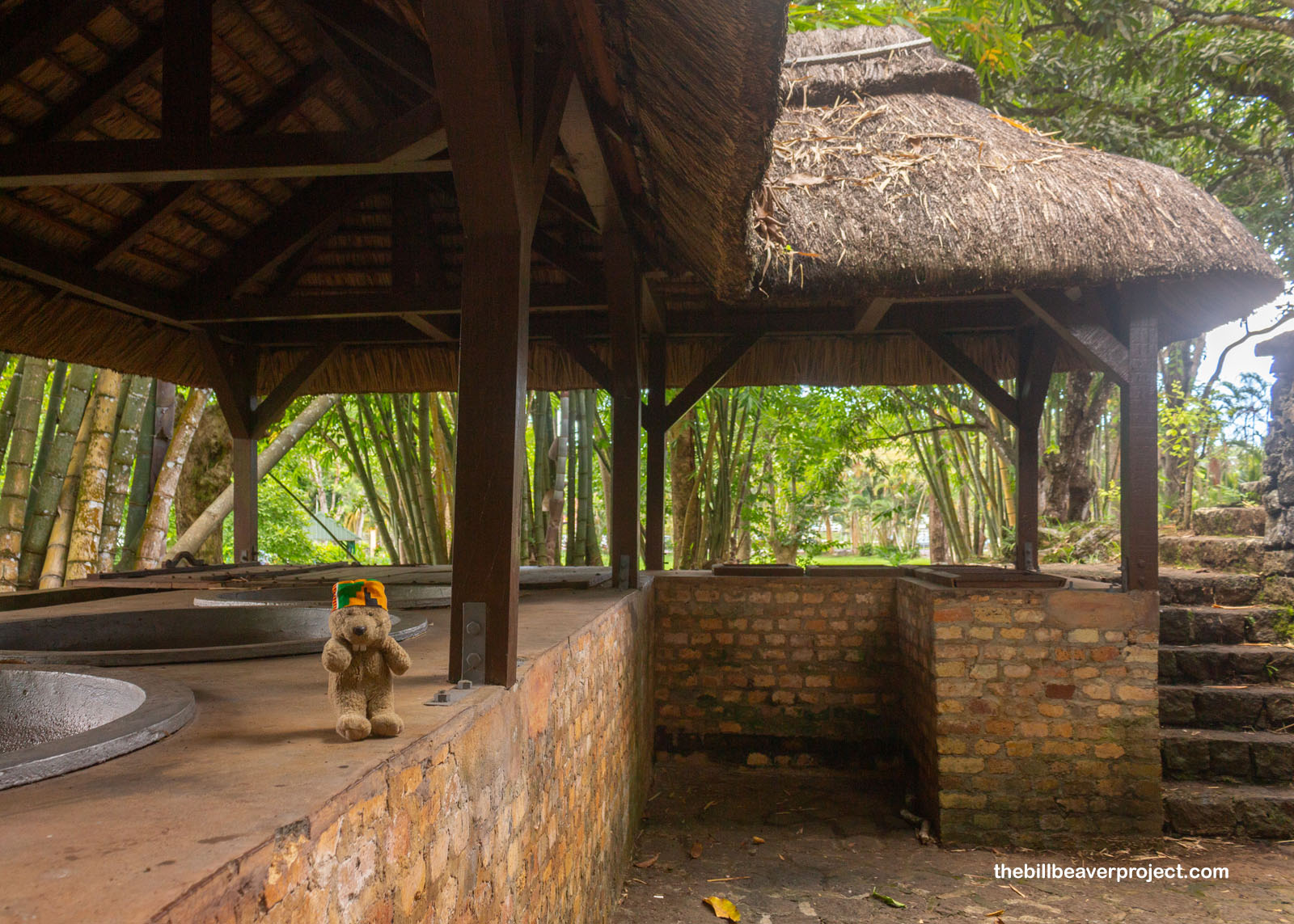
Just past the gate, near the restrooms, was a replica of an old sugar mill, just like the one I saw on St. John last month! Sugar cane had been introduced to Mauritius by the dodo-killing Dutch way back in 1639 and was mostly used to make a kind of alcoholic drink called arrack. It would take almost sixty years for sugar itself to become a commodity on the island, as popularized under Governor de Labourdonnais when the French took over in 1715 and carried by the British in 1810! Sugar was the major reason Mauritius imported so many slaves over the years, so visiting the former Mon Plaisir turned out to be an important way to experience the phases of Mauritian history!
 |
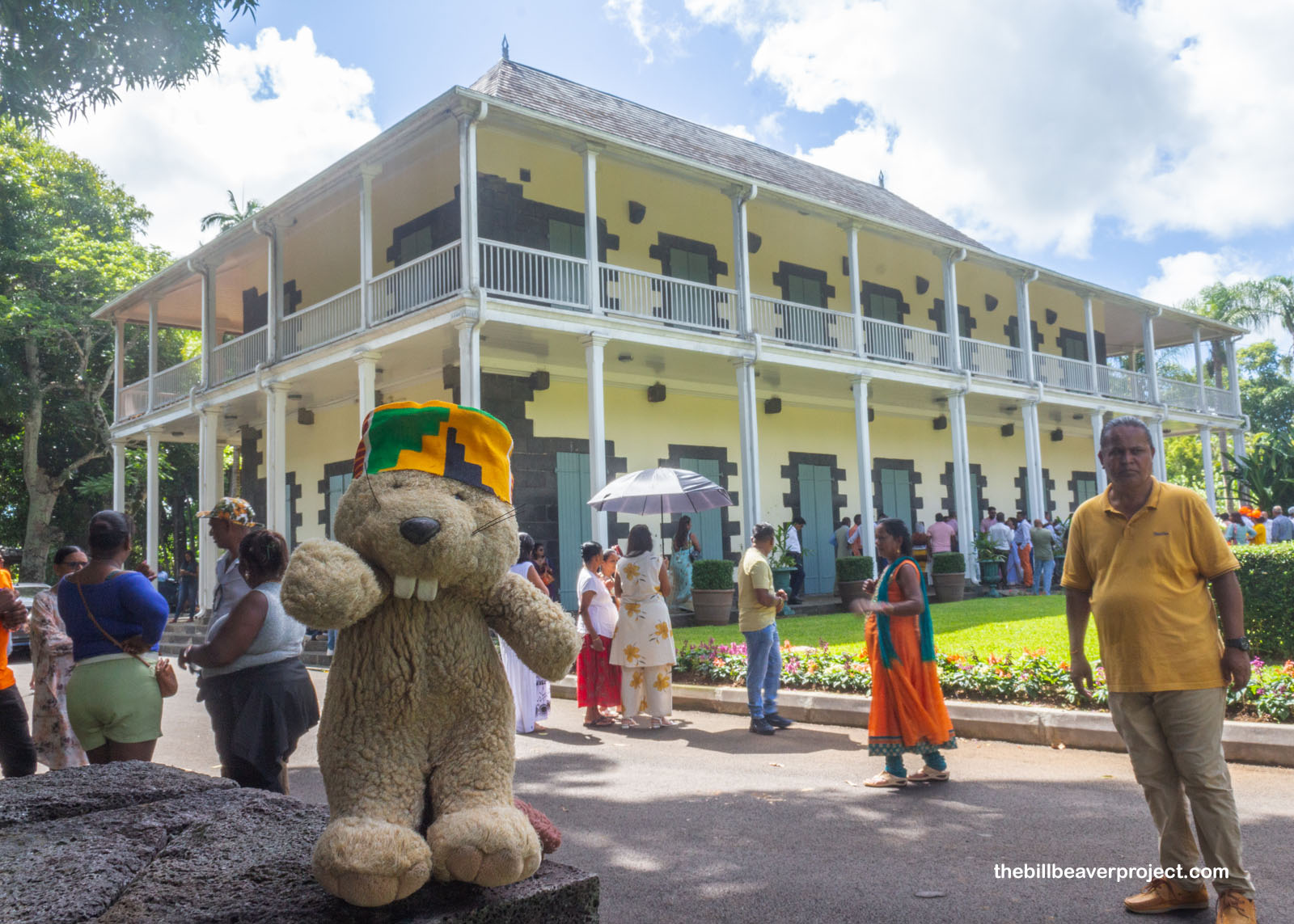
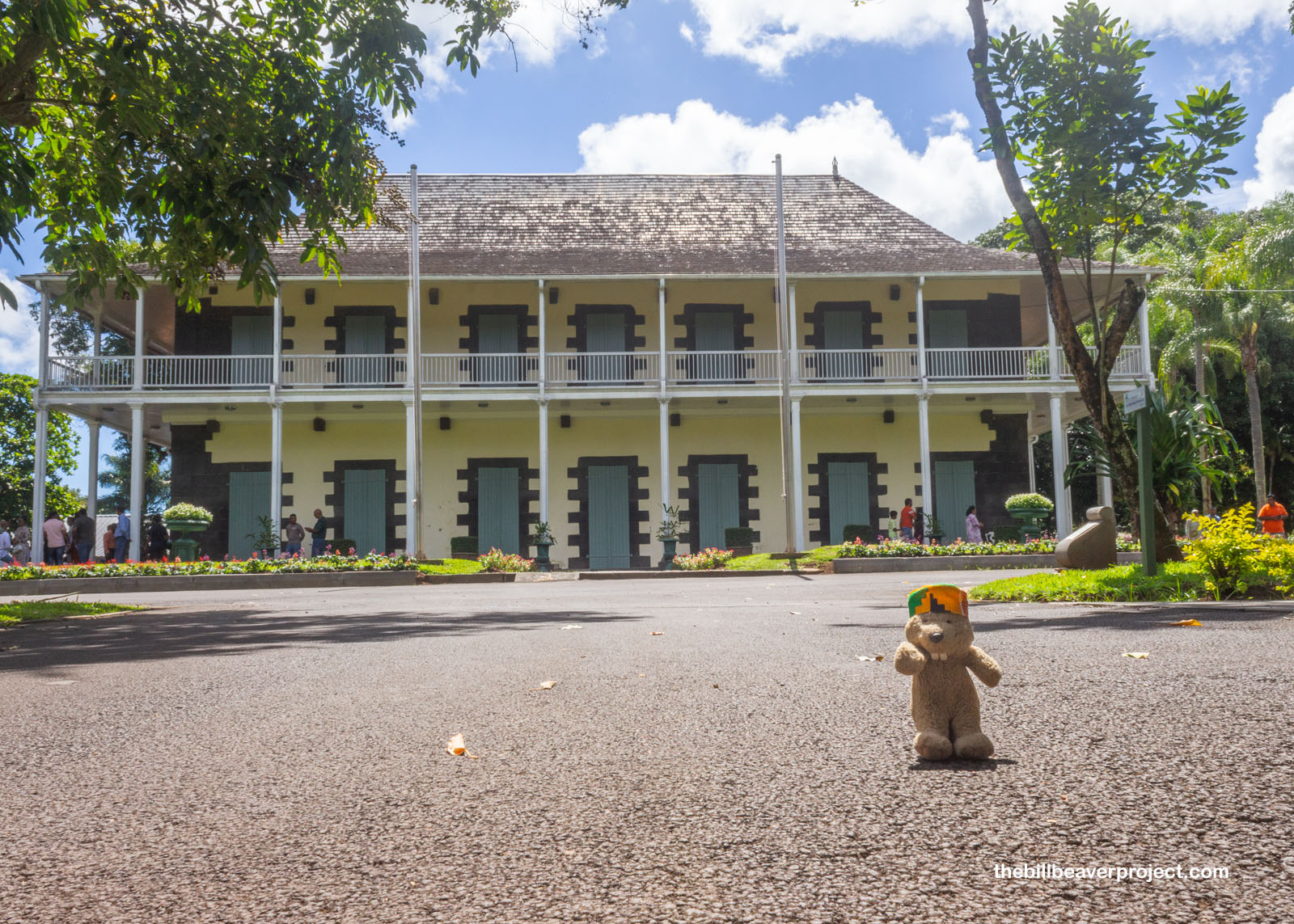
Outside the Chateau de Mon Plaisir, which was actually built to house the garden’s director in 1823, we discovered why the garden was so crowded today. It was the birthday of Sir Anerood Jugnauth, who served Mauritius twice as President and six times as Prime Minister, and is called the father of the Mauritian economic miracle! Under his leadership, Mauritius became a republic on March 12, 1992, modernized its infrastructure, and diversified its economy from sugar-based to one that made money off tourism, textiles, technology, and more! Now, Mauritius is one of the most successful sub-Saharan African countries, and I could see pretty clearly why so many folks were celebrating Sir Jugnauth today!
 |
 |
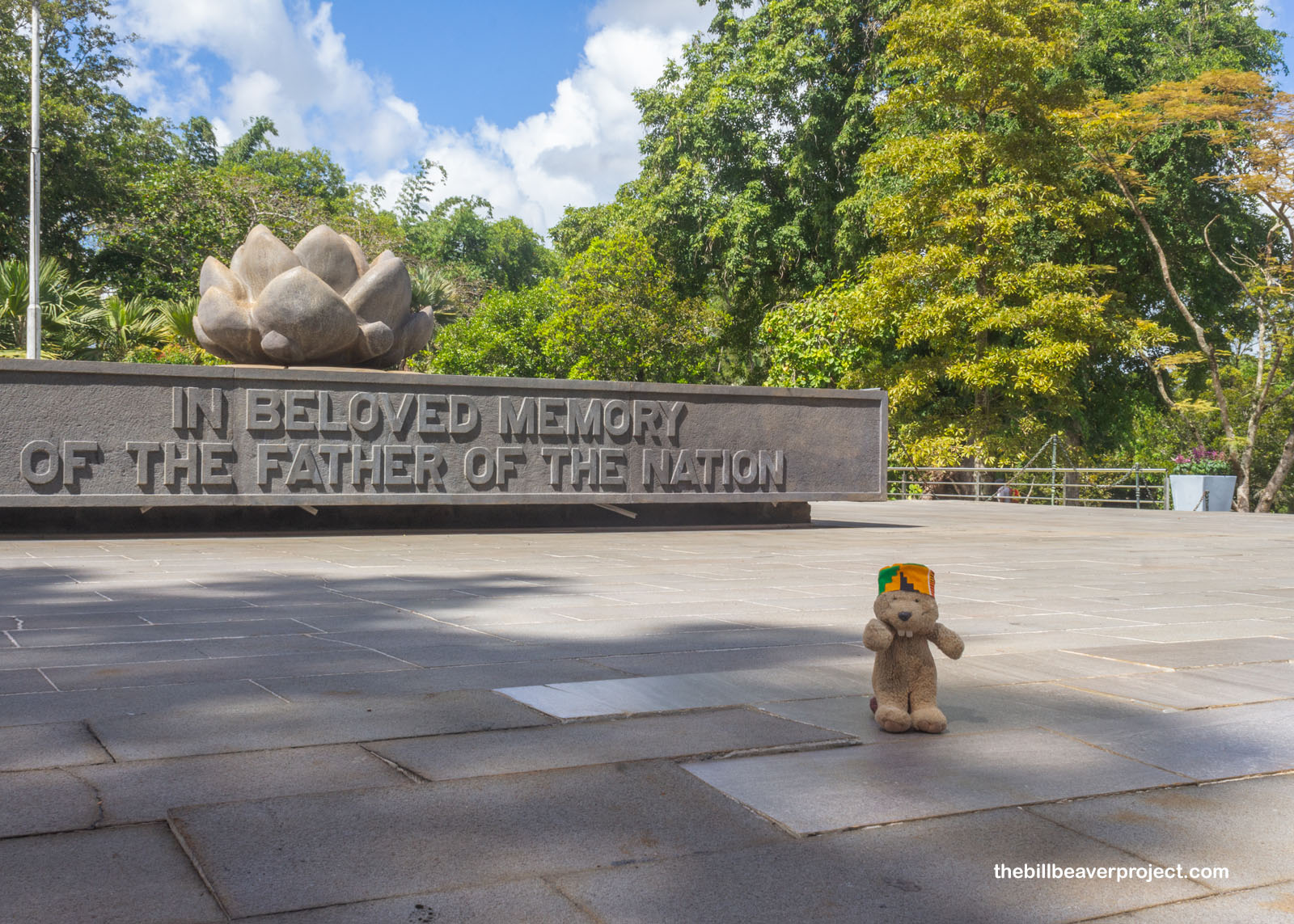
Not far from Sir Jugnauth’s memorial was another to the garden’s namesake, Sir Seewoosagur Ramgoolam! A physician by trade, he was inspired by the independence movement of Mahatma Gandhi in India and became a leading figure in Mauritius’ own push for independence from British rule, attained in 1968! For this reason, he’s known as the father of the nation!
 |
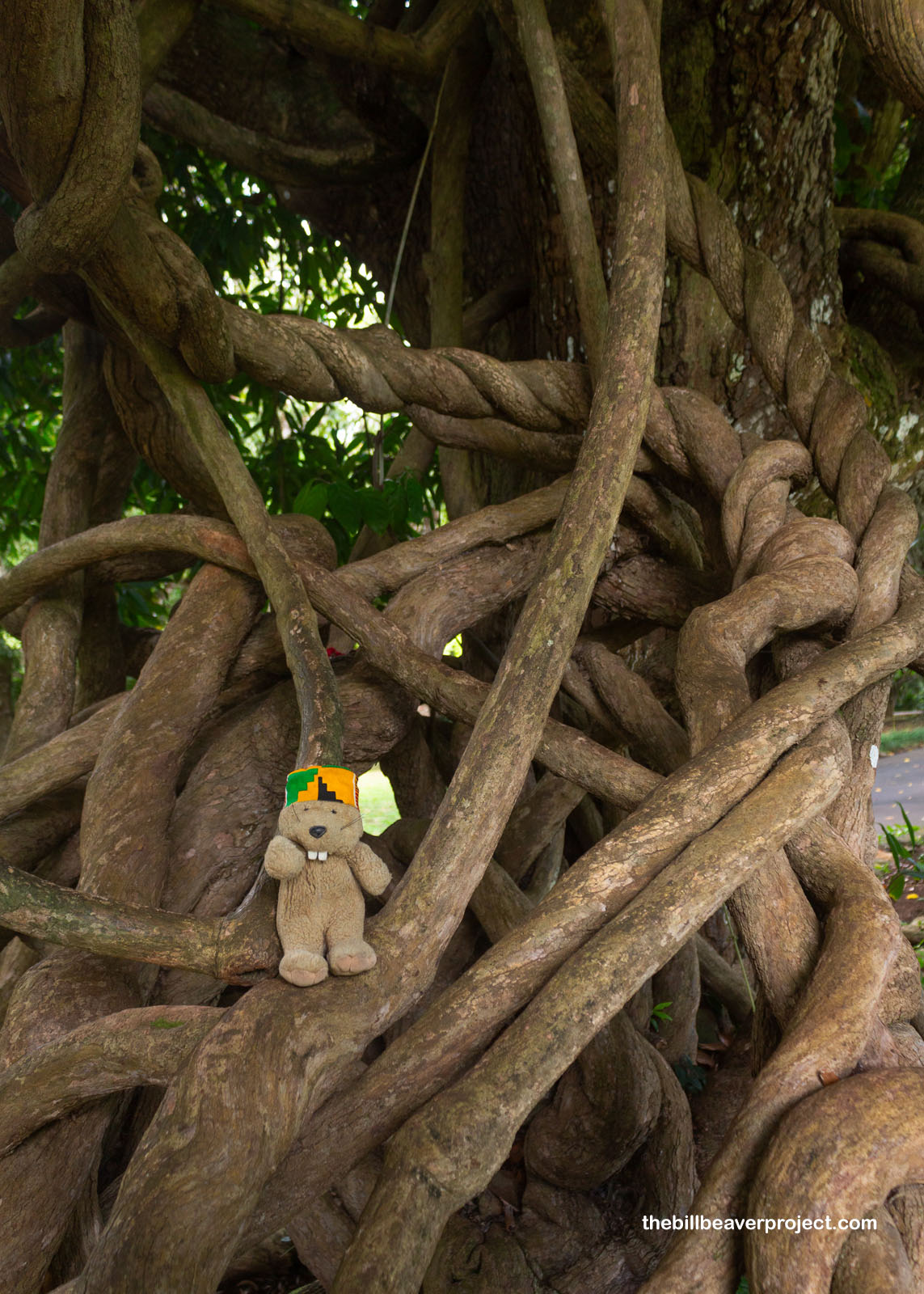
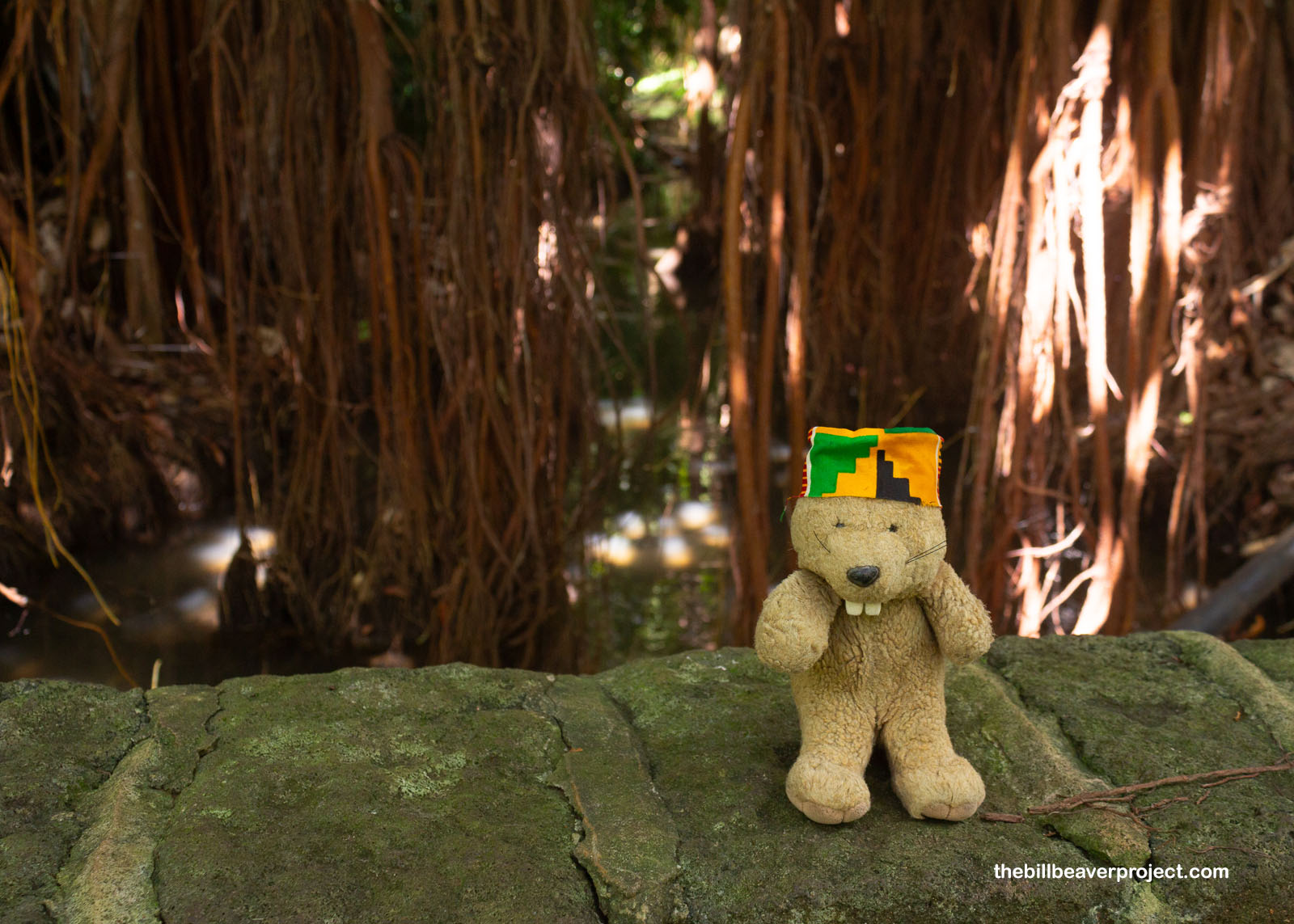
Then it was time to really get to exploring the garden’s plants, starting with some really, really cool vines that reminded me of the strangler figs in Cambodia! While they were super strong, I wouldn’t recommend someone of human bodyweight giving these a climb!
 |
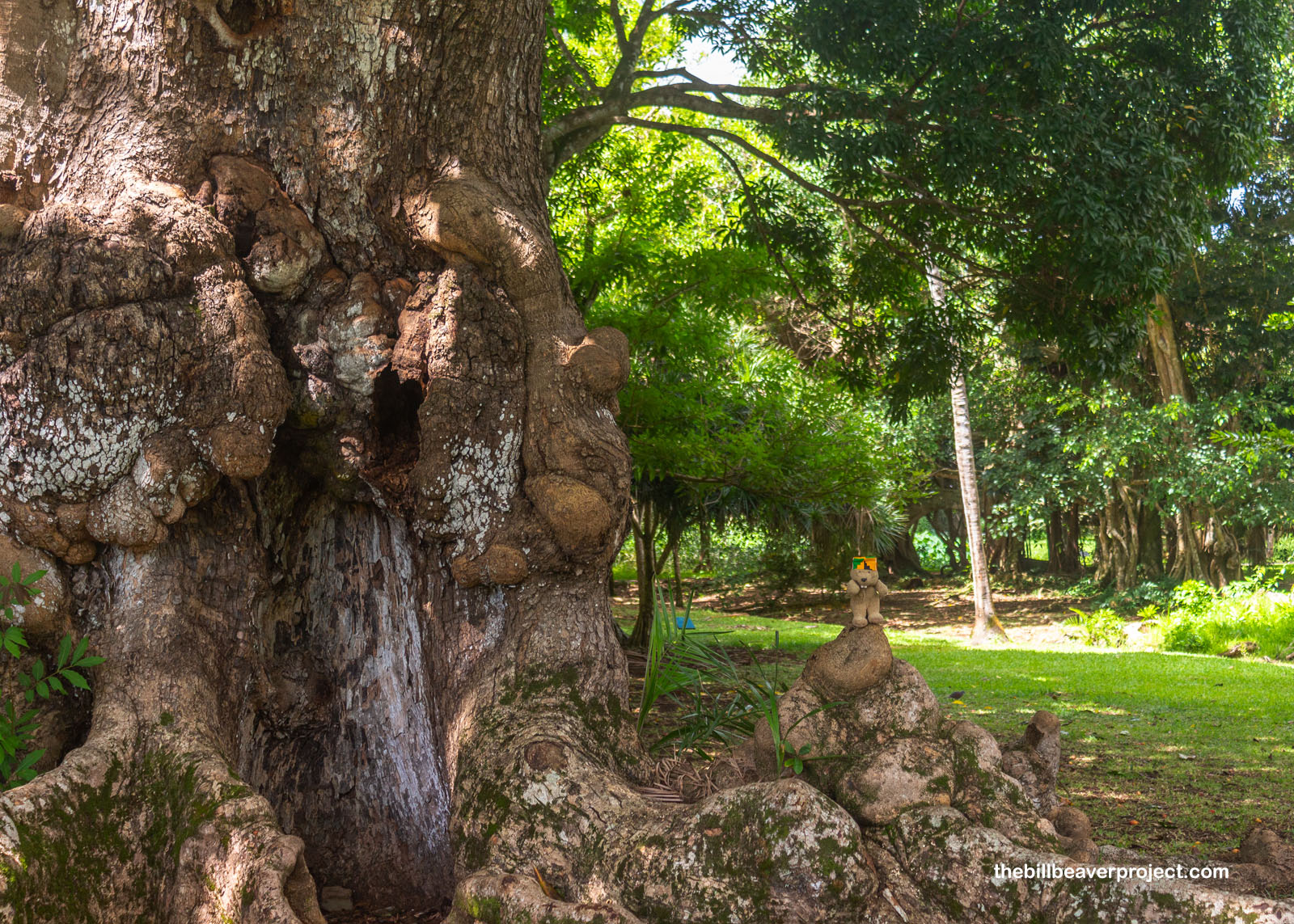
And there were even more cool tree textures, like the roots of this Indian almond (Terminalia catappa), a South Asian relative of the Terminalias I’d enjoyed in Welgevonden, only this one was surrounded by sticky, rotting fruits! Normally, these fruits are edible, as I’d learned at the Foster Botanical Garden in Honolulu back in 2023, but after all this time on the ground, I’d probably get sick midway through my African adventure. So we moved on.
 |
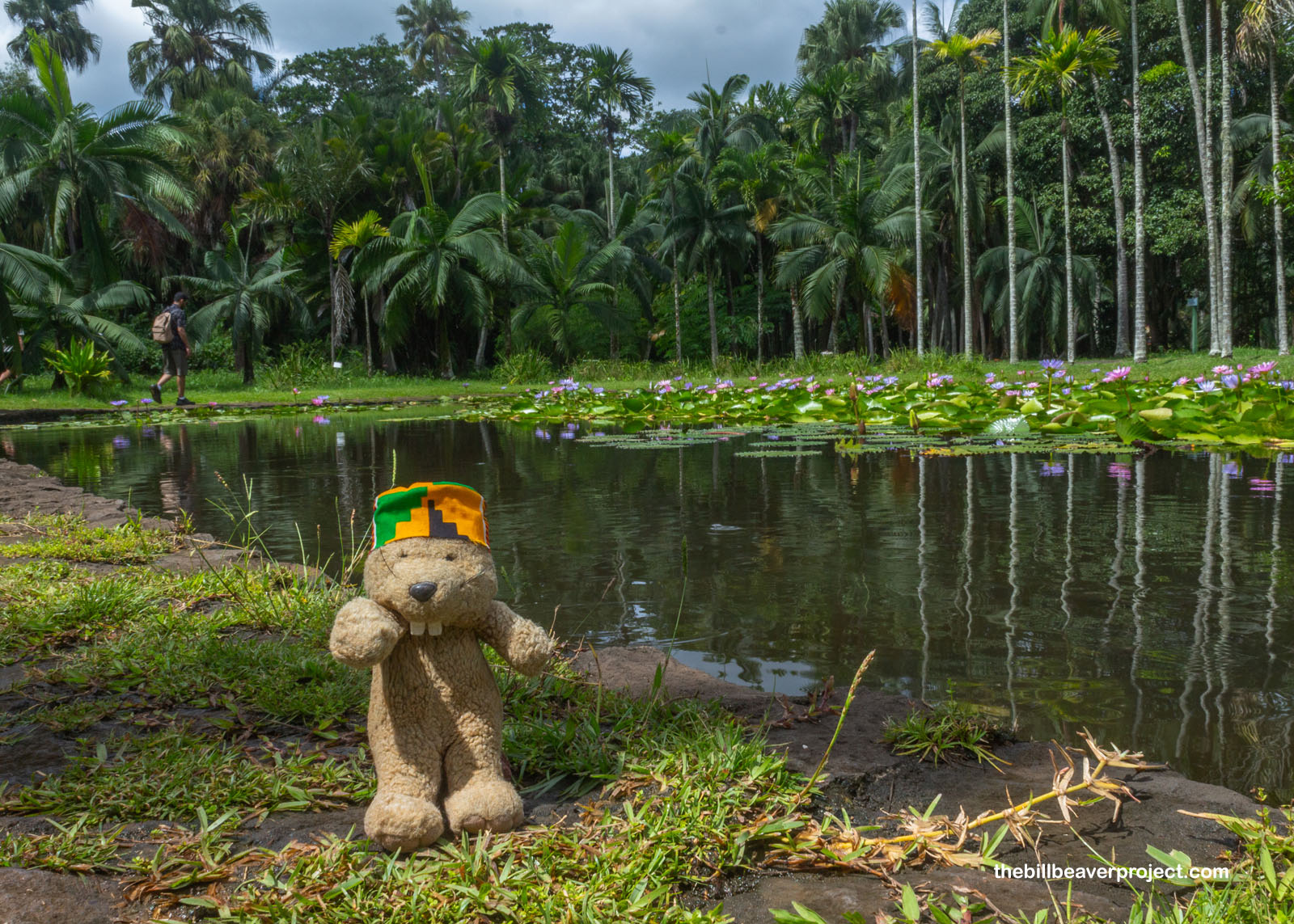
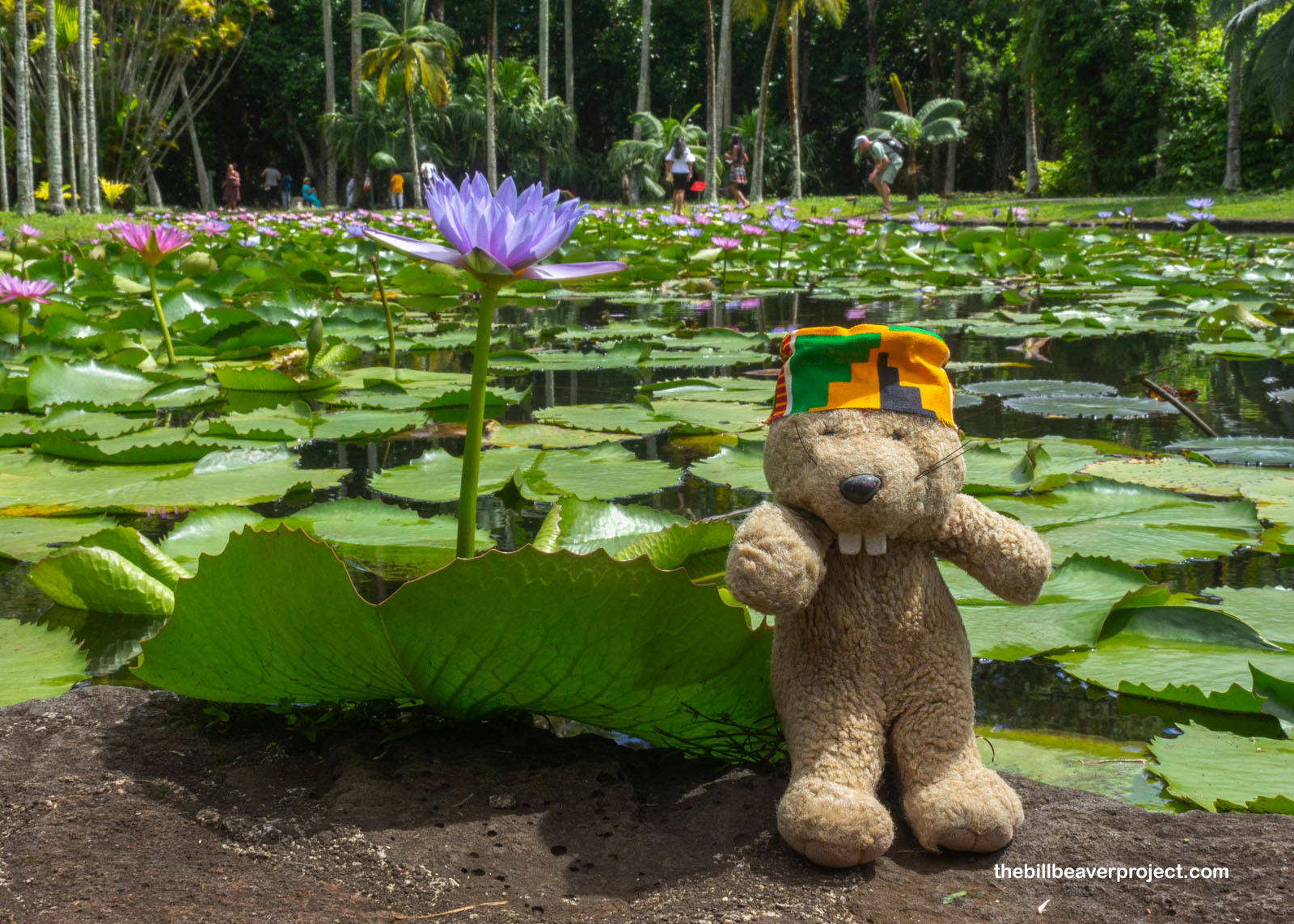
Our path led us past a lovely lily pond, where the Nymphaea blooms ranged from blazing pink to a deep, beautiful purple! While these water lilies can be found practically all over the world, what finer stop could there be than on the bank of a lily pond admiring the blooms and their reflections?!
 |
 |
And what tropical botanical garden would be complete without some form of Ficus species? Like their more famous Banyan cousins, these rubber trees (Ficus elastica) drop air roots from their branches to build extra support as they expand! While they used to be harvested for their latex, which was made into rubber, they were replaced by the Brazilian Pará tree in the late 1800s and are now more often used for decoration, even in offices!
 |
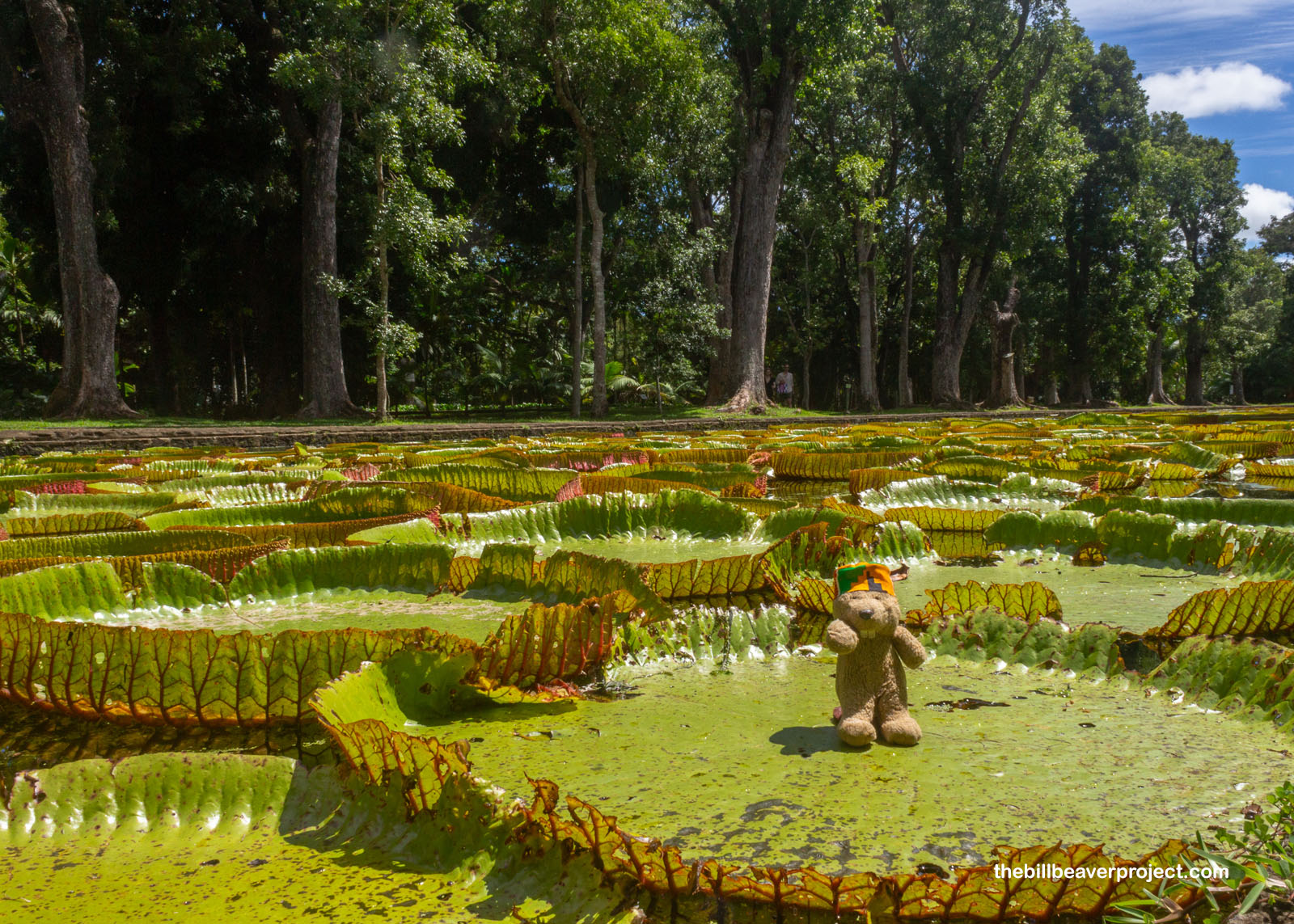
Oh wow! Here’s another import from Brazil, one I’d missed seeing at Kenilworth Aquatic Gardens because they’d been eaten by beavers! These are giant Amazonian water lilies (Victoria Amazonia), the largest known water lily with some reaching a diameter of three meters (almost 10 feet)! Seeing them here, I was very impressed that any beaver was able to eat one, not only because they were so huge but also because underneath every leaf are tons of wicked spines designed to keep plant munchers away! When I set foot on one, it didn’t even dip under my weight!
 |
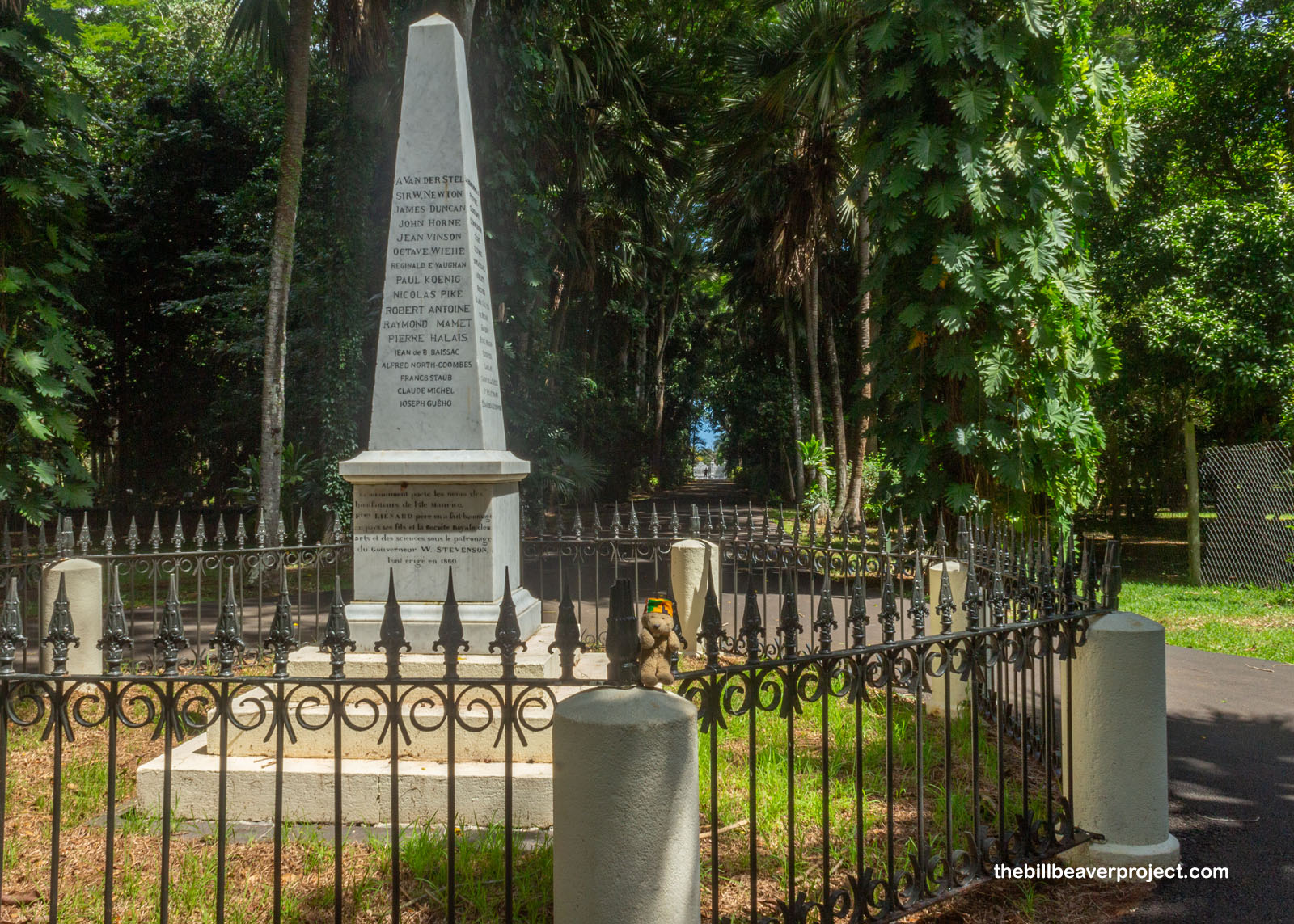
It was getting balmy, so we dipped into the palmy shade of Avenue Bertrand F. Mahé de Labourdonnais to view the Liénard Obelisk. Made of marble, it was donated to the Royal Society of Arts and Sciences of Mauritius by François Liénard de la Mivoye and installed here in the garden in 1861! Its purpose is to honor all the folks who have contributed to Mauritian agriculture or introduced interesting plants here, and features a quote by Bernardin de Saint Pierre, which translates to “The gift of a useful plant seems to me more precious than the discovery of a gold mine, and a monument more enduring than a pyramid.” 73 plant lovers are honored by name on the monument, starting, of course, with garden founder, Bertrand Mahé de Labourdonnais. With the stipulation that a new name can only be added ten years after the person is deceased, 72 new names have joined the former governor’s with the most recent being added on October 31, 2019!
 |
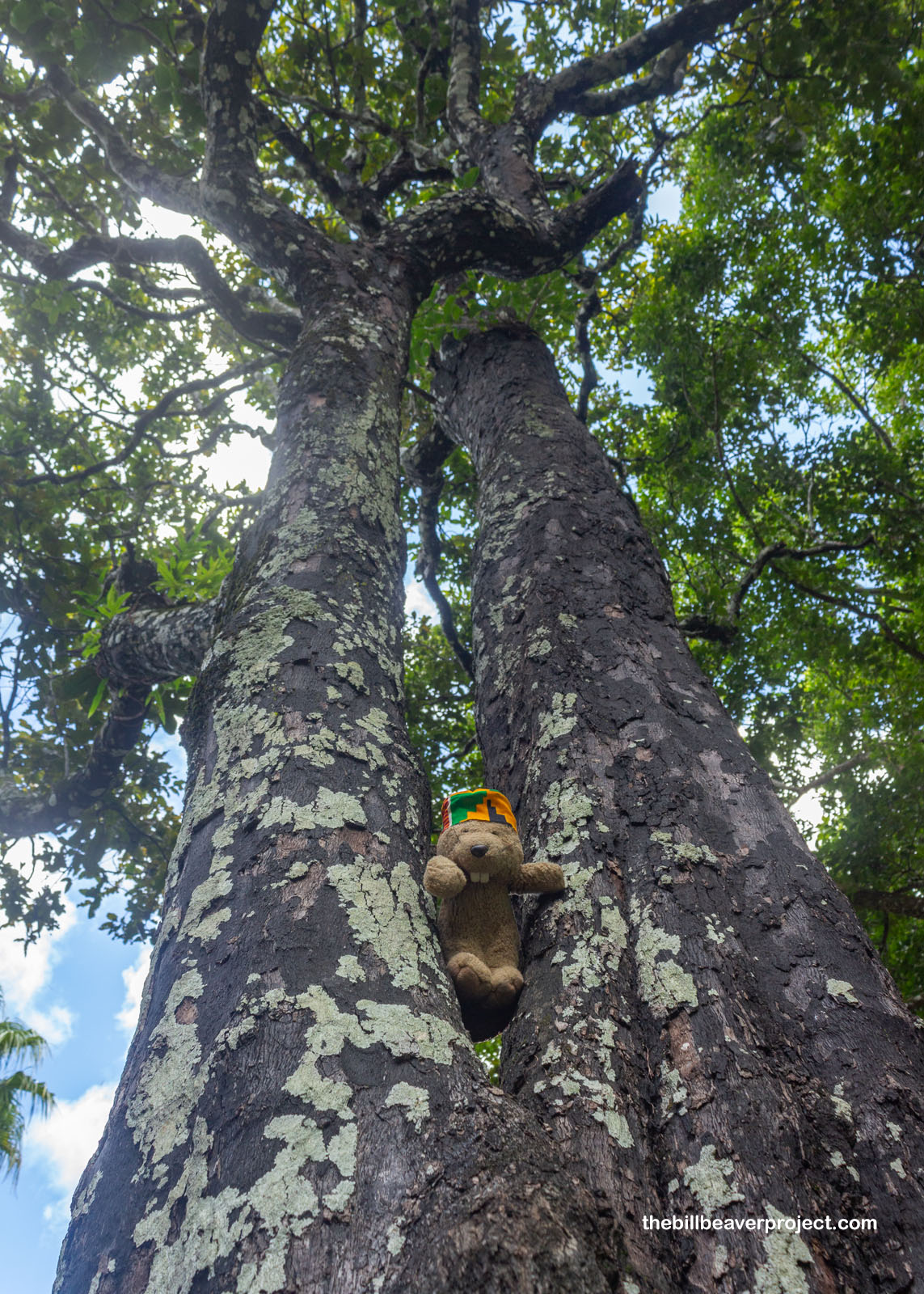
But for all the neat plants found in this garden that were introduced to Mauritius, it would be a shame to skip all the endemics! This one is the black ebony (Diospyros tessellaria), the tree most desired by the Dutch East India Company for its dense, black wood. Amazingly in the same genus as persimmons, the ebony was cut down en masse to make things like chess pieces, piano keys, and furniture. While the tree is easy to propagate and reforest, as of today, all endemic Mauritian ebonies are under threat by exotic plants and animals! Six ebony species are vulnerable, five are critically endangered, and one has gone extinct!
 |
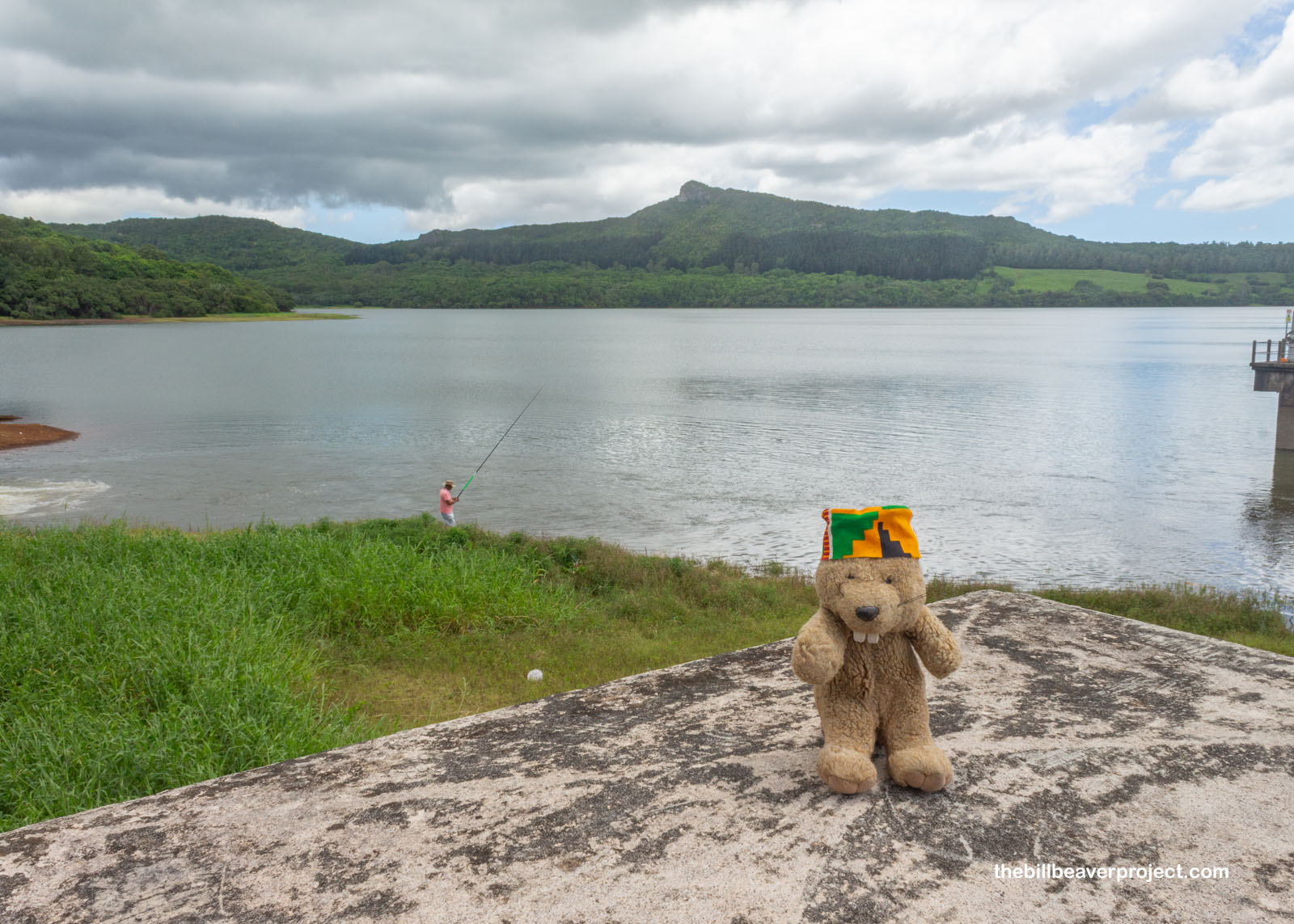
After a brief stop to see some giant tortoises, which were napping in full sploot in the shade behind a fence, our tour of the botanical garden was done. All of the event attendees had left, and the parking lot on the way out was practically empty! Buzz calculated a nice, scenic route back toward the airport, which took us past scenic fields and through tree tunnels with a stop at La Nicolière Reservoir, the main source of water for the northern half of the island. While a vendor made sugarcane juice and a fisherman cast his line down on the shore, our eyes were on the building clouds, and our minds were on the colossal deluge from yesterday afternoon!
 |
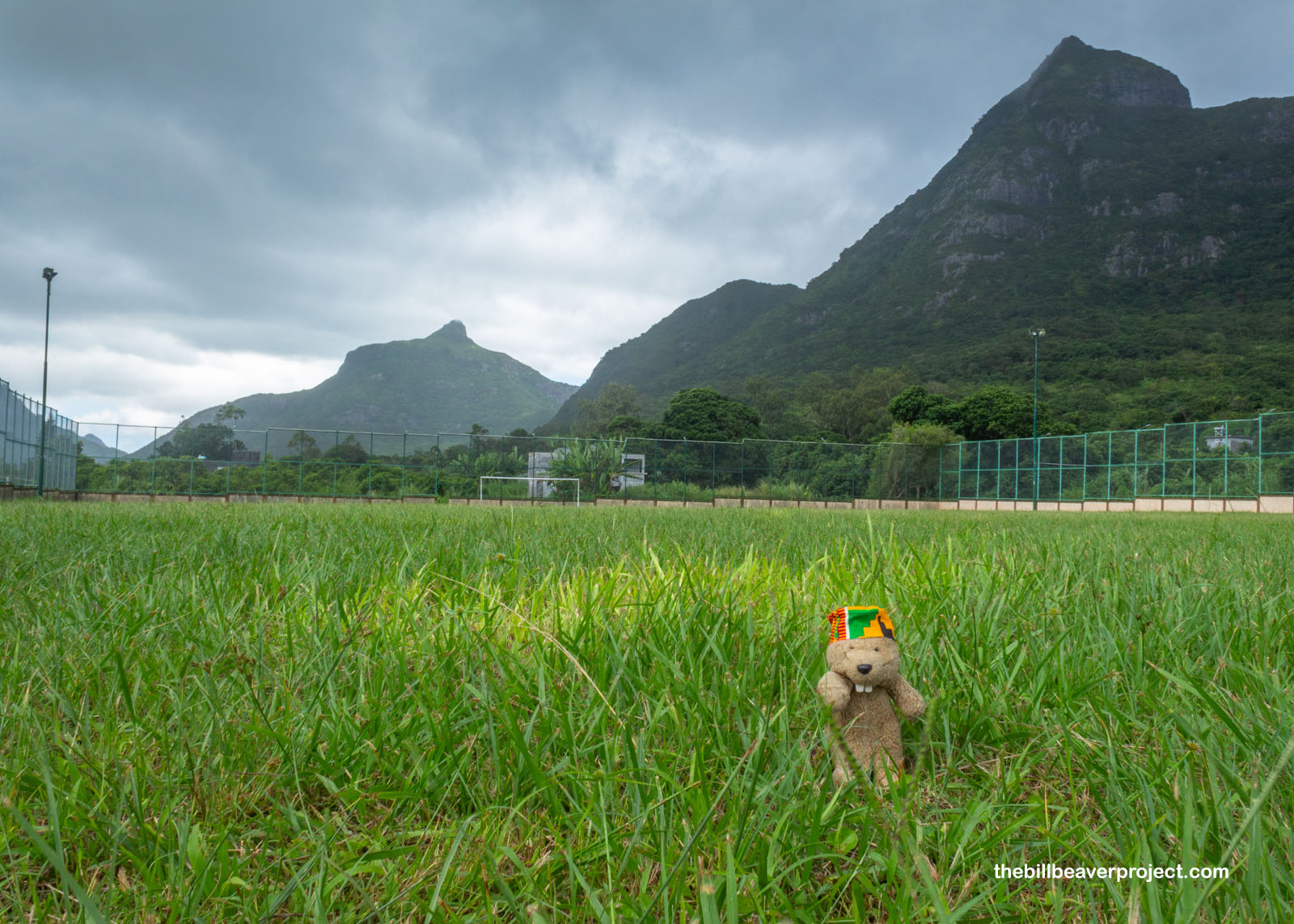
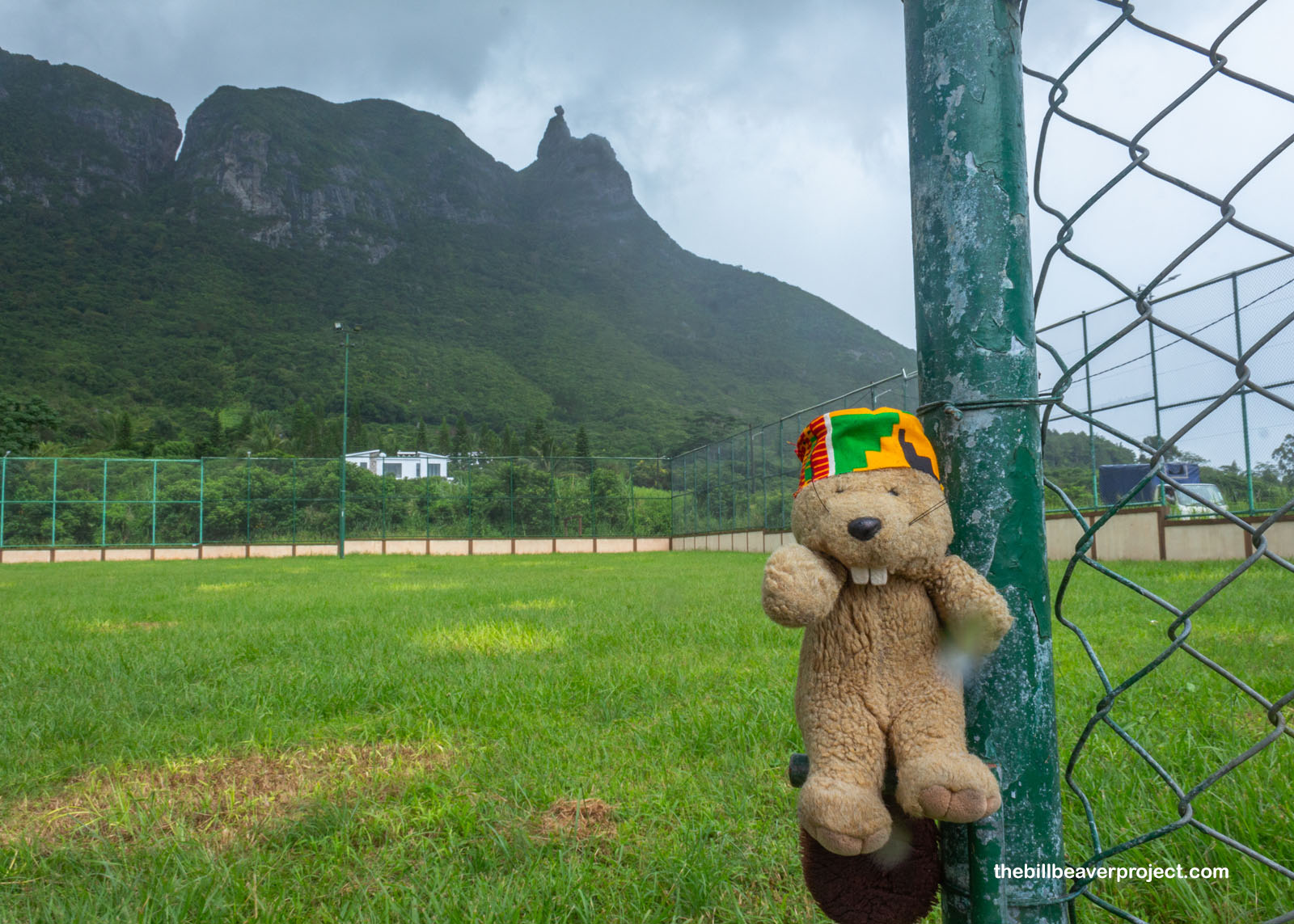
And the rain began before our final stop, where we’d hoped to get some good views of the amazing Moka Mountains we’d been enjoying on our crossing of Mauritius. All we really got was a quick hop out onto a soccer field in La Laura-Malenga to snap some photos of the peaks, particularly Pieter Both, the second highest mountain on Mauritius, named for the first Governor-General of the Dutch East Indies. And then the rain hit hard, driving us back into the car and following us all the way back to the airport. On the way, a colossal bolt of lightning blasted into a telephone pole right in front of us! What a sendoff from this amazing island!
 |
 |
We got back to the airport with plenty of time before our 4:40 flight, turned in the car, and treated ourselves to noodles and sweets before boarding our Safair flight back to Johannesburg. For being such a small island, Mauritius sure was a treasure trove of rich history, neat places to explore, and world-class people-watching in the shopping malls that had been our go-to for dinner. For being practically the opposite side of the world to where I live, I’d say it was well worth the journey! And now, back to the mainland for more African adventures!
Mo pou trouv twa laba!

Previous Day |
Total Ground Covered: 582.7 km (423.2 mi) |
Next Day |