| Landmark #217 | Orange County | Visited: October 27, 2013 | Plaque? NO. 🙁 |
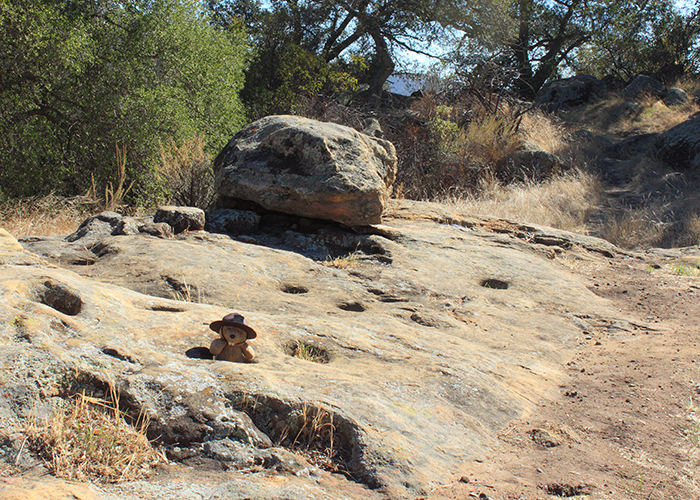
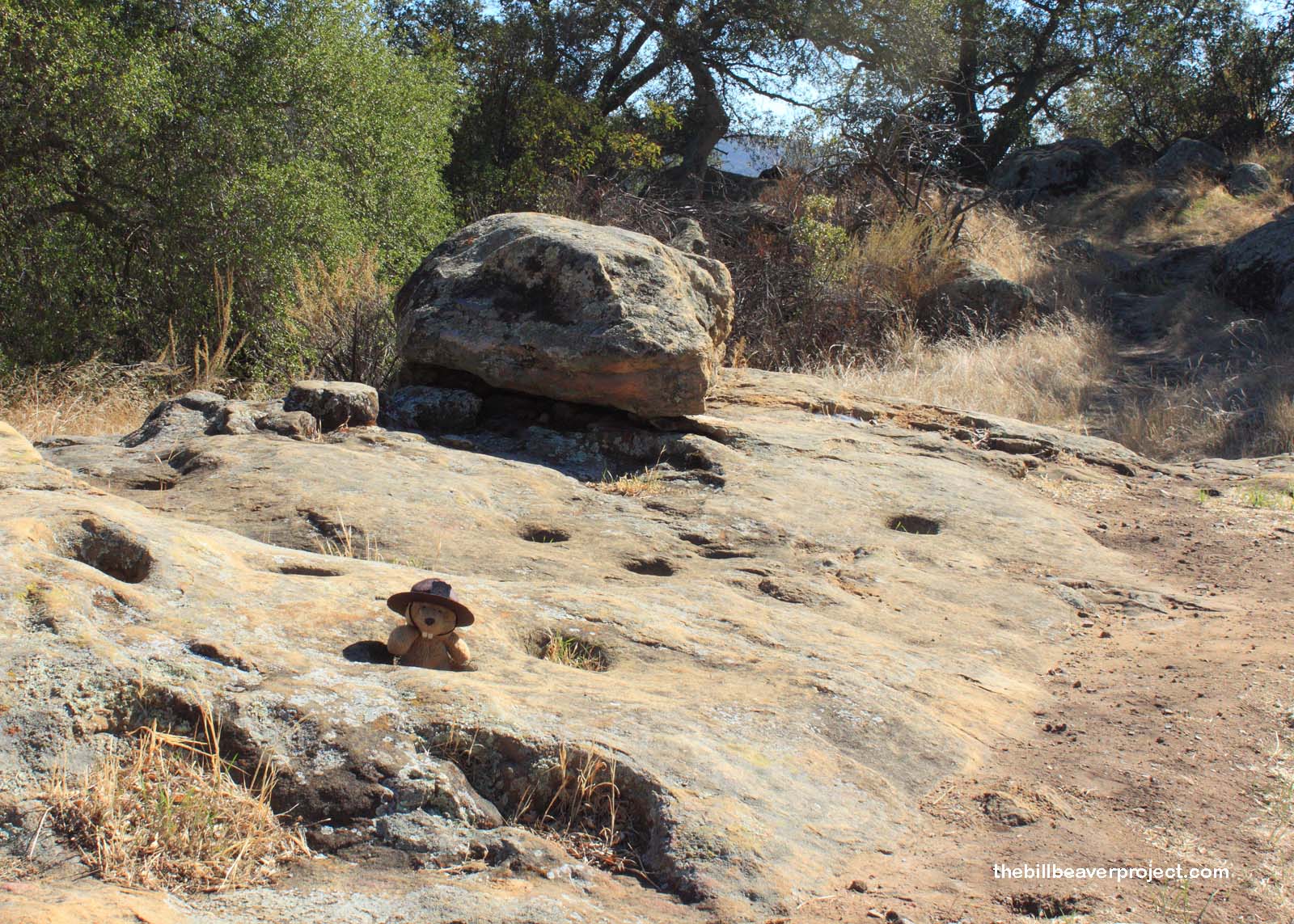
| What is it? | The remaining grinding stones of an old Native American village! |
| What makes it historical? | THE GUIDE SAYS: The Indians who lived on the village located here had stolen some horses, and the whites followed them back to their camp. After a skirmish, the whites left with the horses that the Indians had not killed. In 1878 the Black Star Coal Mining Company had a mine at the mouth of the canyon.
OTHER TIDBITS: Different Native American tribes had different views on horses, and the Tongva who lived in this canyon found them mighty tasty! So, they started stealing horses from the nearby ranchos until one day, a group of American fur trappers wandered in from New Mexico and made an agreement with the local dons to put an end to the horse theft. So, they hiked up into the canyon and shot dead all but a few of the Tongva villagers! To this day, there’s an air of mystery around the canyon, now named for the ill-fated Black Star Mining Company. Some say they’ve seen ghosts of the slain Tongva on the trails. Others report Satanic rituals, KKK meetings, and mafia murders in this canyon! Then there’s Black Star Bill (no relation), a local who reportedly threatens hikers with his shotgun! I went here around Halloween looking for spooky sights like these, but I didn’t see any! |
| How can I Help the Helpers? | HERE’S HOW:
|
| Where is this place? | LISTED DIRECTIONS: Black Star Canyon on Black Star Canyon Rd 6.0 mi N of Silverado Canyon Rd 9 mi N of Silverado, CA 92676 ANNOTATIONS: From Los Angeles: ~55mi (89km) — 1hrs |
| When should I go? | You can go hiking here whenever you like, but it’s always better to go with a group, especially in this area because of the mountain lions and the locals! |
Hi, I know your post is from a while ago, but the information you emphasize about the massacre and why it happened is not supported. I’ve included two links below for your reference. The wikipedia article is well cited. The other is an abstract from an academic paper. Both assert that there is no evidence for the idea that the native people there (Acjachame) were either stealing or eating horses from the ranchers. It is noted that such claims were commonly made during the Spanish period as excuse to dispose of the native people.
Thanks.
https://en.wikipedia.org/wiki/Puh%C3%BA
https://www.tandfonline.com/doi/full/10.1080/1947461X.2021.1997515