 Previous Day |
Vacoas-Phoenix, MU → Le Morne, MU → Vacoas-Phoenix, MU 96.4 km (59.9 mi) |
 Next Day |
Bonzour zot tou!
After a very brief stopover in Pretoria, Buzz and I have made yet another jump, this time four hours east, across the vast island of Madagascar, which would have been a whole trip itself, to the much smaller island of Mauritius, the ultimate cultural crossroads with influences from Africa, the Middle East, India, and Southeast Asia! While European colonists did wipe out the indigenous population here like in most colonies, that population wasn’t human, but bird! Folks, Mauritius was most famously the home of the dodo bird!
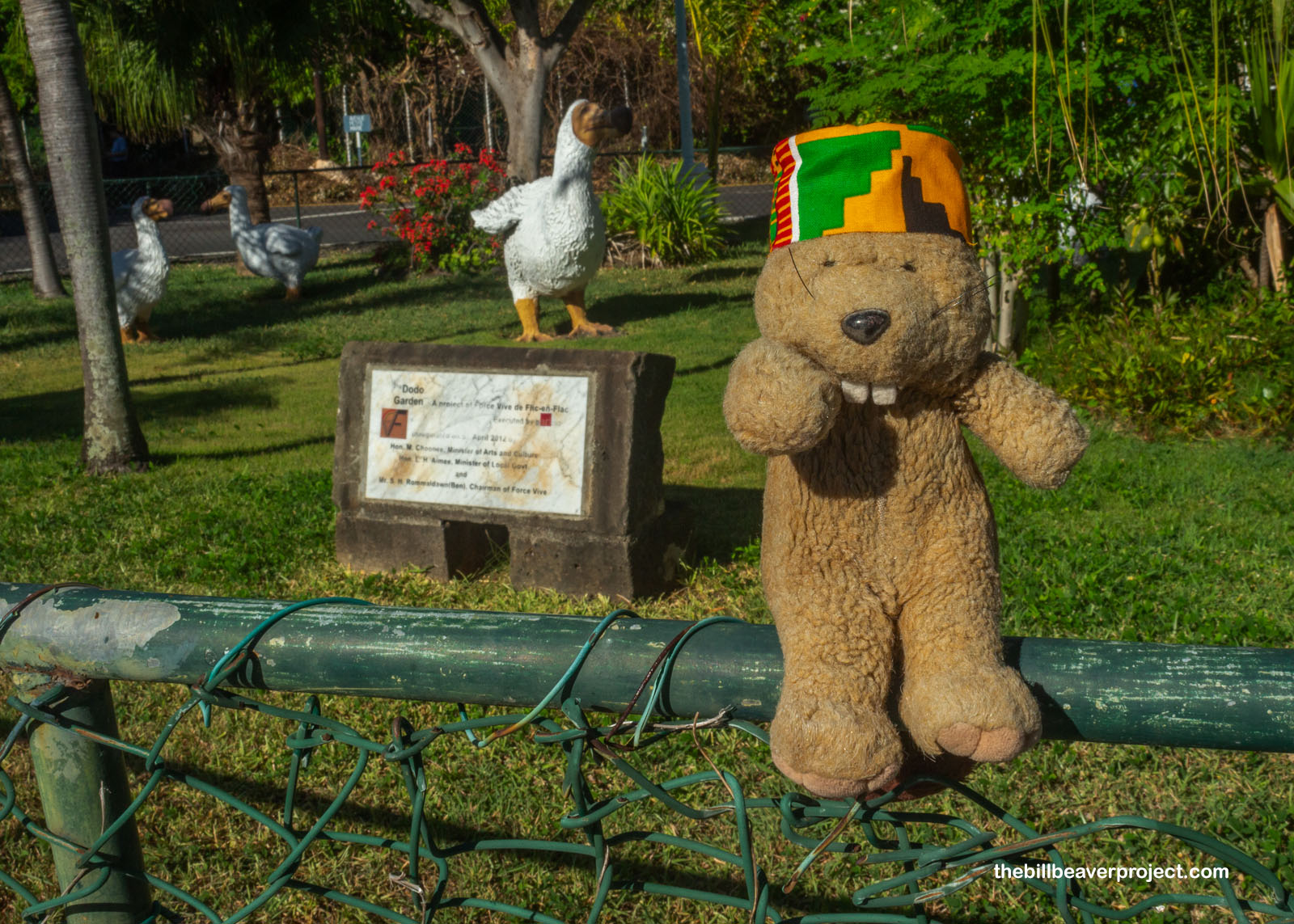 |
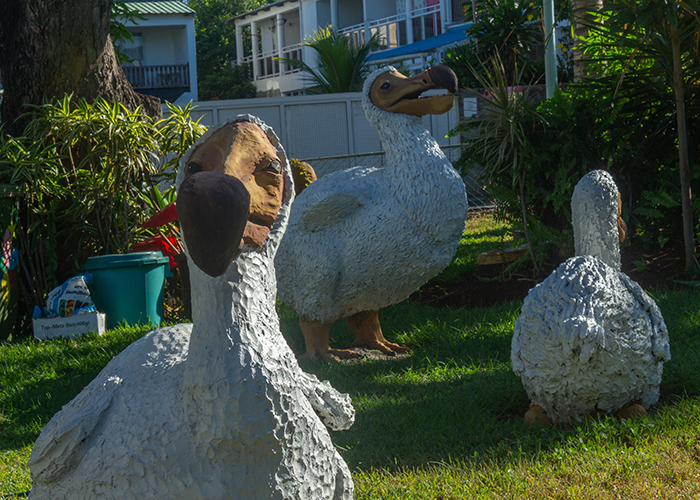
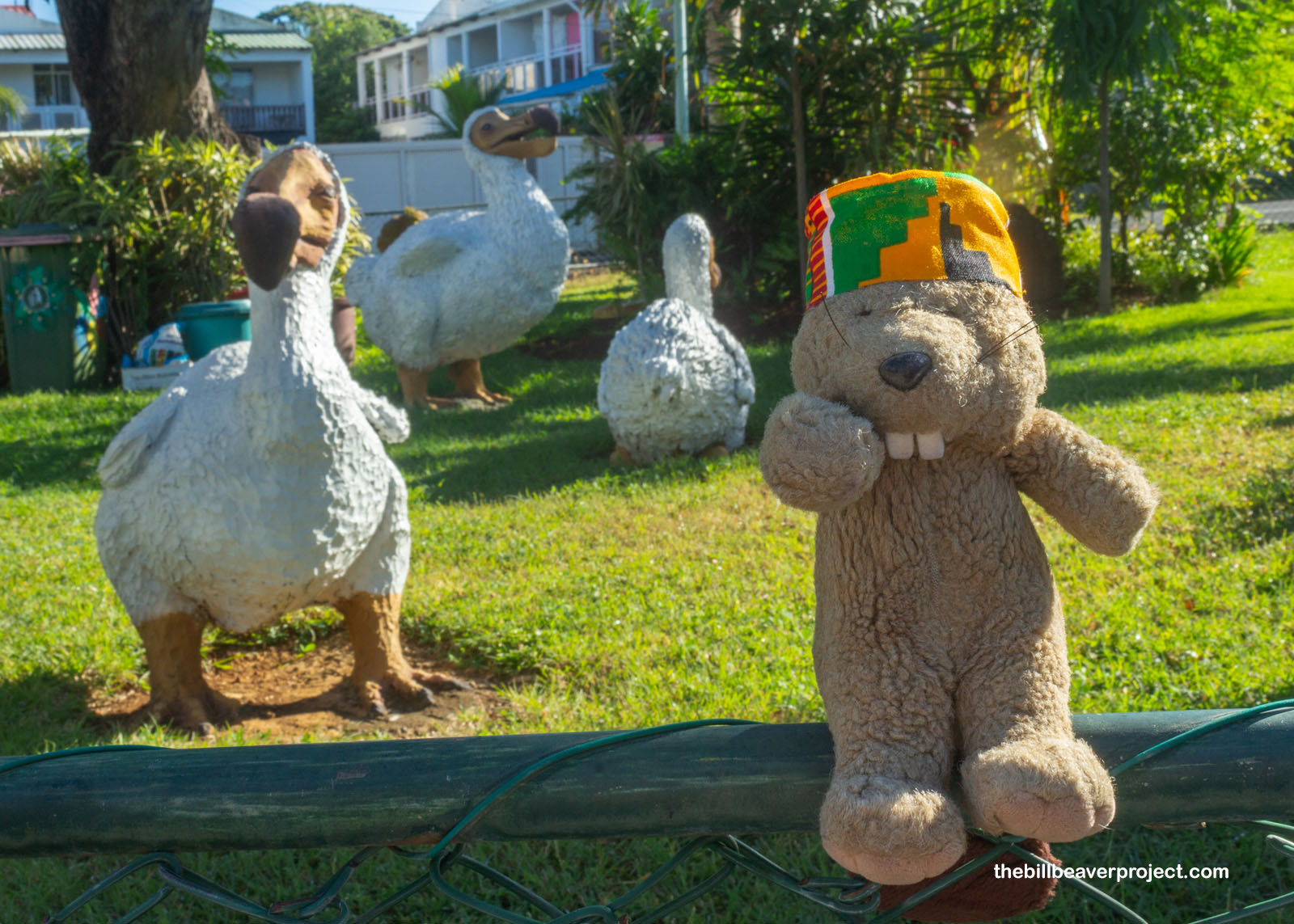
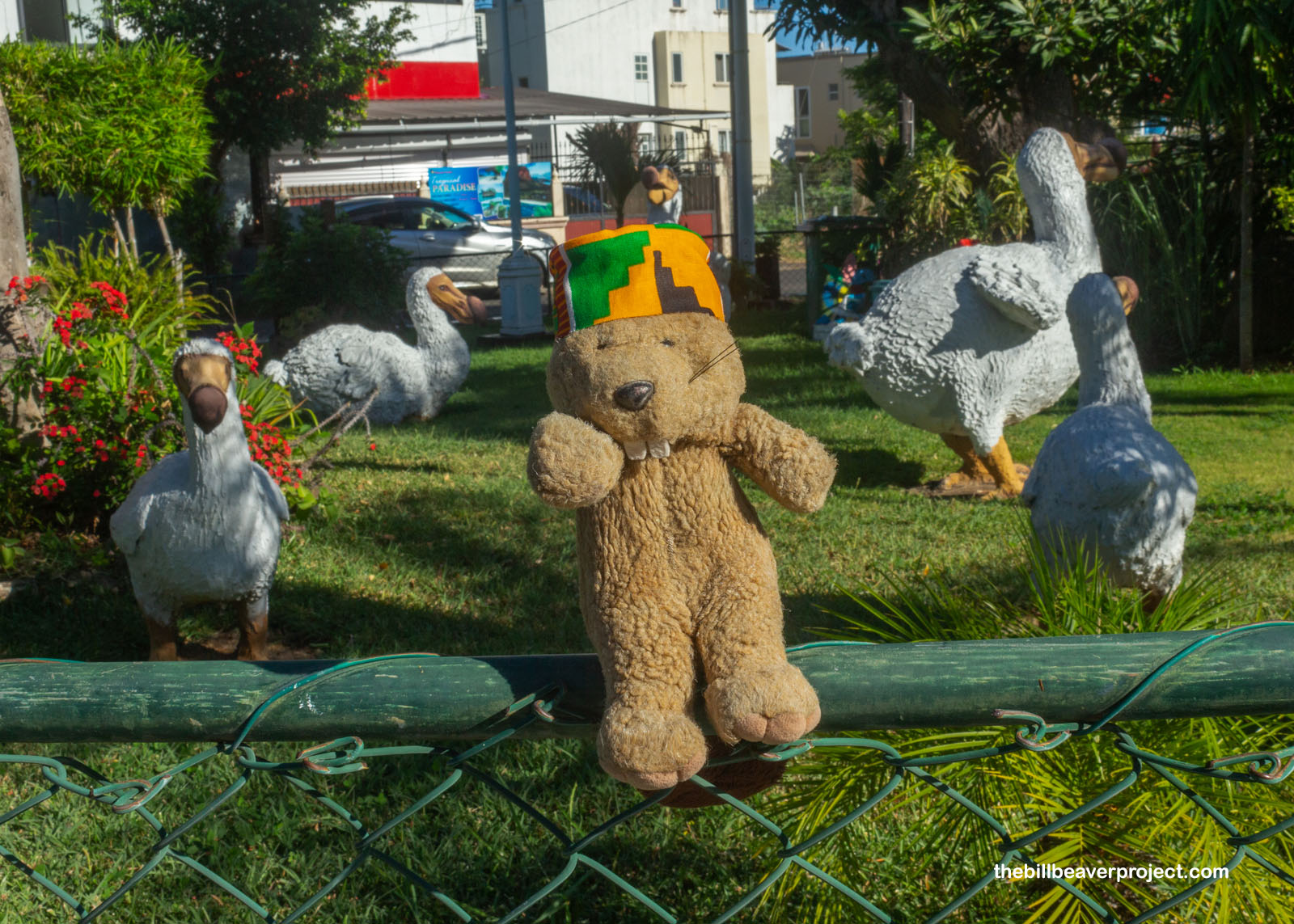
While there is dodo art scattered across the island, the biggest depiction of them is at a roundabout in the beach town of Flic en Flac. It’s believed dodo ancestors found their way here over ten million years by island hopping from the Pacific, and after generations of living on an island without predators, grew huge and lost the ability to fly. Everything changed for them in 1598 when the first Dutch ship landed on Mauritius, putting the island, and its Walghvoghel (“repulsive bird”), on the map. From there, successive European visitors—humans, dogs, even rats—hunted these huge land pigeons, ate their eggs, and built over their habitat. In less than a century, the naïve, friendly birds were extinct, the first species known to have been made extinct by human activity!
 |
 |
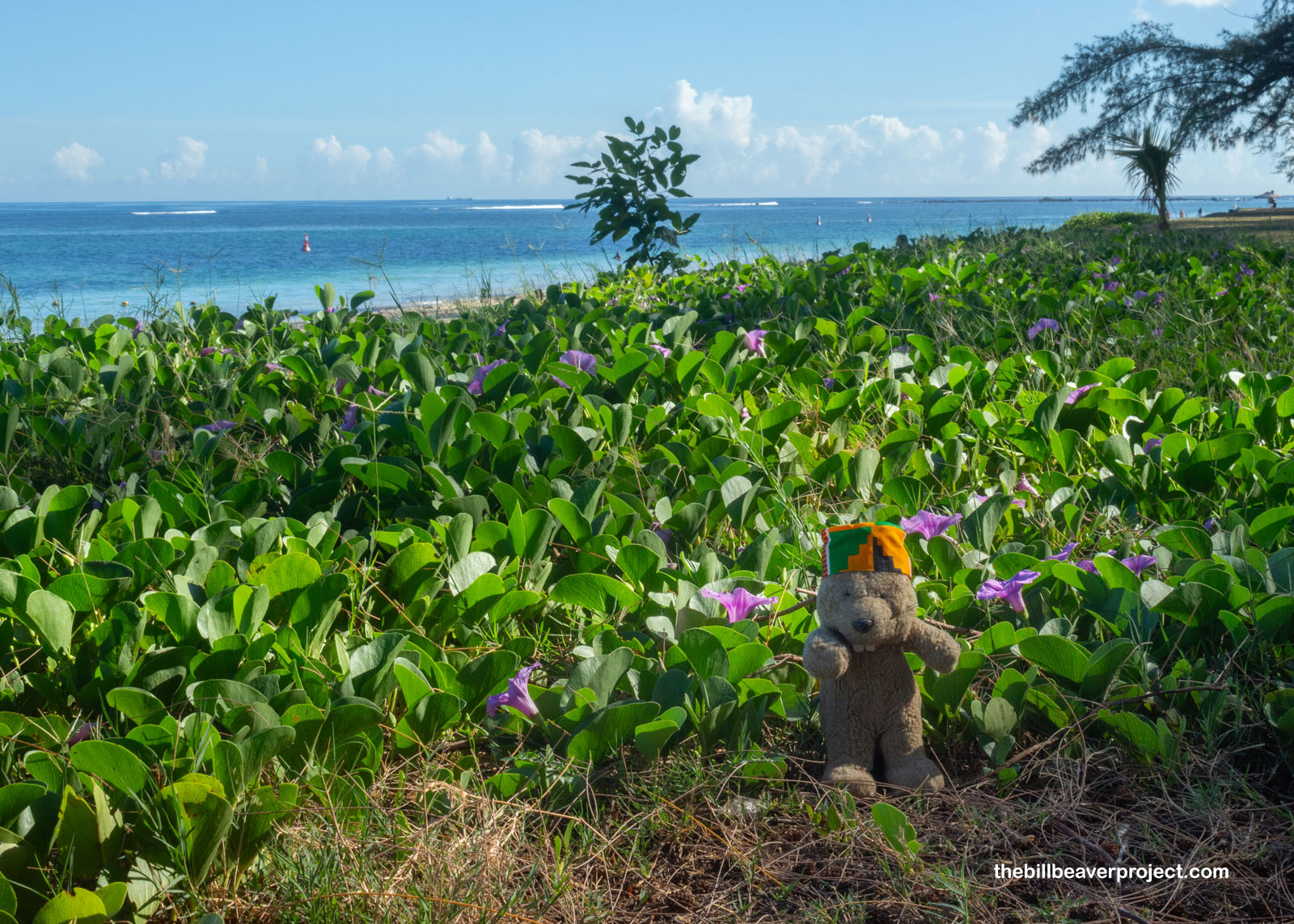
Having paid our respects at the Dodo Garden, Buzz and I headed to the shore for a stroll up and down Flic en Flac Beach. It’s a fun name for the community, believed to have come from the Dutch Fried Landt Flaak for “free, flat land,” and its beach is one of the longest on the island! It’s kept super calm by the barrier reef just offshore, which catches the big sea waves and only allows ripples through, so there were plenty of folks enjoying a swim, a snorkel, or a morning water aerobic workout. While we’d started the morning learning about the endemic dodo, I was super surprised to find something more cosmopolitan blooming here: the very same beach morning glory (Ipomoea pes-caprae) I’d seen on St. Croix, on the opposite side of the globe! Their seeds are salt tolerant, so with the help of ocean currents, these creeping plants are found on tropical beaches everywhere!
 |
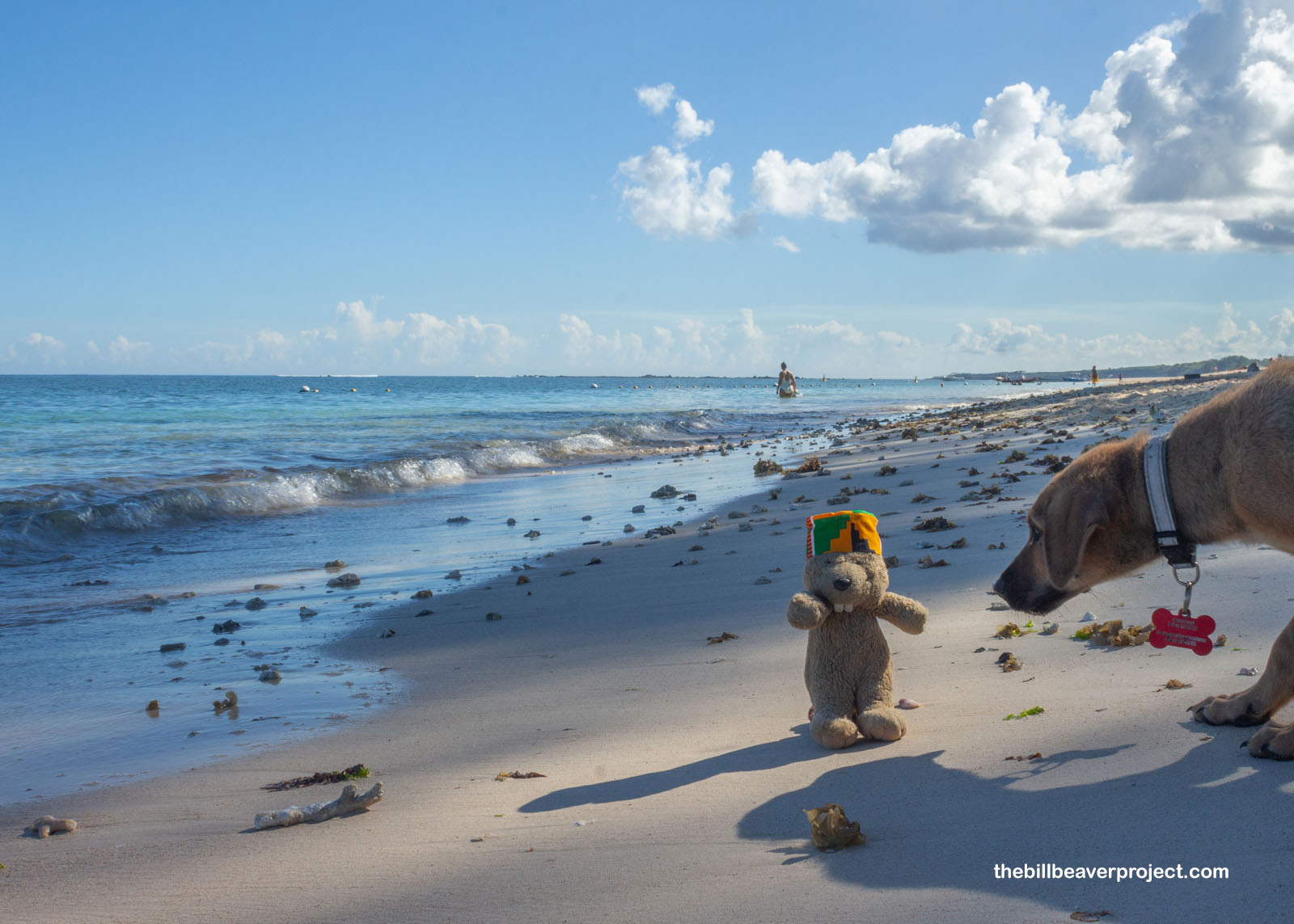
We walked south along the beach, as I realized the calm waters were keeping waves from washing up many sea shells. Also like on St. Croix, it’s illegal to take shells off Mauritius, so it was all for the best. Without realizing it, because it wasn’t really a quest I’d been tracking, I was standing on the shore of my fourth world ocean out of five! Only the Arctic remained! Since Buzz had walked ahead, I turned to tell the nearest set of ears, a puppy who had been playing with her brother on the beach and had never met a beaver before! Sometimes I forget that even I’m an exotic species in different parts of the world!
 |
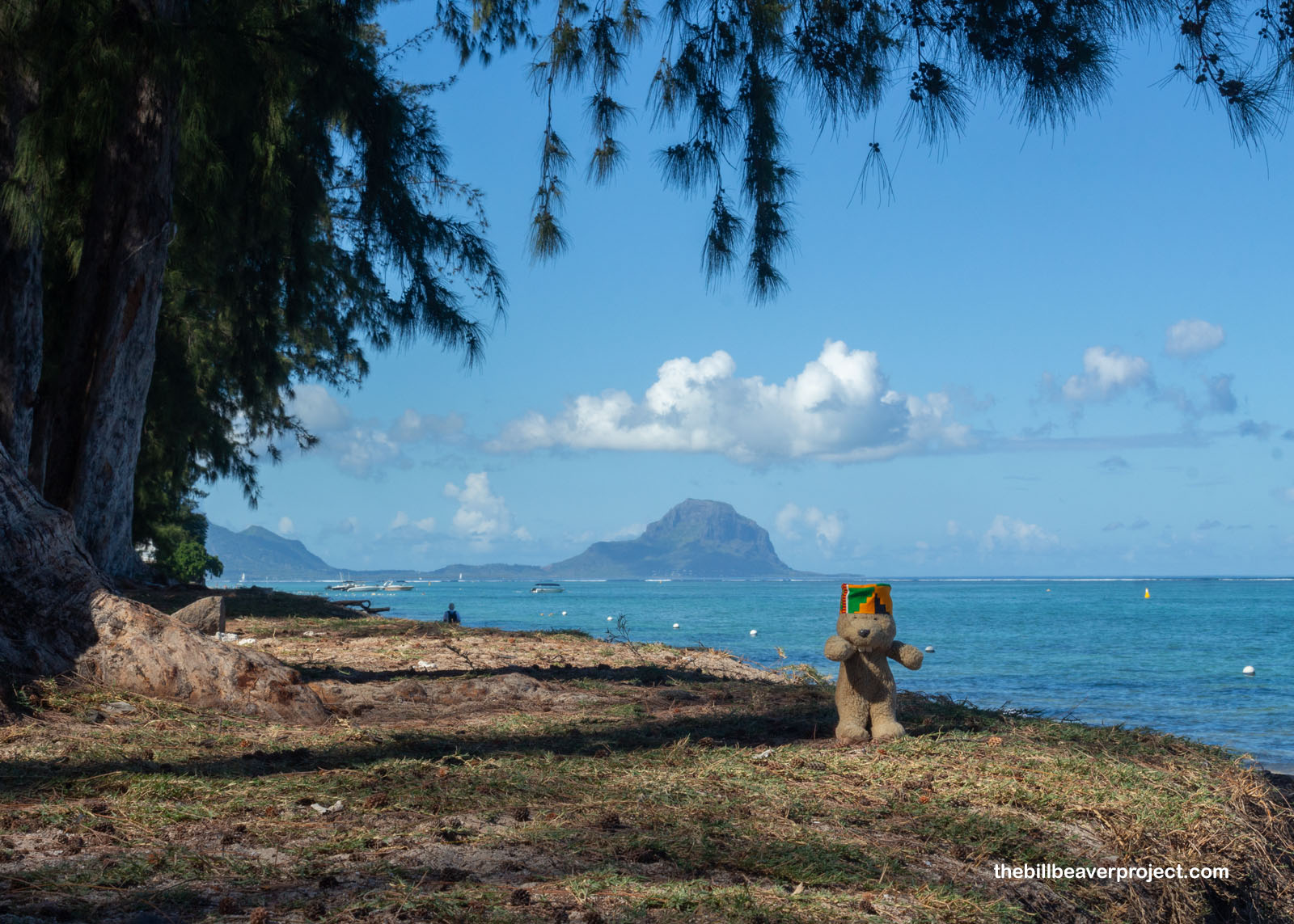
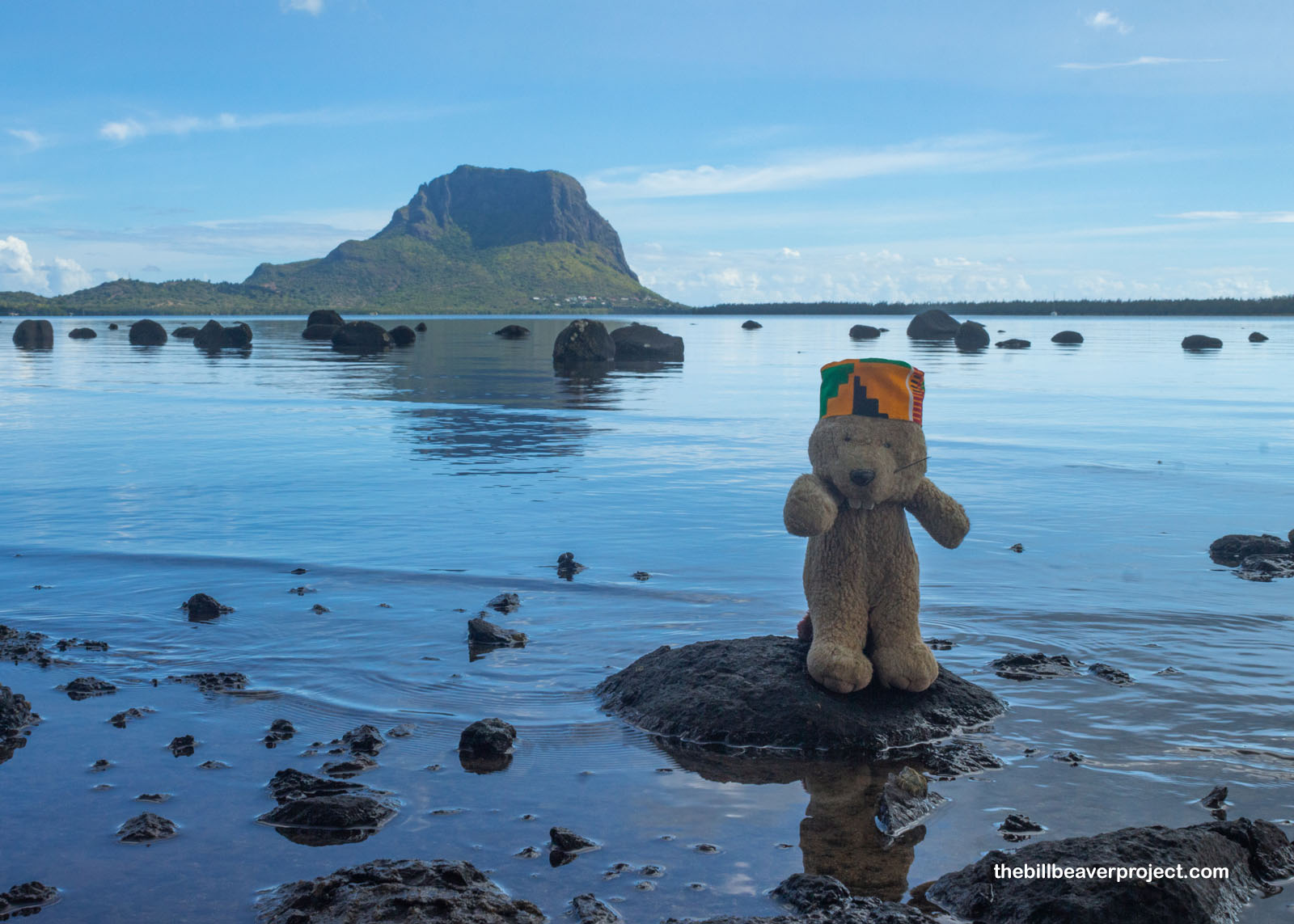
We paused our stroll at a view of our day’s destination: Le Morne Brabant, a huge basalt monolith on the UNESCO World Heritage List for reasons that will be discussed later. Le Morne is French for “the hill,” while Brabant commemorates the Dutch ship of that name, which capsized there on December 29, 1783. Our goal was to hike to the tippy top this afternoon, weather permitting, but first, we needed a little immersion in the nature of Mauritius!
 |
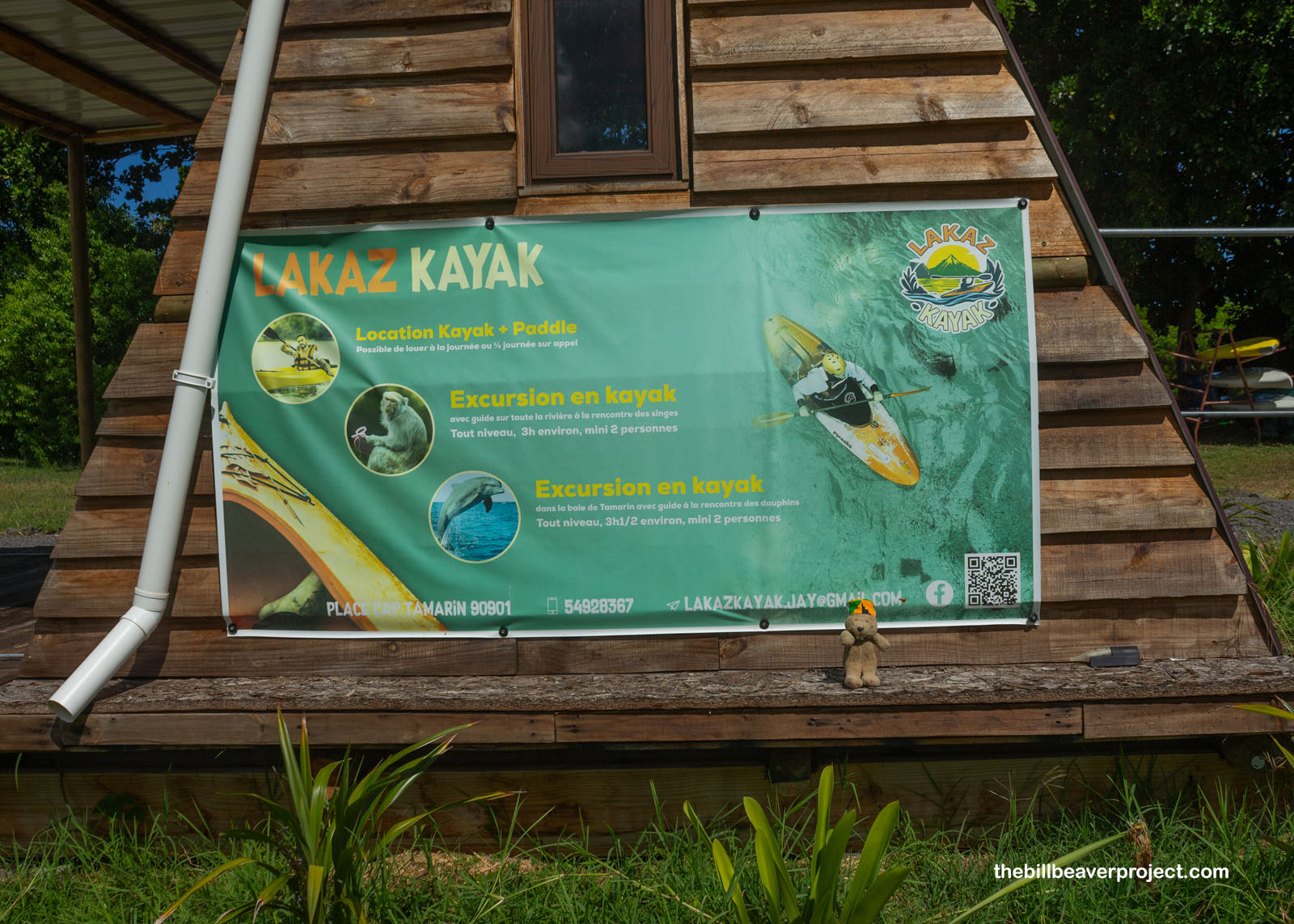
Halfway between Flic en Flac and Le Morne is the town of Tamarin, where three major rivers—Rempart, Tamarin, and Noire, which gives its name to the national park we’ll be visiting tomorrow—flow into the Indian Ocean. It’s the home of Lakaz Kayak, a humble shack off the A3 road with kayaks and paddle boards galore to rent! We booked some kayaks for a two-hour, unguided paddle and set off down the Rivière Tamarin to where it joined Rivière du Rempart, not to be confused with the district of that name on the opposite end of the island, and turned up that river toward the golf course, as directed by the renter.
 |
Paddling was as calm and glassy as could be, a tropical Okanagan that was thankfully free of both water monsters and crocodiles. It was sunny, hot, and humid on the open river, but dark clouds were building over the mountains nearby. Keeping one eye on them, we navigated the curves to the narrow passage we’d been warned about then coasted down a shady tree tunnel to where the river became a stream and the kayaks couldn’t pass! It was a welcome break from the sun.
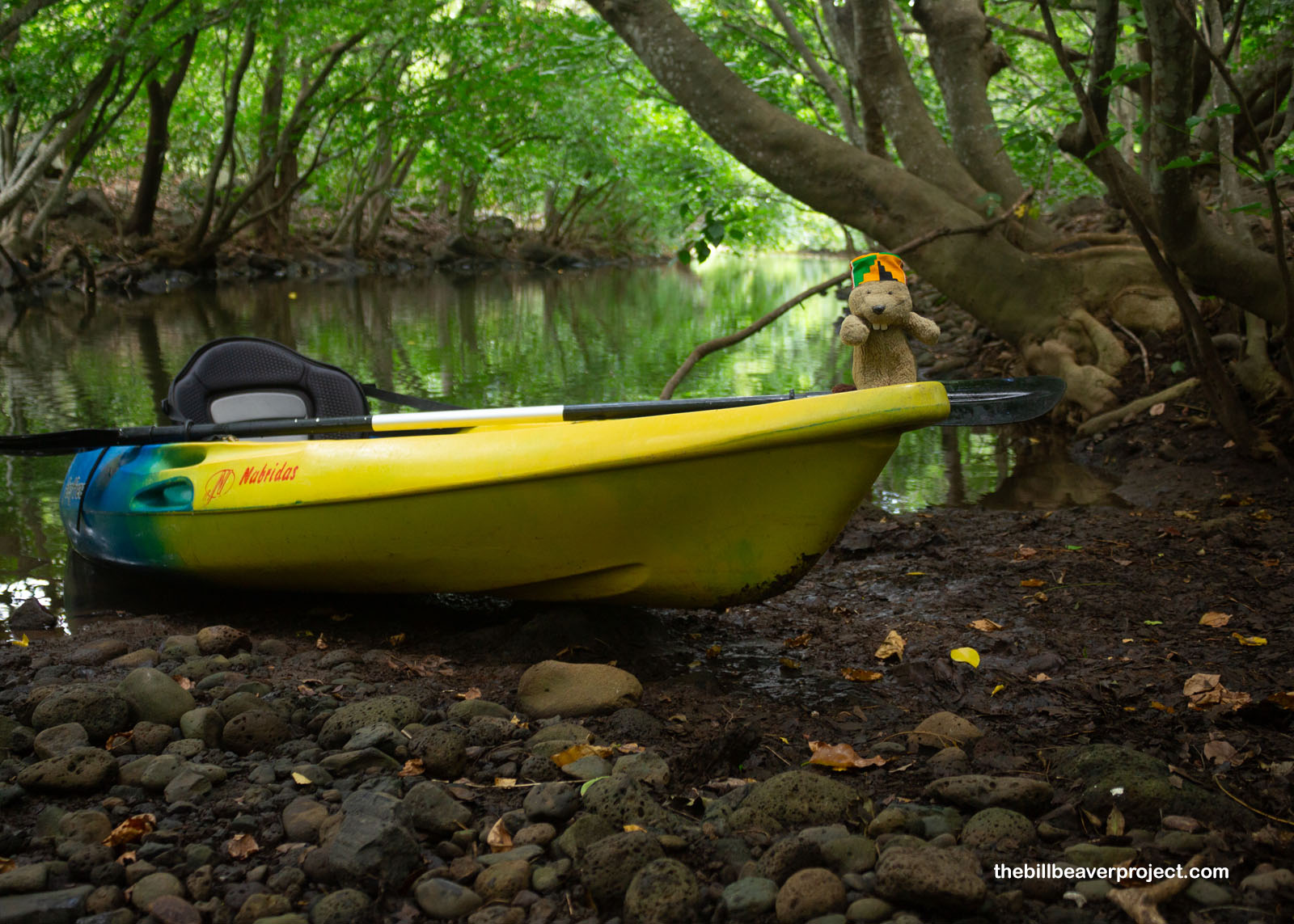 |
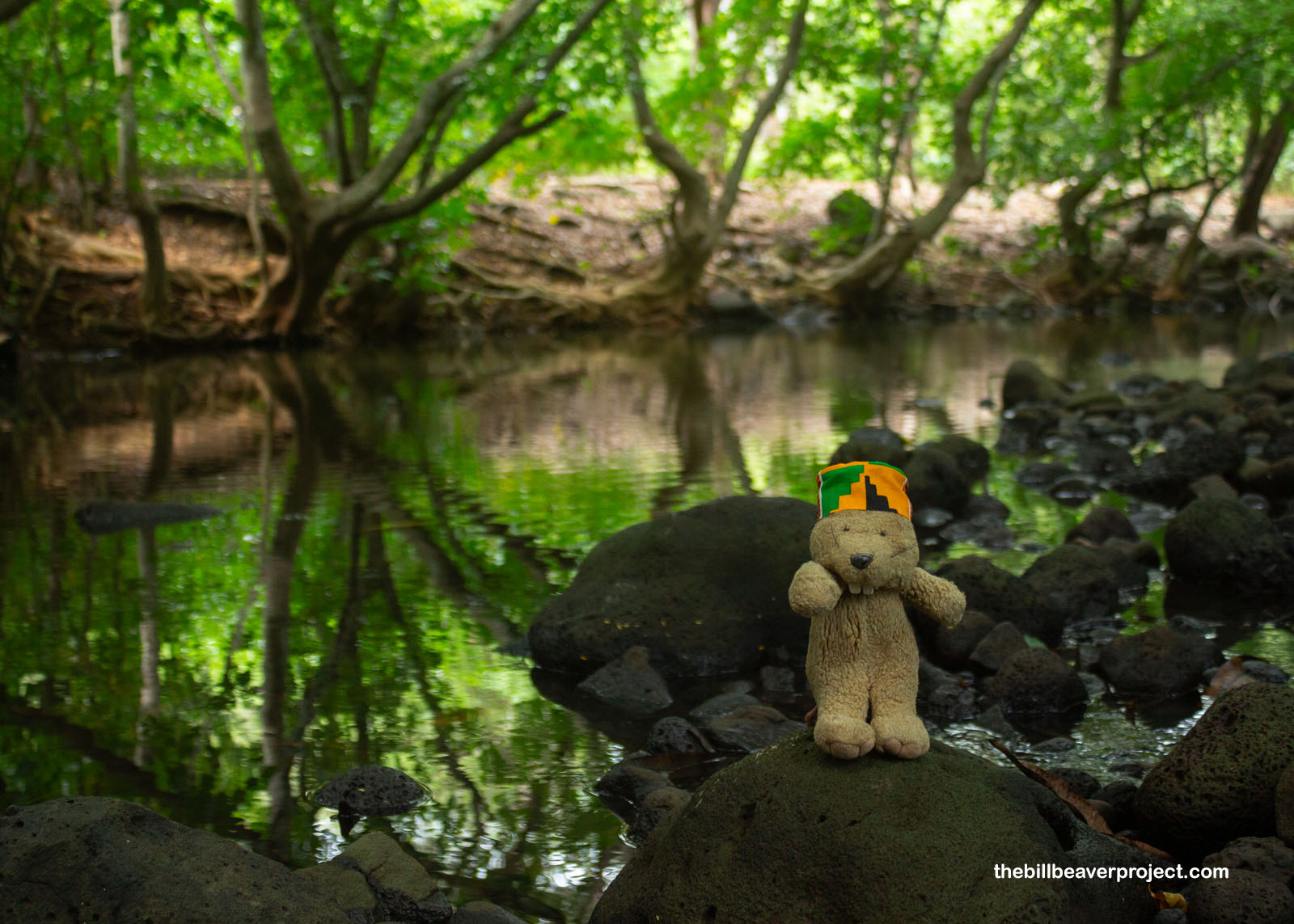
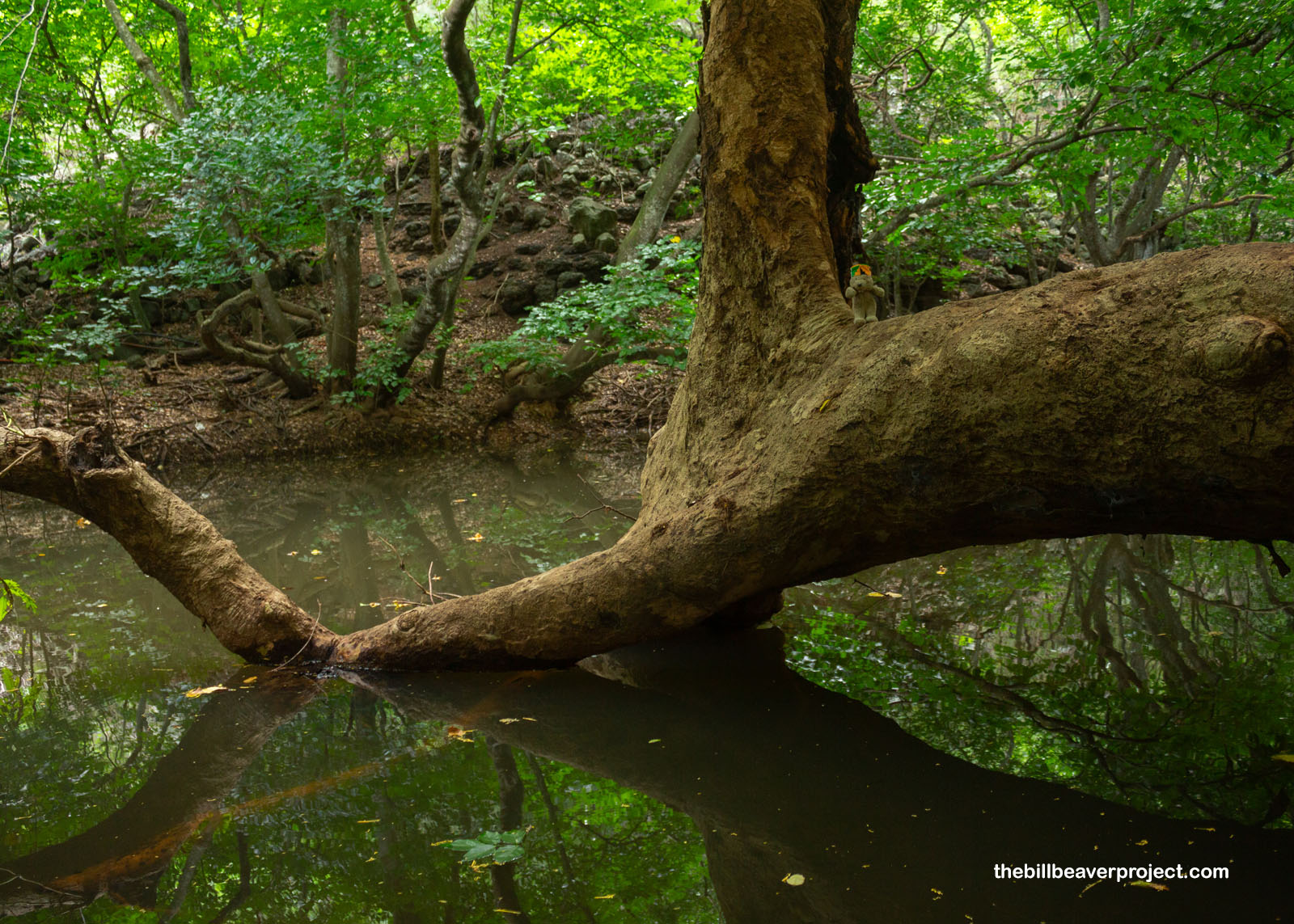
We wandered around the water’s edge, enjoying the false wilderness concealing a golf course on one side and noisy construction machines on the other. Apart from those noises, though, it was super calm, with all the trees perfectly reflected in a watery mirror. It would have been the perfect place to stop for a snack except… it was swarming with mosquitoes! We’d both walked away from the repellant in our kayaks, and the local skeeters knew it! It was annoying for me, but as a beaver, I couldn’t catch any mosquito-borne diseases here. For Buzz, who didn’t have access to the chikungunya vaccine in South Africa, it was cause for more concern! So we cut our shore time short, loaded up on repellant, and returned to open water, where the bloodsuckers wouldn’t follow!
 |
 |
After spotting some cool ducks and a jellyfish in the mangrove area, we turned our kayaks back in, had some food court lunch—malls here have been plentiful and great for all different kinds of cuisines—and continued our journey south to Le Morne Brabant. Along the way, we stopped at a vista, where a mud flat crawling with tiny fiddler crabs led to a spectacular view of our destination. Just beyond, only visible by plane, or maybe from the top of Le Morne, was Mauritius’ famed underwater waterfall, an optical illusion created by currents pulling white sand down into a 4,000-meter deep ocean trench!
 |
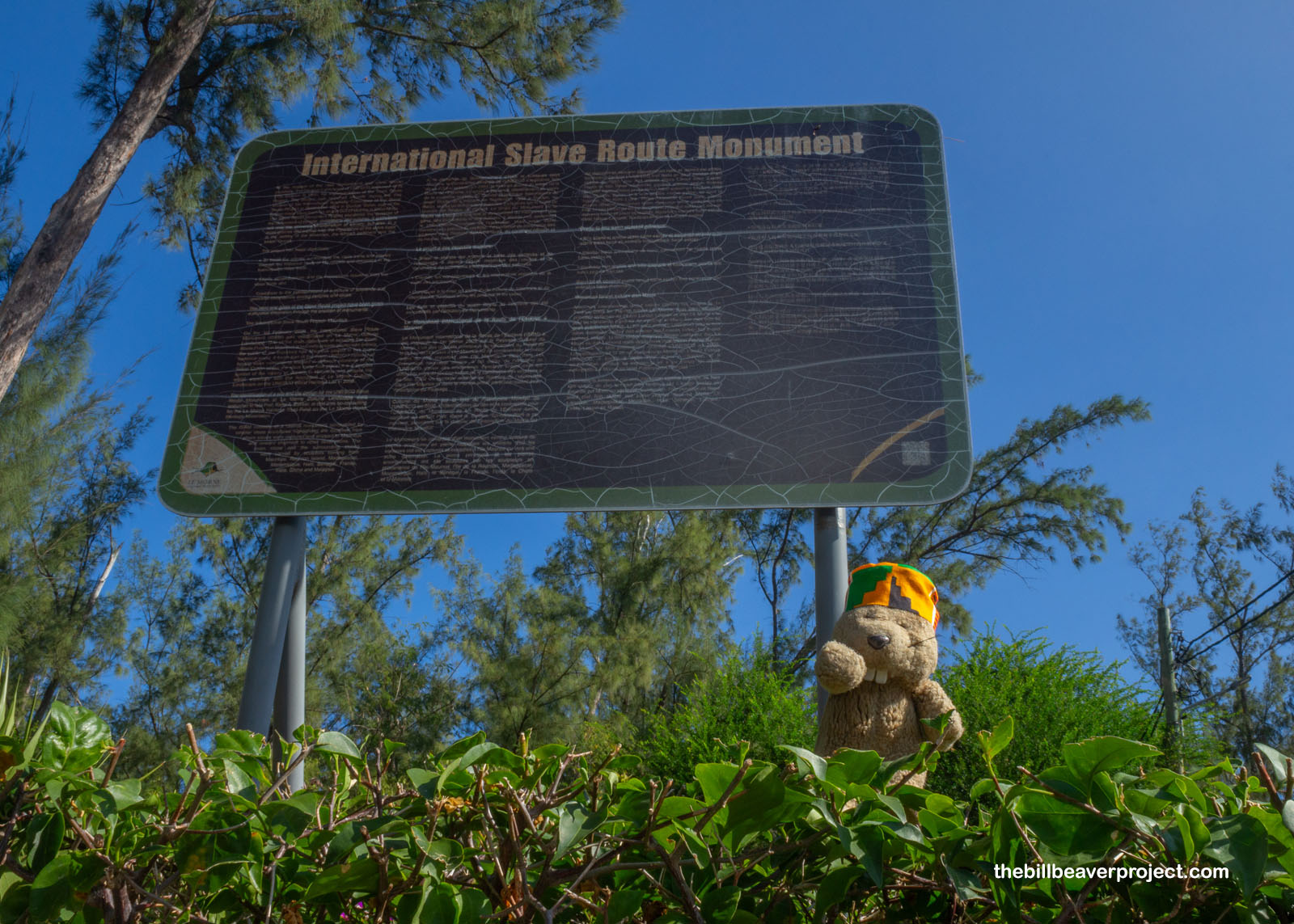
Unfortunately, we arrived later than we meant to, and starting a hike to the summit looked more and more like we’d be caught up in nightfall before we knew it. So instead, we ended up on the west side of Le Morne where the International Slave Route Monument has commemorated the sad history of this place since February 1, 2008. Because it was so near the center of the Indian Ocean, Mauritius became a hub for the slave trade during Dutch rule (1638-1710), French rule (1715–1810), and early British rule (1810-1835). By the late 18th Century, around 80% of the island’s population was made up of enslaved Africans and Indians working sugar fields! Some of those enslaved folks made a break for it and took refuge in the caves on Le Morne’s precarious slopes, creating entire communities called maroons!
 |
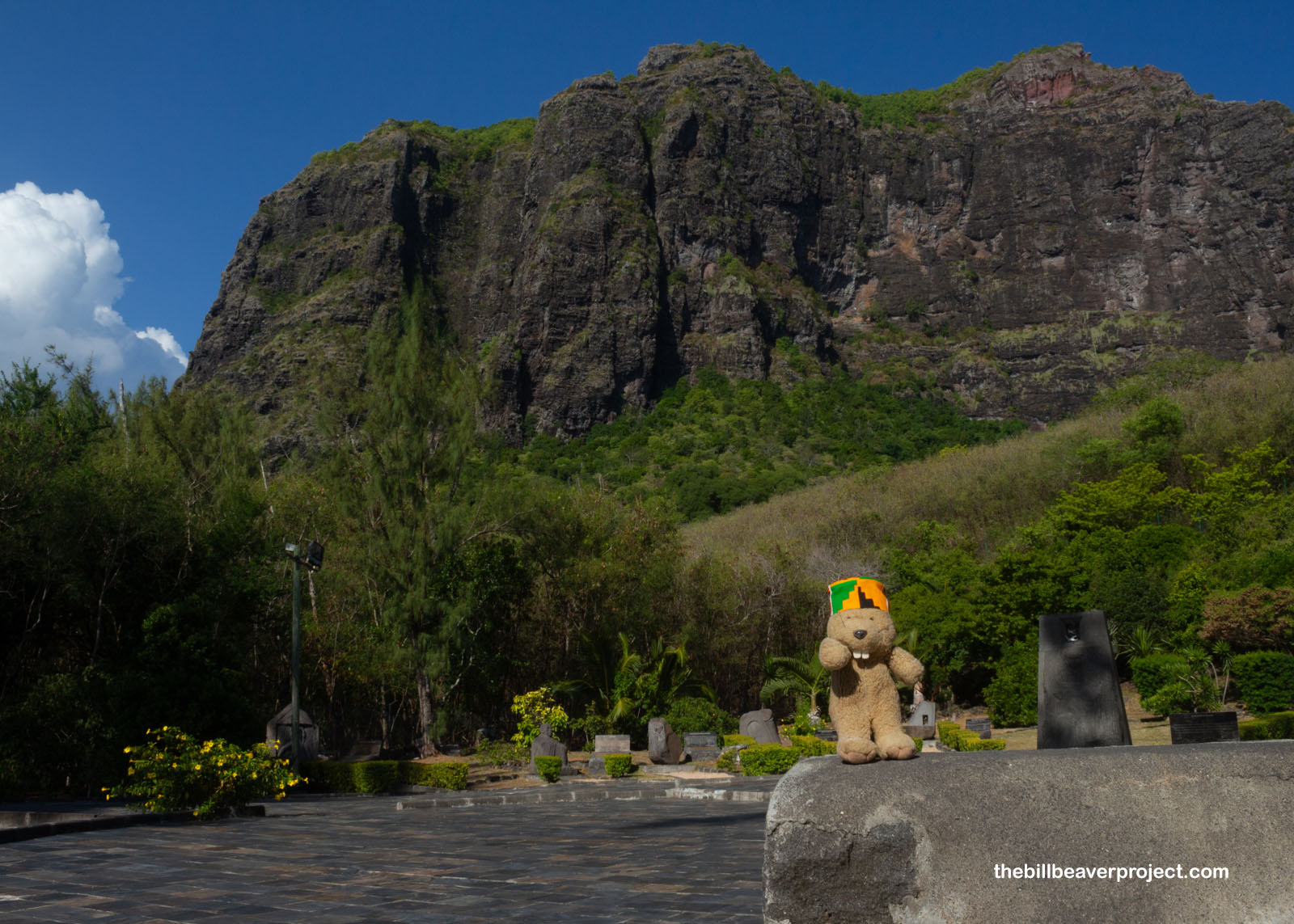 |
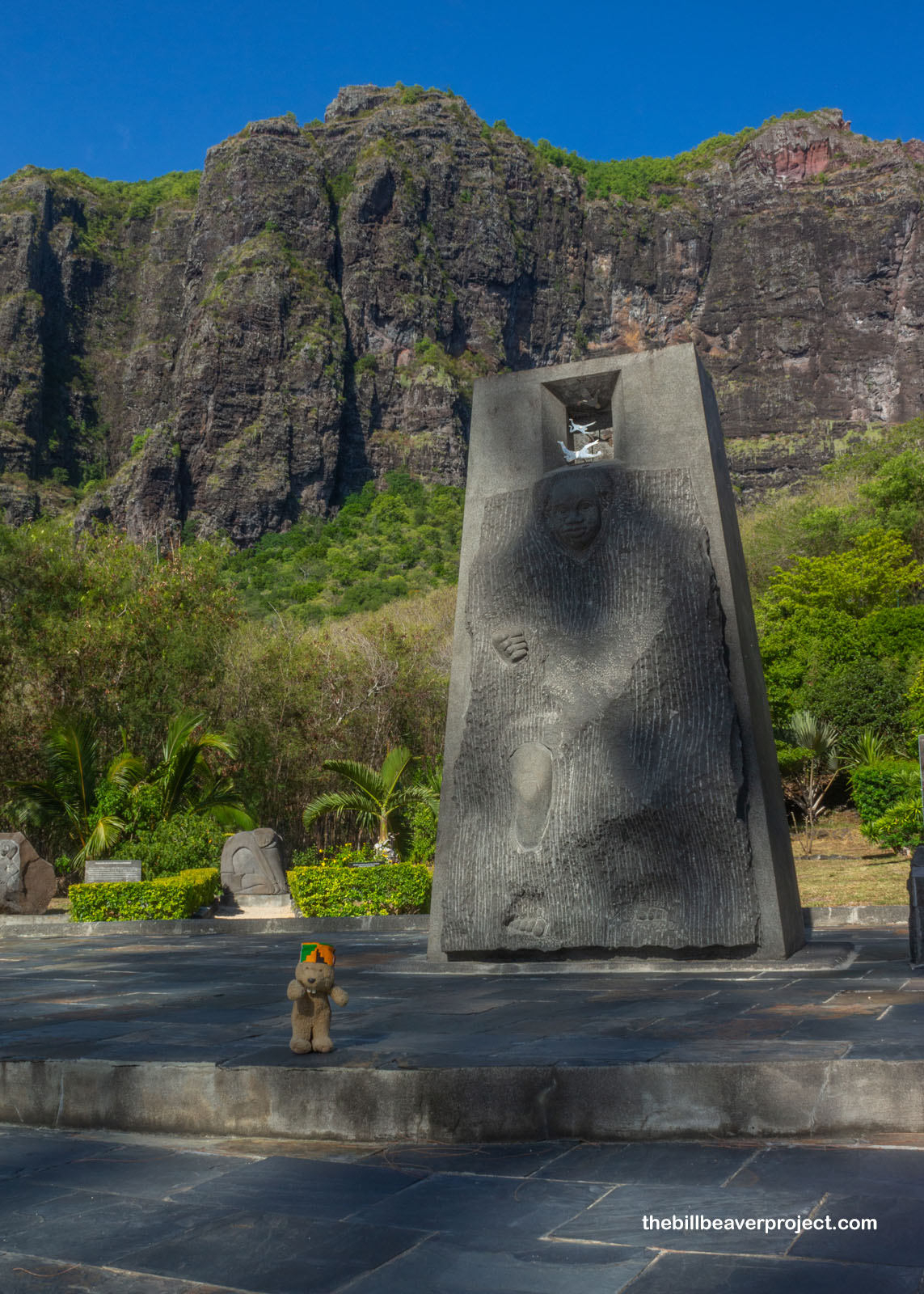
Today’s International Slave Route Monument is positioned between Le Morne and Madagascar, where most of Mauritius’ enslaved folks came from. The sculpture garden here, assembled between 2004 and 2009, features contributions by artists from all across the Indian Ocean. At the center of its semicircle stands a rectangular monolith by Mauritian artist, Jean Michel Hotentote, called Central Rock: Escape. It shows an enslaved man emerging from the rock, but above him are abstract people falling through the air, a reference to a tragic legend from Le Morne. When the British Parliament voted to stop trading slaves in 1835, a police delegation came to Le Morne to share the news, but as legend has it, the residents of Le Morne’s villages thought this was an attempt to recapture them. Not knowing it was a day to celebrate their freedom, many leapt from the top of the rock rather than return to slavery!
 |
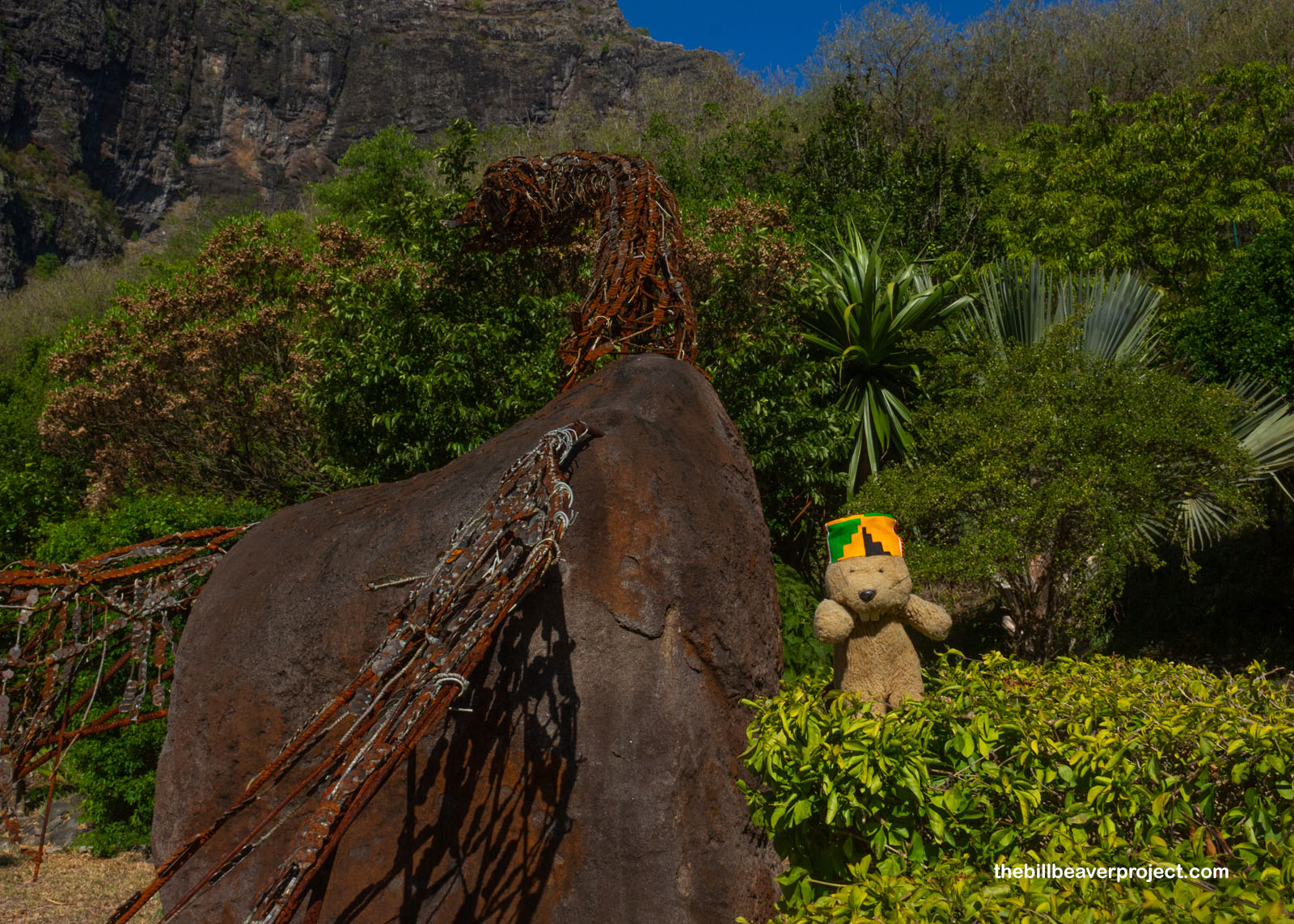
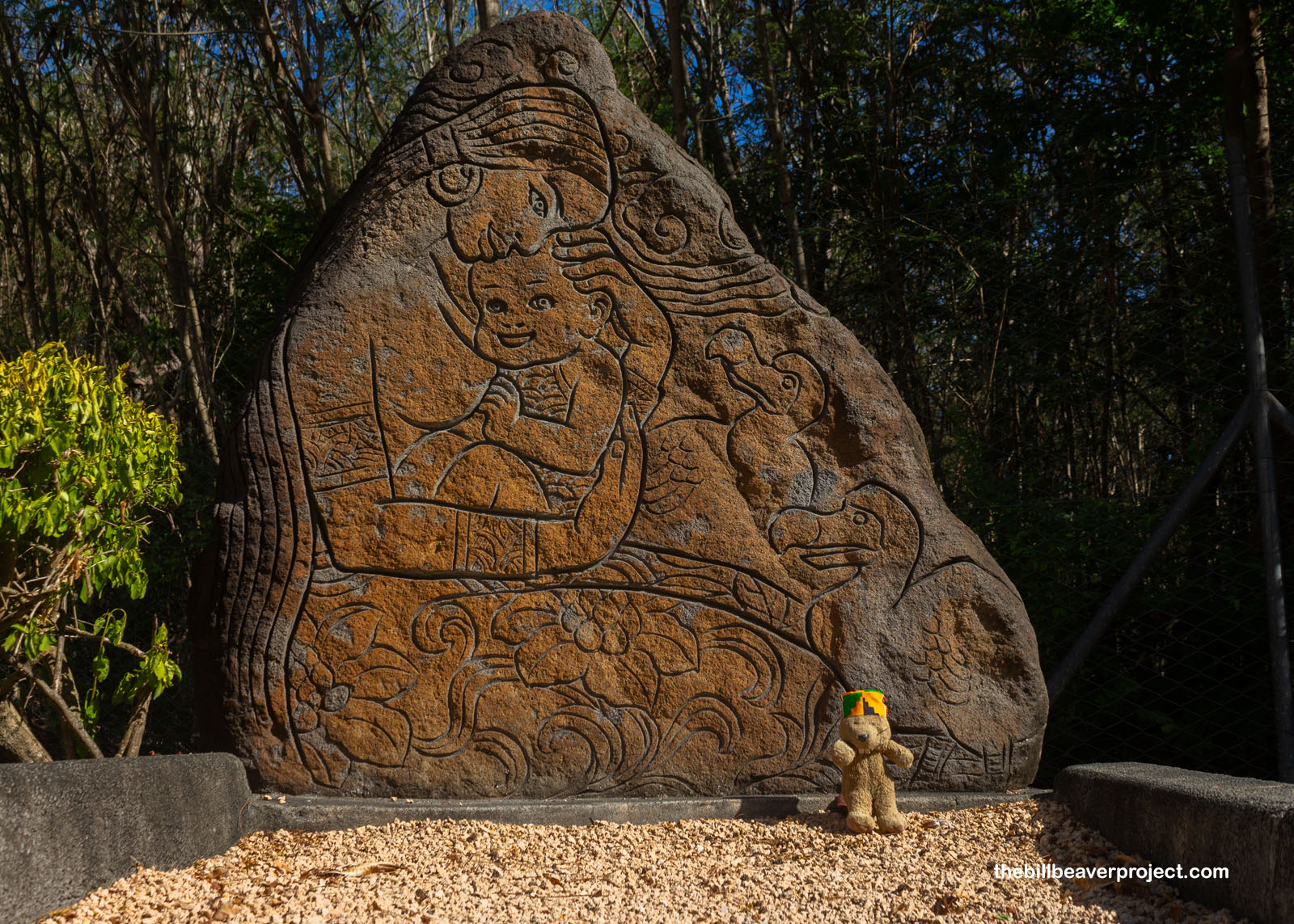
Before we were suddenly shooed out at 3:00PM, which, unbeknownst to us, was the monument’s closing time, we got to enjoy at least a few of the 10 sculptures onsite. Phénix Rouge (Red Phoenix) by French artist, Lionel Sabatté, was made of wire and Mauritian five-cent coins, representing a flight to freedom that it would be cyclical, like the phoenix itself. Renaissance (New Born) by Chinese artist, Nanpeng Zhuang focused on love with a Mauritian mom holding her newborn and the spirits of the friendly dodo birds, long gone, welcoming the new native-born Mauritians, no longer colonizing but inhabiting!
 |
 |
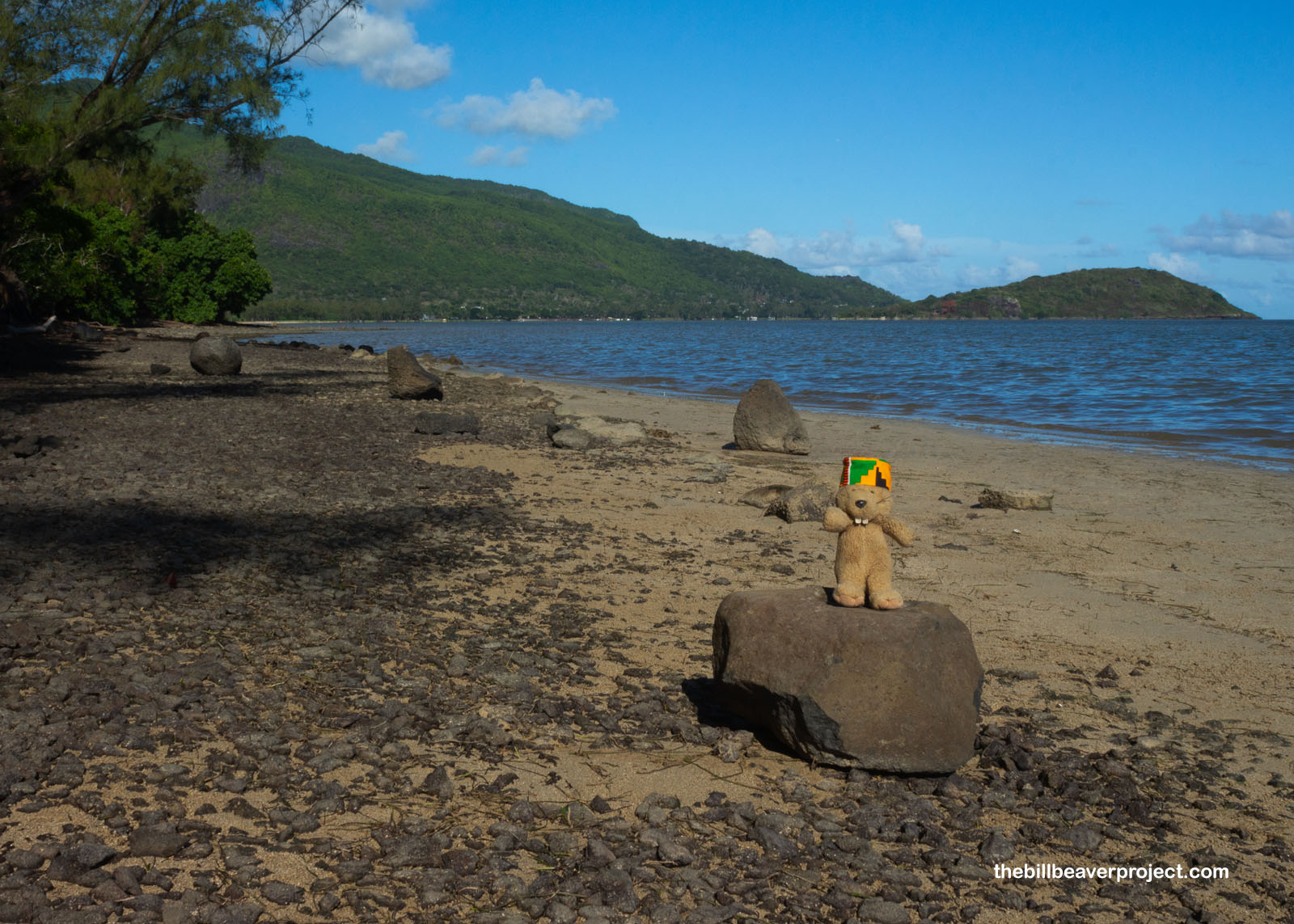
Kicked out of the monument, Buzz and I made for the Trou Chenille Open Air Museum on the other side of Le Morne, only to find that it did not close at 4:00 PM, as was listed online, but at 2:00 PM. A paper with this correction was taped to their sign. So no matter how fast we’d raced to the museum at Le Morne trailhead, we were hours too late to experience either. So, we took a stroll along the shore, watching kite surfers off in the distance, and wondered if we should find time to come back and try that tomorrow. Kite surfing is an activity I’ve never even considered in all my years of adventuring!
 |
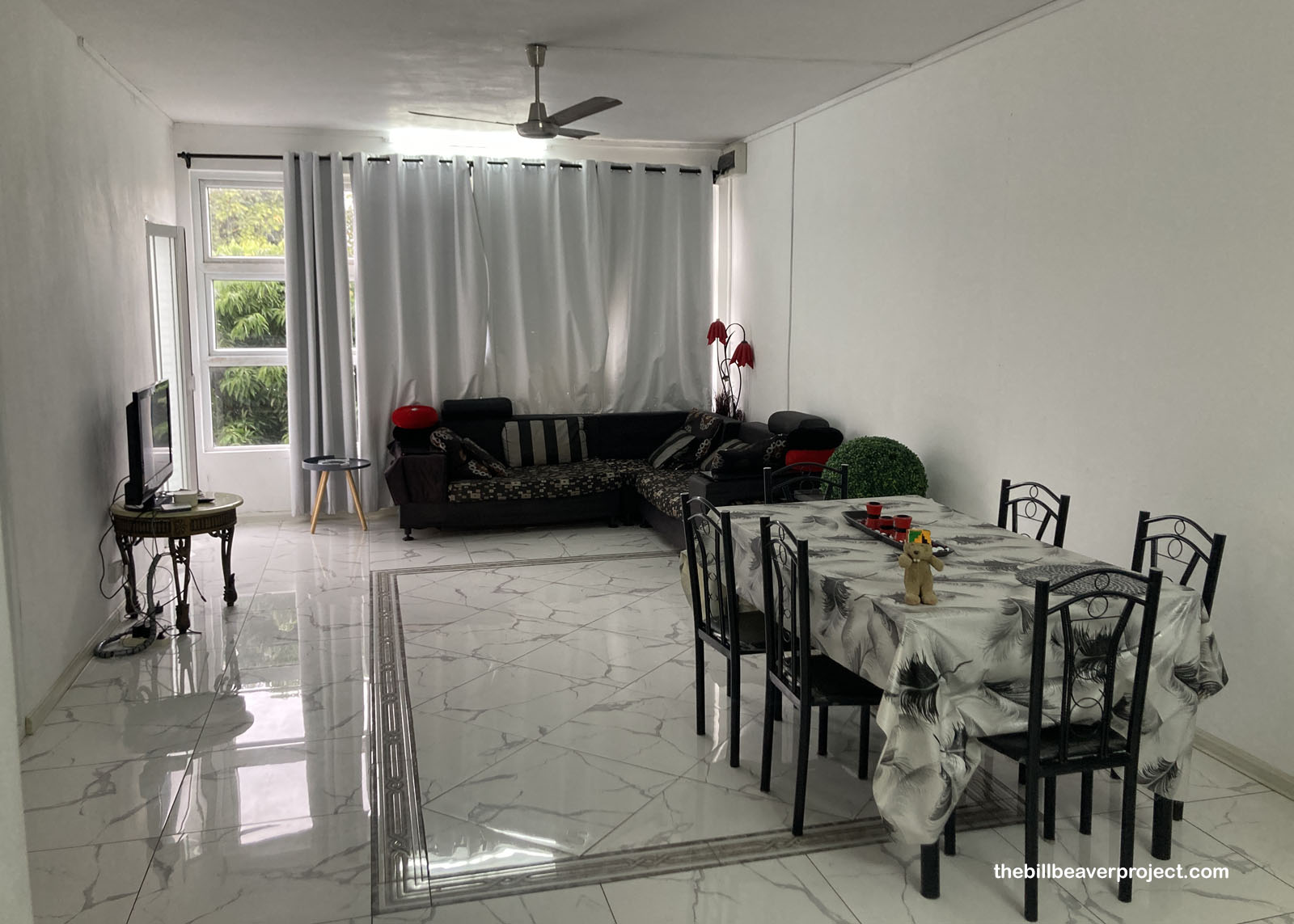
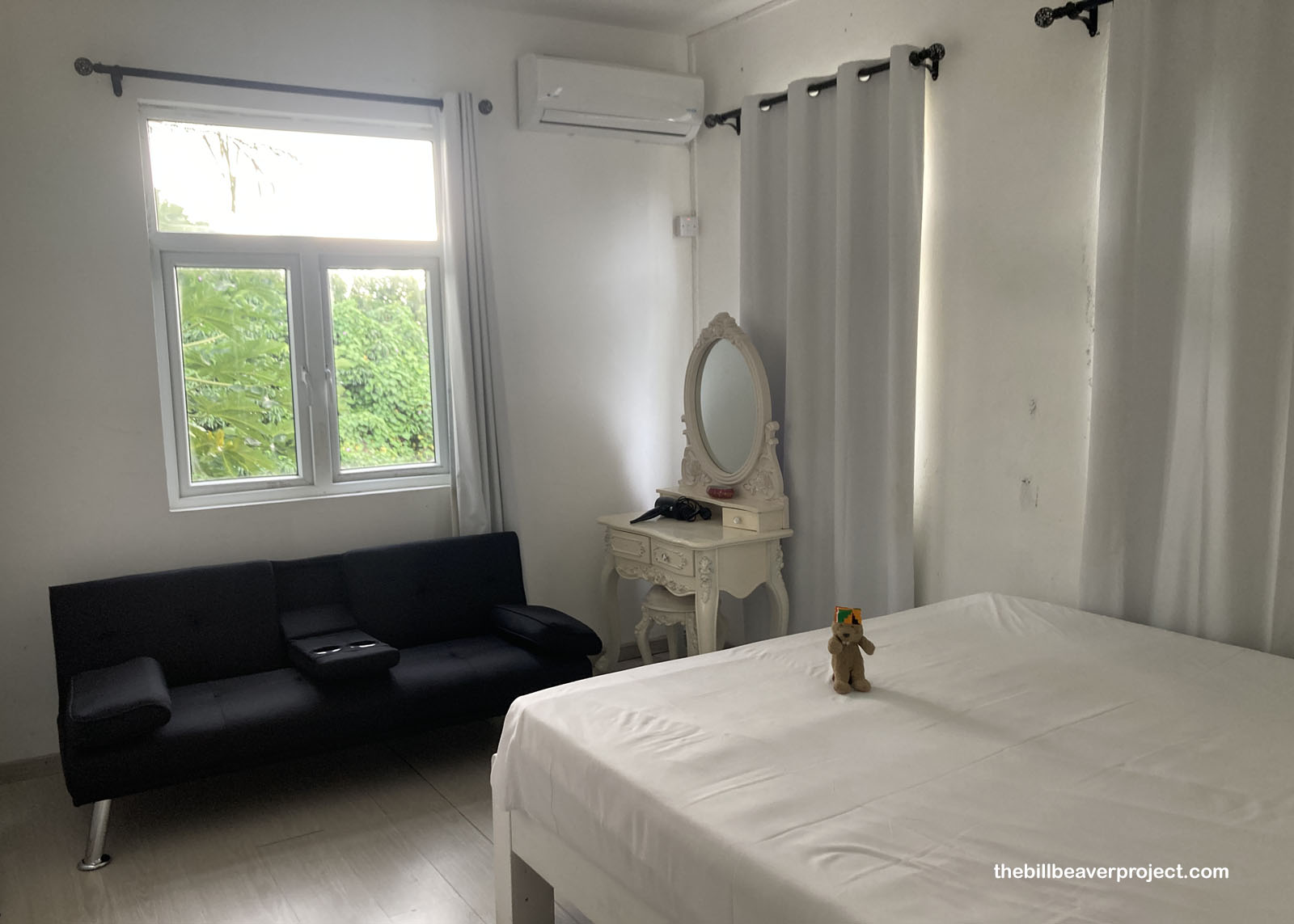
Instead, we decided to head back to our AirBNB in Vacoas-Phoenix before it got dark. Along the way, we dealt with an aggravatingly slow driver on the winding mountain road, identified as tourists by the yellow rental car license plate, but taking that route gave us the chance to scope out the starting line of the road race we’d signed up for tomorrow, another travel activity I’d never considered doing. It turns out traveling with someone else can expose you to all kinds of new experiences! Anyway, once we completed our drive, we settled in at our AirBNB, run by the very courteous Doo (not Dodo), and despite struggling with the over-complicated, multi-valve water heater, got ourselves cleaned up and rested up for our next day of adventure on Mauritius!
 |
 |
First thing in the morning, we’d be headed south again to Le Pétrin Information Center in Black River Gorges National Park to join where 381 other runners in the 12K course of the Championnat de Trail, the island championship! Not that I had high hopes, but only island residents were allowed to win, so Buzz and I decided to go at a measured pace, take photos, and enjoy Mauritius’ largest national park!
Mo truve twa talère!

Previous Day |
Total Ground Covered: 427.4 km (326.7 mi) |
Next Day |